
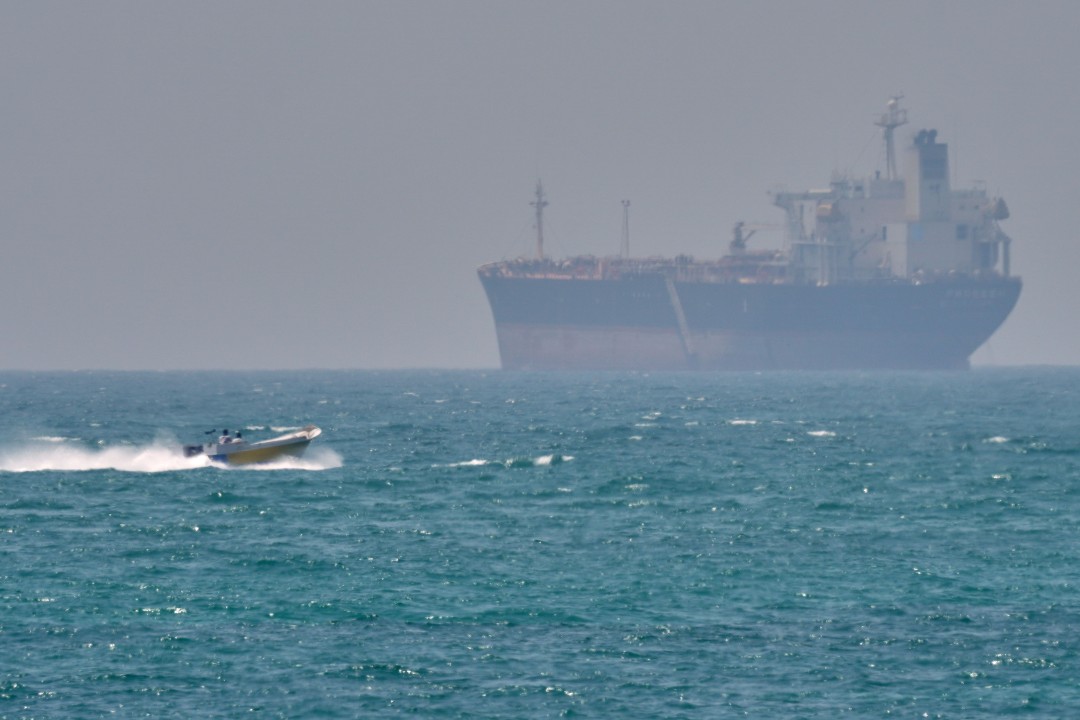
Iran’s surprise decision to re-close the Strait of Hormuz illustrates a problem that has vexed the US since the war began: Just who is calling the shots there? Within 24 hours of Foreign Minister Abbas Araghchi announcing that the strait was “completely open,” Iran’s Revolutionary Guard fired on commercial vessels, warned ships that the passage was still shut, and threatened to destroy any that tried to cross without its say-so. The rapid U-turn has exposed a power struggle between Iran’s diplomats and hardline military commanders and lawmakers, writes Benoit Faucon in a Wall Street Journal analysis.
“The public display of division points to the difficulty ahead as President Trump tries to nail down concessions that would allow him to end the war with a clear win,” he writes. Araghchi’s post had been seen as a signal of flexibility ahead of new talks, but the Guard—and its media allies—quickly lashed out, with one radio message deriding “the tweets of some idiot” and a hard-line lawmaker calling for the minister’s ouster. It’s all the result of a power vacuum that opened up after the death of Ayatollah Ali Khamenei.
“Because the main arbitrator is gone, the fight between different factions has started,” Saeid Golkar, an Iran expert at the University of Tennessee, tells Faucon. A piece at Fortune by Jason Ma notes a similar theme from the Institute for the Study of War, which called the hard-line reaction to Araghchi’s tweet “reflective of broader divisions within the Iranian regime.” Those same divisions may have prevented a breakthrough deal at the first round of talks in Pakistan, the institute says.