
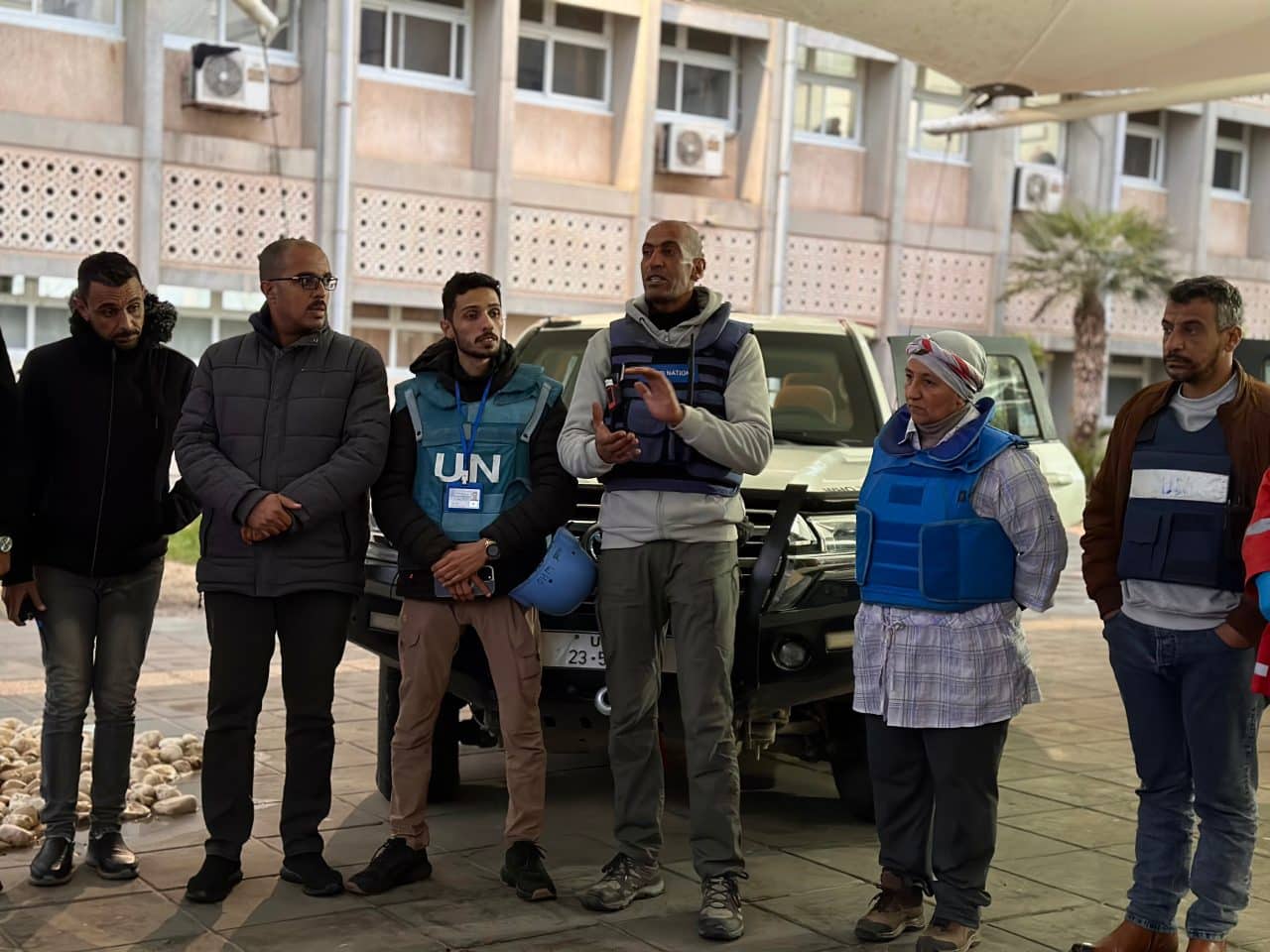
Majdi Aslan, 54, was driving a truck for the UN’s World Health Organization (WHO) on April 6 when the Israeli army killed him in Khan Younis, in southern Gaza. Aslan was the main driver in a WHO convoy that was transporting injured Palestinian patients from Gaza to Egypt and other countries. The convoy already had its coordinated permit from the Israeli army to move, as per protocol. The Israeli army intercepted the convoy on the main Salah al-Din road, fired at the driver, and blocked the convoy from moving.
Raed Aslan, another WHO worker who was part of the convoy, told Mondoweiss from al-Aqsa Martyrs Hospital in Deir al-Balah that the truck was clearly marked with the WHO’s logo on the front, sides, and rear of the vehicle. “No vehicle passes through without official coordination with the Israeli side,” he said. “Three people were in the vehicle when the Israeli tank intercepted.”
“He paid the price of our humanitarian work,” Aslan added.
The convoy was carrying 17 patients who were turned back to hospitals in Gaza after the incident. Dr. Fathi Lulu, at al-Aqsa Martyrs Hospital, told Mondoweiss that the targeting of WHO employees will negatively impact the WHO’s ability to coordinate medical evacuations in the future.
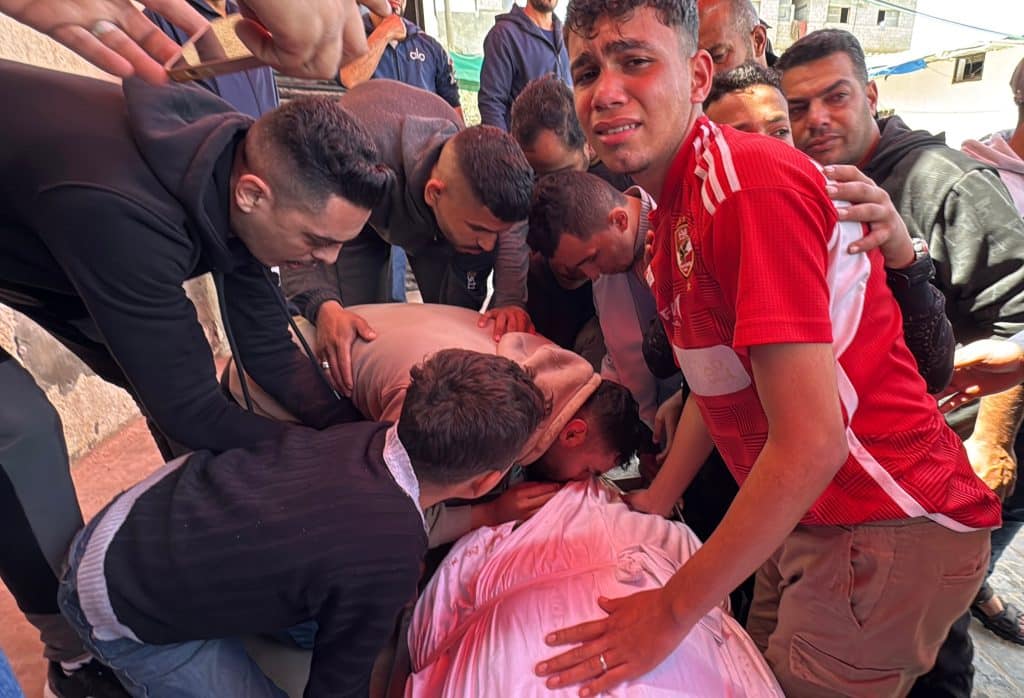 Palestinians bid farewell to the body of Majdi Mustafa Aslan, 54, at al-Aqsa Martyrs Hospital, who was killed by Israeli army fire while driving a World Health Organization medical evacuation convoy in Khan Younis, southern Gaza, April 6, 2026. (Photo: Ahmed Ibrahim/APA Images)
Seven months into the so-called “ceasefire,” Israel continues to restrict the entry of humanitarian aid into Gaza while killing civilians in airstrikes and border incidents on a daily basis. Among the dead have been women, children, aid workers, and journalists.
But the ongoing restrictions have tightened dramatically since the outbreak of the U.S.-Israeli war on Iran, carried out under the pretext of “security.”
The continued humanitarian blockade on Gaza sometimes manifests in clear and violent incidents, such as the killing of Majdi Aslan, but most of the time it remains less visible. Last January, Israel banned the activities of 37 international aid organizations in both Gaza and the West Bank, which has devastated Palestinians in Gaza, who overwhelmingly rely on international aid for survival.
“We are clearly observing a significant decline in the ability of international organizations to carry out their work inside the Gaza Strip,” said Ismail Thawabta, Director of the Government Media Office in Gaza. “This decline is not natural. It is the direct result of Israeli measures targeting the operations of these organizations, whether through restrictions on the entry of aid, obstruction of their movement, or undermining their working conditions.”
Some organizations, such as the World Food Program (WFP) and the United Nations Relief and Works Agency for Palestine Refugees (UNRWA), have already reduced their services due to Israeli pressure and continued restrictions. The WFP’s flour supply has been reduced by 30%, while WFP-funded bakeries have cut bread production by 50%, amid broader critical shortages in bread, water, and baby formula.
Abdulnasser Ajrami, the head of Bakeries’ Association in Gaza, told local news last week that the WFP reductions in the supply of flour and diesel to bakeries “have decreased bread production from 300 tons to 200 tons daily.”
UNRWA, on the other hand, announced that political and economic pressures have led to a 20% reduction in services provided to Palestinian refugees. In a press interview on April 5, Jonathan Fowler, Director of Communications for UNRWA, said the organization is being directly targeted to undermine its work.
UNRWA, WFP, WHO, and other UN-affiliated organizations worked in Gaza for years before the genocide, building an efficient database of families, their locations, and household sizes, with a monthly schedule for the orderly distribution of aid.
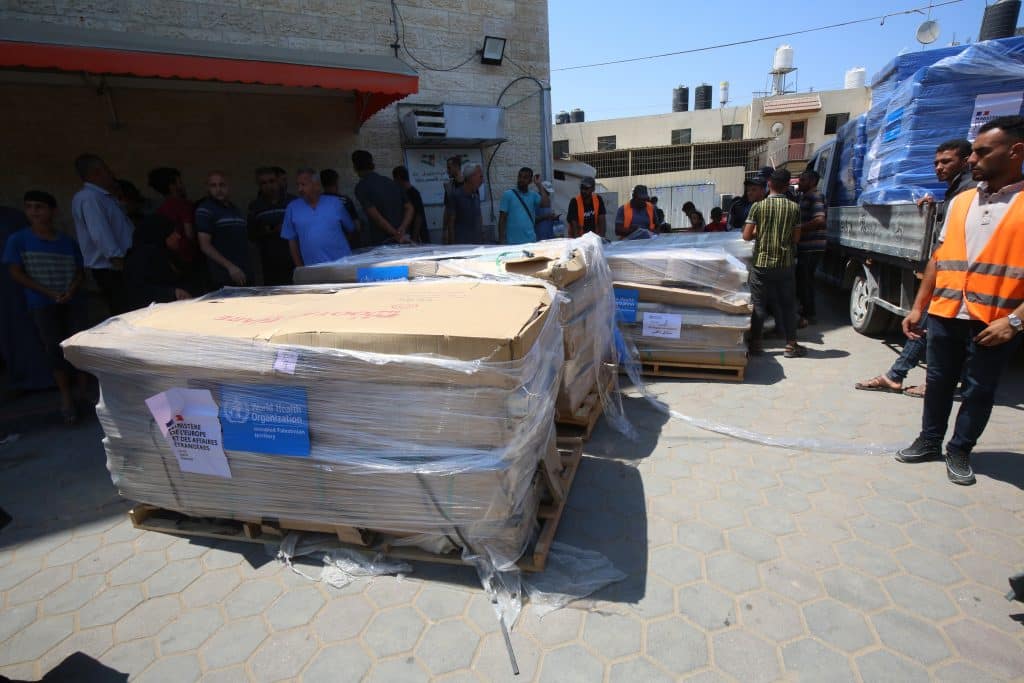 Aid workers transport medical aid to Shuhada Hospital in Deir al-Balah, central Gaza, July 4, 2024. (Photo: Ali Hamad/APA Images)
The impact of the humanitarian blockade
The blockade has been directly felt among residents in Gaza, who say that the past five months have gotten progressively worse.
Hamouda Hussam, 43, says that many community kitchens, known as “Tekiya” kitchens that served as a frontline against the famine in Gaza during the war, have shut down since the restrictions tightened. Such kitchens were organized by independent groups and international charities that have found it increasingly difficult to operate in the Strip due to onerous “coordination” procedures with the Israeli authorities.
The effects are showing in the bread lines in Gaza. Getting bread has now become a several-hour affair, Hussam says, with bread lines sometimes taking up to 10 hours of jostling to secure a few loaves. Hussam says that he has returned to his family empty-handed on several occasions.
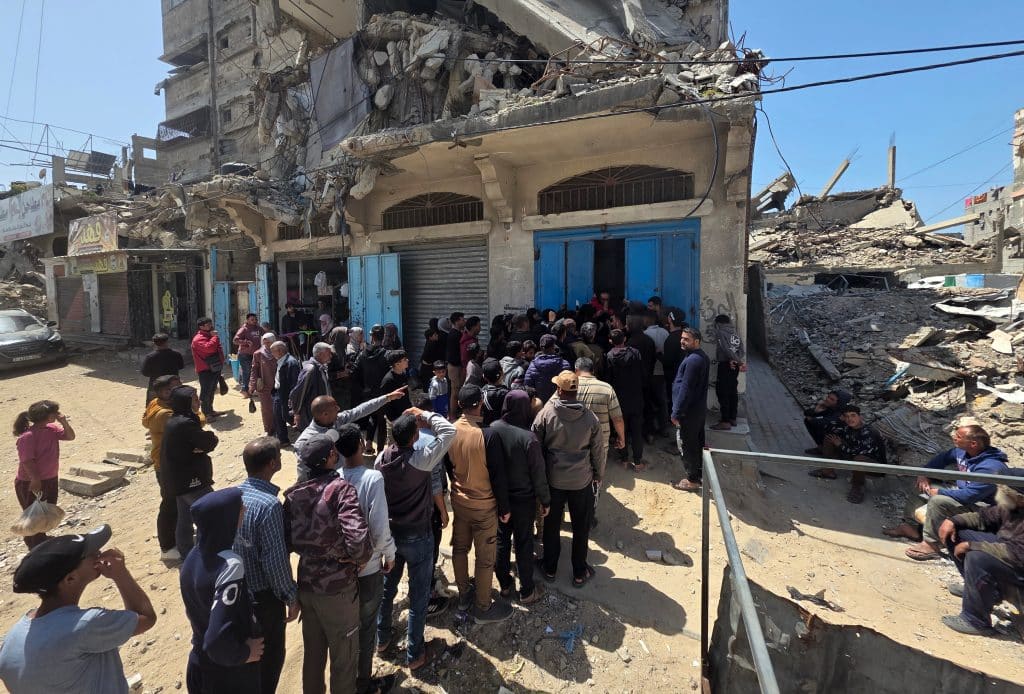 Palestinians line up to obtain bread at a local bakery amid bread shortages in Gaza following the restriction of the entry of aid into the Strip in light of the U.S.-Israeli war on Iran, April 6, 2026. (Photo: Tariq Mohammad/APA Images)
“It always starts with the bread,” he told Mondoweiss. “Whenever there is a shortage in essential goods, bread is the first sign. This is always how it begins. Later, we will struggle to find everything else.”
“We completely depend on the organizations that Israel is fighting,” he added. “When the WFP reduces its supplies to bakeries, we can’t feed our children. When the WHO closes its doors, we can’t treat our sick. And when UNRWA shuts down, we have no educational system or health care. So what does Israel want by fighting these organizations?”
He answers the question for himself. “To leave Palestinians to the unknown, and to strip them of the ability to feed themselves.”
He says this is clear in who Israel targets: “farmers, factories, even people who plant their lands.”
It is infuriating, he added, that the shortages became apparent even during the first week of the war on Iran, because it revealed the extent of Gazans’ total reliance on Israeli cooperation with international organizations. “Israel kept us alive from one day to another, and when they shut down the aid even for a short period, everybody was immediately on the edge of starvation,” he said.