
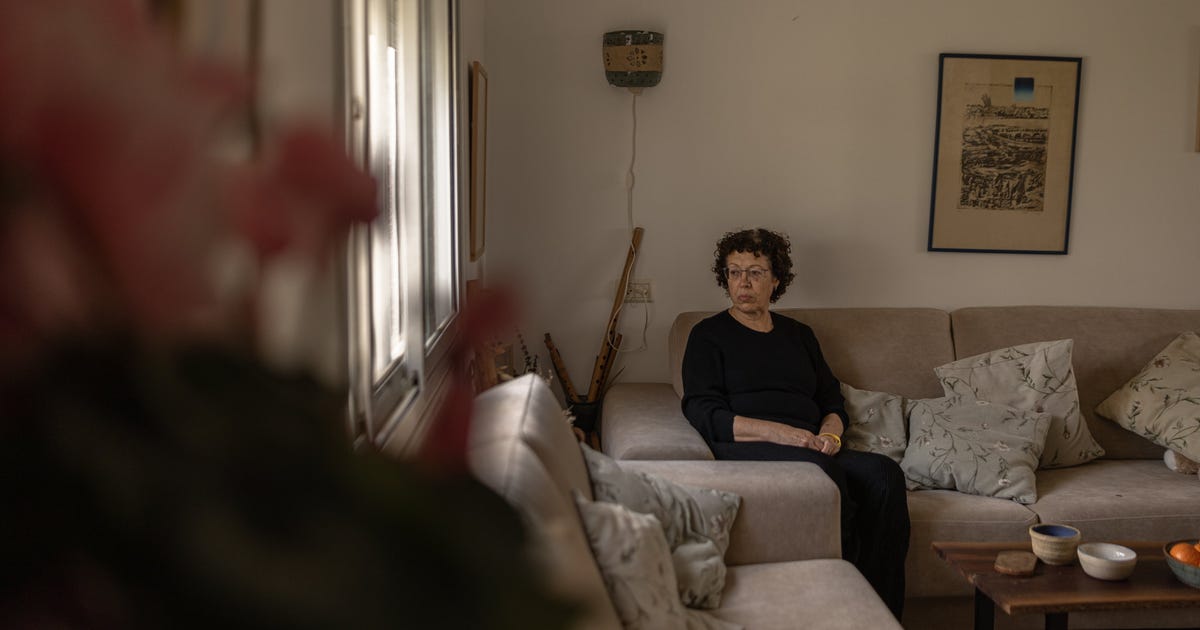
Alon Nimrodi, whose son Tamir was killed in Hamas captivity, finds it difficult to distill his feelings. Many words go through his mind: inferno, longing, anger, pain, distress. He tries to articulate, to characterize, to describe what’s in his heart.
“The truth?” he says, “I’m not sure there are enough words in the Hebrew language to describe the loss of your eldest son.” He long fought to bring his son Tamir back to life. He maintained hope, even when he was almost the only one who still believed. Last October, the hope disappeared without a trace. His anxiety attacks have since become routine. The nights have changed, too. The few dreams in which he saw his son returning healthy have become nightmares. There’s no way back anymore.
Haaretz spoke before Memorial Day to five families of soldiers and civilians who were abducted to the Gaza Strip and killed. They spoke about the muted sense of loss – a situation of prolonged uncertainty about the fate of their loved ones. Although physically absent, they felt the hostages’ presence emotionally and mentally every day, every hour. Their families sought answers, confronted uncertainty and were compelled to struggle for their return.
Such a loss, says. Dr. Einat Yahna, former head of rehabilitation at the Hostage Families Forum’s health division “is considered the most painful in the literature and in clinical history.” Yahna, an expert on trauma, bereavement and ambiguous loss, explains that “the families were in a kind of emotional limbo, moving between anxiety, hope and despair” before receiving final word. Nimrodi’s family is probably the most extreme case. His parents received the official news of his death last, only when his body was returned 740 days after the abduction.
 Close
Close
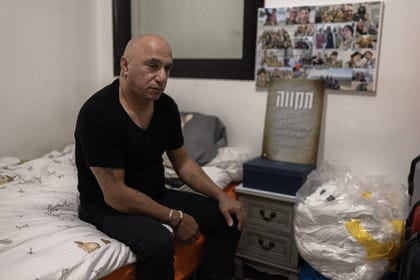
Alon Nimrodi. Even after the final 20 living hostages returned, he didn’t give up believing his son, Tamir, was still alive.
Alon Nimrodi. Even after the final 20 living hostages returned, he didn’t give up believing his son, Tamir, was still alive.
“He didn’t even have to be there, in uniform, on that morning. As a boy, he suffered from anxieties. He didn’t travel by bus, didn’t board trains. The fear of terror attacks petrified him,” his father recalls. “He required therapy. But he underwent a change before conscription. He wanted to do meaningful service, to contribute. He enlisted to be an NCO in the Education and Youth Corps at the base of the Coordinator of Government Activities in the Territories, right on the border. Suddenly, he took public transportation to bases near Ramallah, near Jenin. He overcame his deepest fears.”
He was supposed to spend the Shabbat of October 7 at home, but he volunteered to remain on base. He was with his friends in the situation room until 4:30 A.M. “They begged him to stay, but he said he was tired and that he was on duty the next day, so he left for his quarters,” Alon says.
Two hours later, the attack began. Everyone in the situation room survived. Nimrodi was abducted from the mobile shelter near the barracks with two other soldiers, Ron Sherman and Nik Beizer.
That same day, at about 4 P.M., his family saw the video of his abduction. In it, he looked beaten, perhaps battered, but alive. Hamas published a message two days later to the effect that Nimrodi was killed in a shelling by the Israel Air Force. Several days later, another message came: “Tamir’s body was removed from the hiding place.”
But as far as Israel was concerned, his status remained that of a living hostage. “They told us it was a mind game, psychological terror,” recalls his father. But without information about what really happened, the family was left to commune with their thoughts and fears. “They couldn’t give us any answer, and I shouted and cried out,” Alon says.
 Close
Close
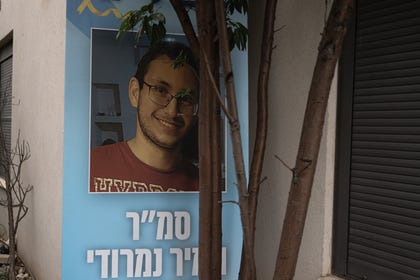
Tamir Nimrodi, 18, who was kidnapped from his base and returned in October. He overcame his fears and insisted on a meaningful military service.
Tamir Nimrodi, 18, who was kidnapped from his base and returned in October. He overcame his fears and insisted on a meaningful military service.
Finally, an officer asked to meet the family. “He tells us laconically that there’s information that ‘apparently’ he was killed,” his father recalls. “I asked him, ‘What do you mean by apparently?’ He had no answer. He just said nothing was definite. So, I told myself that even if there’s a 1 percent chance he’ll return home alive, I’ll go to the moon and back for him.”
At that point Alon Nimrodi decided to devote himself entirely to the struggle. Public declarations, demonstrations, meetings in Israel and abroad. “I did what seemed the right thing for him, so he’d return,” he explains. “But it’s complicated. When your son’s abducted, you don’t get a manual. You act out of pain. When you hit barriers, it only becomes more intense, more unbearable.”
He says not only government and military officials but also the Hostage Families Forum, to some extent, put up hurdles. “They made distinctions between civilians and soldiers, and opposed a campaign for the soldiers. I felt I was alone in this battle for many months.”
Alon Nimrodi didn’t give in. “I’m an optimist by nature,” he explains. “Even if there were breaking points, I had to continue, for Tamir, for my daughters. Even after the last living hostages returned in October, he refused to give up believing that Tamir was still alive. “There are 23 fallen in Gaza and a hostage whose fate is unknown,” he insisted on the eve of the return of Tamir’s body to Israel, on October 15.
The family later learned that the Hamas announcement in 2023 was accurate: On October 9, at 11:46 A.M., the air force attacked a building in the Gaza Strip where many terrorists were allegedly staying. Military Intelligence had no idea that Nimrodi was with them. He was 18 at his death.
After his abduction, they found a note he had written in his shirt pocket, spelling out his aspirations for life: “To be able to help a lot of people, to create a close social circle and not to cause harm.” It’s now framed at their home, a final keepsake.
One message after another
There was a moment when Dalit Oron stopped watching the return of surviving hostages. “I couldn’t bear it. It’d bring me down every time,” she explains. “I’m not an envious person, but at those moments I felt nothing but profound envy. I so much wanted to be in that situation, I would’ve given everything to embrace my son again, to smell him.”
She says she joined the bereaved family in stages. Her son, Idan Shtivi, was declared missing for 90 days. He was reportedly last seen alive around the Nova music festival at Kibbutz Re’im. There was no forensic finding, no intelligence. Then came the first piece of news.
“They told us that the government considered him a hostage,” she explains. “Not because of any findings, simply by process of elimination. They found nothing in Israeli territory, so they started investigating in Gaza.
 Close
Close
Dalit Oron. “Sometimes, I don’t understand how I carry on.”
Dalit Oron. “Sometimes, I don’t understand how I carry on.”
This change, she says, gave her hope. Maybe he’s alive, she thought. “I’d talk to him a lot, encourage him, as though he were next to me. I’d tell him, ‘Idan, you’ll hold out. We’re doing everything. We’ll get you out of there,'” she recalls. “He was a survivor, and he loved people, so I was sure his captors would like him.” She again started to imagine the moment of his return, the first words, the smile. “I washed all his clothes and left his favorite ones on the side, so they’d be clean and ready for him,” she says.
The second piece of news arrived on October 6, 2024. “An entourage came and informed us that they knew for certain that my Idan had been killed,” she recalls. At this point, says Dalit, she decided to accept the news. “I couldn’t continue with that uncertainty and decided to believe,” she says. That was a very, very hard decision, to actually accept his death, without a body.” However, Idan’s father, Eli, publicly cast doubt on the information’s reliability. “I have to feel him with my hands to believe in that,” he explained at the time.
His reaction doesn’t surprise Dr. Ofir Levy, director of the clinic for treating PTSD, in the National Center for Traumatic Stress and Resilience at Tel Aviv University. “The physical absence caused many to seize on a sliver of illusionary hope, which isn’t necessarily related to the facts, and to hold onto it,” he explains.
That reaction repeats itself “because many of them had to accept the news about the death of their loved ones without seeing them with their own eyes and without burying them as in a normal process of mourning and bereavement,” says Dr. Yahna. “They had no closure, creating a prolonged, distorted period of mourning.”
On August 28, 2025, on his mother’s birthday, an army unit extricated Shtivi’s body and returned it for burial in Israel. “Before the funeral, I asked to be alone with the coffin for about an hour. It was just me and him. I wanted to be as close to him as possible,” she explains. “Only after I buried him did I begin to process that I’m a bereaved mother.”
 Close
Close
Idan Shtivi, 28, who was kidnapped from the Nova festival. His mother believed he would endear himself to his captors.
Idan Shtivi, 28, who was kidnapped from the Nova festival. His mother believed he would endear himself to his captors.
However, acceptance is not necessarily relief, certainly not consistently. “There are severe surges of longing,” she describes. “I can be driving and hear a song he loved, and tears well up, without any warning. I feel a hole in my heart, to the point where sometimes I don’t understand how I carry on. But I chose life because that’s what I think Idan would have wanted. Actually,” she corrects, “I’m sure that’s what he would have wanted.”
Dead, alive, dead
In many respects, Hostage Square was a second home for Esther Buchshtab throughout the months of struggle. She was surrounded there by people and support. But on one Saturday in March 2024, that was where she felt most alone. On that day, another Hamas video on Telegram flickered on her phone screen. This time, it showed a picture of her son Yagev, with the caption: “Died from lack of food and medicine.” She remembers how, surrounded by the crowd, she felt utterly alone. How her breathing became heavy, with a feeling that she was on the verge of collapse.
“We have no information,” said the officer who liaised with the family for the military, doing everything but bringing clarity. “We tried to examine the situation rationally,” she recalls. “Yagev didn’t take chronic medication, so it sounded strange to us. We decided not to believe the video and to continue the struggle as if nothing had happened. But you can’t erase the video from your mind. Every piece of information Hamas releases made us wonder – why are they publishing this? What are they trying to say? Who is it aimed at? I felt another level of uncertainty and helplessness being added.”
The first level was built when the war began, after Yagev and his wife, Rimon, were abducted from their home in Kibbutz Nirim. In the first days, they were declared missing. The state was also absent, she says. “No one paid attention to us,” she recounts. “It was a very strange feeling; the state simply wasn’t there.” Even after the military informed the family that Yagev was likely abducted, she remained uncertain.
 Close
Close
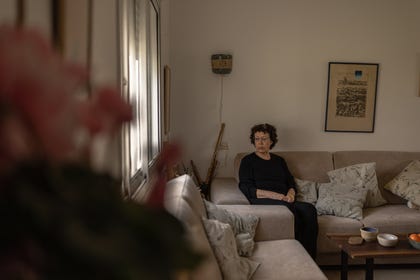
Esther Buchshtab. “It was a great pain, but it galvanized us to fight until the last hostage.”
Esther Buchshtab. “It was a great pain, but it galvanized us to fight until the last hostage.”
A change occurred only after the first female hostages returned to Israel in the first deal. Adina Moshe, Buchshtab recounts, was the first to confirm to them that Yagev and Rimon had been abducted and were alive. A few days later, Rimon was released, and the Buchshtab family began to piece together the story. “She told us very little, trying to hide the difficult details. From others, we understood that they had been abused, and they were treated more cruelly because she and Yagev didn’t want to be separated.”
Months passed. Not much changed, perhaps only the level of anxiety. Then the Telegram video appeared, followed by silence. Only in May did something shift. “An intelligence officer we didn’t know arrived and told us, ‘I have two pieces of difficult news. First, Yagev is not alive. Second, we can’t discuss it because there are intelligence issues,'” Buchshtab recalls.
The family had to figure out how to mourn in silence, how to continue fighting for lives that were already gone. But two weeks later, Buchshtab recounts, another officer came to the family home. The previous message, he said, was not definitive. “‘There is grave concern for his life, but we cannot determine that he is dead,'” he explained, according to Buchshtab.
“Today, when I say ‘grave concern for his life,’ it sounds terrible, but back then, it seemed like the best news in the world,” she says. “Suddenly, there was hope, and we clung to it. We returned to the struggle with renewed strength, with much greater intensity.”
However, that hope also proved false. In July 2024, the family was again called to a meeting. This time, the military said, it was certain; Yagev was dead. “The loss was no longer ambiguous,” Buchshtab recalls. “Hope was shattered. And yet, because of the first mistake, a doubt lingered at the back of our minds, that perhaps they were wrong again. Perhaps he would indeed return.”
In this context, Dr. Levy says, much depends on the level of trust in the establishment. “This is related to how the information was conveyed, its accuracy, and the timing of its delivery,” he says. “Many times, precisely because the establishment wasn’t totally transparent with the hostage families, the feeling grew that perhaps they were mistaken, and hope among the families of the killed hostages rose.”
 Close
Close
Yagev Buchshtab, 35. He was kidnapped from Kibbutz Nirim and returned in August 2024. His family commemmorates his social activism by supporting marginalized communities.
Yagev Buchshtab, 35. He was kidnapped from Kibbutz Nirim and returned in August 2024. His family commemmorates his social activism by supporting marginalized communities.
A month later, all doubts vanished. Yagev’s body was recovered along with five other bodies. The investigation found that terrorists executed Yagev and other hostages by gunfire immediately after the IDF had attacked a tunnel in Khan Yunis in February 2024. They had been in a different part of the tunnel.
A few days after the funerals of the six, the families were called to hear the investigation’s conclusions. “We didn’t express anger,” Esther Buchshtab recounts. “We asked for one thing – that they learn from this and draw conclusions.” A few days later, six more hostages were executed in a tunnel in Rafah. This time, the terrorists did not hear the Israel Air Force attacks. Rather, an army unit was operating nearby, but the result was the same, only the names changed. “It was great pain, but it galvanized us to continue the struggle until the last hostage,” Buchshtab says, “to be a warning sign to the other families that they mustn’t give up, so that their fate would not be like Yagev’s.”
According to the military, 38 hostages were murdered or killed in captivity in the Gaza Strip since October 8, 2023. Activists in the field, as well as members of the Hostages and Missing Families Forum, have cited higher numbers in the past year. Military sources say the difference in data pertains to several hostages who were murdered in Gaza within hours, and sometimes even minutes, of their abduction.
Today, the Buchshtab family is dedicated to preserving the memory of their son’s life. “Yagev was a social activist, and we chose to commemorate him through volunteering and helping marginalized, invisible populations, such as homeless people, asylum seekers, or sex workers,” the mother explains. “It’s very important to me to use our strength positively, towards rectifying the state, not just to sit and mourn. This is our world today, to mourn and grieve while acting.”
Unknown death date
Even today, some of Shlomo Mantzur’s relatives refuse to believe he was returned from Gaza. Despite the National Institute of Forensic Medicine examination and the DNA comparison, they’re not convinced. “They walk around with the feeling that it’s not him,” his sister, Hadassa Lazar, recounts. “They still have nagging questions that give them no rest. It’s hard for them to come to terms with the news.”
At 85, Mantzur was the oldest hostage. He had lived in Kibbutz Kissufim for about 70 years, the eldest of six children and a father of five. He immigrated from Iraq when he was 13, surviving the Farhud pogrom. He never forgot the sights from those attacks – often called “the Kristallnacht of Iraqi Jews.” He also recalled what he saw in his diaries.
 Close
Close
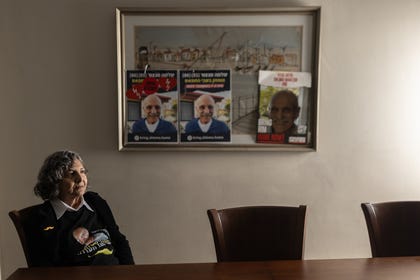
Hadassa Lazar. “I thought perhaps Shlomo was just abducted to some apartment, and intelligence had no information.
Hadassa Lazar. “I thought perhaps Shlomo was just abducted to some apartment, and intelligence had no information.
On October 7, he was again present at a massacre, but this time not as a bystander. Five Nukhba force terrorists broke into his home, fired in every direction, and vandalized everything in sight. They handcuffed Mantzur and beat him. His wife, Mazal, tried to appeal to them. “She asked them, ‘Why are you beating him? He’s an old man; he didn’t do anything to you,’ but they didn’t respond, only demanded the car keys, and she complied,” the sister recounts. As they led Mantzur to the car, his wife managed to escape to the neighbors’ safe room. She survived; he was abducted to Gaza.
As the days passed, public doubt grew in Israel that Mantzur, an elderly hostage weighing 57 kilograms, was still alive. Even senior military officials whispered to journalists that they found it hard to believe he had survived.
Related Articles
Lazar refused to lose hope. “I kept walking with the feeling that Shlomo was alive. I thought perhaps he was just abducted to some apartment, and intelligence had no information. Shlomo spoke Arabic. He’s a smiling person who wins hearts, so I thought perhaps he had endeared himself to his captors.”
In February 2025, Mantzur’s name was moved to the list of killed hostages. “I felt the ground crumbling beneath us, that we were lost,” Lazar recounts. Her brother was returned for burial later that month. “You were our beating heart,” they eulogized him at the kibbutz. His family later learned that he was murdered by gunfire in Gaza. Lazar says they still don’t know if he was shot on the day of the attack or the next day. The family, she says, is still awaiting many answers from the military.
 Close
Close
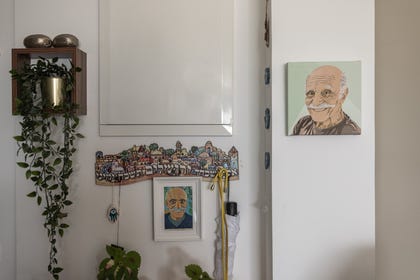
Shlomo Mantzur, 85. He was kidnapped from Kibbutz Kissufim and returned in February 2025. He had witnessed the Farhud pogrom in Iraq as a boy.
Shlomo Mantzur, 85. He was kidnapped from Kibbutz Kissufim and returned in February 2025. He had witnessed the Farhud pogrom in Iraq as a boy.
Since Shlomo’s death, Lazar has carried a burden on her shoulders. “I feel we need to ask for his forgiveness, for not having cried out his cry sooner. Every Shabbat, he would tell me about the incendiary balloons launched at them and how nothing was being done about it. He always told me that no one would wake up until a disaster happened here.”
Still on the battlefield
Itay Chen’s family had one request for the media during their struggle: Don’t use the term “body” but rather “killed hostage.” Ostensibly, this was just terminology, but it was much more for them. “We didn’t feel the word ‘body’ correctly described our son, a heroic soldier who fought and saved many Israelis from a cruel and bitter fate,” his father, Ruby, explains. There was also a more practical reason. “When the word ‘body’ is used, they are defined by death rather than by the fact that they are hostages who must be immediately returned.”
 Close
Close
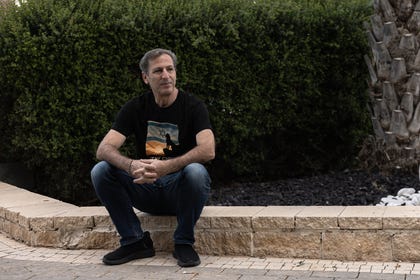
Ruby Chen. “When I met the prime minister, I asked him, ‘On Memorial Day, do you have a place to go see your brother? Where am I supposed to go?’ He had nothing to say.”
Ruby Chen. “When I met the prime minister, I asked him, ‘On Memorial Day, do you have a place to go see your brother? Where am I supposed to go?’ He had nothing to say.”
In March 2024, they received notification of Itai’s death. He was killed in battle at the Nahal Oz outpost, while fighting with his tank crewmates, Matan Angrest, Daniel Peretz, and Tomer Leibowitz, to stop the many terrorists who had infiltrated there. The news of his death did not cause his parents to ease off the gas pedal of their struggle; the opposite was true.
“For us, what defines Itai more than anything else, being a hostage, hasn’t changed,” says Ruby. “When they told us we could sit shiva, we said, ‘What would we sit for?’ This was a kind of defiance against the system, the prime minister and the military – ‘Guys, you haven’t finished the job by telling us he was killed on October 7; you need to bring him back.’ When I met the prime minister, I asked him, ‘On Memorial Day, do you have a place to go see your brother? Where am I supposed to go?’ He had nothing to say.”
 Close
Close
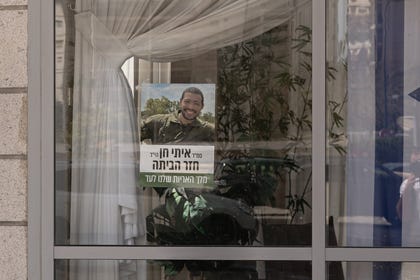
Itay Chen, 19. Kidnapped from the Nahal Oz base and returned last November. He and his comrades stopped many terrorists who had infiltrated into Israel.
Itay Chen, 19. Kidnapped from the Nahal Oz base and returned last November. He and his comrades stopped many terrorists who had infiltrated into Israel.
Last November, after 760 days, Chen was returned for burial in Israel. However, his parents, who did not relent in their struggle even after learning of his death, feel they are still on the battlefield – even if the adversary has changed slightly. “I asked that his gravestone not just say ‘killed in battle,’ but ‘killed in battle and abducted,’ but the system refuses,” says Ruby, adding that he sees this as a symptom of a broader process. “The state, for its own reasons, prefers to obscure the failure regarding the hostages, especially the fallen, and chooses to emphasize only those who returned alive.”
He also stresses the issue of looking after the hostage families after the matter has fallen off the public agenda. About two months ago, 255 – The Organization for Families and Hostages sent an appeal to the Knesset. “Unlike with the families of the returned hostages, the abduction didn’t end for families of killed hostages with the return, but rather became a terrible struggle with bereavement and loss,” it stated. “The family must cope simultaneously with the trauma of the abduction and with the bereavement, with the memory of hope and with the void created when a relentless struggle suddenly became permanent grief. Besides psychological damage, there is substantial occupational and economic collapse.” The NGO called for setting up a system for bereaved relatives to receive disability benefits due to psychological and physical harm. The recommendation remains on paper.
The lack of rights isn’t the only issue troubling bereaved families. So does accountability. “We haven’t heard regret or an apology from state representatives,” Esther Buchshtab notes. “As long as there’s no state commission of inquiry, I won’t forgive. It shows they haven’t understood the abandonment that occurred and continues. In Yagev’s memory, and in memory of all the others, I want our lives, our society, our state to be repaired. Only then can it begin. This is the only way.”