
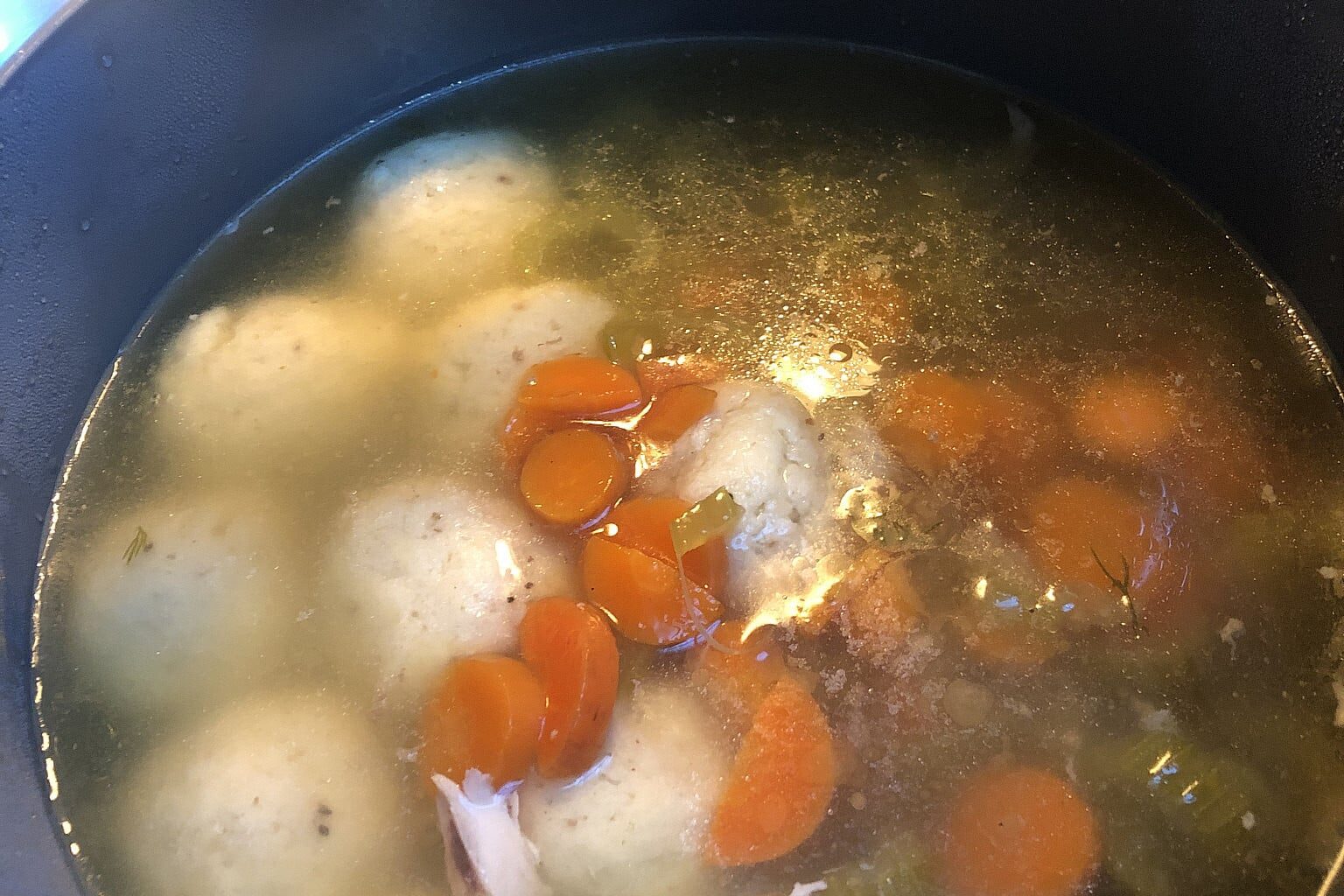
I never thought that after leaving Israel, the holidays would be something I missed.
For me, holidays were always synonymous with family. They smelled like my mother’s latkes, Bubba’s matzah ball soup and my aunt’s brisket that I never touched but everyone loved. They looked like a table crowded with loved ones, laughing through prayers and slipping easily into the nostalgia of what once was.
My first Hanukkah in Israel was a stark contrast to that warmth. I was living with an Israeli roommate a few years older than me. We weren’t close, but she made an effort, frying latkes that we sat around eating on the floor at our coffee table. She invited a friend over, and the two of them spoke in Hebrew, a language I didn’t understand and still don’t. I sat there, a quiet participant in a half-attempt at inclusion, aching for the routines I had left behind. At that moment, Israel felt like a place where I was merely a spectator to someone else’s tradition.
Now, two and a half years after moving from Tel Aviv back to New York, that perspective has flipped. Distance has a way of clarifying what we once took for granted. While I used to long for the familiarity of my family’s table, I now find myself longing for something far less tangible, the collective pulse of a country that moves together.
There is an unmatched authenticity in watching an entire nation shift its rhythm for a holiday. I miss the frantic energy of the supermarkets, aisles overflowing as people gather ingredients at the last minute. The flower buckets on the corner of Dizengoff and Gordon, crowded with customers searching for the perfect centerpiece. The effortless “Chag Sameach” exchanged between strangers at the bank, in coffee shops, in passing on the street.
It’s a kind of togetherness that’s hard to explain to anyone who hasn’t lived it.
In the two years leading up to October 7, I found myself slowly woven into the fabric of Israeli life. I celebrated holidays with friends and their families, adapting my own rituals to match theirs. I began to understand that in Israel, the holiday doesn’t happen to you, you step into it. You become part of something already in motion, something you don’t have to search for because it’s already found you.
I miss the certainty that on Hanukkah, nearly every home is lit by the glow of a menorah. That friends and families gather together to light the candles every single night.
But more than anything, I miss the moments when the personal becomes national.
On Yom HaZikaron (Memorial Day), when the 10:00AM siren pierces the air, the country doesn’t just observe, it stops. Drivers pull over on the highway. Shoppers stand still in the aisles. Conversations fall away. For one minute, an entire nation holds the same breath.
It’s a kind of togetherness I haven’t found anywhere else.
Now, in New York, these moments look different.
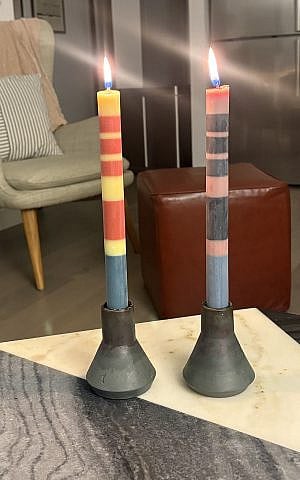 I light Shabbat candles (often) alone in my apartment, the quiet stretching a little longer than I expect. I find myself searching for dinners to join, for spaces that feel like they could be mine. Rooms full of people that don’t quite fit, gatherings that often come with a price tag, or a version of community that feels just out of reach. I don’t speak Hebrew so it’s challenging to be in with an Israeli crowd, and the New York Jewish scene doesn’t feel like me either. I know there are different versions, but I have yet to find a community that feels like mine, aside from individual friends who I’ve acquired over the years.
American holidays, especially ones like July 4th (Independence Day), often feel like they’ve drifted into something else entirely. They’re marked by sales, by long weekends, by parties and crowded beaches. The meaning is still there, somewhere beneath the surface, but it’s not something you feel collectively, not in the same way. It doesn’t stop you in your tracks or ask anything of you. It’s easy to participate without ever fully stepping into it.
And still, I know how much I have here.
I am back at the table I once longed for, surrounded by family, by the traditions that first taught me what these moments could feel like. There is comfort in that, a kind of rootedness I will always be grateful for.
But I also know there is another version of belonging I once lived inside.
Because in Israel, it was never something I had to seek out or recreate. It was everywhere. It found you. The invitations to join Shabbat meals and holidays were endless.
And I didn’t realize how rare that was until I left.
Because once you’ve known what it feels like to be part of something larger than yourself, to move in rhythm with millions of others, all marking the same moment in time, you don’t forget it.
You just learn to hold both: the gratitude for what is here, and the quiet longing for what once was.
Harper Spero is a business coach, community builder, storyteller, and the creator of Made Visible. After years of visiting Israel after Birthright, she made Aliyah in 2021 after falling in love with Tel Aviv. She’s returned to New York City where she grew up but her heart remains in Israel.