
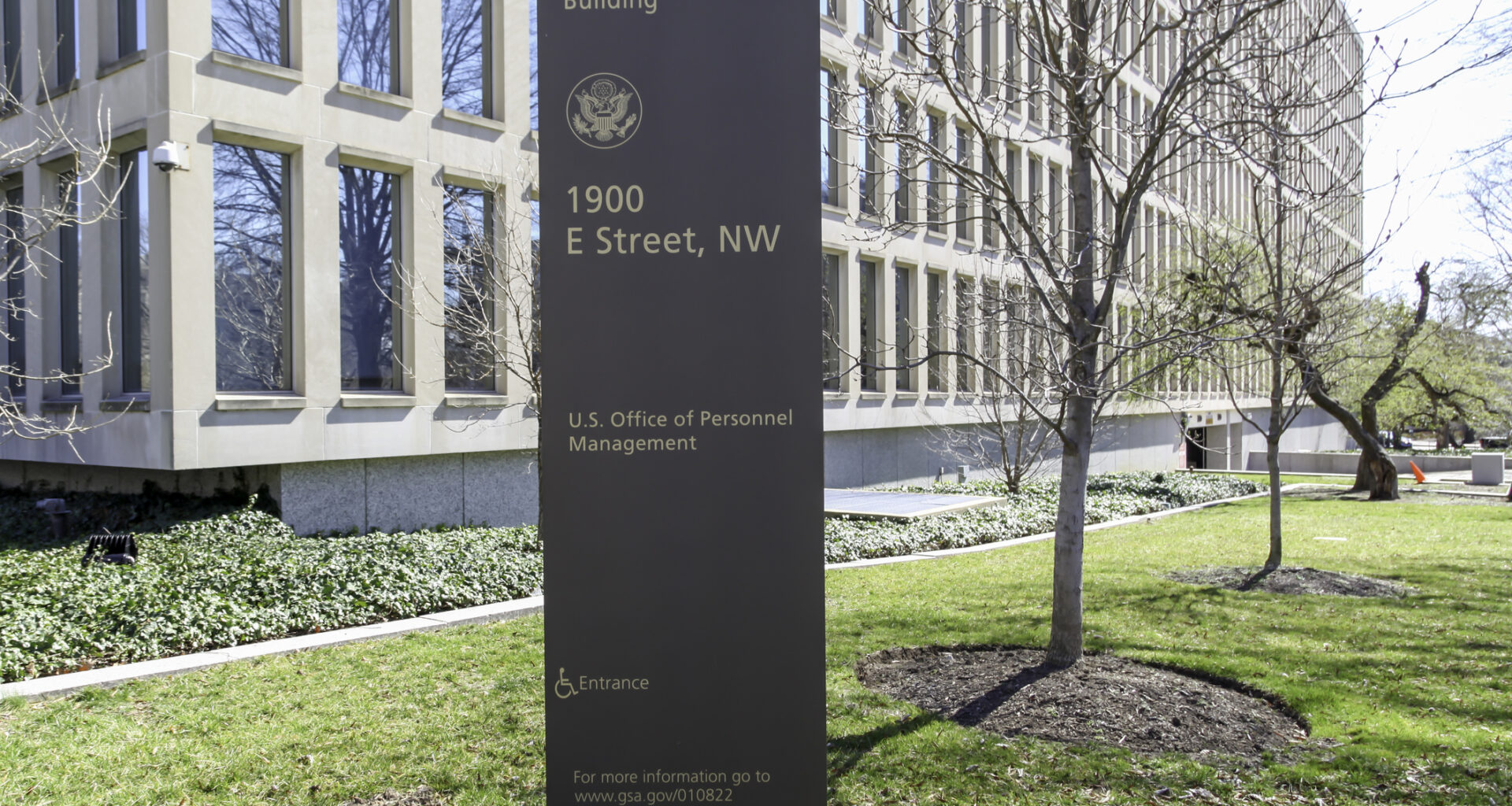
The Office of Personnel Management and the General Services Administration — the federal government’s human resources office and landlord, respectively — are embarking on plans to move under one roof.
GSA will temporarily relocate to OPM’s headquarters, the Theodore Roosevelt Federal Building, starting in July, while GSA’s 1800 F St. headquarters goes through a renovation.
In December 2028, GSA will move back into its renovated headquarters, along with OPM. Once consolidation is complete, GSA says it will initiate an “accelerated disposal” of OPM’s old headquarters building.
A prospectus posted on GSA’s website states the headquarters modernization will cost $239 million in total and will be completed in fiscal 2031. The document, signed in June 2025, calls for a “full-scale modernization” of GSA’s headquarters, and states that the project provides the “opportunity to backfill and consolidate space for federal agencies to maximize space utilization.”
]]>
GSA wrote that only a portion of its building, originally built in 1917 to serve as the Interior Department headquarters, has undergone comprehensive modernization since its construction. Under its previous leadership last year, GSA proposed moving out of its headquarters.
“The remaining wings continue to rely on outdated systems that have exceeded their useful life and no longer meet current safety, accessibility, or performance standards,” GSA wrote.
This is the latest shakeup of federal buildings under the Trump administration. Several agencies in the Washington, D.C. area are moving out of headquarters that aren’t meeting minimum occupancy requirements recently set by law.
GSA Administrator Edward Forst told reporters on Monday that these two agencies are setting an example governmentwide to “maximize every square foot and deliver real value to the American people.”
“For too long, the federal government has paid for space it doesn’t use, buildings it cannot afford to maintain, and in some cases, cannot even occupy. That ends now,” Forst said.
The first Trump administration proposed merging OPM and GSA into a single agency, but ultimately walked away from those plans. In addition to managing a governmentwide real estate portfolio, GSA provides contracting and IT support to other federal agencies.
OPM Director Scott Kupor said there are no talks of a possible merger of the two agencies.
]]>
“The answer is unequivocally no,” Kupor said. “In the prior [administration], there was, of course, conversations. Those conversations are not live today. We’re excited to be partnering with Ed [Forst] in terms of real estate, and there’s lot of things, obviously, our organizations do together, but there’s no discussion around consolidating the organizations of GSA and OPM, other than in our physical footprint.”
Forst told reporters that GSA and OPM employees will soon be “working together and hopefully finding other things, even just as a community of federal employees, that our organizations can do together.”
Renovations of GSA’s headquarters are necessary, Forst said, because 40% of its current space is “uninhabitable.”
“Think about that, the agency that’s responsible for managing the government’s real estate portfolio has not been allowed to properly maintain its own headquarters. That’s the problem, and today we’re solving the problem. No excess, no wasted space, no status quo,” he said.
Under the USE IT Act that former President Joe Biden signed into law in his final weeks in office, agencies must either meet the 60% minimum occupancy standard or come up with ways to downsize their office space.
Forst said OPM’s headquarters is seeing a more than 50% utilization rate on average, but will comply with the USE IT Act requirements once GSA employees temporarily share at the Roosevelt Building.
“As of July, when the team moves over, we’re going to be at or above, quite frankly, 100% utilization for that building,” he said.
“We will be very tightly packed, I think, for the next couple of years, but it’s going to be great,” Kupor said. “The buzz in that building is going to be amazing, like it’s never been, because we are going to be literally kind of busting at the seams. But what that does for the taxpayers, it means we are not spending money on unutilized real estate, so both of us will be at full capacity.”
The Trump administration, so far, has announced plans to sell headquarters buildings for the Agriculture Department and the Department of Housing and Urban Development.
]]>
The FBI is also moving out of its headquarters building and relocating to the nearby Ronald Reagan Building, which already provides office space for several other agencies.
The Education Department recently announced it will move out of its headquarters, the Lyndon B. Johnson building, by August and transfer employees to a building that previously held USAID employees.
The Energy Department will move out of its headquarters, the James Forrestal building, and relocate staff to the Education Department’s headquarters.
The Public Buildings Reform Board, which advises GSA, recommended that the Trump administration sell the Energy Department’s headquarters.
GSA data shows that none of the more than 9,700 buildings at 22 large agencies that submitted data are meeting the 60% utilization threshold under the USE IT Act.
Sen. Joni Ernst (R-Iowa), chairwoman of the Senate DOGE Caucus, who has long scrutinized the federal government’s underutilized federal office space, said GSA and OPM’s plans demonstrate that the Trump administration is “putting more space to work.”
“When it comes to GSA and OPM, they’re not telling others to do what they are unwilling to do themselves. They are leading the way through this collaboration, through the combination of their two spaces,” Ernst said. “Bottom line, if taxpayers are paying for rent, then the government must actually be using that space.”
If you would like to contact this reporter about recent changes in the federal government, please email jheckman@federalnewsnetwork.com, or reach out on Signal at jheckman.29
Copyright
© 2026 Federal News Network. All rights reserved. This website is not intended for users located within the European Economic Area.