
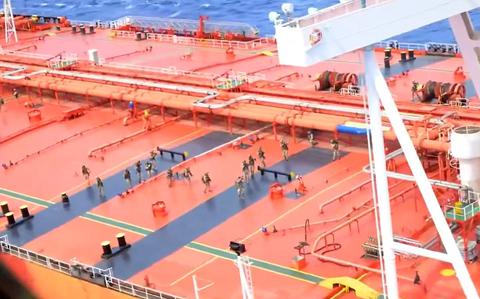
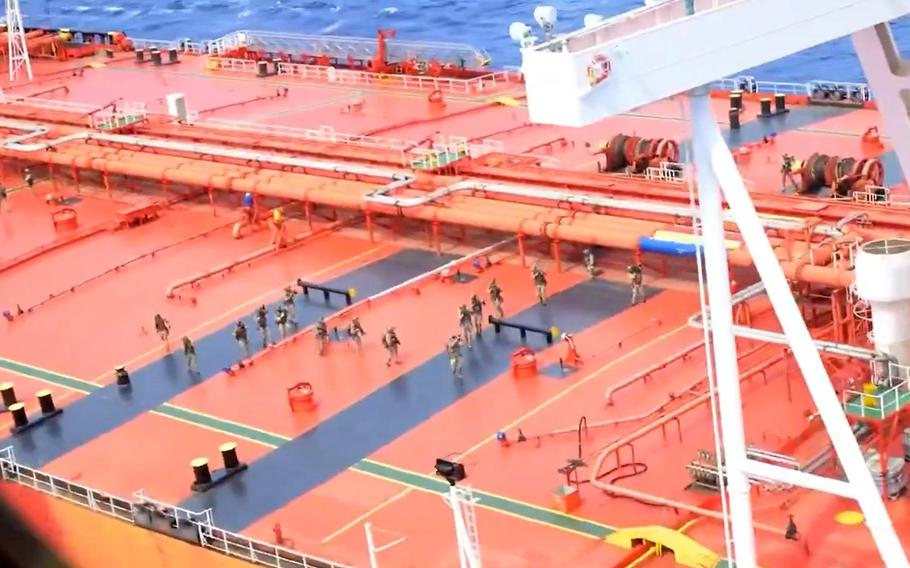
U.S. forces conduct a right-of-visit boarding of M/T Tifani in the U.S. Indo-Pacific Command area of responsibility in this screenshot from a video posted to the Defense Department’s X account Tuesday. The Pentagon said the inderdiction and boarding operation occured without incident. (Defense Deparment/X)
U.S. forces conducted an interdiction and boarding of a stateless, sanctioned oil tanker in the Indo-Pacific region, the Pentagon said Tuesday, highlighting the global effort to pressure Iran as ceasefire negotiations continue.
Video footage shared by the Defense Department showed service members rappelling from helicopters onto the deck of the M/T Tifani. A ship by the same name was last reported in the Indian Ocean sailing under the flag of Botswana, according to ship tracker MarineTraffic.com.
The Pentagon said the operation occurred without incident.
“As we have made clear, we will pursue global maritime enforcement efforts to disrupt illicit networks and interdict sanctioned vessels providing material support to Iran—anywhere they operate,” the Pentagon said in an X post.
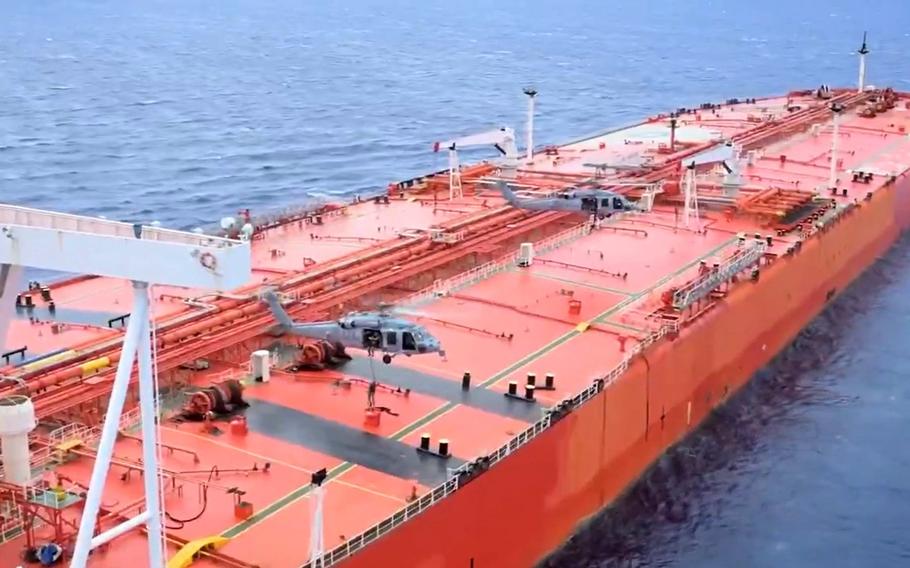
U.S. forces rappel from helicopters onto the deck of the stateless M/T Tifani in the U.S. Indo-Pacific Command area of responsibility in this screenshot from a video posted to the Defense Department’s X account Tuesday. M/T Tifani is the second vessel the U.S. has halted in recent days as it seeks to exert maritime control over Iran’s supply networks. (Defense Deparment/X)
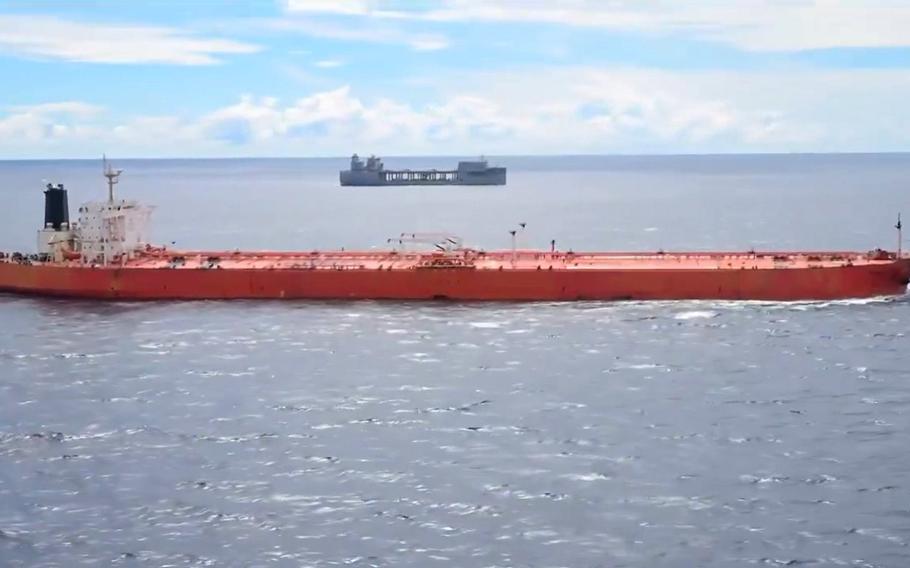
The stateless M/T Tifani is shown in front of USS Lewis B. Puller in the U.S. Indo-Pacific Command area of responsibility in this screenshot from a video posted to the Defense Department’s X account Tuesday. U.S. forces conducted an overnight interdiction and boarding of the sanctioned oil tanker, the Pentagon said Tuesday. (Defense Deparment/X)
This is the second vessel the U.S. has halted in recent days as it seeks to exert maritime control over Iran’s supply networks. Over the weekend, the U.S. Navy guided-missile destroyer USS Spruance captured an Iranian-flagged cargo vessel attempting to pass through the naval blockade near the Strait of Hormuz.
The U.S. instituted the naval blockade on Iran-bound vessels last week in an attempt to wrest control of the strait from Iranian forces, which have virtually blocked traffic in the vital trade corridor since the war began in late February.
The blockade includes ships carrying a variety of items deemed contraband by the United States, including weapons, ammunition, nuclear materials, oil products, as well as iron, steel and aluminum bound for Iran.
In its first week, the blockade has redirected at least 27 ships, according to U.S. Central Command. But Pentagon leaders have made clear that they’re willing to go after ships outside the Middle East region.
Joint Chiefs of Staff Gen. Dan Caine last week described the U.S. mission as a blockade on Iran’s ports and coastline, not a blockade on the strait itself.
Enforcement of the blockade will occur in other areas of responsibility, he said, including the Pacific.
The interdiction of the crude oil tanker comes as Vice President JD Vance prepares to lead a delegation of U.S. officials to Pakistan for another round of negotiations with Iran. A temporary two-week ceasefire deal is scheduled to expire on Wednesday unless the deadline is extended or the parties come to a resolution.
Iran has given mixed messages on whether it will attend the talks.
President Trump, speaking in an interview on CNBC, struck a more aggressive tone when asked whether he would extend the ceasefire.
“I expect to be bombing because I think that’s a better attitude to go in with,” Trump said, adding: “We’re ready to go. The military is ready to go.”
Iran and the U.S. remain far apart on key issues, including control of the strait and the future of Iran’s nuclear program. Trump has said the U.S. plans to confiscate what remains of Iran’s enriched uranium, while leaders in Tehran have framed the proposal as a nonstarter.