
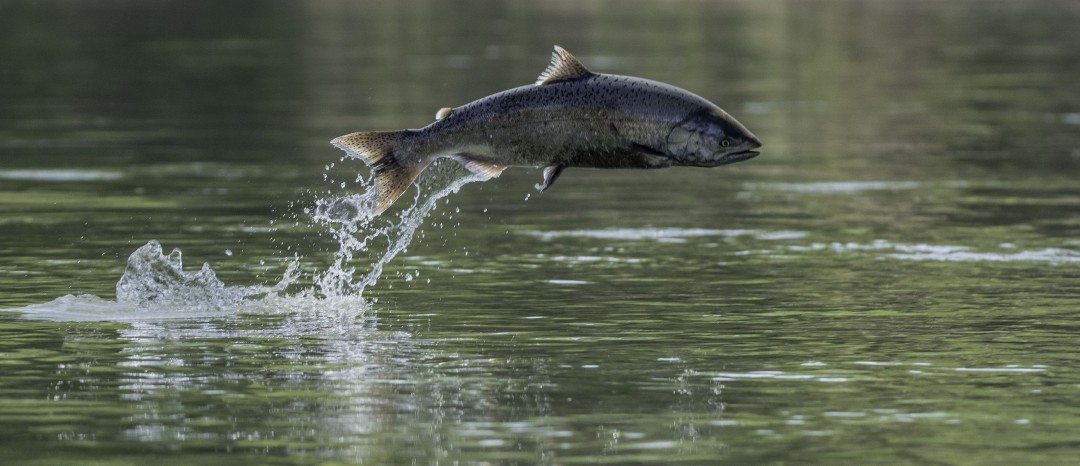
Cocaine isn’t just a human problem—it may be quietly rewiring salmon, too. A new study suggests that traces of the drug and its main by-product, flushed into rivers and lakes, can build up in young Atlantic salmon and alter how they move around. Swedish researchers implanted slow-release doses of cocaine, its metabolite benzoylecgonine, or a neutral substance into juvenile salmon, then tracked them for two months in Lake Vattern using acoustic tags, reports the Guardian.
All the fish eventually settled into defined areas, but the drug-exposed salmon stayed more active and roamed farther, per the research published in Current Biology. In the final weeks, cocaine-dosed fish swam about 3.1 miles more than the control group; those exposed to the metabolite logged nearly 8.7 miles extra and pushed farther north into the lake, indicating higher energy use and possibly greater exposure to predators. The metabolite—common in real-world waterways—had the strongest effect, raising concerns that current pollution risk assessments may be overlooking key compounds.
Scientists say more work is needed to see if similar shifts appear in wild fish, but they argue that better sewage management and reduced raw discharges could help limit whatever ecological fallout is building below the surface. The New York Times notes that cocaine isn’t the only pollutant finding its way to salmon: Traces of ibuprofen, Benadryl, Prozac, and Lipitor have been found in the tissue of juvenile chinook in Washington’s Puget Sound.