
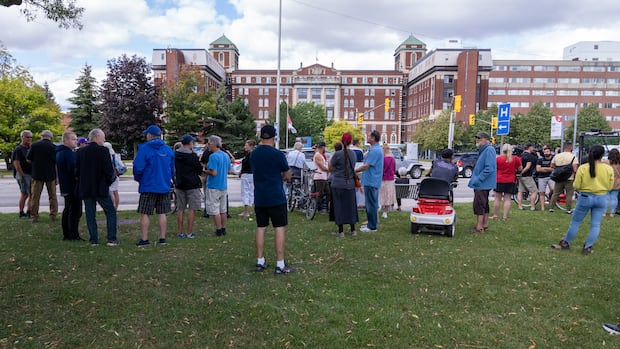
Councillors have passed a controversial “bubble bylaw” that will restrict protests in Ottawa near hospitals, schools and places of worship, after a fraught debate about a secret opinion on possible legal issues.
The vote at Wednesday’s council meeting was the final step to passing the bylaw. It passed 20 to 4, with only Couns. Shawn Menard, Sean Devine, Jessica Bradley and Ariel Troster voting against.
Supporters said the bylaw is needed to maintain safe access to those sites, as well as nursing homes and daycares. It would allow those institutions to apply for a 50-metre buffer zone extending from the entries to the facilities, banning most protests inside that boundary.
The bylaw has exceptions, including for labour demonstrations. Supporters said it would survive constitutional challenges.
“Great care has been taken here to make sure that everyone’s rights are being protected,” said Mayor Mark Sutcliffe. “I think this strikes the right balance. I think it is reasonable.”
But opponents weren’t so sure. Before voting, they tried to discuss an external legal opinion on the bylaw that has been kept confidential.
Debate over transparency
Devine said the opinion “speaks to significant risk” and moved to have council go behind closed doors so they could ask staff questions about it.
“In my opinion, it is important that council as a whole has the benefit of hearing that advice before we make a final decision,” he said.
Coun. Matt Luloff said other councillors had “ample opportunity” to read the opinion privately, but Devine suggested that only a minority of councillors have actually done so.
Devine’s motion lost in a 17 to 7 vote. Some councillors worried that council is moving behind closed doors too often at the cost of transparency – and instead pushed to discuss the opinion openly.
Do we all want to light ourselves on fire and open ourselves up to lawsuits?- Coun. Tim Tierney
Menard made a motion to lift privilege on the opinion and do just that, before facing a furor from other councillors that he was putting the city at legal risk.
“I can’t think of any municipality that is stupid enough to do that,” said Coun. Tim Tierney. “Do we all want to light ourselves on fire and open ourselves up to lawsuits?”
Stuart Huxley, the city’s top lawyer, urged councillors to be “very careful” about lifting privilege.
“It could for example give unintended consequences of providing a roadmap to potential litigants,” he said.
But Menard said council’s reluctance to lift privilege proved his point: that there’s more constitutional risk than supporters are willing to admit.
“Then debate it in the open. But you won’t do that,” Menard said. “You won’t do that because you know there’s legal issues.”
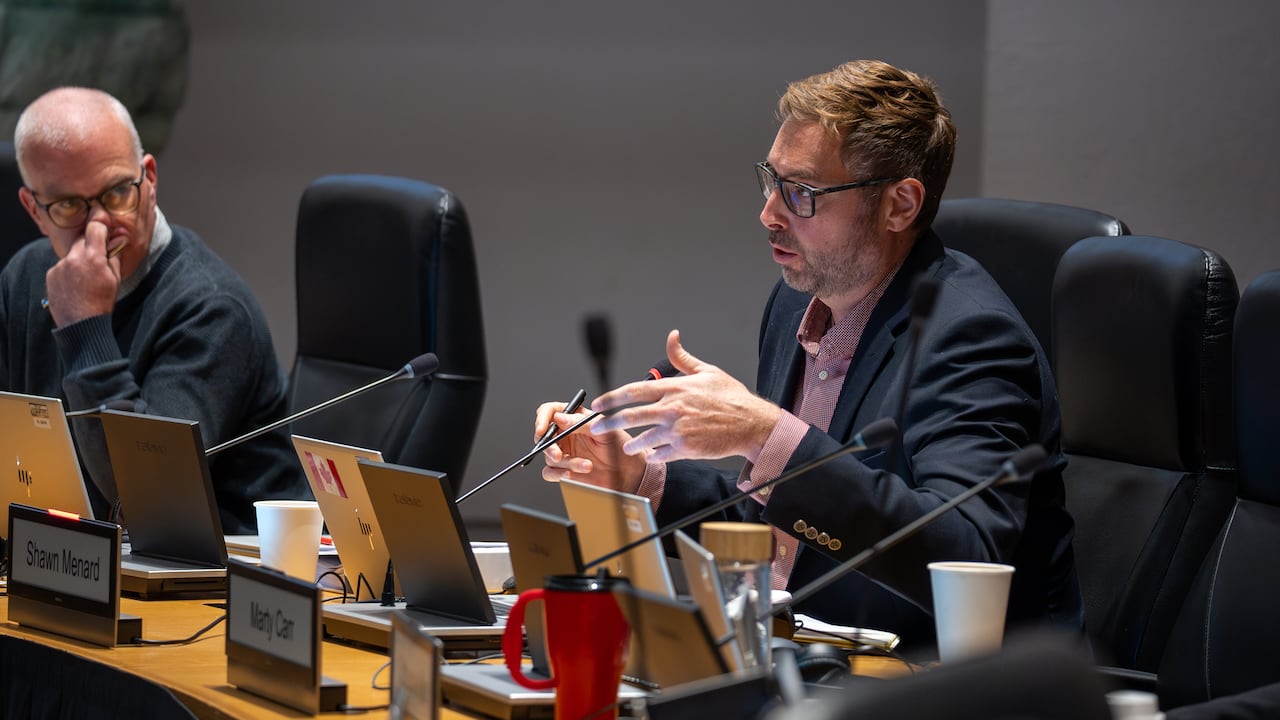 Coun. Shawn Menard, seen here at council last year, put forward a motion to lift the privilege around the legal opinion on the bylaw. He later withdrew it. (Francis Ferland/CBC)Constitutional challenges elsewhere
Similar bylaws in Calgary and Vaughan, Ont., have been subject to constitutional challenges. Huxley recently updated council on an Alberta decision that upheld Calgary’s bylaw while scaling it back.
Menard withdrew his motion, before turning to criticize the bylaw as a whole.
He said it’s already illegal to block access to the sites mentioned in the bylaw, and that in his view, that isn’t what the bylaw is about.
Menard said the bylaw would gag essential protests about the “deplorable conditions” in long-term care homes or against cuts to education.
“This city is about to ban dissent of these things [within] more than half a football field of the very institutions and actors that require checks and balances in a healthy society,” he said.
But Coun. David Hill, a strong supporter of the bylaw, said there has been an “outcry” from vulnerable communities for help from the city.
“They want to be safe when they go to their school to their place of worship or their hospital, and they do not feel safe,” he said.
Luloff said freedom of expression can’t come at the expense of someone’s right to simply go about their day, or access a place of worship or medical care.
“This bylaw draws a careful and necessary line,” he said.
Other motions fail
But several councillors struggled with the decision.
Troster, who had supported the bylaw at committee last week, changed her vote at council on Wednesday, saying there were too many unknowns.
“Will this prevent students from protesting in front of their own schools? How will protesters be seen and heard 50 metres away from the injustice they are demonstrating against?” she asked.
“Should we really be protecting a faith institution if they host a transphobic speaker or preach that marriages like mine should not be allowed to exist?”
Bradley made a motion to ensure the bylaw wouldn’t apply when a facility is being used by a third-party for an event outside its normal purpose. That failed in a 14 to 10 vote.
Devine moved the same motion he tried and failed to pass at committee, to remove the blanket ban on protest and instead only restrict conduct that blocks access. That failed too, 18 to 6.
As for the criticism from Menard and others about frequent secret meetings behind closed doors, Sutcliffe said that’s been forced on council by the matters they’ve been confronted with — including legal issues surrounding the LRT.
“It’s not because of a desire for secrecy,” he said. “It’s because of the hand we were dealt.”
After the vote, councillors went behind closed doors to discuss a collective bargaining issue.