
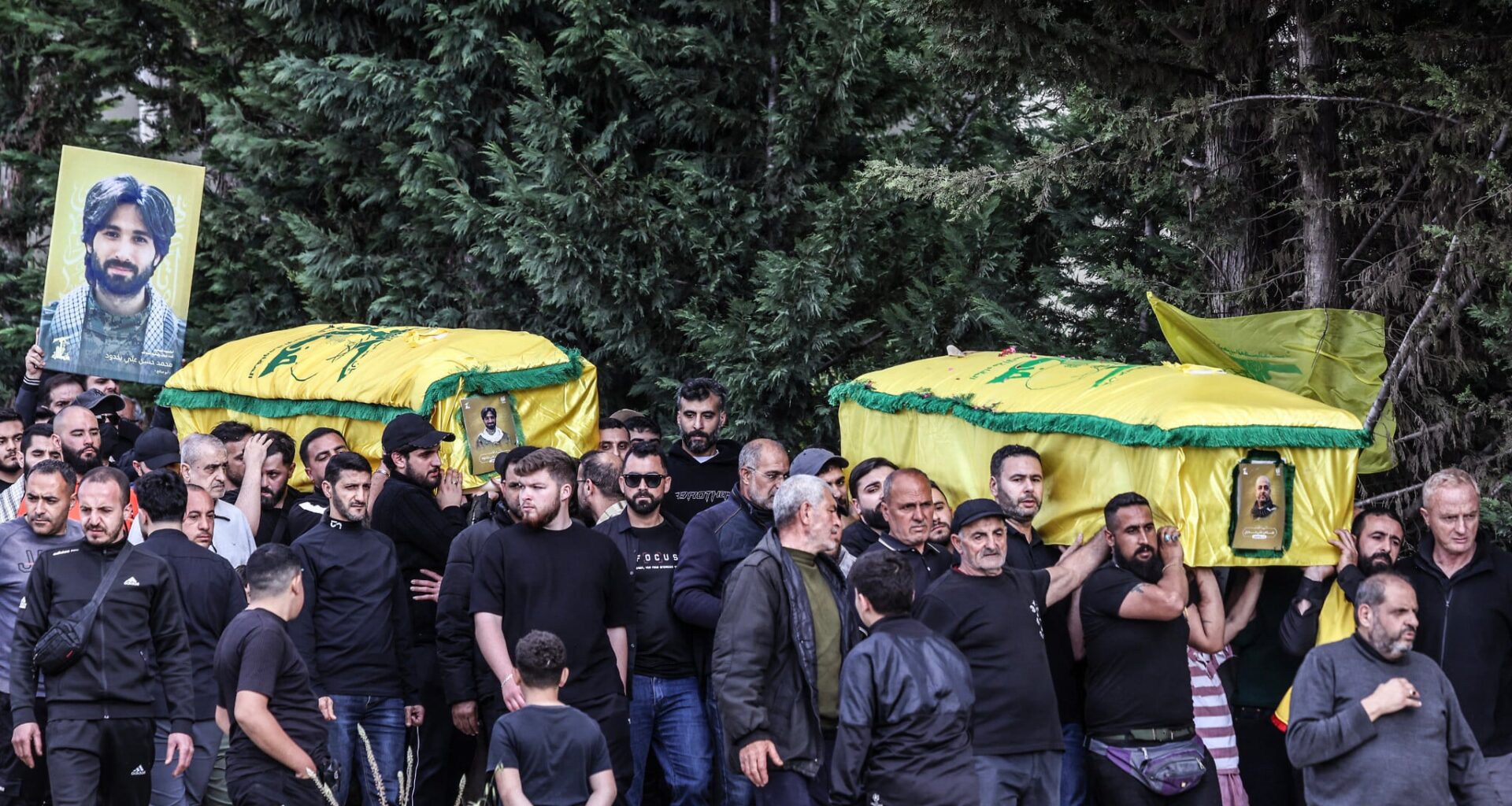
KFAR SIR, Lebanon — Lebanese town official Sharif Badreddine begged his youngest son not to leave to fight for Hezbollah against Israel in the country’s south, but as the tearful father buried his child, he did not hide a sense of pride.
In the face of a government push to disarm the terror group, its supporters call on a long-held enmity with Israel, deep religious beliefs and backing from Iran to justify their sons’ sacrifice in the organization’s latest war that has killed thousands in Lebanon.
“Before he left, I told him, ‘Don’t go, the situation is bad,’” Badreddine, 67, told AFP.
But his son Ahmad, who was in his twenties with two children, insisted, leaving his father no choice but to accept his death as a necessary sacrifice for his homeland.
Israel has fought several wars with Hezbollah and other armed groups in Lebanon since the 1970s. The Iranian-backed terror group is bent on the destruction of the Jewish state.
Get The Times of Israel’s Daily Edition
by email and never miss our top stories
By signing up, you agree to the terms
“I am proud of him. He was martyred on the front lines. This is an honor for me,” said the grieving father, who last saw his son six weeks ago. “He was defending me, all of southern Lebanon, and all of Lebanon.”
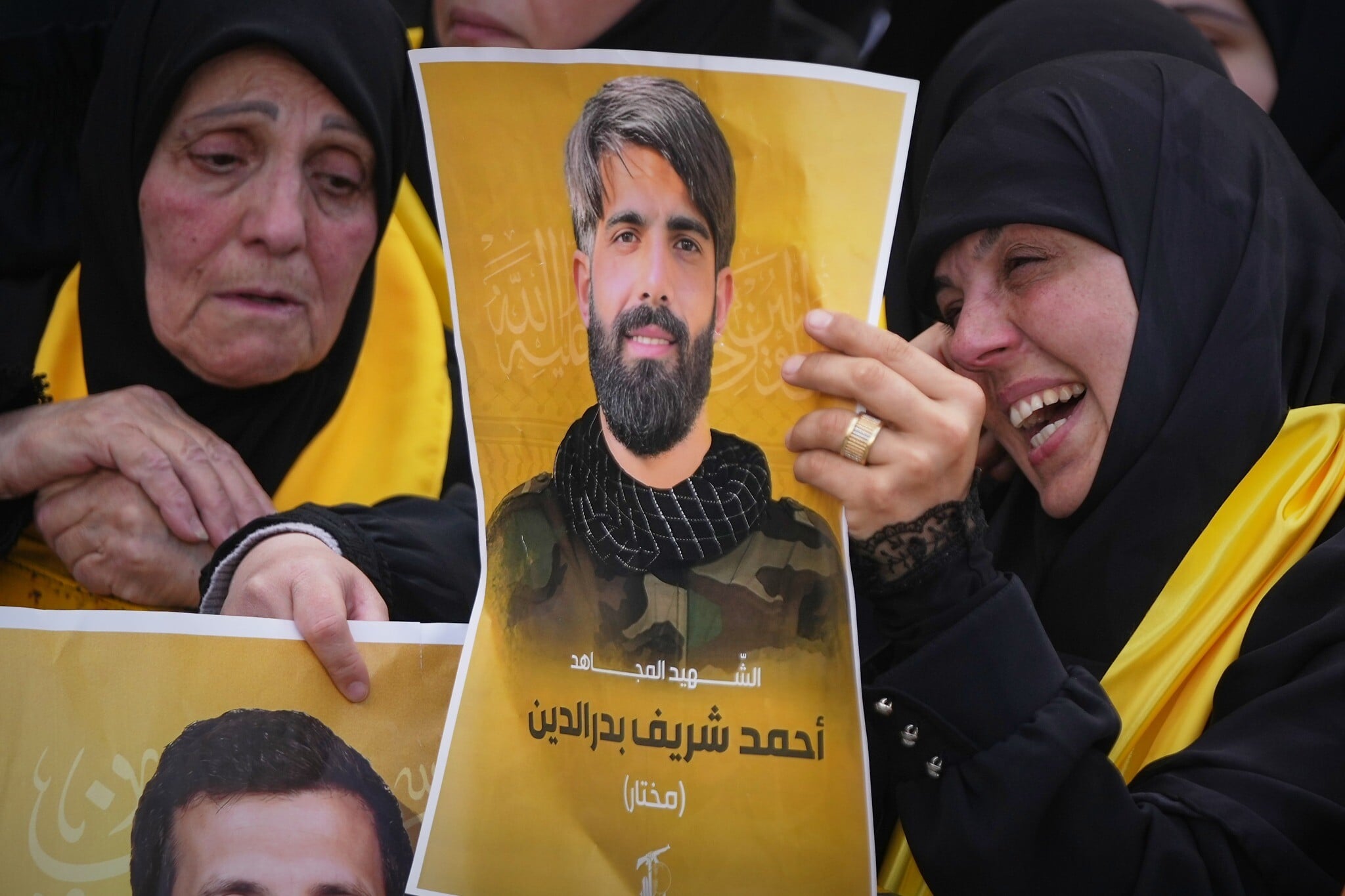
Women mourn while holding portraits of Hezbollah fighters killed before the ceasefire in the war between Hezbollah and Israel during a mass funeral procession in the southern village of Kfar Sir, Lebanon, April 21, 2026. (Hassan Ammar/AP)
As the father buried his son alongside 13 others, including two rescuers, in southern Lebanon’s Kfar Sir, a 10-day truce between Israel and Lebanon that began on Friday had brought some calm to the area.
Israel conducted huge strikes across Lebanon, including Kfar Sir, and invaded the south after Hezbollah on March 2 began pummeling northern Israel with rockets and drones in support of its backer Iran, which came under attack from a joint US-Israeli campaign. The fighting has killed more than 2,400 people according to Lebanese authorities, who do not distinguish between fighters and noncombatants.
The ceasefire led displaced residents of the town, which sits 15 kilometers (nine miles) north of Israel’s border, to return and mourn the 14 men, some killed in Israeli strikes and others in clashes with IDF troops.
“These young men did us proud. They forced the Israelis to retreat. The Israelis were unable to achieve their goals,” said father of five Badreddine, one of the few who remained in the town.
If his other son decided to fight, he said he would hold his head “high thanks to him too.”
‘The last inch’
Faces in the crowd were filled with gloom and sadness as mourners waited for the Hezbollah-organized ceremony to begin.
The men’s pictures were hung around the town, and when their coffins draped in Hezbollah’s yellow flags reached its square, women in black ululated, wept and threw roses and rice from balconies.
Amena al-Shami stood looking at her son Hassain Sheaito’s coffin, weeping while women hugged her.
“He defended our pride, our dignity, and our honor. He sacrificed himself and offered himself up on the border,” she said while holding up his picture. “I still have two young men to offer as well.”
The scene showed the entrenched support of Hezbollah that remains in southern towns despite the government banning the group’s military activities at the beginning of March, shortly after the start of the war.
Hezbollah has not officially mourned the fighters it lost in more than six weeks of war, but mass funerals have been held by relatives in southern towns like Kfar Sir.
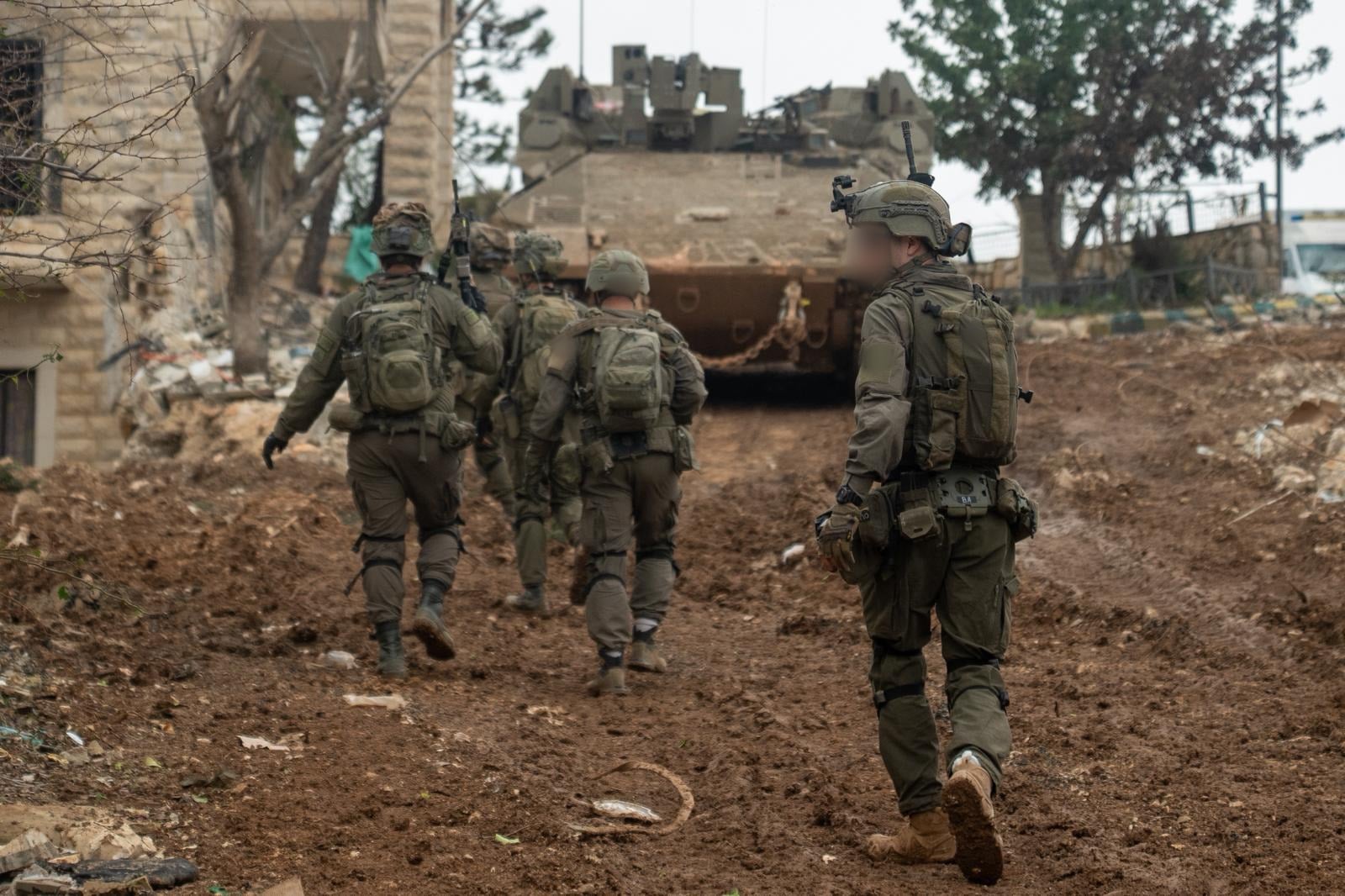
Troops of the 7th Armored Brigade operate in southern Lebanon, in a handout photo issued on April 22, 2026. (Israel Defense Forces)
The truce came after unprecedented direct talks between Lebanon and Israel in Washington ahead of planned peace negotiations, which Hezbollah and its supporters are strongly opposed to. A second round of talks is scheduled for Thursday.
Shami called the talks “cowardice” and said the group’s fighters remained unbowed despite being squeezed by the government and Israel.
“We will continue on this path to liberate the last inch of Lebanon,” she said.
‘Honored’
Hezbollah lawmaker Hassan Fadlallah told AFP on Monday that thousands of young men are “demanding to join the ranks” of the group to fight Israel’s invasion, indicative of the fierce belief among its supporters.
Following the ceasefire, the Israeli army said it had established a “yellow line” in southern Lebanon that it says is necessary to defend Israeli border communities from Hezbollah’s incessant attacks.
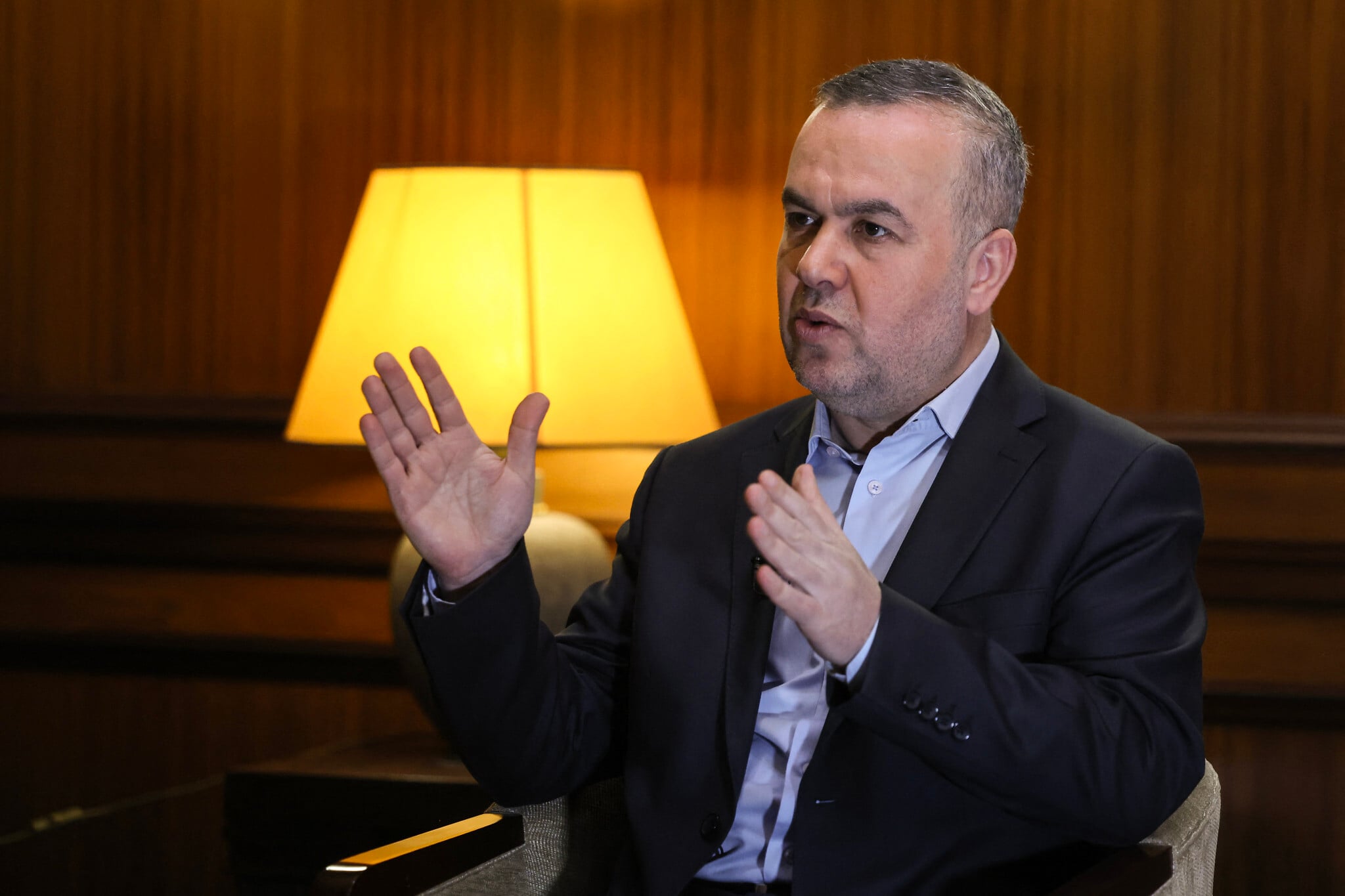
Hezbollah lawmaker Hassan Fadlallah speaks during an interview with an AFP journalist at the Lebanese Parliament in Beirut on April 20, 2026. (Anwar AMRO / AFP)
It encompasses dozens of villages and is somewhat reminiscent of Israel’s occupation of a 20-kilometer-deep strip of land along the border until 2000.
Hezbollah has vowed to break the line through “resistance.”
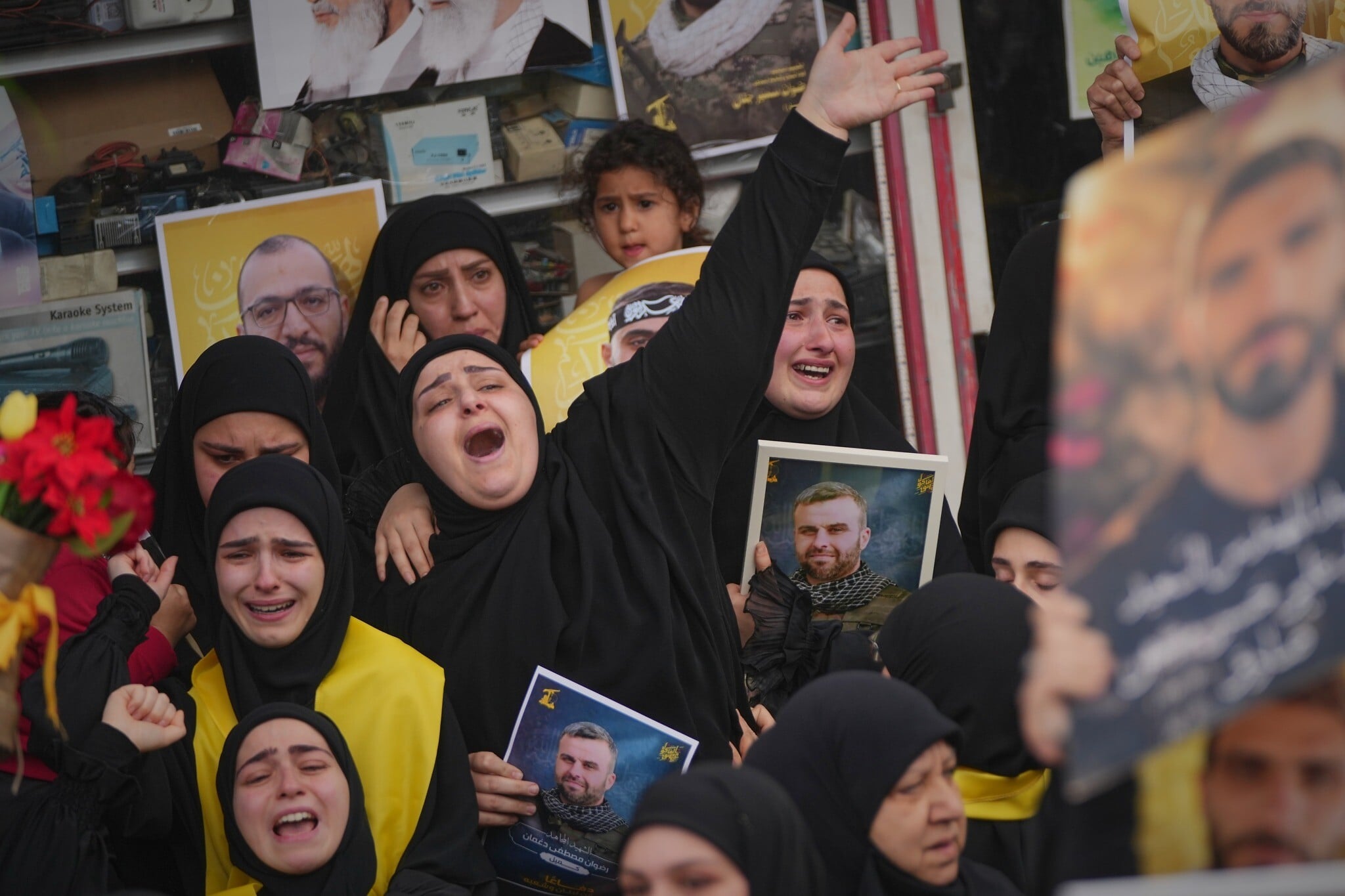
Women mourn during a mass funeral procession for Hezbollah fighters killed before the ceasefire in the war with Israel in the southern village of Kfar Sir, Lebanon, April 21, 2026. (Hassan Ammar/AP)
Sitting on a chair in Kfar Sir’s square, teary-eyed Haydar Sbeiti, 68, talked about his engineer son, Mahmoud, killed fighting Israel.
“We have been on this path for a long time,” he said. “He chose this path from a young age, and I encouraged him. I am honored to be the father of a martyr.”
He said he had three other sons who were defiant and ready to join the fight against Israel.
“We are all ready to sacrifice ourselves for Lebanon, its people, and the resistance.”
You appreciate our wartime journalism

You clearly find our careful reporting of the Iran war valuable, at a time when facts are often distorted and news coverage often lacks context.
Your support is essential to continue our work. We want to continue delivering the professional journalism you value, even as the demands on our newsroom have grown dramatically during this ongoing conflict.
So today, please consider joining our reader support group, The Times of Israel Community. For as little as $6 a month you’ll become our partners while enjoying The Times of Israel AD-FREE, as well as accessing exclusive content available only to Times of Israel Community members.
Thank you,
David Horovitz, Founding Editor of The Times of Israel