
 Play Brightcove video
Many parents across the UK have gotten in touch with ITV News claiming that care providers have unfairly limited their access to their loved ones. Investigations Editor Daniel Hewitt reports
Additional reporting by Investigations Producers Lili Donlon-Mansbridge and Mariah Cooper.
More than a hundred charities have called for “urgent” law change to protect the rights of vulnerable people in care to see their loved ones.
It comes as an ITV News investigation finds more families of people with learning disabilities are claiming their visiting rights were restricted after complaining about negligent care.
Last month the government promised to “crack down” on care companies implementing “blanket bans” and disproportionate restrictions on families visiting their loved ones in care homes and supported living.
But leading care charities have told ITV News that change is needed urgently, and argue that regulations the government are focused on – known in England as Regulation 9A – do not go far enough.
In an exclusive interview, Care Minister Stephen Kinnock said new guidance would be introduced to ensure that existing regulations upholding families’ visiting rights are properly enforced.
He also revealed that the government was exploring the possibility of changing the law to prevent care companies from introducing visiting restrictions.
ITV News has been contacted by hundreds of families who say they have been restricted or banned by care companies and councils from seeing loved ones with learning disabilities, after complaining about the quality of care.
Care Rights UK CEO Helen Wildbore welcomed Mr Kinnock’s recognition of the problem.
But she has called on the government to go further and faster in introducing new legislation to protect the rights of vulnerable people to choose to have a loved one, often a family member, legally involved in their care.
Subscribe free to our weekly newsletter for exclusive and original coverage from ITV News. Direct to your inbox every Friday morning.
“Our advice line hears all too often from people who are too afraid to speak out, even about poor care for fear of restrictions, including being banned from visiting their loved ones,” she told ITV News.
“Sometimes people are already at crisis point when they reach out to us and they have already had a ban on visiting their loved one. They are traumatised, distressed, worried about what’s going to happen to their loved one when they’re not there to support them.”
Care Rights UK – along with a coalition of 108 other charities – are calling on the government to introduce ‘Gloria’s Law’, which would give vulnerable adults who access health or social care services the right to nominate someone they choose to be their ‘care supporter’.
They argue the new law would both protect the rights of vulnerable people to have loved ones visit them in social care settings, as well as take an active role in deciding their care needs and plans.
“Visiting is not enough. This [new law] is not about a duty on care providers to facilitate visiting. This is about shifting the power,” Wildbore said.
“We are in a situation where people in really vulnerable situations are left without the guidance and support of their family and friends when they need them most, and that can’t continue.”
“[There is] a kind of power imbalance between families who don’t know where to go and don’t know how to deal with what’s been put in place, and care companies and sometimes local authorities who seem to hold all the cards in these situations.”
Families say they have been restricted or banned from seeing loved ones with learning disabilities. Credit: ITV News
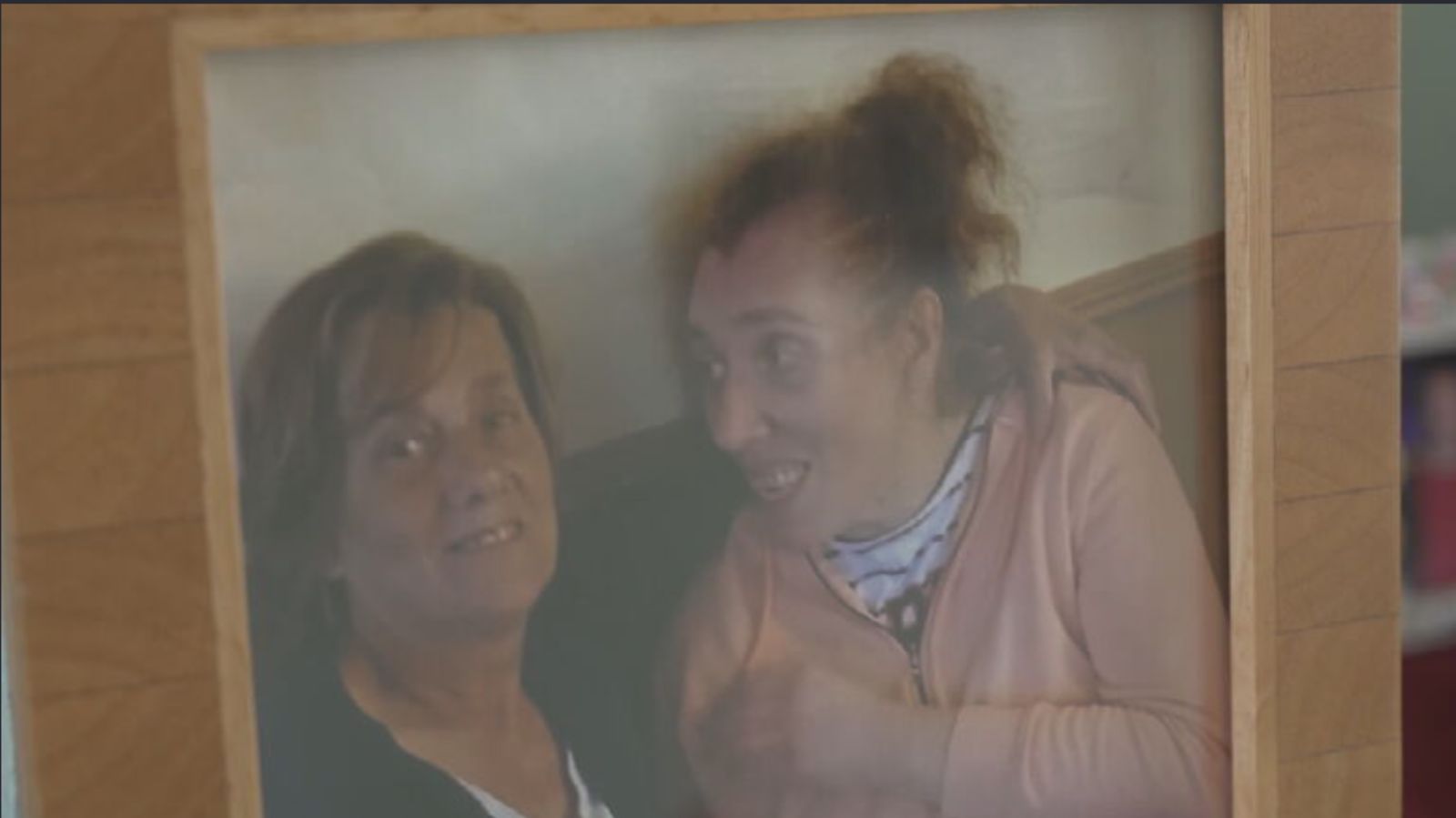
We met Mark and Majorie at their home in Belfast. Almost as soon as we arrived, Majorie received a call. It was from her daughter, Laura.
Laura is an adult with complex learning disabilities who is currently living in a mental health hospital after being detained under the Mental Health Order NI.
Laura called her mum because she had lost her gloves, and wasn’t quite sure when she might find them.
“How’s my wee woman?” says Majorie. They have a short conversation about where the gloves might be, then the call is over: “Alright, love you, bye now”. Laura’s life is the story of a broken care system.
She spent 17 years living in Muckamore Abbey Hospital, an institution in Northern Ireland now subject to a public inquiry and police investigation after the uncovering of a horrific litany of physical abuse and neglect of the disabled adults that lived there.
From Muckamore, Laura was moved to a supported living facility called The Mews, run by the Cedar Foundation. It was there that Mark and Majorie allege they were blocked from seeing their daughter after raising concerns about Laura’s care and the state of the accommodation.
Care charities argue regulations the government are focused on – known as Regulation 9A – do not go far enough. Credit: ITV News
For a family coming to terms with the trauma of institutional abuse, this felt devastating.
“From September 2024 to July 2025, they didn’t take her out. Laura wasn’t allowed out.” Mark explains.
“Laura’s state was deteriorating. Her mental health was deteriorating. Lying in bed all day plus the dirt of the apartment, the food hygiene, the fridge, the washing machine. Everything we found fault with.”
“When they stopped taking her out, she just went downhill. She just wasn’t being cared for,” adds Marjorie.
“And when we put in complaints, they were starting to exclude us.”
Laura lived in her own flat, which carers would access to support her. The electronic key fob, which allowed her parents to visit her, was disabled without their knowledge, and strict limits were placed on when they could visit.
“They blame everything on the parents. Instead of working with you and let us have our opinion,” Marjorie told us.
“They just treat parents like they’re the enemy. They’re just treating us like second-class citizens, when we’re Laura’s parents, and they know how much we love her and care about her.”
It’s argued the new law would protect the rights of vulnerable people to have loved ones visit them in social care settings. Credit: ITV News
Mark and Marjorie took their complaints to the RQIA, the board responsible for regulating adult social care in Northern Ireland, which then launched an unannounced investigation into The Mews.
In February 2025, the inspection raised “serious concerns regarding the care and treatment” of the people living at the Mews. It found evidence of restrictive practices, and concerns about staff training, competence and skill.
Mark and Marjorie hoped the report’s findings, which supported their own experiences, would be a turning point.
Laura was allowed out for her 40th birthday party. She looked happy and healthy, but six days later, the Belfast Health Trust detained Laura in a mental health hospital, where she remains.
Mark and Marjorie’s visiting rights are now limited to two hours per day with the hospital’s permission.
“Of course I worry about her. I can’t sleep at night. It’s really bad. I love my daughter,” Mark tells us.
“We’ve got no power. They’ve got all the power and we can’t do anything about it.”
In a statement, the Belfast Trust said it “understands that Laura’s family are experiencing considerable stress and anxiety in relation to her wellbeing. We want to again reassure them that Laura’s wellbeing is of vital importance to us and we will continue to work with them regarding the next steps in finding the best outcome for her.
“She is being cared for by a team of professionals whose sole aim is to ensure she is receiving the level of care she needs at all times. Belfast Trust will continue to talk to Laura’s family about any issues they want to raise.”
A spokesperson on behalf of The Cedar Foundation said: “We are sorry that the family felt unhappy with the care and support we provided however, we are confident in our position in refuting a claim that restrictions to their access to their daughter was a direct result of them raising concerns.
“We have a record of complaints raised by the family, all of which were fully investigated and reported back to them, whilst Laura was living at The Mews.
“In 2024, a Communications Plan was developed over a series of meetings from June to October, involving Mark and Marjorie Sharp, our staff and the Belfast HSCT. This plan was developed in response to escalating concerns that our capacity to deliver safe, effective, and person-centred care for Laura and other tenants was at times being compromised by the behaviour of her parents.
“The electronic fob access for the family was disabled to address concerns of interruptions to Laura’s personal care routine that was leading to elevated levels of distress for Laura and injuries to her parents and staff.
“In April 2025, the Regulation and Quality Improvement Authority (RQIA) raised concerns relating to elements of the service at The Mews. None of these were in relation to safeguarding. The report findings were acknowledged in full.”
We met Mark and Majorie at their home in Belfast. Credit: ITV News
This is not an isolated story. Mark and Marjorie are two of many parents across the UK who have got in touch with ITV News claiming that care providers have unfairly limited their access to their loved ones.
In South London, Jade* tells us what happened to her niece since moving into a supported living house run by a company called Rapid Improvement last year. We are changing Jade’s name to protect the identity of her niece, a young woman with moderate learning disabilities and other disabilities.
Jade has cared for her niece since she was seven years old. She claims her visits with her niece, who now lives alone with 2:1 care support, were restricted after she raised concerns about her care, including unexplained cuts and bruises.
“She has unexplained injuries. She kept itching and she said it’s really sore and she named one of the care staff as shaving her private area and she said why did she do that, and I said I don’t know”, she told us.
Jade says she alerted Merton Council and Rapid Improvement to these incidents. She says she has only been allowed restricted visits with her niece – and that she was frozen out of meetings and information about her care.
“I’ve been repeatedly denied access going there. I can hear her inside calling me. And I can’t gain access. Visiting is 4-7pm once a week, with seven days’ notice per visit”, said Jade.
“We get to sit at a kitchen table on some plastic chairs on just like a kitchen dinner table with two staff present, one at one end of the table, and one at the other end of the table.
“They’ve never communicated with me at all any visit, I ask them questions about her welfare, her sleep, her diet, I ask the office, they don’t ever answer my calls, they don’t answer my emails”.
Care Rights UK CEO Helen Wildbore is calling on the government to go further and faster to introduce new legislation. Credit: ITV News
In a statement, Merton Council told ITV News they “strongly refute the allegations made”.
They told us Jade’s niece is a “happy and thriving young woman who is living in high-quality supported living with a dedicated two-to-one care team”
“The council has no concerns about the provider, which is rated ‘Good’ by the Care Quality Commission. All concerns raised by the resident’s aunt have been thoroughly and statutorily investigated by the council and a multi-disciplinary team, including police, health, advocacy and social care. No evidence has been found to substantiate the allegations made.”
“Our resident is able to make informed decisions about her day-to-day life. She has expressed a preference for weekly contact with her aunt.”
Jade says her niece has expressed to her a desire to see her frequently.
Rapid Improvement, who runs the supported living facility, told ITV News they take “all allegations regarding the care and wellbeing of the individuals we support extremely seriously. We firmly refute the claims of neglect and mistreatment.”
“The person we support receives care through a detailed, person-centred care plan developed and regularly reviewed with the local council and relevant professionals. She is supported by a consistent team trained to meet her needs, with a clear focus on her safety, wellbeing, and promoting as much independence as possible in her day-to-day life. All concerns raised have been carefully reviewed through the appropriate safeguarding processes, including involvement from external agencies where required.”
“These processes have not identified evidence to substantiate any of the claims made. We recognise the importance of family relationships and any arrangements around visits or communication are made with careful consideration of professional guidance, safeguarding responsibilities, and the individual’s own wishes.” If you would like to get in touch with us please contact investigations@itv.com
From Westminster to Washington DC – our political experts are across all the latest key talking points. Listen to the latest episode below…