

Listen to this article
Estimated 4 minutes
The audio version of this article is generated by AI-based technology. Mispronunciations can occur. We are working with our partners to continually review and improve the results.
The Agropur dairy operation near Sussex will close by the end of 2028, the company confirmed Thursday.
This will also be the case for the Agropur ingredients plant in Truro, N.S.
The closure is part of a project announced to transform the Bedford, N.S., plant — doubling dairy-ingredient and butter-processing capacity in the region — and modernize operations at the Miramichi plant, increasing dairy-processing capacity by 50 per cent.
A spokesperson for Agropur confirmed that this will mean potentially 60 jobs lost in the Sussex area and 30 potential job losses in Truro. The change will see a combined 45 jobs added to the two other plants — 30 in Bedford and 15 in Miramichi.
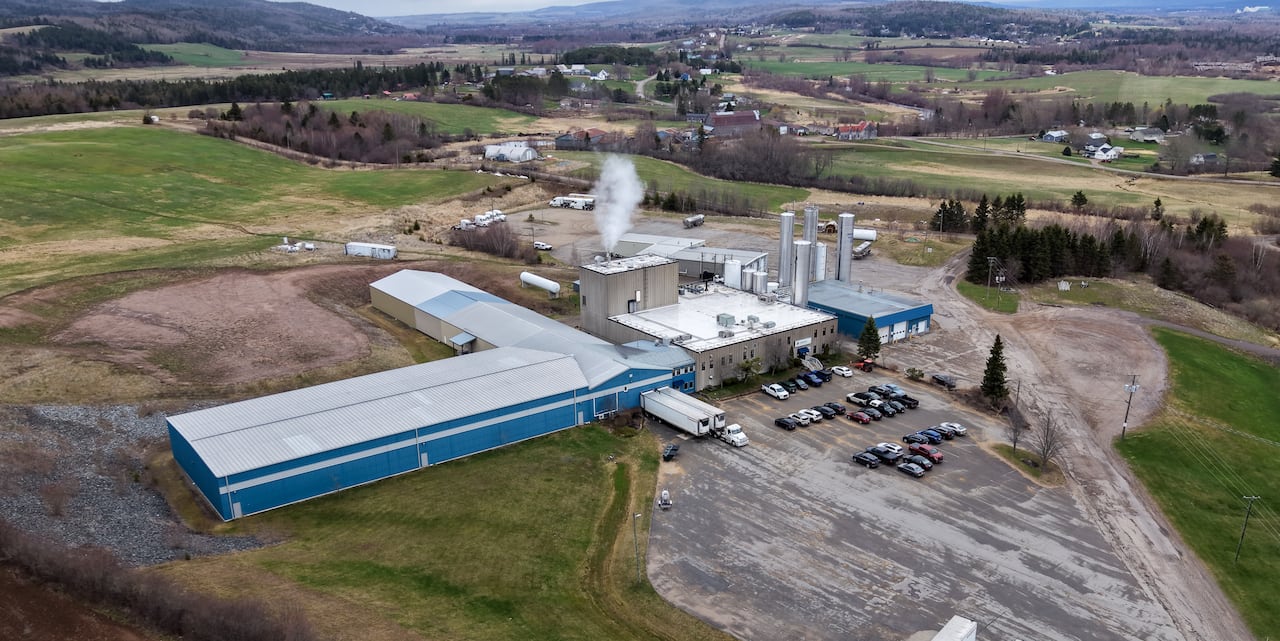 The Sussex-area Agropur plant is set to close by the end of 2028, the company announced Thursday. (Roger Cosman/CBC)
The Sussex-area plant opened in 1984, and Dairytown announced a merger with Agropur in 2014. It is known for its preparation of butter and other dairy products, such as milk powders.
Agropur also announced an expansion project for the Beauceville, Que., plant. That project, combined with the Bedford one equals a combined commitment of nearly $1 billion.
The Miramichi investment totals around $20 million, the company said.
Butternut Valley Mayor Alan Brown said he spoke to someone from Agropur on Thursday about the closure.
“The statement I received was that they understand it is hard news for the people of this area and the farmers, but it is a necessary one to maintain their presence in the Maritimes,” Brown said of his conversation with the company.
“It’s a multimillion-dollar process they’re going through, and we’re a casualty of that.”
 Butternut Valley Mayor Alan Brown said he thinks the closure will take some time to sink in for the community. (Roger Cosman/CBC)
He said the employees were told about the closure on Wednesday, but he thinks it will take some time until the news fully settles in.
“There are employees there that have been there since Day 1, and that’s 40 some years,” Brown said.
Stéphane Lamoureux, the president of Unifor Local 506, said he got a call on Tuesday to tell him that employee meetings would be held on Wednesday.
Lamoureux said the union’s priority, with support from Unifor national, is to ensure members have strong representation and can access support. He said the union will also begin negotiations with Agropur.
The announcement came as a shock to employees, he said, because they were once told by Agropur that the plant would be expanded, not closed.
“Losing [these jobs] is not something this region can absorb easily,” he said.
In a news release from Agropur, the process was framed as a positive — highlighting the large monetary investments in Bedford and Miramichi.
“It’s a project, they call it,” Lamoureux said. “It’s not a project to our members. They’re all losing their work.
“So we’re going to have talks with the company and see what can be done, because that plant matters to the members and it matters to the community, and we’re going to do everything in our power to see what can we do.”
Danielle Connell, the president of the Agricultural Alliance of New Brunswick, said she started hearing rumblings about the plant closure a few months ago.
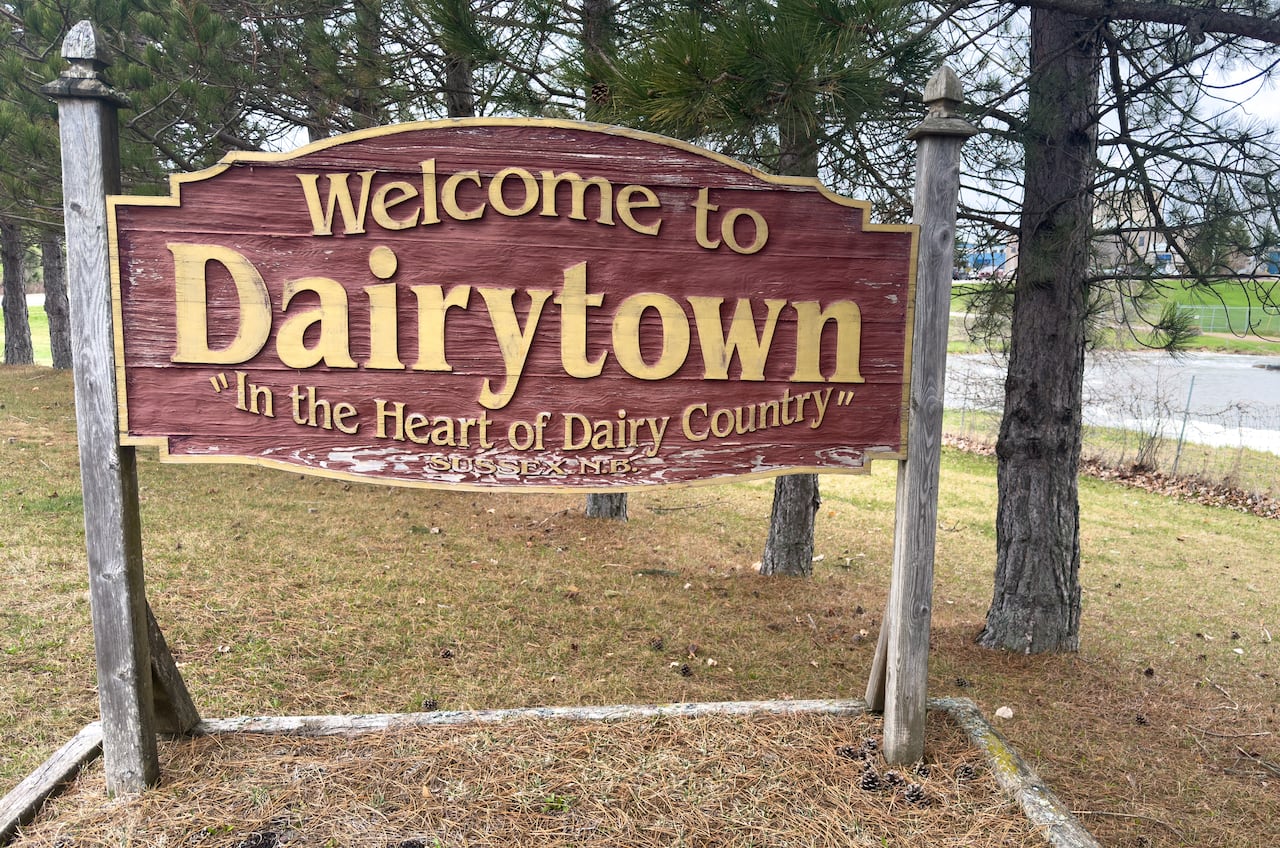 A “Welcome to Dairytown” sign still greets Sussex visitors. But by 2028’s end, Agropur plans to move the nearby dairy plant operations to Bedford, N.S. (Roger Cosman/CBC)
She said the closure doesn’t make sense given the high milk production happening on multiple farms within a few kilometres of the plant.
Connell pointed to Agropur’s goal of achieving net zero emissions by 2050.
“This doesn’t eliminate milk production, but it shifts the costs onto the farmers and the system,” she said.
“If our goal is to reach net zero … I don’t think we accomplish that by putting more trucks on the road.”
And Connell said, for the Agricultural Alliance, this closure isn’t just about one plant. She said it speaks to whether New Brunswick will be able to keep control of its food system or if it is going to “slowly lose control piece by piece.”
“We’re not just losing 60 jobs, or 90 jobs, it’s … losing that critical capacity to process in the heart of dairy country,” she said. “It’s going to be a real blow to Sussex, not just [for] the farmers, but the whole community.
“This is a big deal for New Brunswick.”