
The High Court justices are treading a dangerous path in their hearings on the petitions to establish a state commission of inquiry into the October 7, 2023, Hamas-led massacre in southern Israel and the ensuing war. It is dangerous to the public interest, dangerous to the rule of law, and dangerous to the role of judicial review within Israel’s constitutional framework.
And all this is in exchange for a short-term gain: The justices’ wish to avoid becoming the target of poisoned arrows of political criticism should they order the establishment of a state commission of inquiry before the upcoming election.
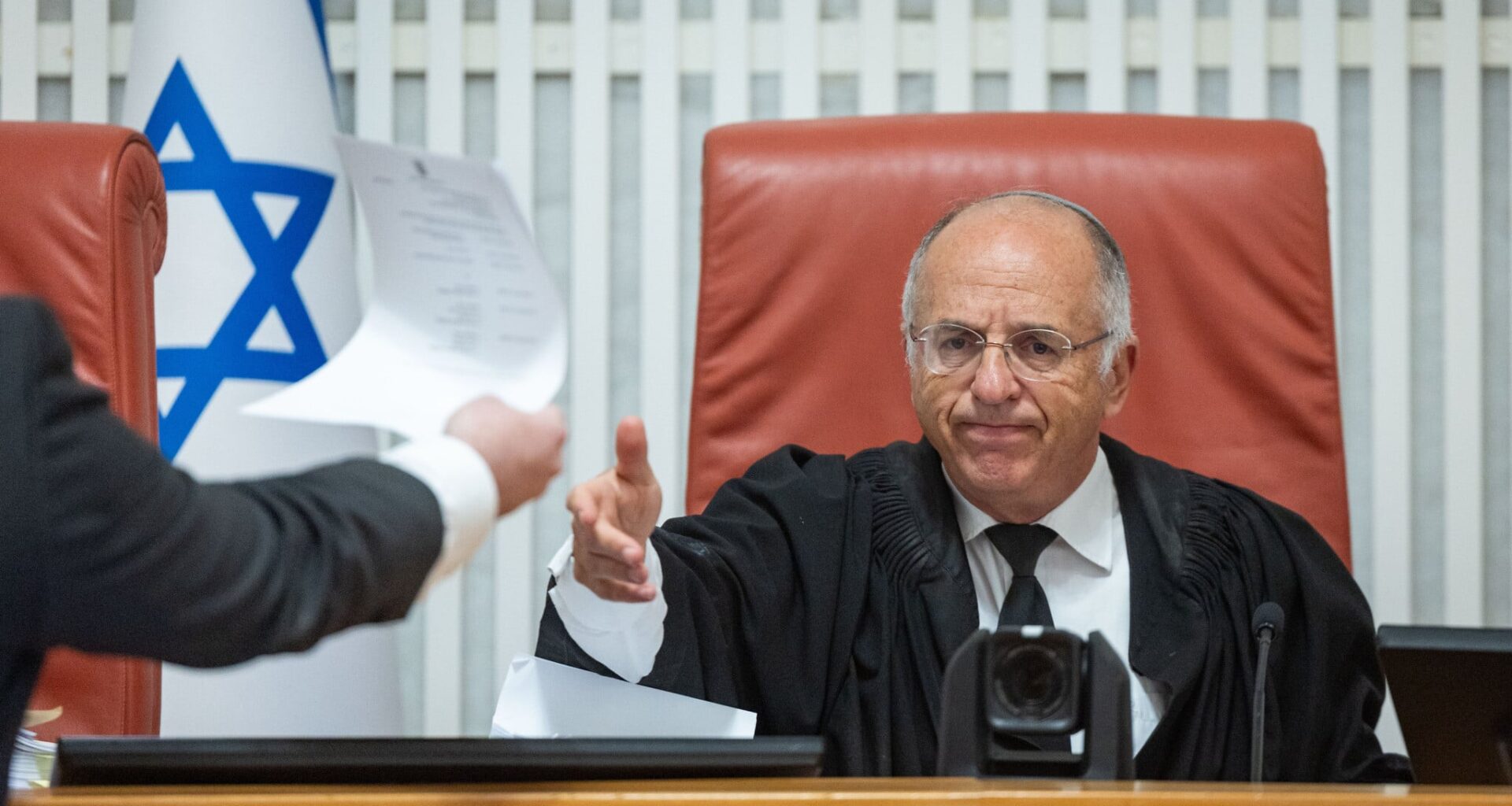
For six and a half hours on Thursday, an expanded panel of seven High Court justices, headed by Deputy Chief Justice Noam Sohlberg – a staunch conservative on a bench where the liberal wing is increasingly shrinking – heard three petitions regarding the establishment of a state commission of inquiry.
During the hearing, Sohlberg voiced the following thought, which one can assume was formulated in advance, even though it sounded as if the idea had just occurred to him:
“We need to be honest, all those involved. There are very heavy costs to a judicial order to establish a state commission of inquiry at this time. We are aware of the advantages; we must also be aware of the disadvantages.”
Get The Times of Israel’s Daily Edition
by email and never miss our top stories
By signing up, you agree to the terms
“There are many difficulties now that we have come this far, just a few months before the election; a matter of profit versus loss,” Sohlberg continued. “We already want to see the commission of inquiry. But we are already in election season, the election is relatively soon, and we so badly want the public’s trust in such a commission when it is established. Is the ideal timing, now that we have come this far, to leave the work to the government that will be formed after the election?”
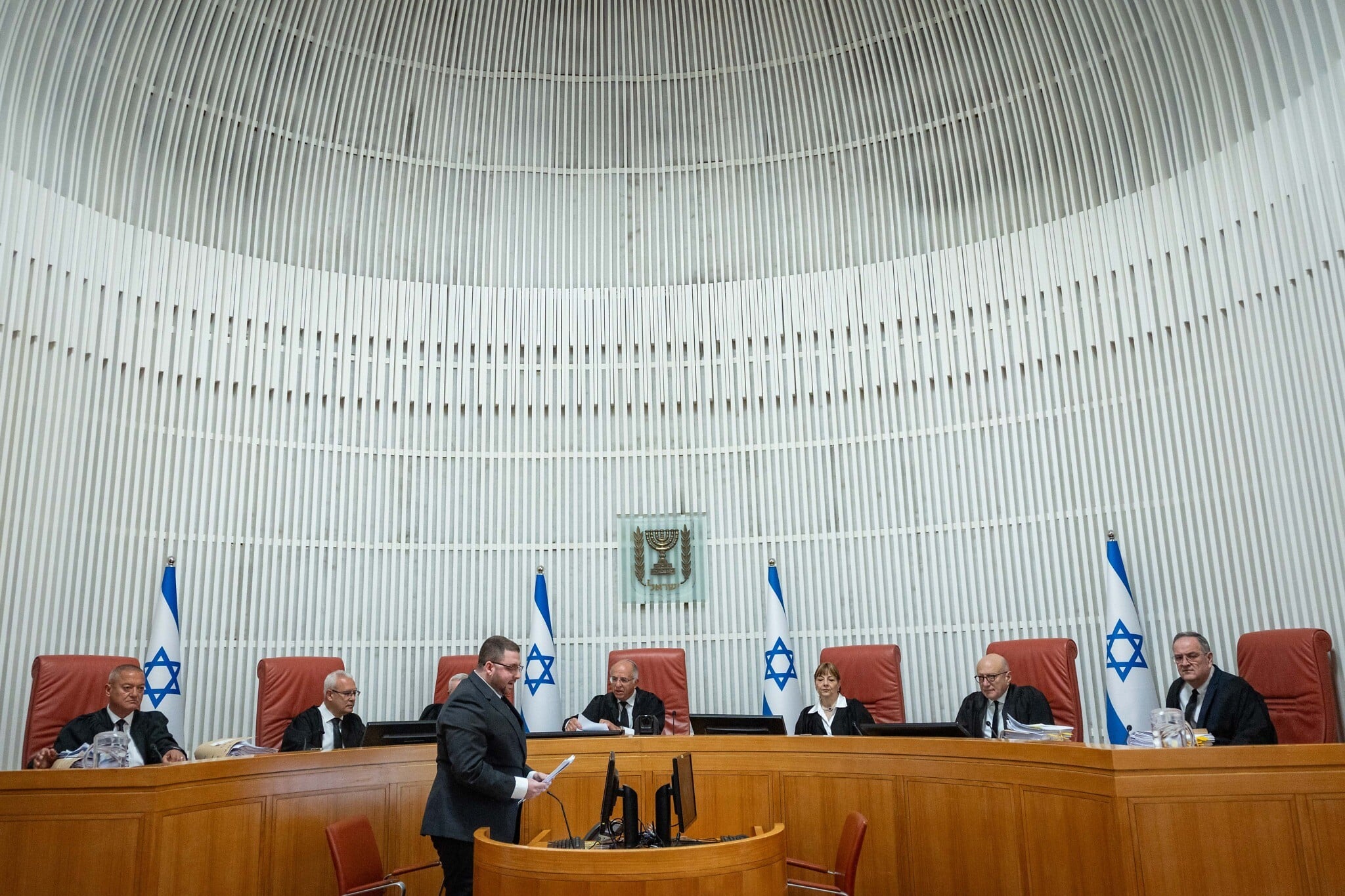
The High Court presides over a hearing on a petition demanding the formation of a state commission of inquiry into the October 7 massacre at the Supreme Court in Jerusalem, April 23, 2026 (Yonatan Sindel/Flash90)
Several other justices on the panel shared the idea that, instead of a judicial ruling, the question of establishing a state commission of inquiry should be left to the court of public opinion during the upcoming election campaign.
“In an election, the public is the one that will have its say on the commission of inquiry,” said Justice Yael Wilner, another conservative voice on the court. “Is that not preferable? On the eve of an election, that is truly putting the court of public opinion into practice.”
The judicial notion of leaving the issue of establishing a state commission of inquiry without a ruling due to its proximity to an election period is a dangerous idea that could cause multilayered damage.
The judicial notion of leaving the issue of establishing a state commission of inquiry without a ruling due to its proximity to an election period is a dangerous idea that could cause multilayered damage
First, it rewards the wrongdoers. The petitions to establish the commission of inquiry were filed some two years ago, after it became clear Prime Minister Benjamin Netanyahu had no plan to establish one.
According to Israeli law, a state commission is established by the government; however, the chief justice of the Supreme Court decides who will preside over the commission to ensure impartiality.
Netanyahu and his ministers claim on the record that the Supreme Court – along with the entire judicial system – is biased against this government and therefore should not determine the commission’s makeup. But it is generally accepted that Netanyahu simply fears that an independent commission, headed by a former chief justice, could find him culpable for the failings that led to the October 7 massacre.
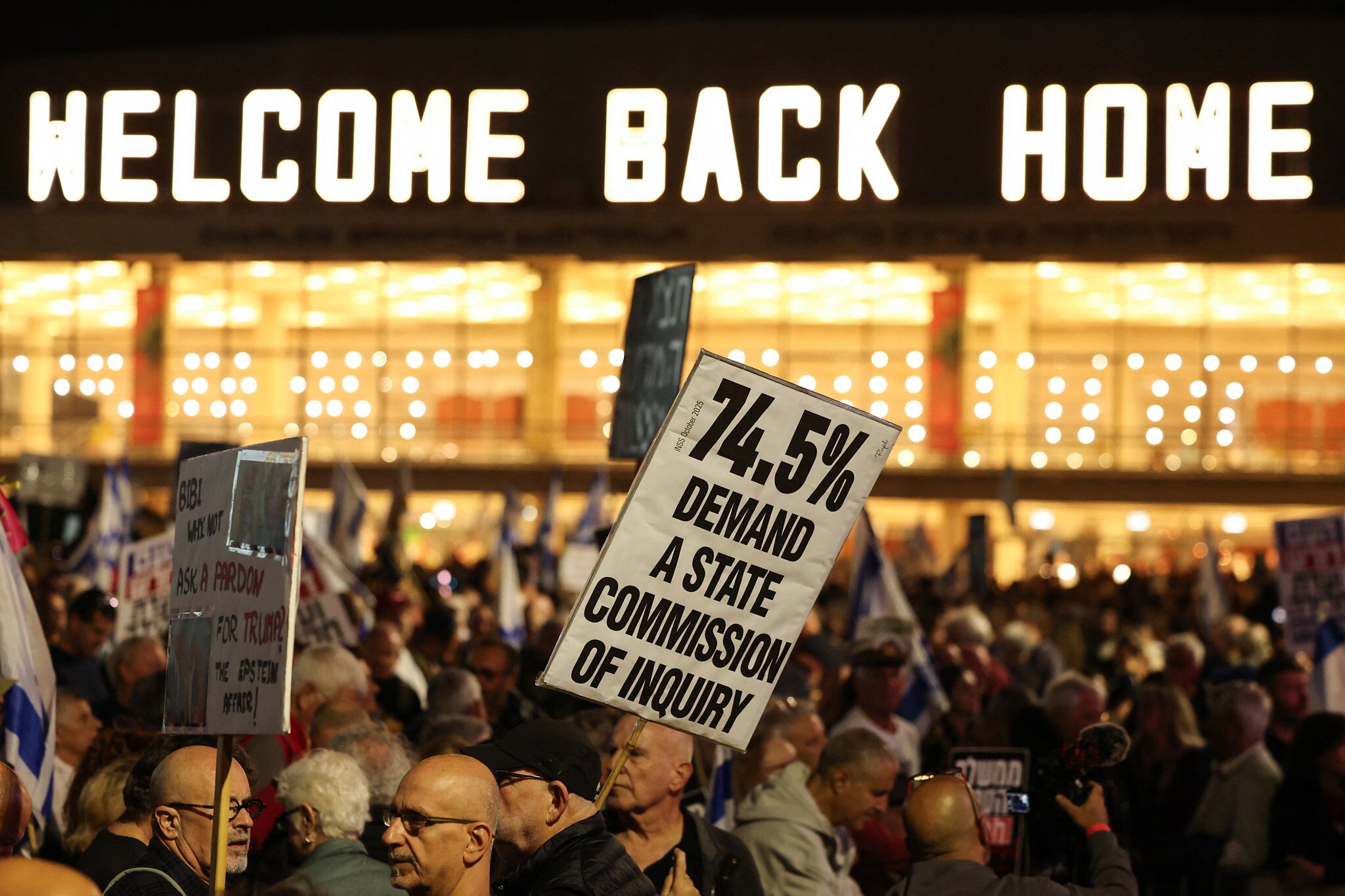
Anti-government protesters lift up placards during a demonstration against the prime minister and in support of establishing a state commission of inquiry into Hamas’s October 7, 2023, attacks on Israel, in Tel Aviv on November 15, 2025. (Jack GUEZ / AFP)
Once it became clear that the government had no plan to set up an inquiry, bereaved families demanding to know why and how their loved ones were killed on that day and in its aftermath petitioned the High Court to instruct the government to set up a state commission. That was, as stated, almost two years ago.
Since then, the High Court has handled the proceedings with excessive and deliberate slowness in order to give the government every possible opportunity to correct its ways without judicial intervention.
This slowness is also a direct result of the government’s foot-dragging. It was the government that repeatedly told the High Court that “now is not the time,” to set up an inquiry, amid the war being waged in Gaza. Then it shifted its argument, asserting that the proper way to investigate was not through a state commission of inquiry under existing law, but rather through special legislation that would allow for the establishment of a political commission of inquiry in one format or another.
The judicial notion of leaving the issue of establishing a state commission of inquiry without a ruling due to its proximity to an election period is a dangerous idea that could cause multilayered damage
This slowness has brought us to the election period, and now the justices are considering rewarding the government for its foot-dragging, leading to a situation where these manipulations achieve their goal.
Second, the assumption that the question of establishing a state commission of inquiry will stand at the center of the election campaign – and will indeed be a central consideration guiding voters’ informed decisions on which party to support – has no theoretical or empirical basis. In simple terms, it is a wild delusion.
Not only is this not how voting patterns are formed among the Israeli public, and not only might many other questions of equal weight stand at the center of public discourse, but the justices also have no reasoned way to justify this expectation. The argument that voters will decide how to cast their ballots based on this issue specifically is either disingenuous or wishful thinking.
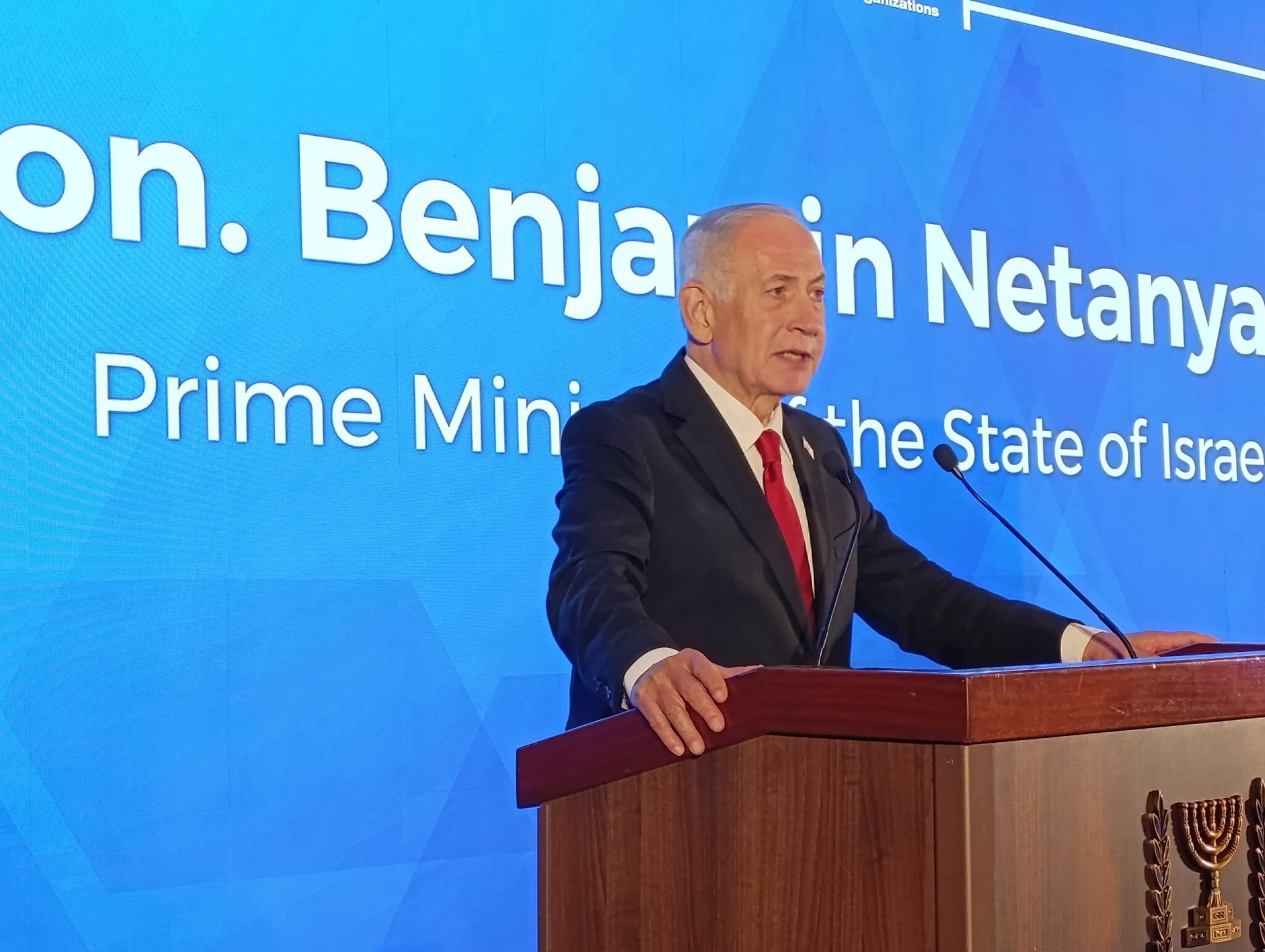
Prime Minister Benjamin Netanyahu at the Conference of Presidents Leadership Mission to Israel in Jerusalem, February 15, 2026. (Zev Stub/ Times of Israel)
It is also a futile approach. Israel is generally either just before an election or immediately after one – in the past seven years, there have been six elections. The judicial potential to leave matters to the democratic mechanism is ever-present. Elections are an excuse that can be pulled out at any moment.
The justices were right to challenge attorney Michael Rabello – Netanyahu’s close personal lawyer and the Likud party’s go-to legal fixer, who represented the government in the High Court hearing. They noted that the current governmental stance he presented – that the war has not ended and therefore the time has still not come to establish a commission of inquiry – constitutes a dramatic shift from the government’s previous position.
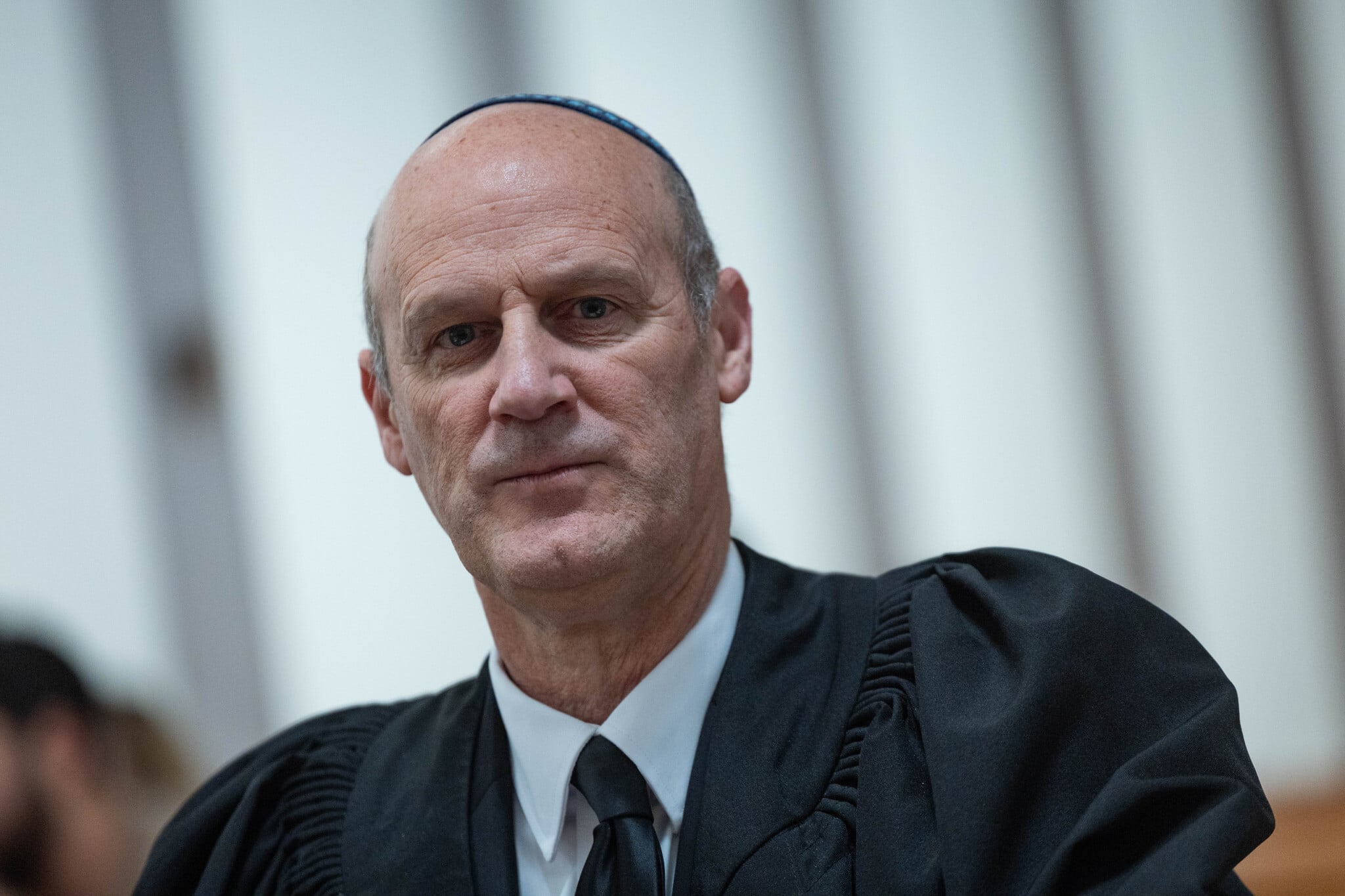
Attorney Michael Rabello attends a hearing on a petition demanding the formation of a state commission of inquiry into the October 7 massacre at the Supreme Court in Jerusalem, April 23, 2026 (Yonatan Sindel/Flash90)
As far as Rabello is concerned, the Gaza war may have ended, but the ceasefire in Lebanon is fragile, it is better not to say too much about Iran, and in any case, everything is connected. In such a state of affairs, the time will never be found to investigate the government’s failures – a tactic some already saw coming when Israel entered Gaza in October 2023.
The simple truth is that the justices are afraid. They see the organized displays of rage that certain actors make sure to orchestrate in the High Court halls
By the same token, the justices must now be told: Just as security considerations can always be found to hide behind, alternative considerations can always be found to justify leaving the matter to the voters’ discretion.
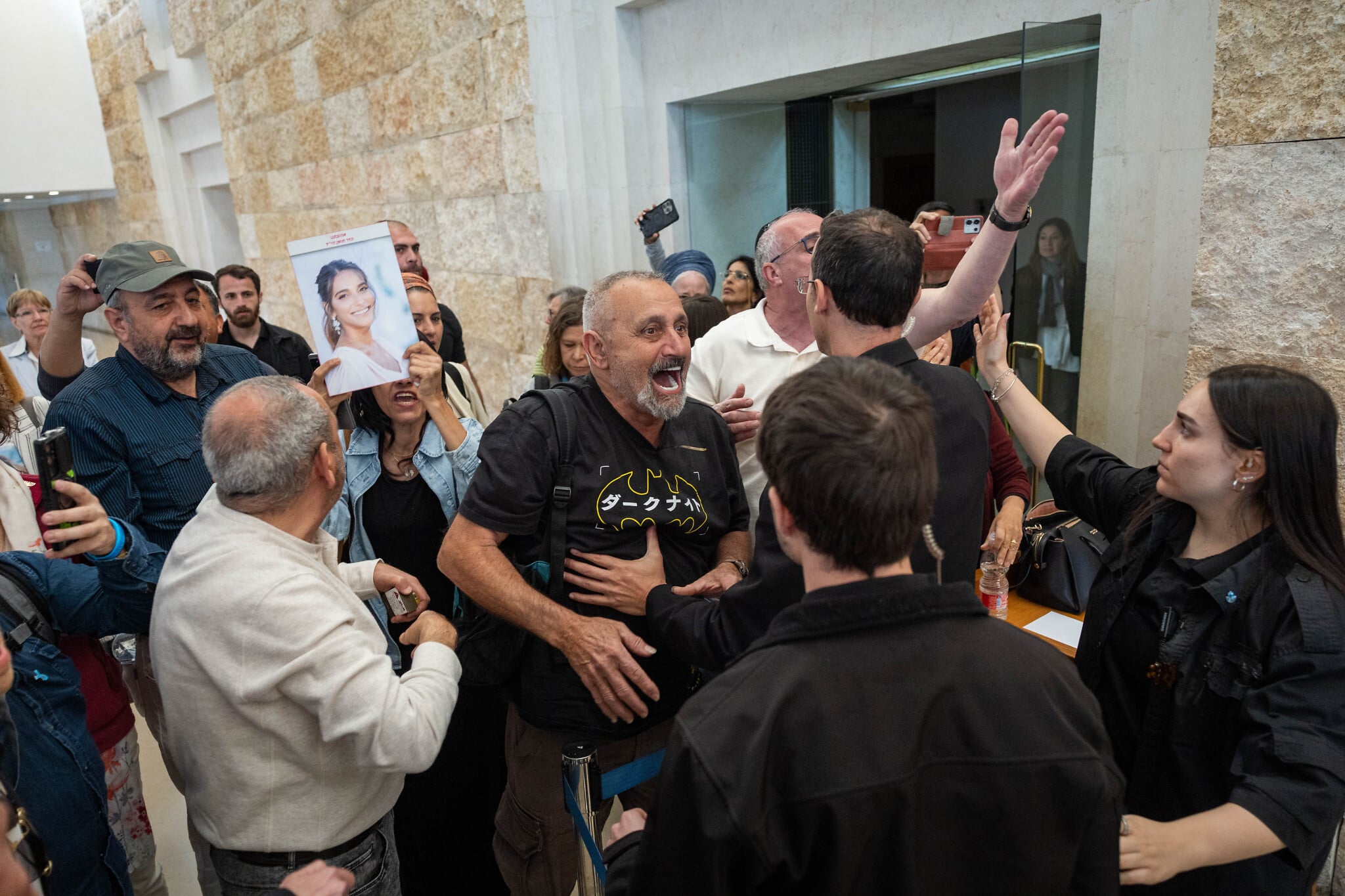
Bereaved families opposing a state commission of inquiry into the October 7 invasion and atrocities protest outside a High Court of Justice hearing demanding the court order the government to establish such a commission, April 23, 2026 (Yonatan Sindel/Flash90)
The simple truth is that the justices are afraid. They see the organized displays of rage that certain actors make sure to orchestrate in the High Court halls. Thursday’s hearing was even suspended for a time on the instructions of the Courts Guard, with the justices evacuated to the secure chambers floor, out of concern that an incited mob might burst into the courtroom.
The rising temperature in the Supreme Court, signs of which have appeared repeatedly over the past year as the toxic legacy of the government’s 2023 judicial overhaul campaign evolved into actual physical intimidation, is not a natural phenomenon; it is man-made. Certain elements are making sure that this is the atmosphere surrounding the justices.
Therefore, the petitioners’ representatives were right to remind the justices of what every law student learns in their first year of studies: there are extraneous considerations that simply must not be allowed through the door.
Sohlberg states that “there are heavy costs to a judicial order at this time.” Well, what are those costs? Criticism of the Supreme Court by certain segments of the public? Claims of a “lack of trust”? Will surrendering to political threats of this kind increase public trust in the Supreme Court?
Toward the end of Thursday’s hearing, the masks were almost entirely removed. Representatives of pro-government factions – such as the Tikvah or Gvura forums, who claim to represent the interests of “the bereaved families” as a whole despite the painful, highly politicized schism that has fractured that community – began hurling accusations at the justices, claiming that their own role in the October 7 disaster would also have to be investigated.
But there was nothing behind those claims. The justices demanded to know which specific ruling was at issue, in which they had supposedly mandated restrictive military rules of engagement that allowed terrorists to approach the border fence and thereby played a part in the abandonment – a widespread populist myth pushed by far-right politicians and media outlets.
Attorney Zehava Gur, who represented the government’s supporters, was unable to name even a single judicial decision.
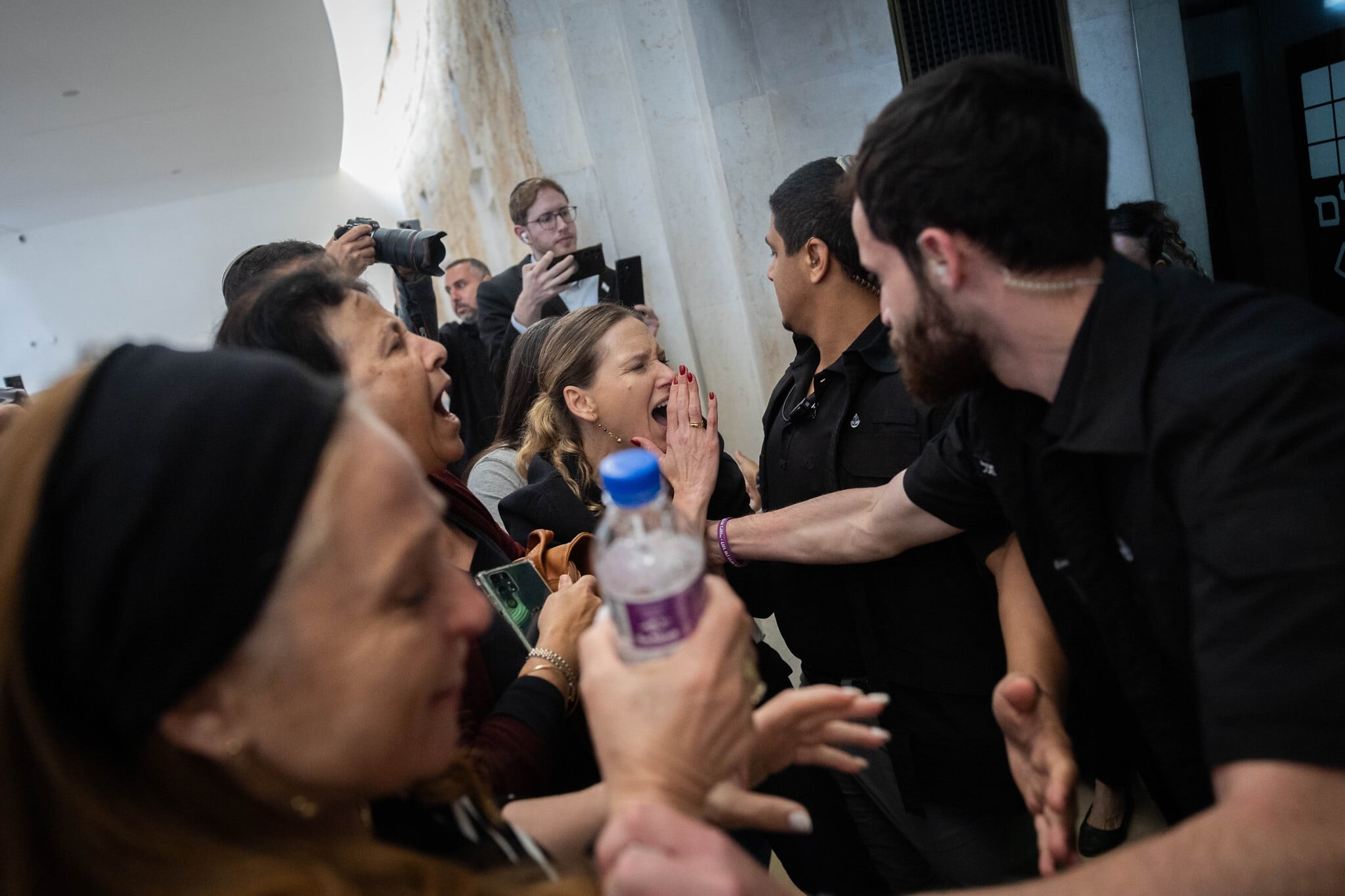
Bereaved families opposing a state commission of inquiry protest outside a hearing on a petition demanding the formation of such an inquiry into the October 7 massacre, at the Supreme Court in Jerusalem, April 23, 2026 (Yonatan Sindel/Flash90)
Earlier, at the start of the hearing, the justices thoroughly dismantled the claim made by attorney Rabello, the government’s representative, who argued that under no circumstances does the court have the authority to intervene in the establishment of a state commission of inquiry.
The question of the court’s authority has already been resolved; it is no longer up for debate. What remains is whether the government’s conduct over the past two and a half years has been tainted by extreme unreasonableness, given the unprecedented failure and disaster that occurred. This question has a simple answer, and it lies right before the justices’ eyes.
Translated from the original Hebrew on The Times of Israel’s sister site Zman Yisrael.