
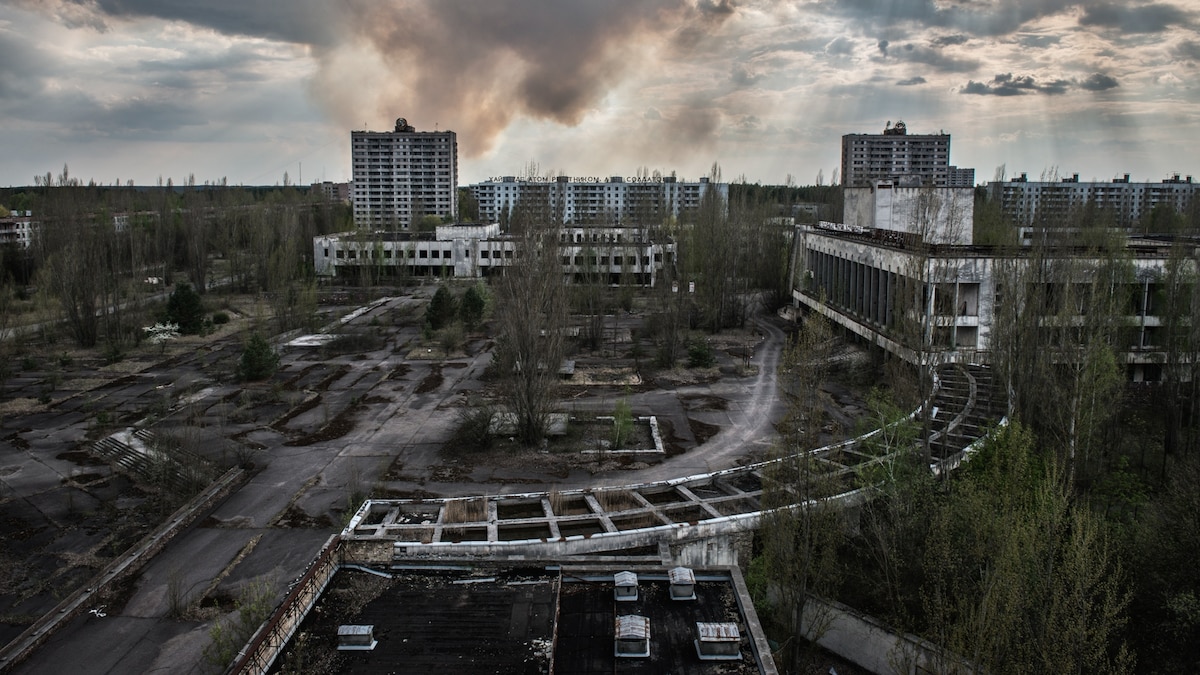
But the passage of time has done more to reshape Chernobyl than any manmade initiative. Italian photographer Pierpaolo Mittica has been documenting the changing landscape of the Chernobyl exclusion zone since he first visited almost two-and-a-half decades ago. These pictures, from across that span of time, reveal an expanse that is neither devoid of life nor static. At least 600 people come to the Chernobyl nuclear power plant every day to continue a cleanup effort that will last well into the 2060s. And that number does not include the soldiers, firefighters, forest rangers, elderly returnees and others who live and work throughout the 30-kilometer zone surrounding the damaged reactor.
(Radioactive dogs? What we can learn from Chernobyl’s strays)
At the same time, nature has taken over abandoned villages and the deserted city of Pripyat, where workers of the plant and their families lived before the disaster. The presence of radiation has decreased the human footprint in the exclusion zone, leading to an incredible resurgence of plants and wildlife. This resurgence means many of the artifacts, murals and day-to-day objects that were abandoned by the area’s Soviet citizens are deteriorating at a rapid rate, making Mittica’s mission of documenting them all the more urgent.
But Chernobyl’s most lasting legacy will be its radiation, which will be present long after we are gone, Mittica told me, and new generations of people will have to find ways to manage it. “We are just at the beginning of the story of Chernobyl. And for me, this is really important to know,” Mittica said. “Chernobyl is not history. Chernobyl is the present and the future of humanity.”