
In the immediate future the United States will need a new nuclear deal with Iran, one that firmly protects the state of Israel from nuclear attack. Perhaps the Trump administration would like to call it, “One Big Beautiful Iran Nuclear Deal.”
But why not just zero enrichment?
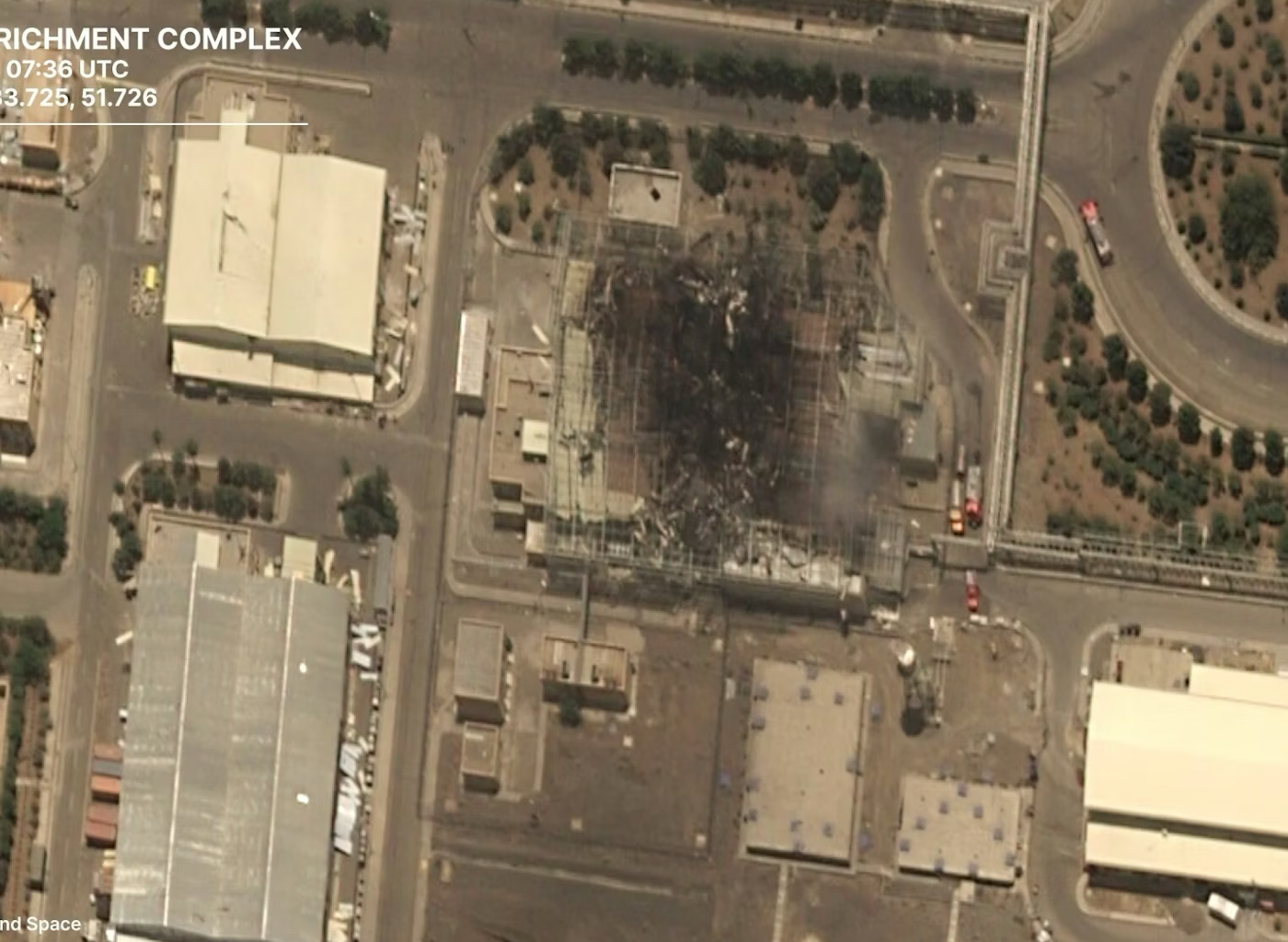
The US and Israel inflicted immense damage on Iran’s political and military hierarchy, its military capabilities, and its nuclear infrastructure. The US has threatened civilization-ending destruction. On the other hand, the US and Israel have not been able to stop missile and drone attacks against Israel and against Iran’s neighbors on the Persian Gulf. They have also been unable to provide sufficient confidence to shippers and their insurers to keep the flow of oil and gas moving through the Strait of Hormuz. Most importantly, Iran can still hold the oil and gas production capabilities of its neighbors, and with them the world economy, at risk.
Fundamentally, since the US has not been able to force unconditional surrender on Iran, it does not have unlimited leverage. Thus, the US, in consultation with Israel, will need to make trade-offs amongst its priorities, which presumably include:
• Nonaggression by Iran and its regional allies
• Limitations on Iran’s ballistic missile arsenal
• Free navigation in the Persian Gulf
• Limitations on Iran’s nuclear program
If the US insists on zero uranium enrichment in Iran, it will have to accept a less restrictive agreement on resistance to Israel by Iran and its allies, weaker limitations on Iran’s ballistic missiles, and/or less complete freedom of navigation in the Gulf. If the US chooses, instead, to agree to some limited uranium enrichment in Iran, what would “One Big Beautiful Iran Nuclear Deal,” that protects Israel, look like?
It would need to include the special features of the old Iran nuclear deal, such as monitoring by the International Atomic Energy Agency (IAEA) of uranium mines, chemical conversion facilities, and centrifuge production plants. Iran would also need to blend any enriched uranium in its possession, including its 440.9 kg of highly enriched (to 60%) uranium, down to reactor fuel enrichment level, say less than 4%, under IAEA oversight.
In such a deal, Iran could safely be allowed to produce fuel for its reactors, on a schedule consistent with its demonstrated needs, which are quite modest. It could be required to chemically convert all of its low-enriched uranium in hexafluoride form to uranium dioxide reactor fuel, imposing an additional conversion step back again, in the face of IAEA monitoring, in advance of any further enrichment. Deep underground nuclear facilities could be disallowed. Enrichment plant monitoring intensity could be keyed to Iran’s enrichment capacity.
The US and Israel have clearly demonstrated that they do not need a year to interdict an Iranian attempt at breakout to high enrichment, as was assumed by the Obama administration. But we do need timely indication if and when breakout begins. This is something that monitoring by the IAEA can provide.
Rather than sunset clauses, the monitoring arrangements and restrictions on uranium enrichment could be open to renegotiation, say every 10 years, depending on security conditions in the Middle East.
Experts need to be engaged now to provide decision-makers with options such as these, and then, if we proceed down such a path, to hammer out the details along with their Iranian counterparts.
An agreement such as this could earn President Trump the Nobel Peace Prize he so covets. And, more importantly, it could provide Israel with long-term security.
Rob Goldston is a professor of Astrophysical Sciences at Princeton University. He teaches and writes about nuclear energy, with special focus on nuclear proliferation risks. He was director of the US Department of Energy Princeton Plasma Physics Laboratory from 1997 to 2009. He won a 2014 “Leading Global Thinkers” award from Foreign Policy Magazine for his work on arms control.