
(TNND) — Iran said it will not hold direct negotiations with U.S. officials during its foreign minister’s visit to Pakistan on Saturday, even as President Donald Trump sends envoys to the region for a new round of ceasefire talks.
Iranian Foreign Minister Abbas Araghchi arrived in Islamabad for Pakistani-led mediation efforts and met with Prime Minister Shehbaz Sharif. Pakistani officials said the discussions would focus on the “current regional situation.”
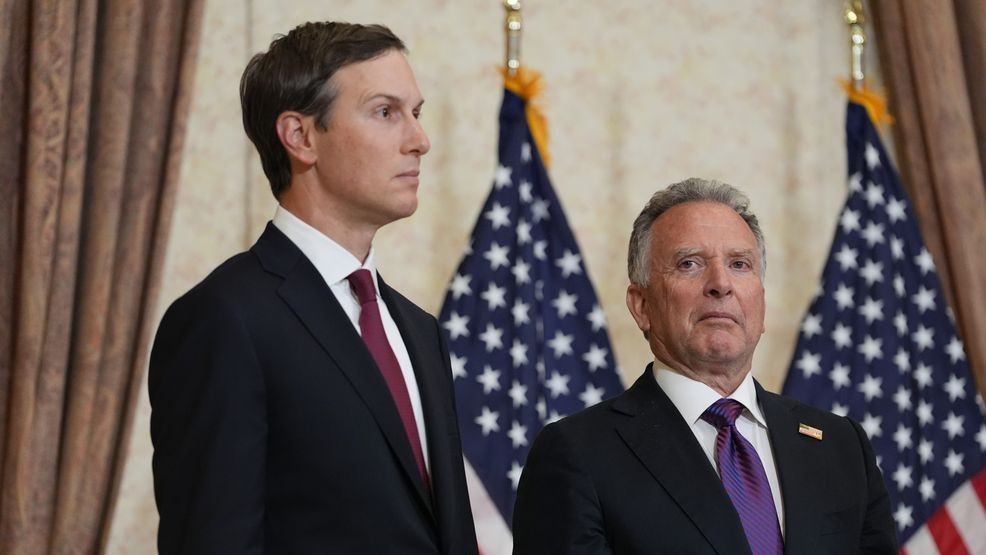
At the same time, White House Press Secretary Karoline Leavitt said Trump is dispatching envoys Steve Witkoff and Jared Kushner to Islamabad, Pakistan to participate in a second round of negotiations aimed at securing a peace deal with Iran.
Leavitt previously said Iran wanted to talk “in person.” She also said Vice President JD Vance, who traveled to Pakistan a few weeks ago for peace talks, will not attend, adding that he “is on standby” and will head to Pakistan if necessary.
“The president, as I’ve said many, many times to all of you, [is] always willing to give diplomacy a chance,”she told reporters on Friday. “So, Steve, Jared will be heading to Pakistan tomorrow to hear the Iranians out. We hope progress will be made and we hope that positive developments will come from this meeting And we will see.”
Pakistan was preparing to receive Witkoff and Kushner for the start of the renewed talks, although officials have not specified when they are due in Islamabad.
Earlier this week, Trump said the U.S. will extend the ceasefire until Iran’s leaders and representatives can come up with a unified proposal. The president said he made the decision at Sharif’s request.
“Based on the fact that the Government of Iran is seriously fractured, not unexpectedly so and, upon the request of Field Marshal Asim Munir, and Prime Minister Shehbaz Sharif, of Pakistan, we have been asked to hold our Attack on the Country of Iran,” Trump previously wrote on Truth Social.
While the indefinite ceasefire has paused most fighting, the economic fallout is still mounting with global energy shipments disrupted by the closure of the Strait of Hormuz.
The diplomatic push comes as the Trump administration announced it is placing economic sanctions on a major China-based oil refinery and roughly 40 shipping companies and tankers involved in transporting Iranian oil. The move appeared to be part of the administration’s threat to impose secondary sanctions on entities doing business with Iran in order to cut off Iran’s oil exports, a key source of its revenue.
Iran’s refusal to engage directly with U.S. representatives underscores the challenges facing negotiators as they attempt to broker a deal through intermediaries.
Pakistan has emerged as a key mediator in the talks, hosting meetings between regional and international officials as efforts continue to prevent further escalation.
_____________
EDITOR’S NOTE: The Associated Press contributed to this report.