
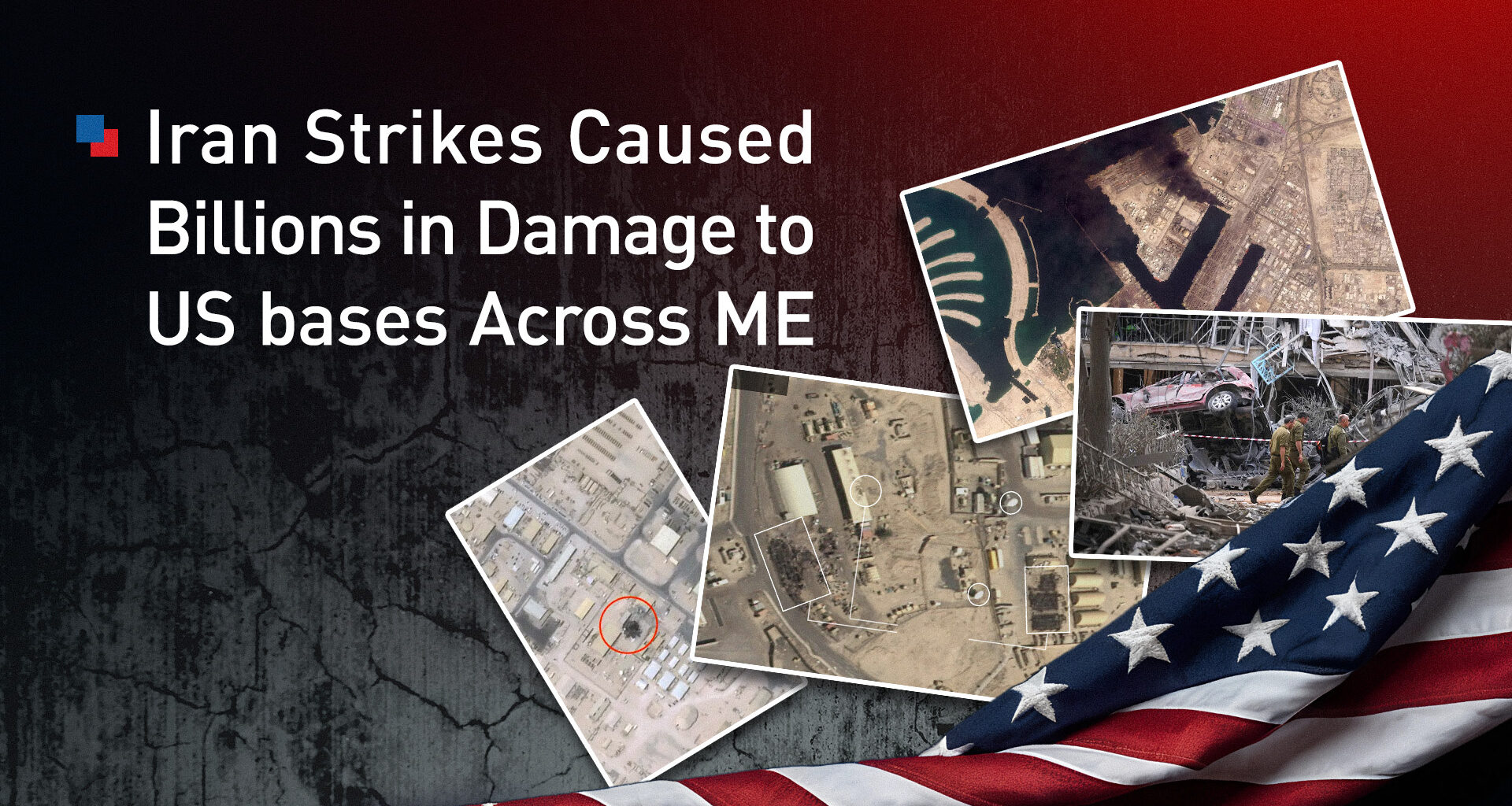
Iranian retaliatory strikes inflicted billions of dollars in damage on U.S. military bases across the Middle East, with extensive losses to infrastructure, aircraft, and defense systems, according to figures reported by NBC News, the American Enterprise Institute (AEI), The Hill, and Reuters.
ERBIL (Kurdistan 24) — Iranian retaliatory strikes during the ongoing conflict inflicted extensive and costly damage on U.S. military bases across the Middle East, with repair costs expected to reach billions of dollars, according to multiple reports citing U.S. officials and independent assessments published between April 22–26, 2026.
The strikes began on February 28, following U.S. and Israeli operations against Iran, and targeted more than 100 sites across at least 11 military installations in seven countries, including Qatar, the United Arab Emirates, Bahrain, Jordan, Kuwait, Iraq, and Saudi Arabia, according to a report by NBC News and an assessment by the American Enterprise Institute (AEI) both on April 24.
According to U.S. officials cited by NBC News, the attacks hit critical infrastructure such as command headquarters, runways, satellite communications systems, high-end radar installations, and multiple aircraft platforms.
Among the most notable incidents, an Iranian F-5 fighter jet reportedly struck Camp Buehring in Kuwait, marking a rare instance of a fixed-wing aircraft breaching U.S. air defenses, according to NBC News.
Significant damage was also reported at the U.S. Navy’s Fifth Fleet headquarters in Bahrain, while a runway at Qatar’s Al-Udeid Air Base was described as completely destroyed, according to NBC News and The Hill on April 25th.
Military asset losses were substantial. Officials told NBC News that at least one fighter jet, more than a dozen MQ-9 Reaper drones, two MC-130 tankers, and four helicopters were destroyed, with several additional aircraft and defense systems severely damaged.
Despite the scale of the attacks, U.S. and allied forces intercepted the vast majority of incoming threats. According to U.S. military officials cited by NBC News, more than 1,700 ballistic missiles and drones were successfully intercepted during the conflict.
Casualties, while limited relative to the scale of the attacks, included 13 U.S. service members killed and approximately 400 wounded, with officials noting that most injuries were minor and over 90 percent of personnel have returned to duty, according to NBC News.
Estimates suggest infrastructure repair costs alone could exceed $5 billion, based on analysis from the American Enterprise Institute cited by NBC New, while The Hill reported that total costs could be significantly higher when including damaged equipment and systems.
Congress is currently considering supplemental funding that could surpass $100 billion to cover war-related expenses and reconstruction efforts, according to NBC News reporting.
However, the Pentagon has declined to provide detailed public assessments of the damage, citing operational security concerns.
“We do not discuss battle damage assessments for operational security reasons,” a Pentagon official told NBC News, adding that U.S. forces remain fully operational.
The scale of Iranian strikes reflects a broader escalation following the launch of U.S.-Israeli military operations earlier in the conflict. While Washington has emphasized the effectiveness of its defensive systems, the damage sustained across multiple regional bases underscores the intensity of the confrontation and the evolving nature of modern warfare.
At the same time, on April 23rd, Reuters reported that U.S. and allied operations significantly degraded Iran’s military capabilities, destroying or damaging more than 66% of Iran’s missile, drone, and naval production facilities.
The conflict has unfolded across multiple fronts, including maritime tensions in the Strait of Hormuz, proxy engagements, and direct strikes on strategic assets, raising concerns about long-term regional stability and the resilience of military infrastructure.
The reported extent of the damage highlights both the scale of Iran’s retaliatory capabilities and the financial and operational burden facing the United States, as questions persist over transparency, costs, and the broader trajectory of the conflict.