
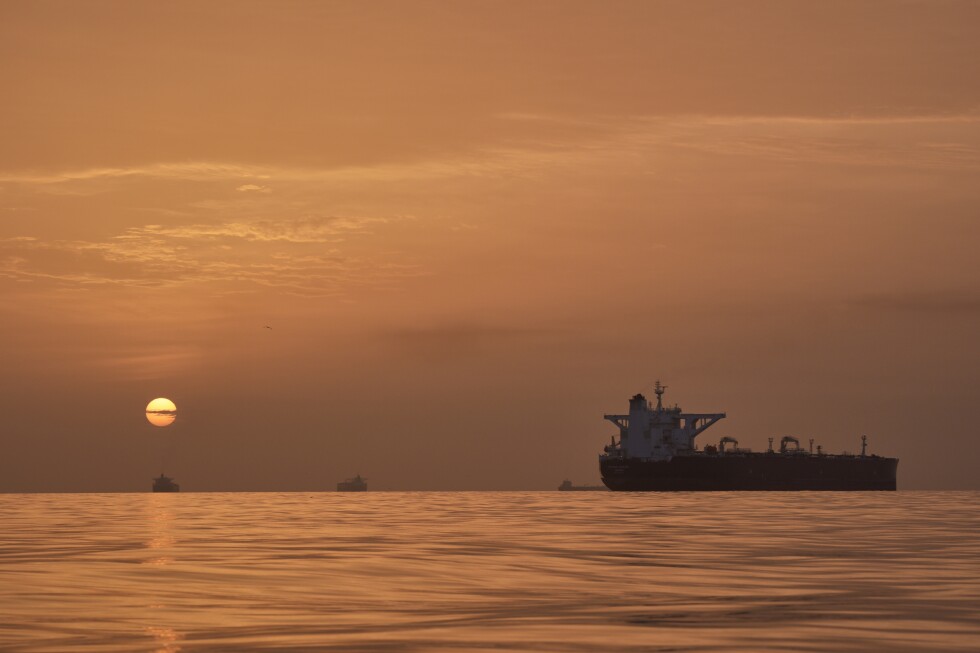
NEW DELHI (AP) — For about eight weeks, Indian Capt. Rahul Dhar and his crew have been stranded on their tanker in the Persian Gulf, sometimes watching drones and missiles explode as the Strait of Hormuz remained effectively shut while the Iran war dragged on.
The crew’s morale, he said, is holding as they carry on with their routines, but the strain is beginning to show.
A shaky ceasefire between the U.S. and Iran has brought “a careful sense of hope” for the crew, but there is still no clear end to the war. “Day to day, we try to keep things normal with open conversations and small team activities that help lift everyone’s spirits.”
The crew sighted drones and missile interceptions several times, both near the ship and along the horizon during their watches. “Those moments were difficult and created real tension for the crew,” Dhar told The Associated Press.
“None of us expected the warlike situation,” he said, noting that reliable internet has helped them stay in touch with families. “Those calls and messages really keep us grounded and give us strength.”
About 20,000 seafarers are stranded in the Gulf
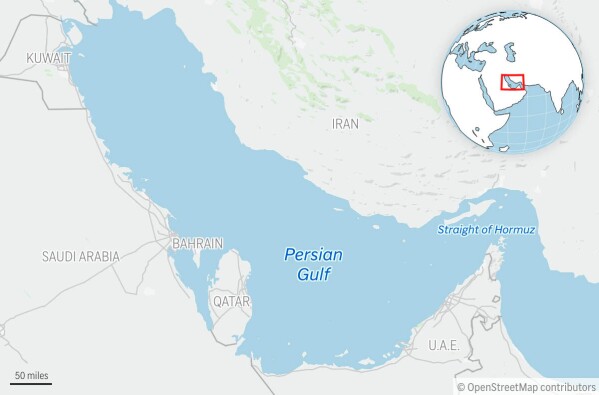
This is a locator map for the Persian Gulf and its surrounding countries. (AP Photo)
This is a locator map for the Persian Gulf and its surrounding countries. (AP Photo)
Add AP News on Google
Add AP News as your preferred source to see more of our stories on Google.
Share
Read More
Around 20,000 seafarers on hundreds of vessels, including oil and gas tankers and cargo ships, have been stuck in the Gulf, unable to cross the Strait of Hormuz. Normally about a fifth of the world’s oil and liquefied natural gas transits the waterway.
Roughly 80 vessels passed through the strait in the week of April 13-19, according to the maritime data firm Lloyd’s List Intelligence, compared to approximately 130 or more transits per day before the war. Dozens of ships have come under attack since the war started, and the U.N. says at least 10 seafarers were killed.
Even as U.S. President Donald Trump last week extended the ceasefire indefinitely, the U.S. kept the blockade of Iranian ports. In response, Iran fired on ships in the strait and seized two.
“Seafarers are the backbone of global trade, yet we are often the most affected by regional geopolitical conflicts,” said Capt. ArunKumar Rajendran, who also has been stranded with his tanker crew for around eight weeks.
Some ‘watched blasts from decks’
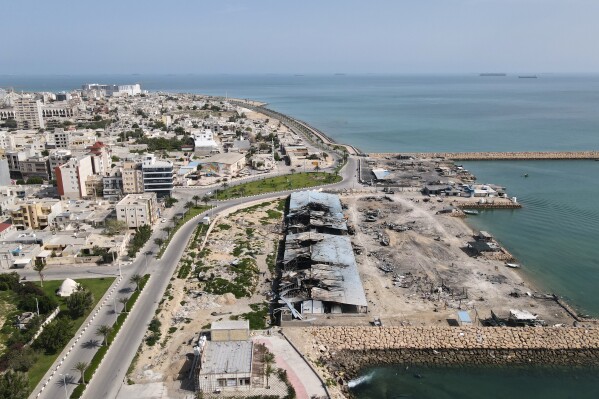
Backdropped by ships in the Strait of Hormuz, damage, according to local witnesses caused by several recent airstrikes during the U.S.-Israel military campaign, is seen on a fishing pier in the port of Qeshm island, Iran, Monday, April 13, 2026. (AP Photo/Asghar Besharati)
Backdropped by ships in the Strait of Hormuz, damage, according to local witnesses caused by several recent airstrikes during the U.S.-Israel military campaign, is seen on a fishing pier in the port of Qeshm island, Iran, Monday, April 13, 2026. (AP Photo/Asghar Besharati)
Add AP News on Google
Add AP News as your preferred source to see more of our stories on Google.
Share
Read More
Manoj Kumar Yadav of the Forward Seamen’s Union of India said thousands of Indian sailors were aboard the stranded vessels, enduring days of fear and isolation as ships lay anchored near Iranian ports such as Bandar Abbas and Khorramshahr. Explosions sometimes occurred just a few hundred meters (yards) away.
“They were watching blasts from their decks,” he said, adding that his union has been fielding daily distress calls from crews and their families. “Many of them were on board a ship for the first time, and you can imagine what mental state they have gone through.”
India, one of the world’s largest suppliers of maritime labor, has more than 20,000 nationals working on foreign-flagged ships in the region, many of them beyond the reach of coordinated evacuation efforts. India’s shipping ministry said last week that at least 2,680 sailors had been evacuated since the conflict began.
Yadav said many sailors reported acute shortages of food and drinking water, with some vessels forced to ration supplies. Communication with families in India was sporadic due to internet disruptions and signal jamming. When contact was possible, sailors often paid high roaming charges for just a few minutes of conversation, he said.
Sailors’ families are growing increasingly anxious, demanding the safe return of their loved ones.
Mohamed Arrachedi, the International Transport Workers’ Federation’s network coordinator for the Middle East, said earlier this month it had received hundreds of requests for assistance, including for food, from seafarers.
Crew faces drones and uncertainty
Stranded off Oman for more than a month, Reza Muhammad Saleh, an Indonesian chief officer aboard a Greek-owned cargo ship, said a drone exploded near the port shortly after they arrived March 3. At least two more incidents followed, forcing repeated evacuations of the crew to bunkers, he said. No one was harmed.
“The biggest problem is the uncertainty. We don’t know when Hormuz will be open again,” Saleh told the AP.
The vessel with 24 crew members from Indonesia, Arab countries, India and Ethiopia typically transports iron ore across Gulf states, transiting Hormuz once or twice a month. It now requires written clearance from Iran. “No company wants to take the risk without it,” he said.
Though experienced in conflict zones, the crew has been rattled by missile strikes and GPS disruptions that forced it to use manual navigation, he said.
“Sometimes we think it’s safe, then suddenly it’s not. Today we’re safe. Tomorrow, nobody knows,” he said.
Crew changes are difficult
Fleet Management Limited usually communicates multiple times a day with dozens of stranded ships that are staffed by more than 400 seafarers, its CEO Capt. Rajalingam Subramaniam said.
Stock checks are regularly maintained for food supply, and pickups have been arranged to ensure availability by moving vessels to the nearest points where they can pick up fresh and dry provisions, he said.
Some crew changes were still happening, but in limited numbers. “Who wants to go on the ship?” Subramaniam said. “The inbound crew has the right to refuse and we respect (that).”
Most of the stranded mariners have been in the Gulf since the war began. “(For) mariners who did not sign up to be in warlike area, they also (need) to be respected so that they do not become the unintended collateral,” he said.
Among the vessels attempting to cross the Strait of Hormuz during the ceasefire, several were fired upon and others turned back. Vessels managed by Fleet Management did not attempt to cross, Subramaniam said.
Germany’s largest shipping company, Hapag-Lloyd, has had around 150 sailors stranded near the strait, on six vessels. “These are difficult days and weeks,” Hapag Lloyd spokesman Nils Haupt told the AP earlier this month. He said Hapag-Lloyd was in contact with the captains and crews at least once a day.
“We’ve been able to rotate some of them (crew) in the meantime, but you can easily imagine that after such a long time, monotony naturally sets in on board,” he said.
Shortages of global seafarers to worsen
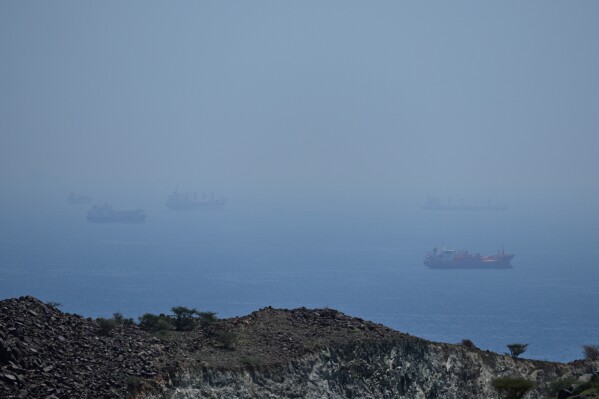
Tankers and bulk carriers anchored in the Strait of Hormuz, Saturday, April 18, 2026. (AP Photo)
Tankers and bulk carriers anchored in the Strait of Hormuz, Saturday, April 18, 2026. (AP Photo)
Add AP News on Google
Add AP News as your preferred source to see more of our stories on Google.
Share
Read More
The International Maritime Organization, the U.N.’s shipping agency, and others have called for a safe corridor for commercial vessels in the strait. Most ships are still unable to pass through, even though Iran had said the strait was open to vessels it perceived as non-hostile and demanded to collect tolls for passage.
Iran was said to have placed mines in the waterway, and Trump said last week that the U.S. was clearing Iranian mines and would “shoot and kill” boats laying mines in the area. Under heightened risks of mines and attacks on ships, “there is no safe transit anywhere in the Strait of Hormuz,” said IMO Secretary-General Arsenio Dominguez.
Multiple crises in recent years have left many seafarers stranded at sea. That includes the COVID-19 pandemic, Russia’s invasion of Ukraine and attacks by Yemen’s Houthi rebels on ships in the Red Sea. Subramaniam said he worries that even after the Iran war ends, fewer people will be willing to sign up at a time when there is already a shortage of skilled seafarers.
___
Chan reported from Hong Kong. Karmini reported from Jakarta, Indonesia. Associated Press journalists Chonchui Ngashangva in New Delhi, Kerstin Sopke in Berlin and John Leicester in Paris contributed to this report.