
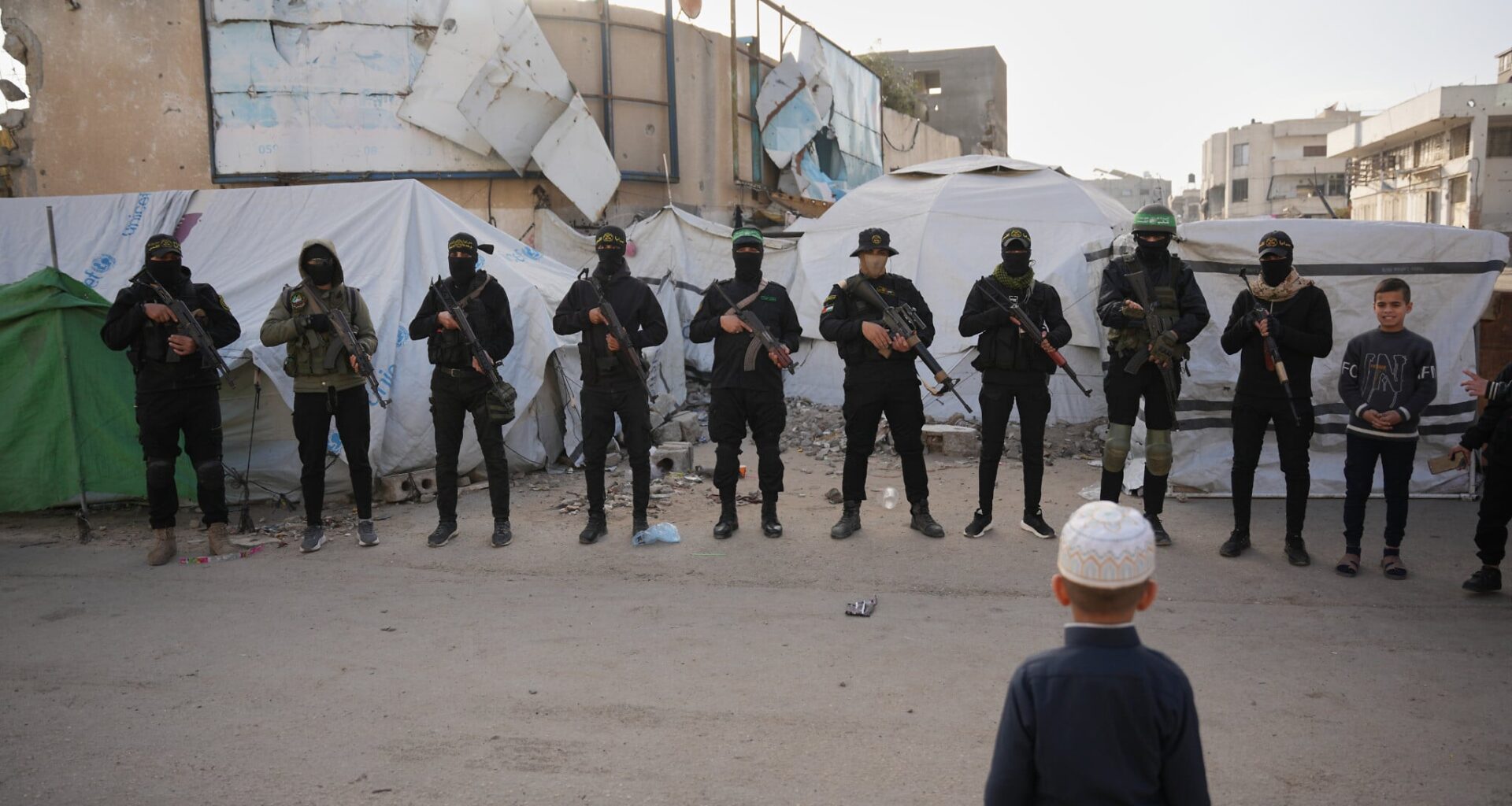
Battered but still breathing, Hamas is set to hold a long-delayed internal election to choose a new chief and political bureau in the coming weeks.
The vote, coming after a years-long military campaign aimed at dismantling the terror group’s rule over the Gaza Strip, will likely offer an indication of Hamas’s future direction while broadcasting its continued existence as an organized entity and its ability to project power.
Coming amid slow-moving negotiations aimed at disarming the group and installing a transitional leadership in Gaza under US President Donald Trump’s ceasefire proposal, the vote will serve to telegraph whether Hamas plans on continuing to fight Israel over Gaza or whether it will shift to a less aggressive stance aimed at buying the time needed to rehabilitate its strength in the Strip and beyond, according to expert Michael Milshtein.
“These elections are about which arena will lead Hamas,” said Milshtein, who heads the Palestinian Studies Forum at Tel Aviv University’s Moshe Dayan Center.
Hamas generally holds leadership elections every four years, but the latest vote, initially scheduled for 2025, was delayed by the war sparked by the terror group’s October 7, 2023, massacre. During the war, Israel assassinated most of the group’s senior political and military commanders.
Get The Times of Israel’s Daily Edition
by email and never miss our top stories
By signing up, you agree to the terms
According to reports in Arab media, the vote is now expected to take place in the coming weeks, roughly a year behind schedule, though the exact timing remains unclear.
Fighting in Gaza broke out following the October 7 onslaught into southern Israel, in which some 1,200 people were killed and another 251 were kidnapped, most of them civilians. Israel vowed in the wake of the worst massacre in its history to wipe out the group, launching a war that left much of Gaza in ruins and killed much of Hamas’s command structure.
However, many vestiges of Hamas rule and military strength remain intact since the October 2025 ceasefire took effect, particularly in the approximately 47 percent of Gaza outside of Israeli military control, where nearly all of the enclave’s Palestinians live.
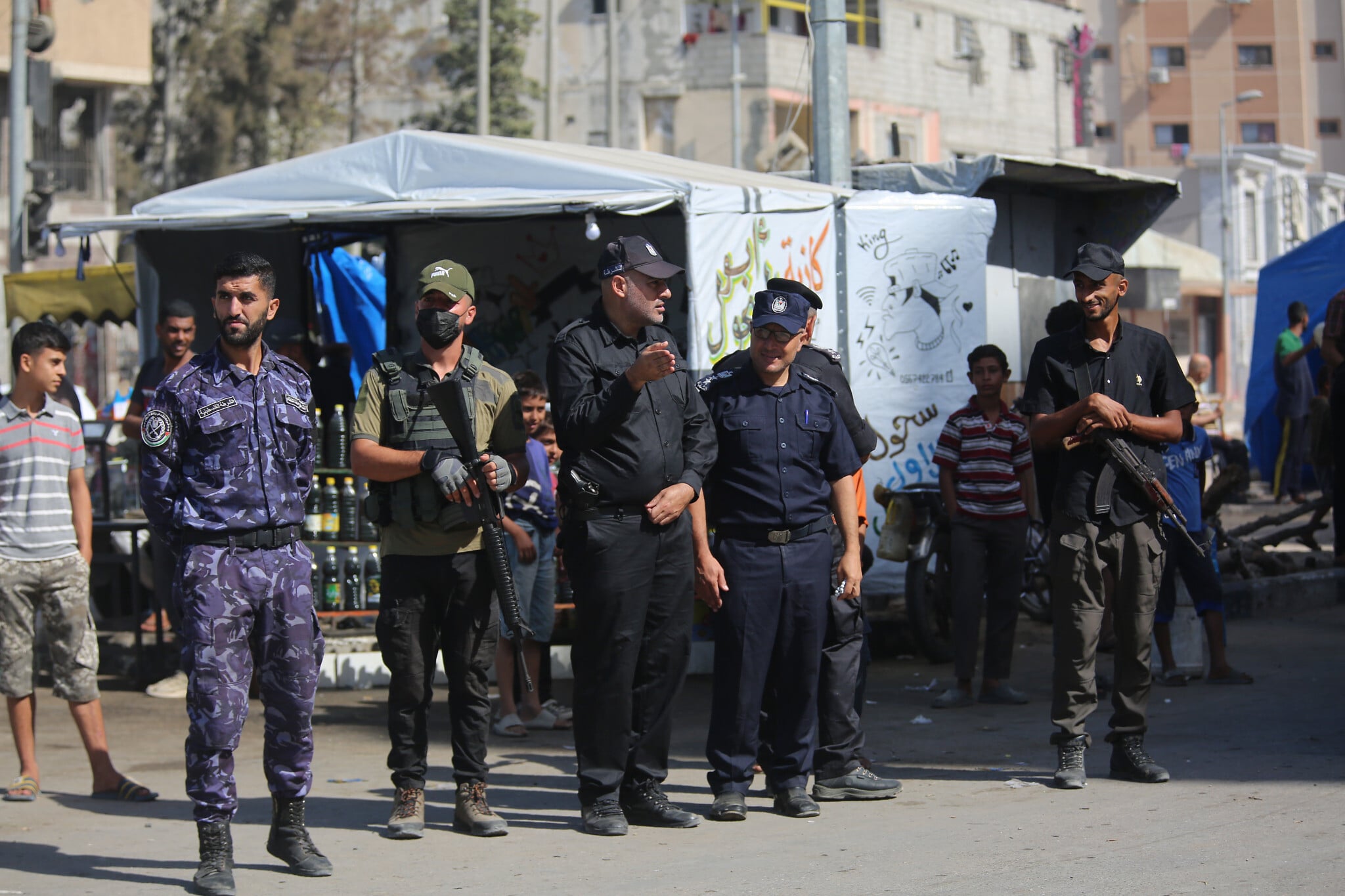
Hamas police forces deploy in Gaza City on October 11, 2025. (Ali Hassan/ Flash90)
Based largely outside of Gaza, Hamas’s politburo manages the group’s strategic priorities, including on the diplomatic front, and also directs the Hamas military wing, the Izz ad-Din al-Qassam Brigades, which primarily operates in Gaza and the West Bank. According to Milshtein, a hierarchy remains intact whereby strategic decisions are made by the leadership abroad, while the military wing carries them out.
The elections have historically been conducted in secrecy, with only a few hundred to a few thousand senior members quietly casting ballots and Hamas keeping results under wraps to shield its operatives from exposure to Israeli assassination attempts. In 2021, however, the group’s confidence in its firm entrenchment in Gaza, with even Israel recognizing its de facto rule over the Strip, led the group to hold the vote in the open and officially announce who had won roles in the political bureau.
This time, Milshtein assessed, the process will likely be more limited and far more covert, given the heavy blows Hamas has sustained across multiple fronts.
“In 2021, Hamas held elections among some 20,000 people in Gaza — almost public elections. You can’t do that in Gaza in 2026,” he said, citing the devastation in the Strip and the extensive targeting of Hamas operatives. The only place where he believes organized voting can realistically take place is abroad.
Voting in other areas will also be challenging, at least in part due to Israeli actions against Hamas leadership since the October 7 attack.
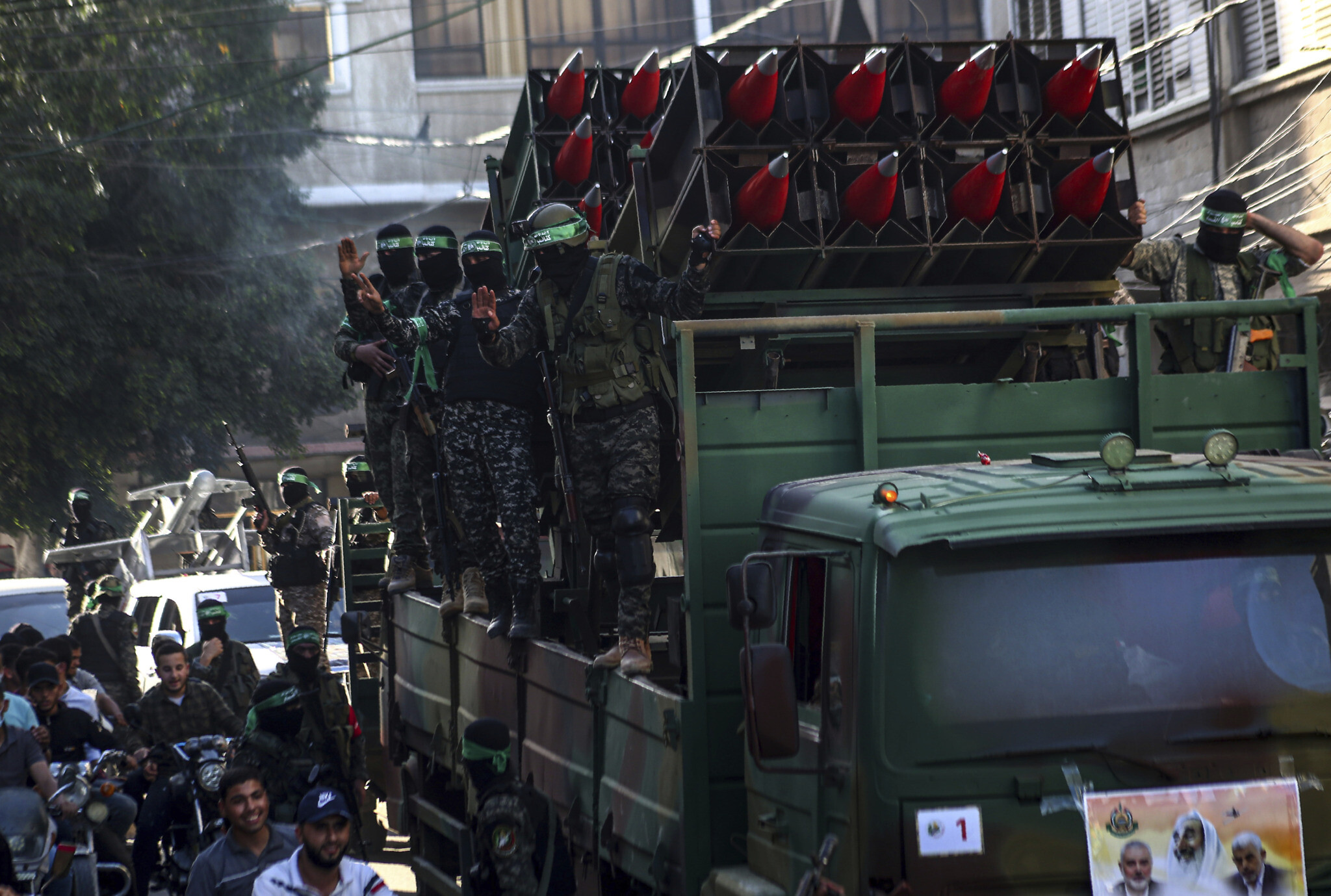
Masked Hamas members parade with Qassam rockets through the streets of Khan Younis, southern Gaza Strip, on May 27, 2021. (AP/Yousef Masoud)
“The entire Hamas leadership in the West Bank has been arrested and imprisoned since October 7, and the leadership structure inside prisons itself has been dismantled,” Milshtein said, referring to steps taken by the Israel Prison Service that ended the previous system of internal organization and autonomy for Palestinian security prisoners, including Hamas.
Despite these constraints, Milshtein stressed that coordination between Hamas leadership abroad and its military wing inside Gaza remains strong — and is expected to continue even after the selection of a new leader, who will likely remain outside the Strip for the foreseeable future.
“The ability of those outside Gaza to control what happens inside remains very high,” he said. “In Israel people often say there’s a disconnect, that they’re not communicating – that’s nonsense. There is ongoing consultation with those inside Gaza — Mohammed Oudeh, Ali Amoudi, Izz al-Din Haddad — but the hierarchy is clear: the strategic decisions are made outside the Strip, and they implement them.”
Party of five
Hamas has not had an elected leader since July 2024, when a bomb planted by Israel in Tehran killed Ismail Haniyeh, who was elected to a second term as terror chief in 2021. Following the assassination, Hamas announced that Yahya Sinwar, its top official in Gaza, would take over as leader, without holding internal elections.
Sinwar, a former al-Qassam chief who is credited as the mastermind of the October 7 assault, assumed the role while in hiding from Israeli airstrikes on the Strip, and his tenure lasted just three months before he was killed in the Rafah area.
Since his death, Hamas has not formally named a successor or interim leader. However, various reports indicate that the group has since been led by a quintet of senior officials based outside Gaza, primarily in Qatar and Turkey.
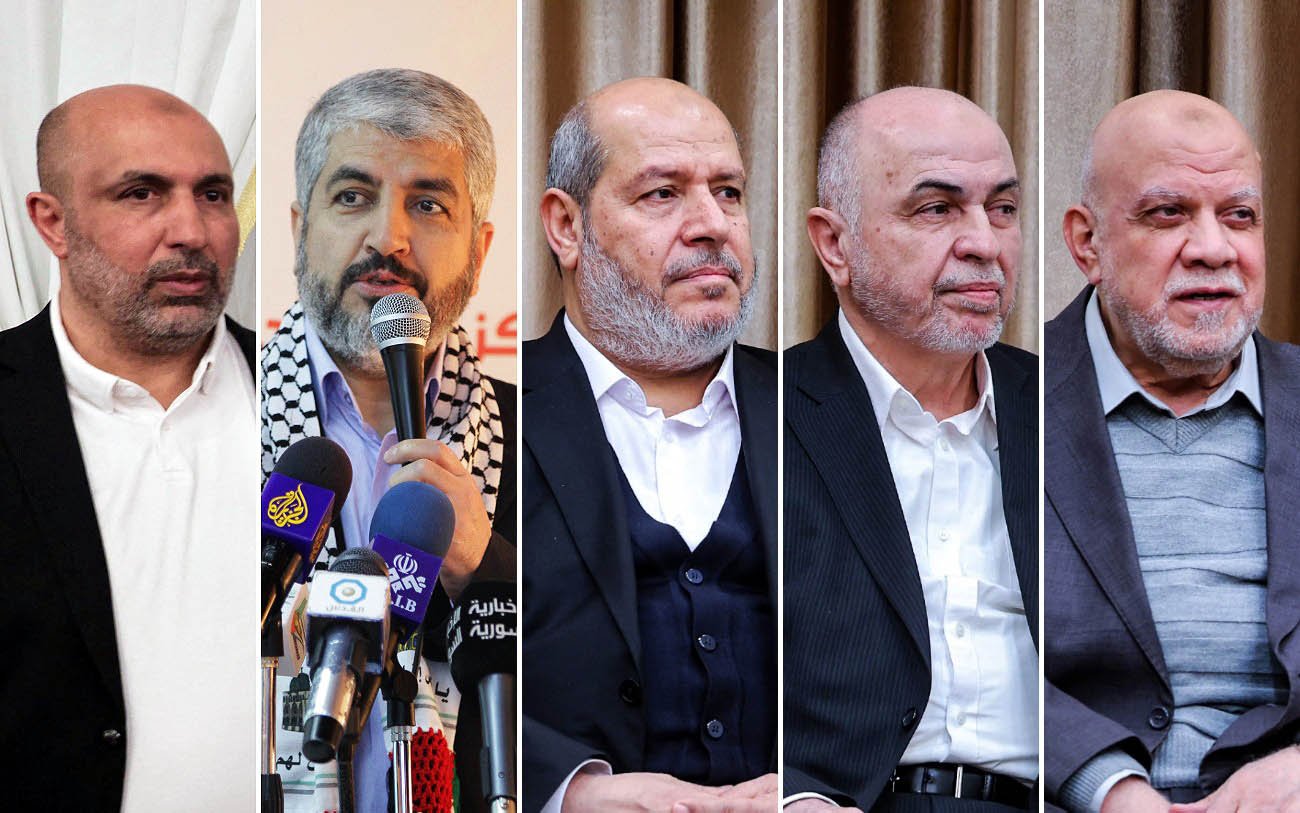
A composite image of five members of Hamas’s leadership targeted by Israel in Qatar on September 9, 2025, L-R: Zaher Jabarin, Khaled Mashaal, Khalil al-Hayya, Muhammad Ismail Darwish, Nizar Awadallah. (Mahmud Hams/Louai Beshara/KHAMENEI.IR/AFP)
The crew is reportedly made up of Khalil al-Hayya, Sinwar’s deputy and the group’s chief negotiator; Khaled Mashaal, who heads Hamas’s external leadership and had headed the group before Haniyeh; Mohammad Darwish, head of the advisory Shura Council; Zaher Jabarin; and Nizar Awadallah. Most had been in Gaza but left the Strip shortly before the October 7, 2023, attack.
These officials have been seen over the past two years in numerous meetings with representatives from Qatar and Turkey, and in Cairo during ceasefire negotiations over Gaza.
Hamas’s accession to the Trump ceasefire deal has underscored its ability to make strategic decisions even without a single leader at the helm, a feature built into Hamas’s structure. Though organized hierarchically, Hamas also maintains the ability to operate in a decentralized way, with factions in the West Bank, Gaza, Israeli prisons and abroad able to act independently of each other.
Even after many senior figures in Gaza were killed, the external leadership was able to fill the vacuum, continue decision-making, and maintain contact with those still inside the Strip.
Hamas also operates under the principle of “shura,” or consultation, requiring decisions to be made collectively rather than by a single individual.
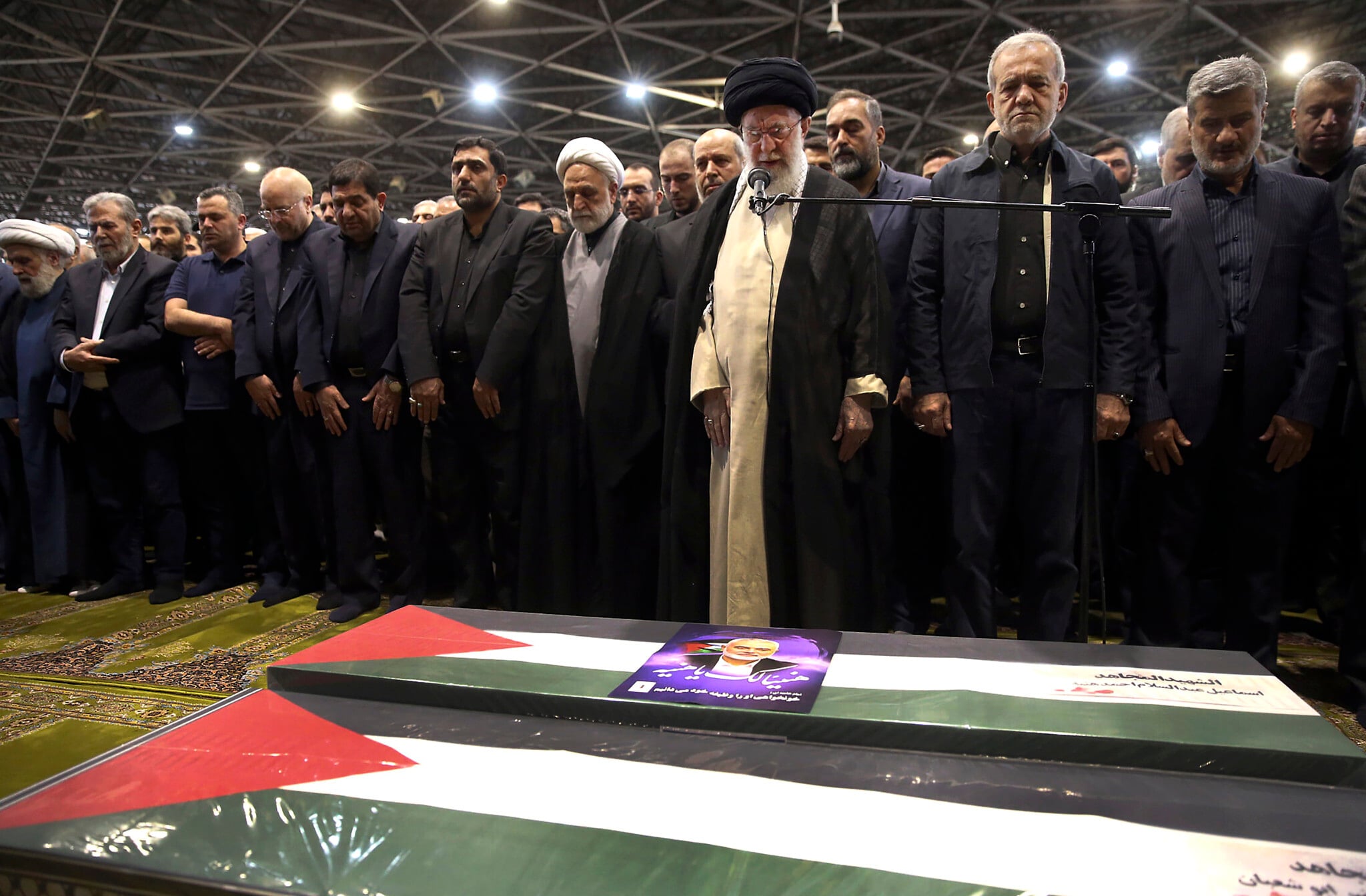
In this photo released by the official website of the office of the Iranian supreme leader, then-supreme leader Ayatollah Ali Khamenei, third right, leads a prayer over the coffins of Hamas leader Ismail Haniyeh and his bodyguard, who were killed in an Israeli operation, during their funeral ceremony at the Tehran University campus, in Tehran, Iran, August 1, 2024. (Office of the Iranian Supreme Leader via AP)
Still, Milshtein noted that the five-headed leadership represents an unusual moment in Hamas’s history, with the group likely seeking a return to a single figure at the top guiding its direction.
The identity of that person, and where he hails from, will likely be a major factor in shaping the organization’s trajectory in the coming years, particularly regarding the centrality of Gaza in its priorities.
Gaza or survival
The upcoming elections amount to “a battle for the survival of the concept that has dominated Hamas over the past 20 years — since the group seized control of the Gaza Strip by force — according to which Gaza is Hamas’s crown jewel,” Milshtein said.
Prioritizing the Strip as its main area of investment, Hamas built up its military wing in Gaza and entrenched its civilian rule there. The October 7 attack put Hamas’s consolidation of its power there to the test, risking its rule over the enclave, the lives of millions of Palestinians, tens of thousands of whom were ultimately killed, and the enclave’s entire future.
Gaza’s place in the group’s priorities is now particularly critical as Hamas engages in efforts to negotiate the second phase of the Gaza ceasefire deal, which could strip it of civilian control over the enclave.
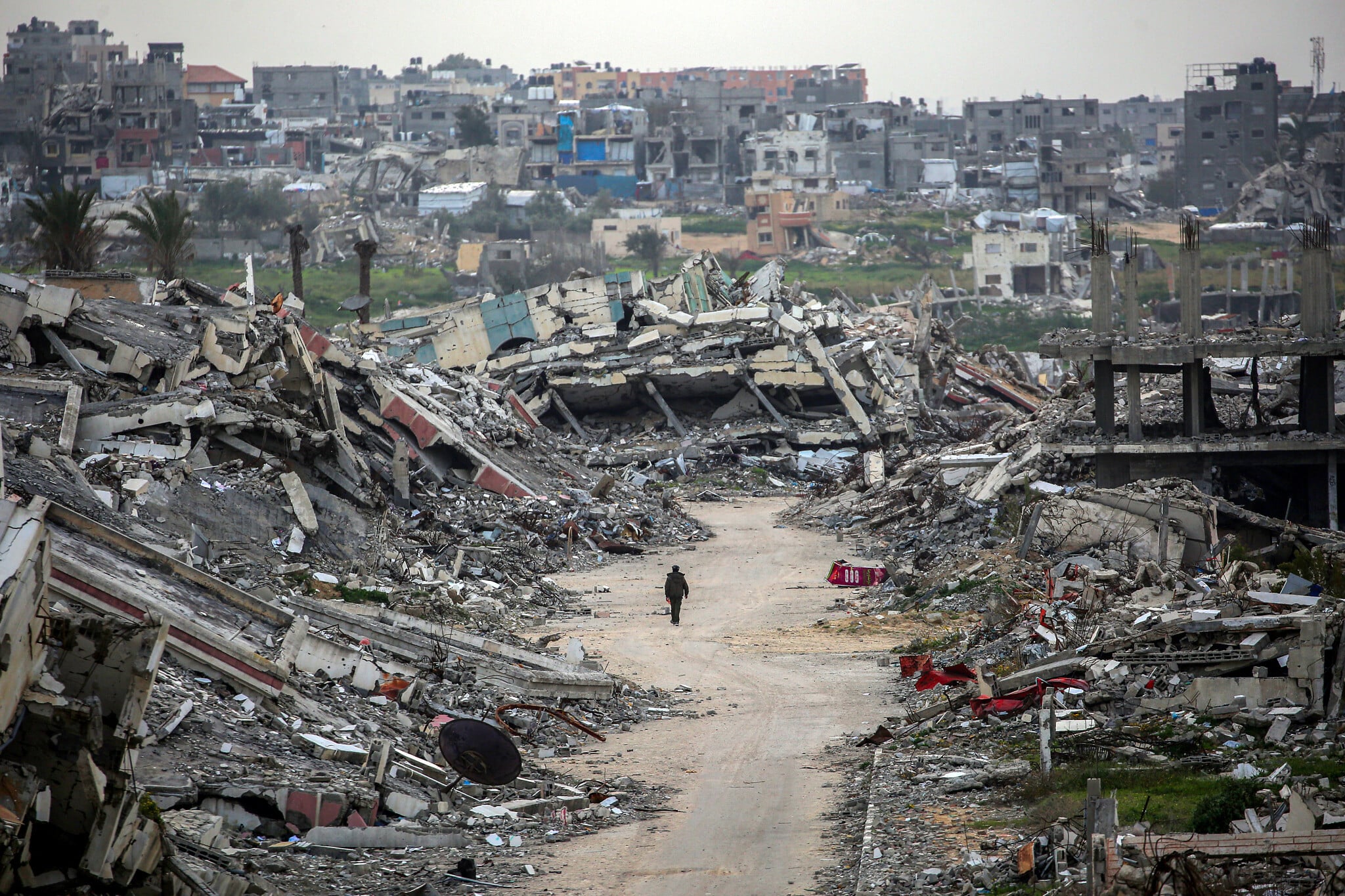
A man walks along a street past the rubble of destroyed buildings in the Zahra neighborhood, southwest of Nuseirat in the central Gaza Strip, on February 6, 2026. (Eyad Baba / AFP)
While the first phase of the ceasefire required little more than halting hostilities, Hamas is now facing more immediate and consequential decisions about its future in Gaza — including how much power it will retain, whether it will relinquish its weapons, and whether it will maintain a long-term ceasefire with Israel.
Hamas has not publicly named the leading candidates in the upcoming elections, but the two figures most frequently mentioned in recent months — Al-Hayya and Mashaal — represent sharply divergent visions regarding Gaza’s importance in Hamas’s broader agenda, and whether the Strip should remain the central arena or give way to building the organization’s strength on other fronts against Israel.
Al-Hayya is closely tied to the Gaza Strip. Born and raised there, he spent his entire life in the territory until the October 7 massacre. Just days before the attack, he left the Strip along with other senior figures in Hamas’s Gaza-based political bureau and relocated to Qatar, where he has remained since.
Despite his current residence, Milshtein said, “he is not from abroad — he is a Gazan in every sense,” in terms of his priorities and the emphasis he places on investment in the Strip.
For al-Hayya, Milshtein explained, “it is far more important to continue developing the issue of control in Gaza and the matter of [military] rebuilding.”
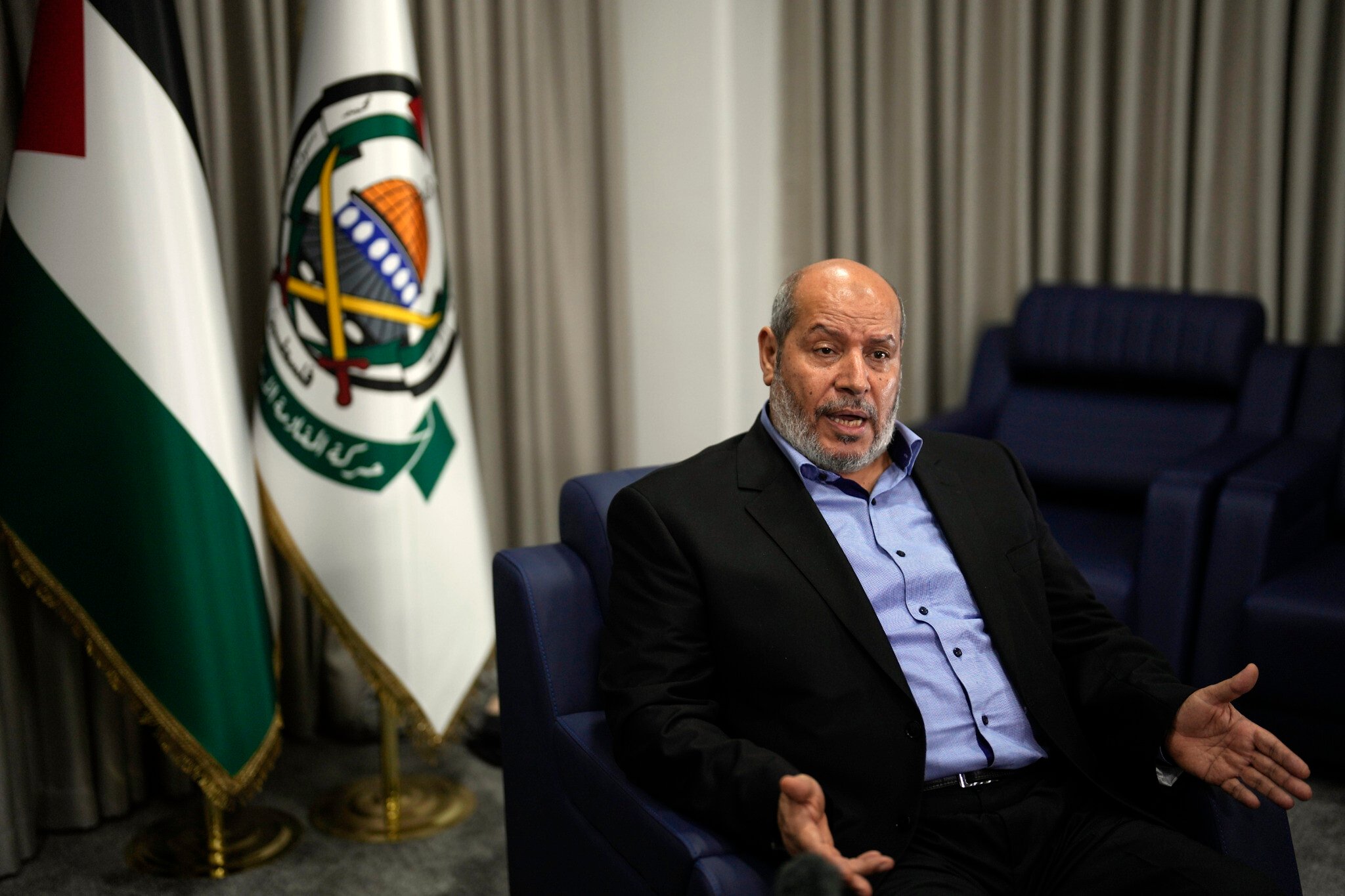
Senior Hamas politburo official Khalil al-Hayya speaks during an interview with The Associated Press, in Istanbul, Turkey, April 24, 2024. (AP Photo/Khalil Hamra)
That preference is also reflected in his role. Until Sinwar’s killing, al-Hayya served as his deputy — effectively making him deputy head of Hamas’s political bureau in Gaza. After Sinwar’s death, Hamas referred to al-Hayya as the group’s leader in Gaza, even though al-Hayya is not in Gaza and no formal internal elections were held for the position.
Shielded from Israel by a reported US guarantee protecting his safety, al-Hayya has become one of Hamas’s more recognizable public faces, appearing before cameras to deliver key speeches on behalf of the organization at major moments.
He also led negotiations for a ceasefire, building something of a rapport with Trump envoys Steve Witkoff and Jared Kushner, reflecting his senior standing and international cachet.
Despite agreeing to a deal that ostensibly includes Hamas’s ouster from Gaza and disarmament, he has also broadcast stances that place the group’s control of Gaza as a central priority and one worth continuing to fight Israel over.
Mashaal, on the other hand, has pursued a different strategy, one that sees Hamas surviving by maintaining quiet in Gaza and improving relations with the Palestinian Authority, according to Milshtein.
“For Gaza, it is far more important to continue developing governance and the struggle [against Israel],” he said. “But Mashaal, in his discourse, talks about reconciliation with Fatah and about [Palestinian-wide] elections.”
Unlike al-Hayya, Mashaal was born in the West Bank and spent most of his life abroad. Since 2011, he has been based in Qatar.
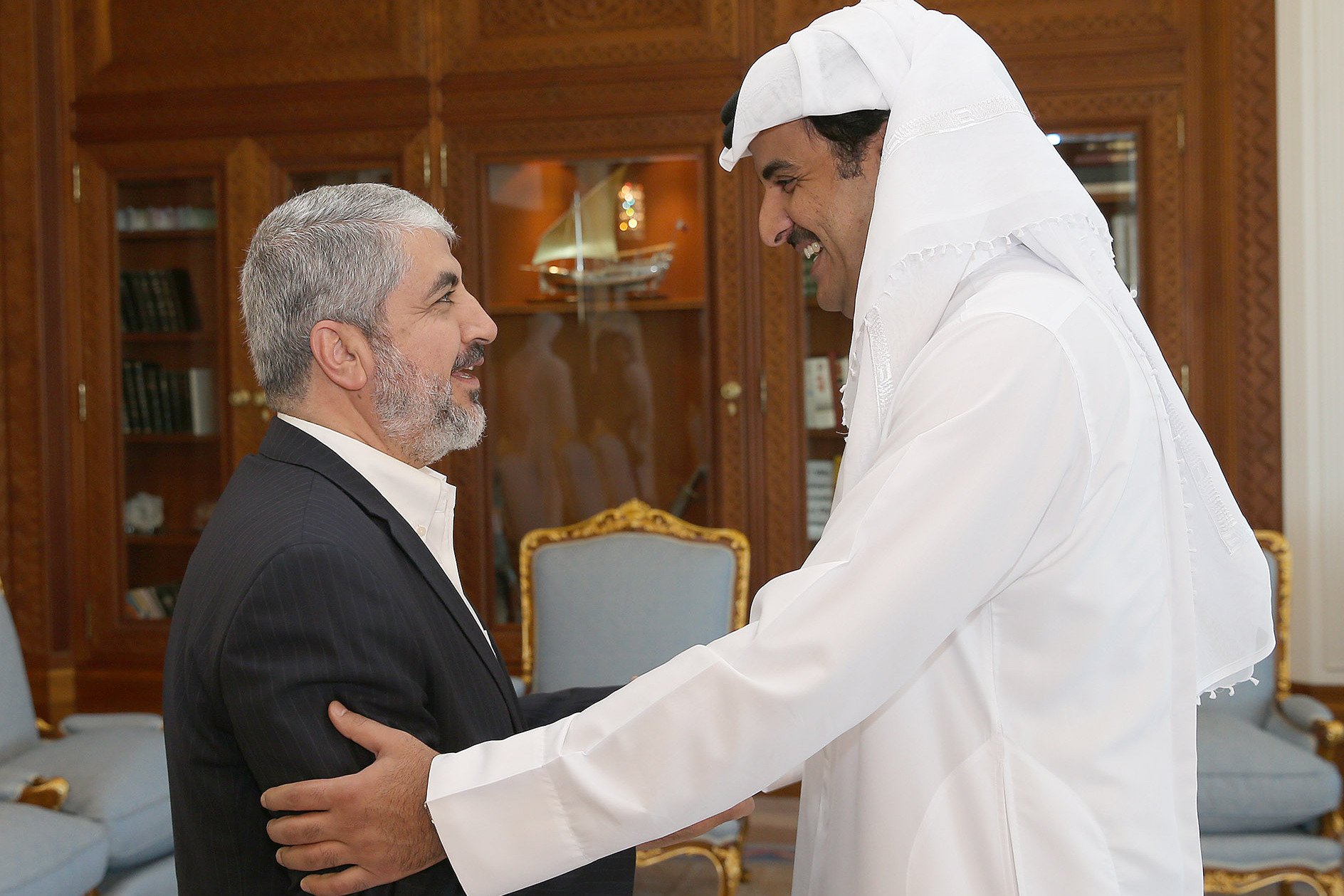
Emir Tamim bin Hamad al-Thani (R) in a meeting with Hamas official Khaled Mashaal in Doha, October 17, 2016 (Qatar government handout)
During his tenure as Hamas leader between 2011 and 2017, Mashaal promoted reconciliation efforts with Fatah, and he has continued to call for such reconciliation since leaving the post.
That message has persisted during the war in Gaza. In June 2024, speaking at a conference in Beirut, Mashaal said that reorganizing “the Palestinian house” — referring to reconciliation between the rival Palestinian factions — had become essential.
“We cannot wait until the end of the [military] campaign; we must address it in the midst of the campaign,” he said.
Milshtein framed the divide as “a battle over emphasis,” and stressed that Mashaal’s position should not be seen as “moderate,” noting that it does not reflect a fundamental ideological departure from Hamas’s broader stance of continued confrontation with Israel.
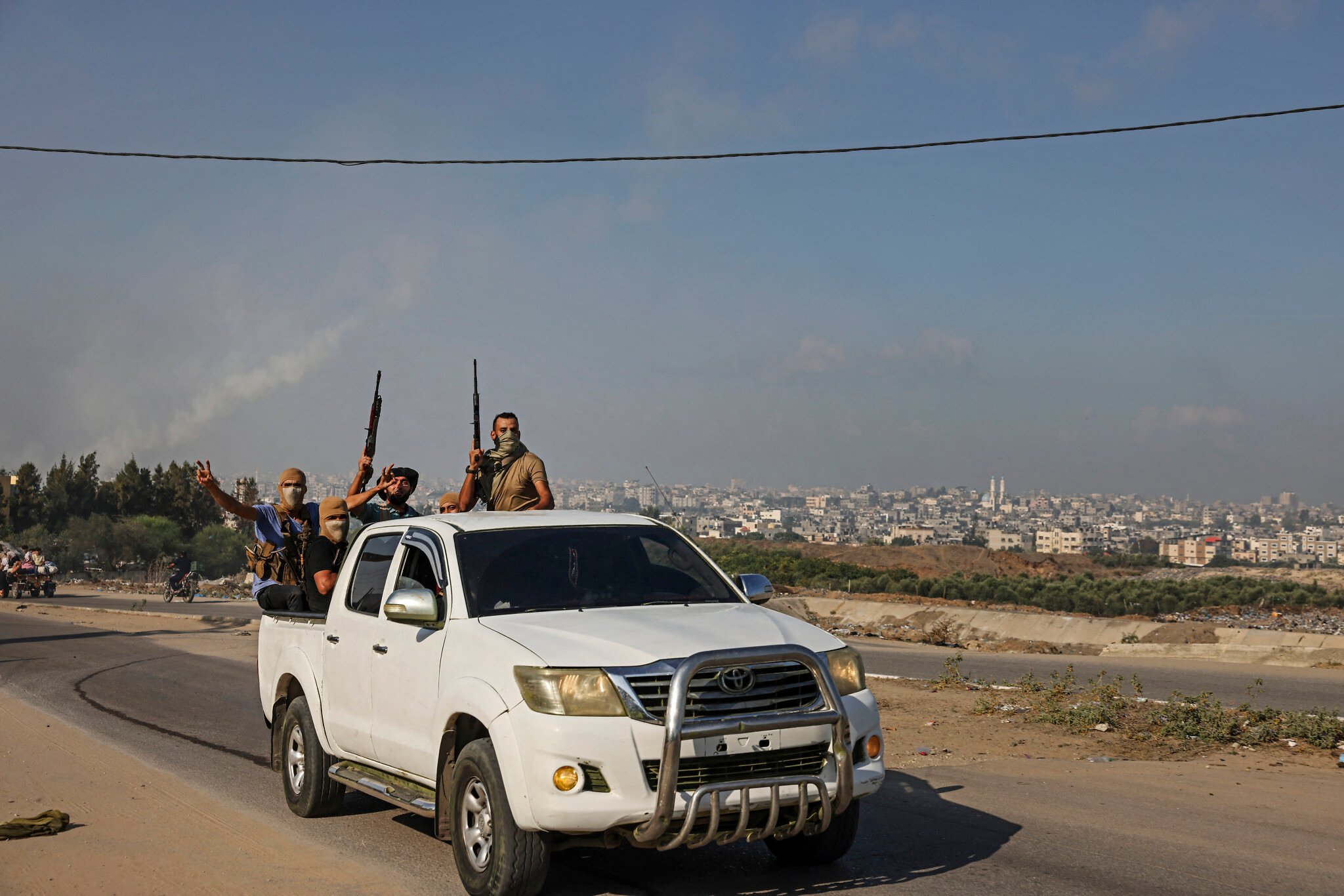
Hamas terrorists move towards the Erez crossing between Israel and the northern Gaza Strip, during the terror group’s onslaught on October 7, 2023. (Mohammed ABED / AFP)
“It is pragmatic,” he said. “What matters to him is preserving Hamas, and that is currently more important than when the next round with Israel [in Gaza] takes place.”
According to Milshtein, this approach could entail a willingness to curb Hamas’s power, including by pursuing a compromise with Fatah, committing to long-term calm, or relinquishing some degree of control of Gaza, in exchange for ensuring the organization’s survival.
The Iran factor
Hovering over the vote will likely be Iran, which has provided Hamas with hundreds of millions of dollars annually, weapons expertise and military training, and which may be seeking to torpedo a Mashaal leadership bid.
Ties between Tehran and Hamas ramped up following Mashaal’s ouster in 2017, largely cultivated by Ismail Haniyeh and Yahya Sinwar, who relied on Iranian support in planning and executing the October 7 assault.
Al-Hayya, Sinwar’s deputy, is seen as continuing that line within Hamas and maintaining ties with Tehran.
Mashaal fell out with Iran as early as 2011, when he and other Hamas leaders based in Damascus were expelled after criticizing the Assad regime, a key Iranian ally.

People walk past a billboard showing a portrait of Hamas leader Yahya Sinwar (top) next to Palestine Square in Tehran on August 12, 2024. (Atta Kenare/AFP)
Correspondence between Hamas and Iran uncovered by the IDF during the Gaza war suggests that years later, relations between Mashaal and Tehran remained strained, with Iranian officials seeking to sideline him from decision-making within Hamas.
In one such letter, Mahmoud Saeed Izadi, head of the Palestine branch in Iran’s Revolutionary Guards, wrote to Sinwar in 2021 that Mashaal’s “misguided policy bears responsibility for many of the failures and problems that have emerged in the axis of resistance, because he did not fulfill his role and did not make use of his leadership and influential position.”
In the same letter, Izadi made clear that Iran opposed placing a Hamas military force established with its support in Lebanon under Mashaal’s command, despite his formal role as head of Hamas’s external wing.
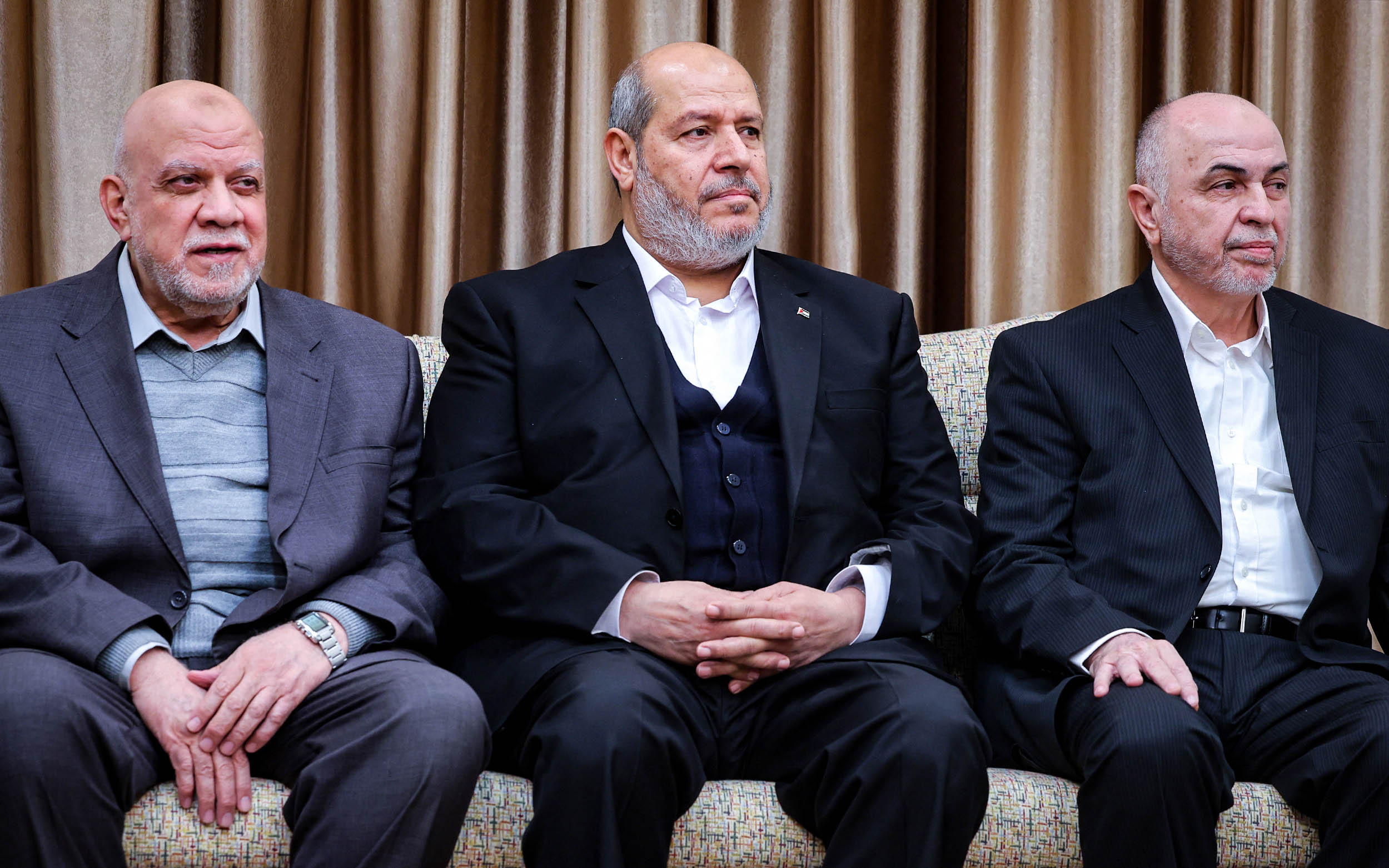
This handout picture released by the office of Iran’s then-supreme leader Ayatollah Ali Khamenei on February 8, 2025, shows L-R) member of the Hamas political bureau Nizar Awadallah, deputy chairman of the Hamas political bureau Khalil al-Hayya and the head of the political council of Hamas Mohammad Ismail Darwish, in a meeting in Tehran, Iran. (KHAMENEI.IR / AFP)
The issue also surfaced within Hamas itself. According to documents reportedly seized during the Gaza war, Sinwar wrote to Haniyeh on March 6, 2023, recommending that Mashaal not be included in a Hamas delegation to Iran and stressing the need to assure Tehran that its financial support would not be directed to Hamas’s external branch, led by Mashaal.
Milshtein said the trove of material captured during the war “illustrates just how much the Iranians resented Mashaal — how much they disliked him,” Milshtein said.
Should the more Gulf-centered Mashaal emerge as Hamas leader, ties between the group and Tehran may be strained once again. However, Milshtein noted that what Iran thinks likely matters less at this point, with its ability to exert influence weakened by strains on its resources due to weeks of US and Israeli attacks.
Iran viewed Mashaal as someone seeking to curb its influence over Hamas and favor ties with Gulf states such as Qatar instead, meaning his election could significantly strain relations between Tehran and Hamas.
“Its standing has declined” within Hamas regardless, he said.
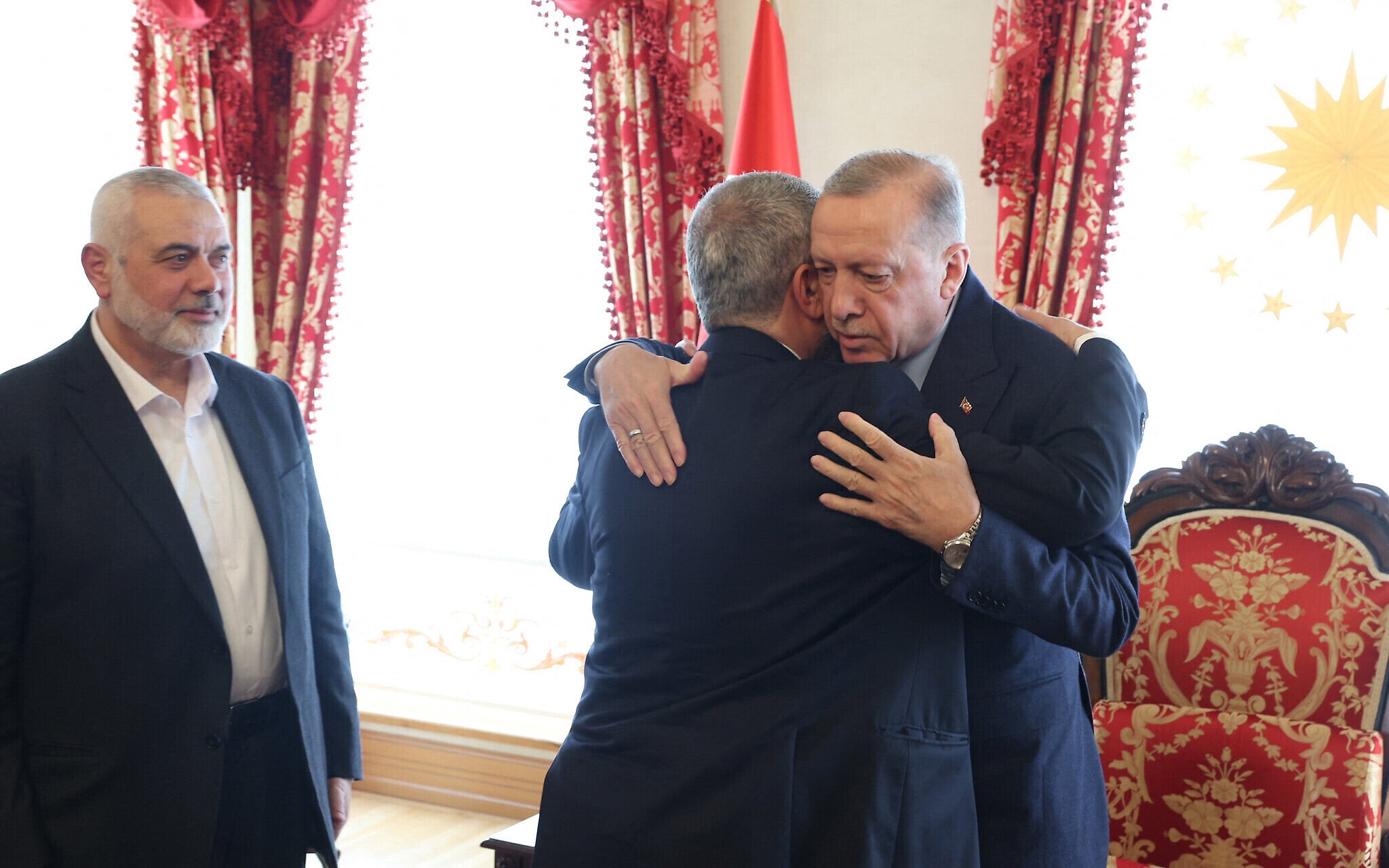
Turkish President Recep Tayyip Erdogan (R) embracing top Hamas official Khaled Mashaal (C) as he meets with then-leader of the terror group Ismail Haniyeh (L) and his delegation at the Dolmabahce Presidential working office in Istanbul, on April 20, 2024. (Handout / TURKISH PRESIDENTIAL PRESS SERVICE / AFP)
In the absence of strong Iranian backing, Hamas is expected to continue relying on the countries hosting its leadership — chiefly Turkey and Qatar. On this front, Milshtein said there is little meaningful difference between the candidates, with both Mashaal and al-Hayya currently based in Qatar and maintaining stable ties with Doha.
There is also the possibility that neither candidate will be chosen and that Hamas will opt instead for a compromise figure — a relatively low-profile individual without a clear ideological stance on the movement’s future, such as Shura Council leader Mohammad Darwish or Mohammad Nasr, a relatively obscure senior figure who has been part of the team negotiating in Egypt over the Gaza ceasefire.