
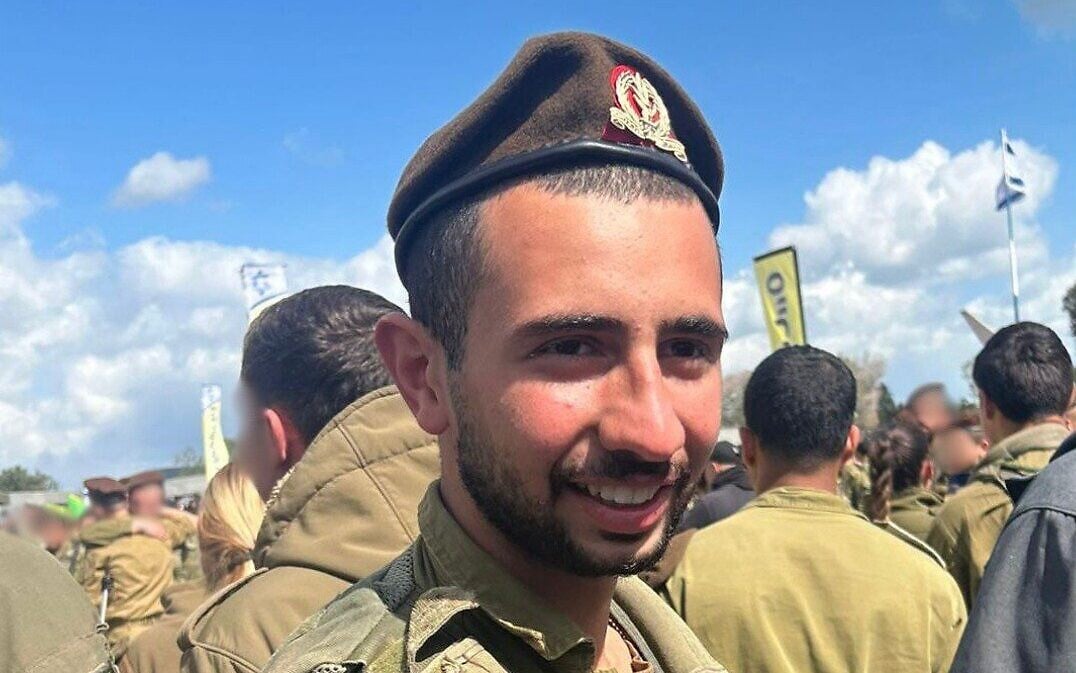
An Israeli soldier was killed, and another was moderately wounded in a Hezbollah explosive drone attack in southern Lebanon on Thursday morning, as another drone launched by the terror group struck an artillery position on the border, wounding twelve other troops.
The slain soldier was named as Sgt. Liem Ben Hamo, 19, of the Golani Brigade’s 13th Battalion, from Herzliya.
A US-brokered ceasefire appeared to be falling apart as the terror group carried out several other drone and rocket attacks on Thursday. Israel, meanwhile, launched strikes on the terror group in southern Lebanon, saying it was acting against threats. Lebanon’s health ministry said Israeli strikes on south Lebanon killed nine people, including two children.
During the morning incident, Hezbollah launched two explosive-laden drones at troops stationed in the village of Qantara. According to the IDF, one of the drones was intercepted by troops, while the second struck near the forces.
The drone impact killed Ben Hamo and wounded the second soldier moderately.
Get The Times of Israel’s Daily Edition
by email and never miss our top stories
By signing up, you agree to the terms
While the casualties were being evacuated, the military said it struck Hezbollah infrastructure in the area.
Hezbollah took responsibility, claiming in a statement to have targeted two Israeli tanks in Qantara with drones.
Earlier in the morning, a Hezbollah drone launched from Lebanon struck a military cargo carrier, which caught fire, at an artillery site near the northern Israel border community of Shomera. Several artillery shells in the area also exploded. The M548, known in the IDF as the Alfa, is used to transport artillery shells.
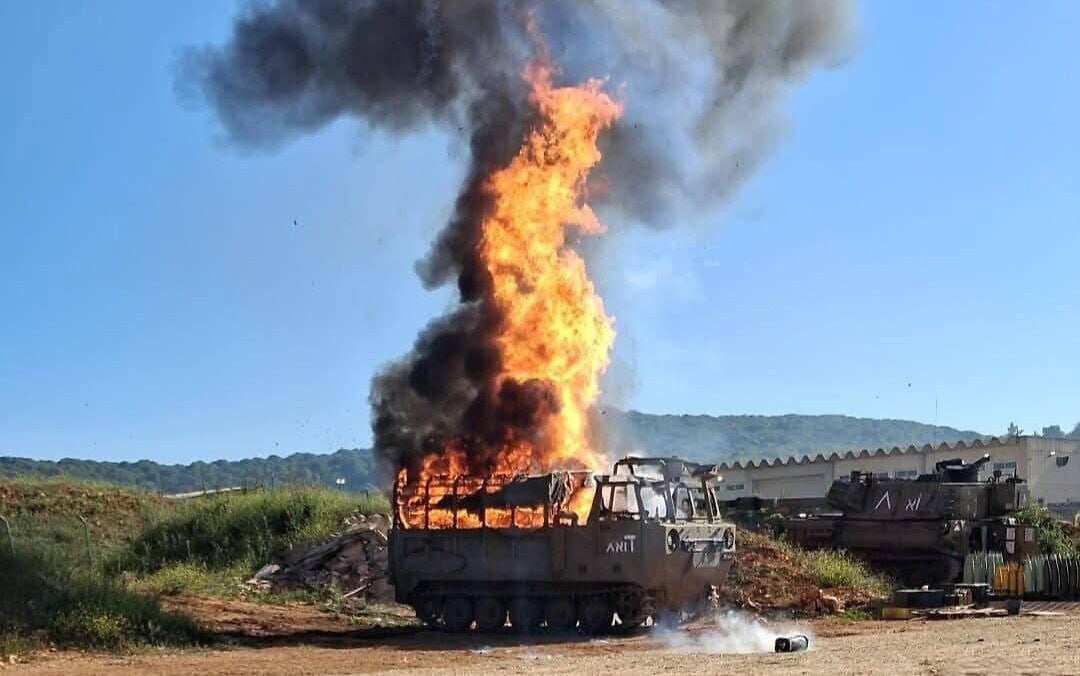
A M548 cargo carrier at an Israeli military artillery site near the northern border community of Shomera that was hit by a Hezbollah drone on April 30, 2026. (Used in accordance with Clause 27a of the Copyright Law)
The drone strike wounded 12 soldiers. According to the IDF, two of the soldiers were moderately hurt, while the rest were in good condition.
Sirens warning of a suspected drone attack from Lebanon had sounded in the border communities of Zarit, Adamit, Shomera and others, sending residents into shelters.
The military was investigating whether the drone was guided by a fiber optic cable, which is immune to electronic jamming. Hezbollah has been using fiber optic-guided drones in attacks on troops in southern Lebanon in recent weeks.
Hezbollah took responsibility for the drone attack.
In at least six other incidents, IDF interceptor missiles were launched at suspected Hezbollah drones identified over areas of southern Lebanon where troops are deployed, the military said. The IDF said most of the “suspicious aerial targets” were intercepted, while the results of others were still under review.
Additionally, a rocket launched from Lebanon at northern Israel in the afternoon struck an open area, the military said. No sirens sounded in any towns.
The IDF said the attack was “another violation of the ceasefire understandings by the Hezbollah terror organization.”
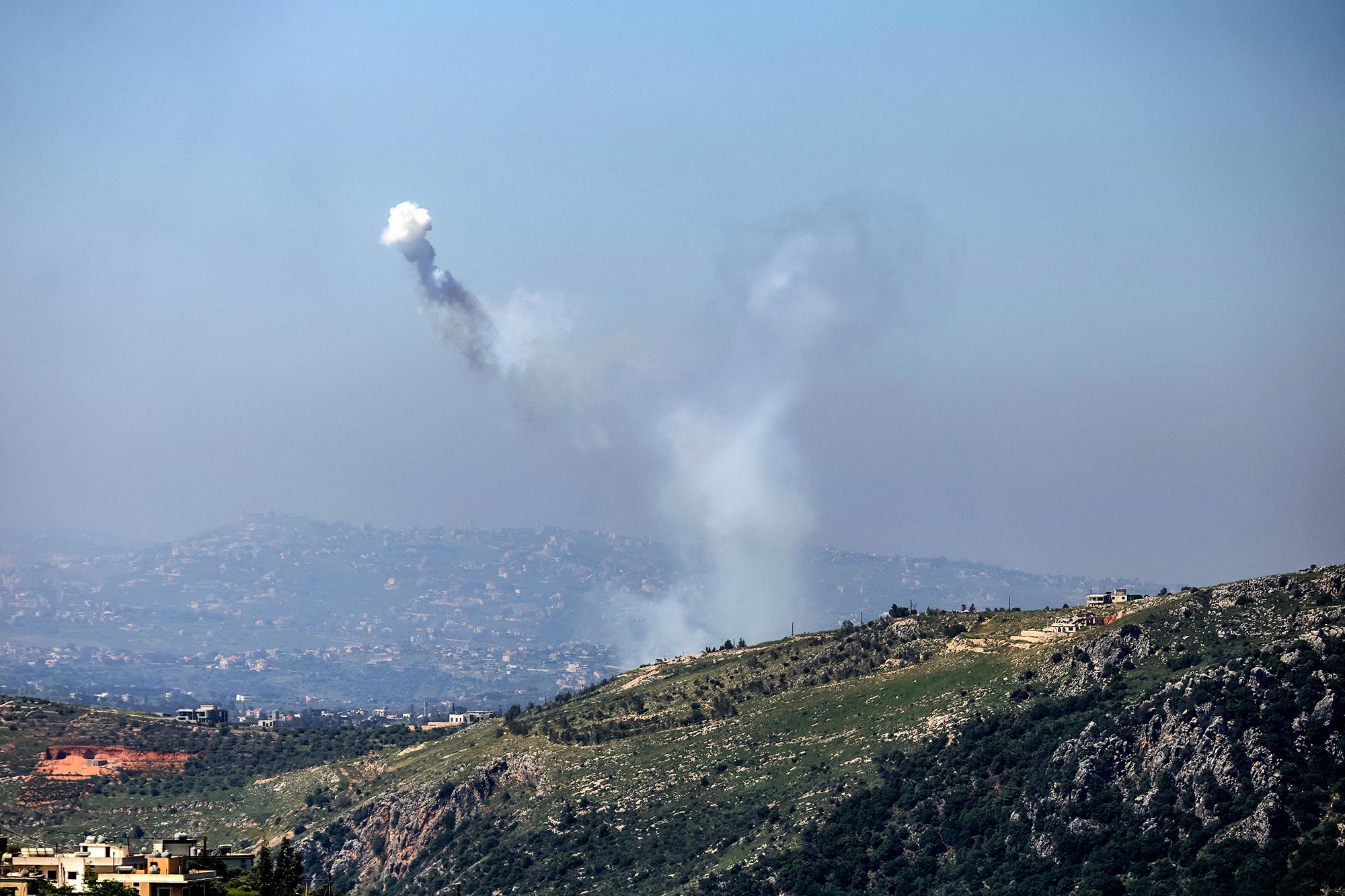
A photograph taken from the southern Lebanese area of Marjeyoun shows the smoke traces of Israeli shelling as it targets the village of Yohmor on April 30, 2026. (AFP)
The terror group also said it shot down an Israeli Hermes 450 drone over southern Lebanon, and the IDF confirmed one of its unmanned aerial vehicles was downed by a Hezbollah surface-to-air missile.
“There is no fear of information leaking,” the military said of the downed drone, adding that the incident was under further investigation.
The IDF later said it launched a wave of airstrikes against Hezbollah infrastructure sites across southern Lebanon.
No further details were immediately given, but the military issued evacuation warnings for 23 villages in southern Lebanon ahead of strikes on Hezbollah.
The warning was addressed to residents of Sammaaiyeh, Hanniyeh, Qlaileh, Wadi Jilou, Kniseh, Kafra, Majdal Zoun, Seddiqin, Jibshit, Habboush, Harouf, Kfar Jouz, Nabatiyeh al-Faouqa, Ebba, Aadshit, Arab Salim, Toul, Houmine al-Faouqa, Mjadel, Arzoun, Dounine, Haumeiri, and Maaroub. They were called to evacuate to at least a kilometer away.
“Hezbollah activities are forcing the IDF to act against it, as it does not intend to harm you,” said army spokesman Col. Avichay Adraee.
The Lebanese communities are outside of the “buffer zone” in southern Lebanon that Israel established before the ceasefire that was announced earlier this month, which has failed to fully halt hostilities.
Strikes on three south Lebanon villages killed nine people, among them two children and five women, Lebanon’s health ministry said.
“Israeli enemy strikes on south Lebanon led, in an initial toll, to nine martyrs, among them two children and five women, and 23 wounded, among them eight children and seven women,” the ministry said in a statement.
Lebanese President Joseph Aoun decried what he described as Israel’s continued violations of the ceasefire, calling for international pressure on Israel to stop strikes he said were hitting civilians and paramedics.
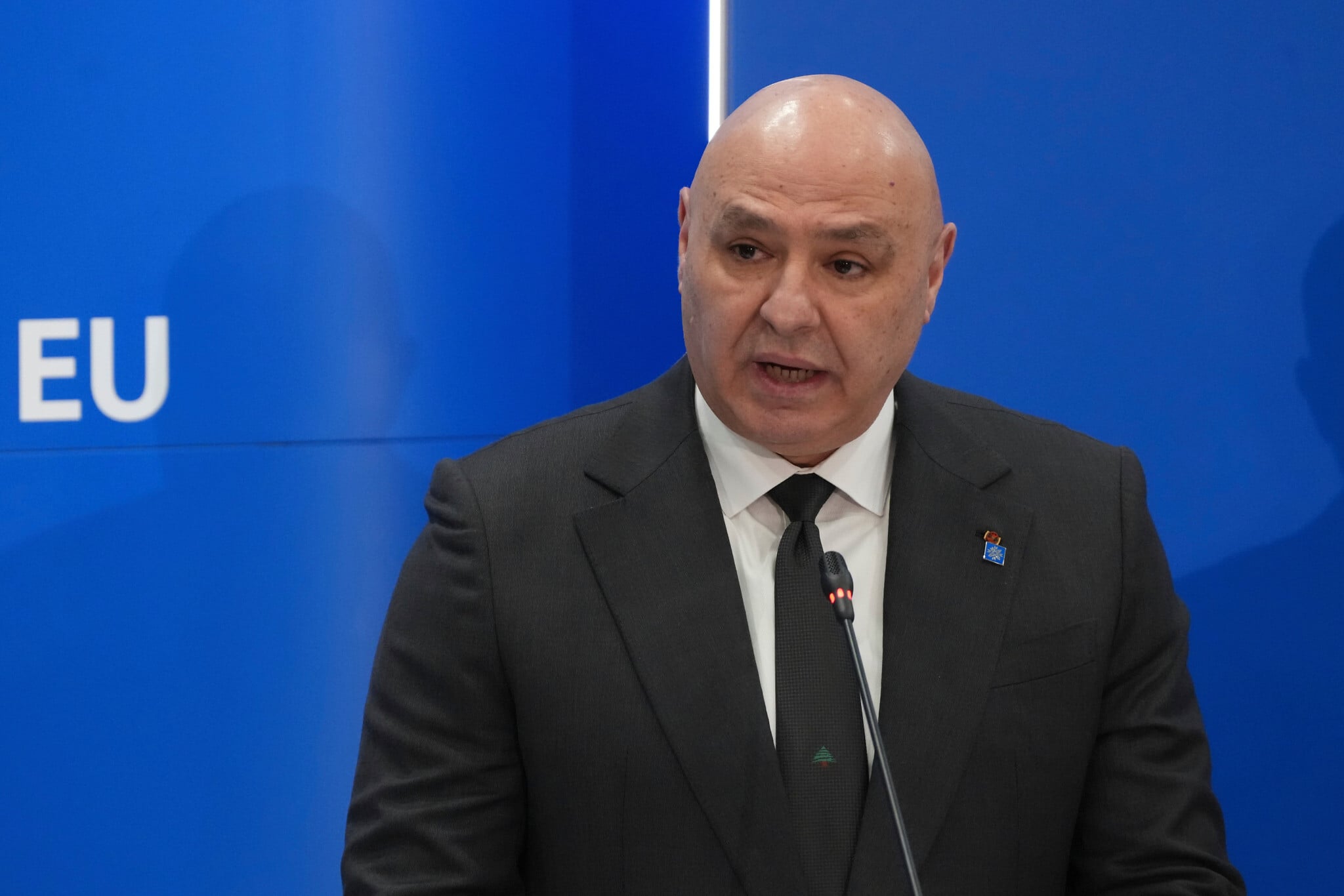
Lebanon’s President Joseph Aoun speaks during a press conference after the EU Summit in Nicosia, Cyprus, Friday, April 24, 2026. (AP Photo/Petros Karadjias)
Aoun slammed the “continuing Israeli violations” in south Lebanon, saying they were occurring “despite the ceasefire, as do demolitions of homes and places of worship, while the number of killed and wounded rises day after day.”
“Pressure must be exerted on Israel to ensure it respects international laws and conventions and ceases targeting civilians, paramedics, civil defence, and humanitarian health and relief organisations,” he added in a statement.
Israel says it is acting in response to Hezbollah threats and violations of the truce.
Updating on recent operations, the IDF said it struck buildings in southern Lebanon where Hezbollah operatives were operating. “The infrastructures that were struck were used by Hezbollah to advance terror attacks against IDF troops and the State of Israel,” the military said.
The army said it also demolished several Hezbollah combat positions on the Lebanese side of the border-straddling Mount Dov during a recent raid.
The operation was led by the elite Alpinist Unit and Yahalom Combat Engineering Unit. The military said the forces located and demolished several Hezbollah combat positions, including rocket-launching posts.
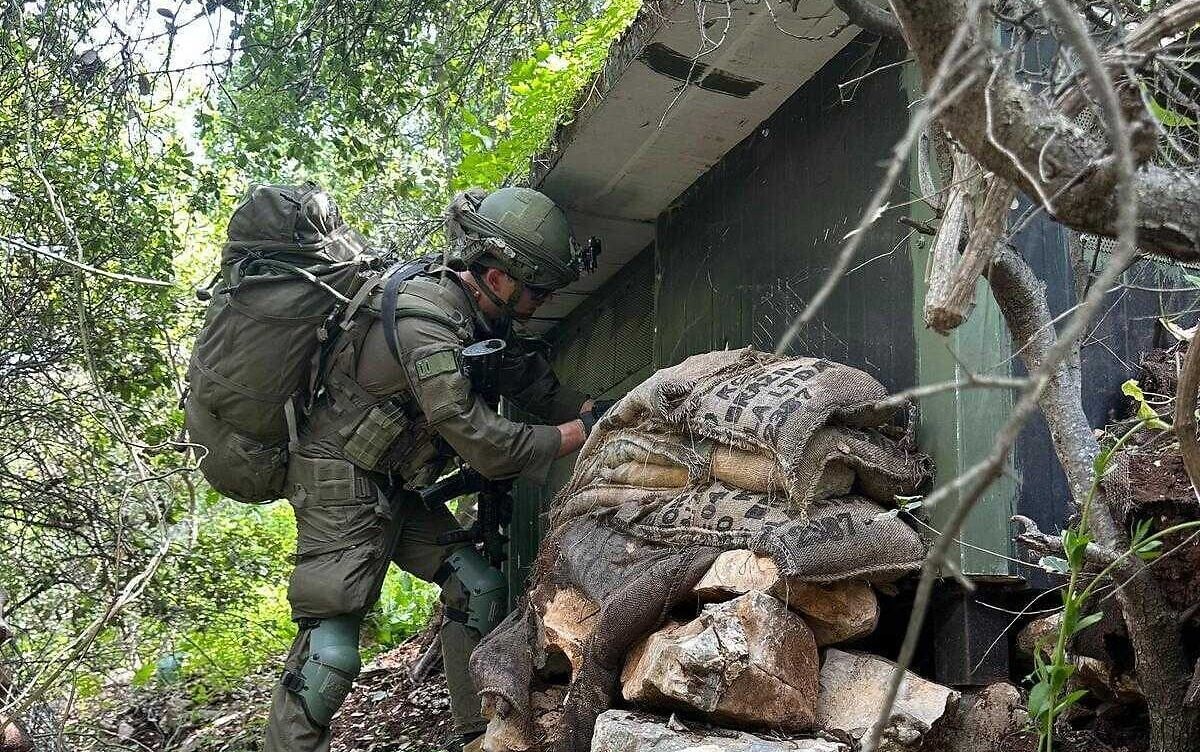
A Hezbollah fighting position is located by troops on the Lebanese side of Mount Dov, in a handout photo published by the military on April 30, 2026. (Israel Defense Forces)
Also, five Hezbollah operatives identified near Israeli forces in southern Lebanon the previous day were killed in airstrikes, the military said.
The IDF said the operatives were identified by troops of the 146th Division in the western sector of southern Lebanon, before being targeted by the Israeli Air Force.
חיל-האוויר תקף וחיסל אתמול חמישה מחבלים מארגון הטרור חיזבאללה שפעלו בסמוך לכוחות צה”ל בדרום לבנון, בזיהוי והכוונת כוחות אוגדה 146.
מדובר בהפרות נוספות של הבנות הפסקת האש על ידי ארגון הטרור חיזבאללה.
צה”ל ימשיך לפעול להסרת איומים על אזרחי מדינת ישראל וכוחות צה”ל. pic.twitter.com/24DIpYtGid
— Israeli Air Force (@IAFsite) April 30, 2026
Meanwhile, Hezbollah launched several explosive-laden drones at Israeli troops stationed in southern Lebanon in two incidents on Wednesday. The IDF said the drones struck near the forces but did not cause any injuries.
“These are further violations of the ceasefire understandings by the Hezbollah terror organization,” the military said.
The US-mediated ceasefire between Israel and Hezbollah, which started on April 17, was extended on April 24 for an additional three weeks, US President Donald Trump announced at the time. His announcement came as Israeli and Lebanese diplomats met for US-brokered talks. Under the terms of the ceasefire, Israel can strike against immediate threats and in self-defense.
On Wednesday, IDF Chief of Staff Lt. Gen. Eyal Zamir said during a visit to troops posted in southern Lebanon that there “is no ceasefire.”
Zamir’s comments came amid a reported push from Jerusalem to get the US to limit its historic direct talks with the Lebanese government to a two-week timeframe, and to sign off on a large-scale IDF campaign against Hezbollah if the talks fail.
Fighting erupted when Hezbollah began attacking across the border after Israel and the US launched their joint campaign against Iran on February 28 in a bid to destabilize the regime and destroy its nuclear and ballistic missile capacities. Israel launched massive airstrikes in Lebanon in response to the Hezbollah terror group’s rocket barrages.
Despite the ceasefire, Hezbollah has fired rockets at northern Israeli communities, though most attacks have been on troops in southern Lebanon or on the Israeli side of the border.