
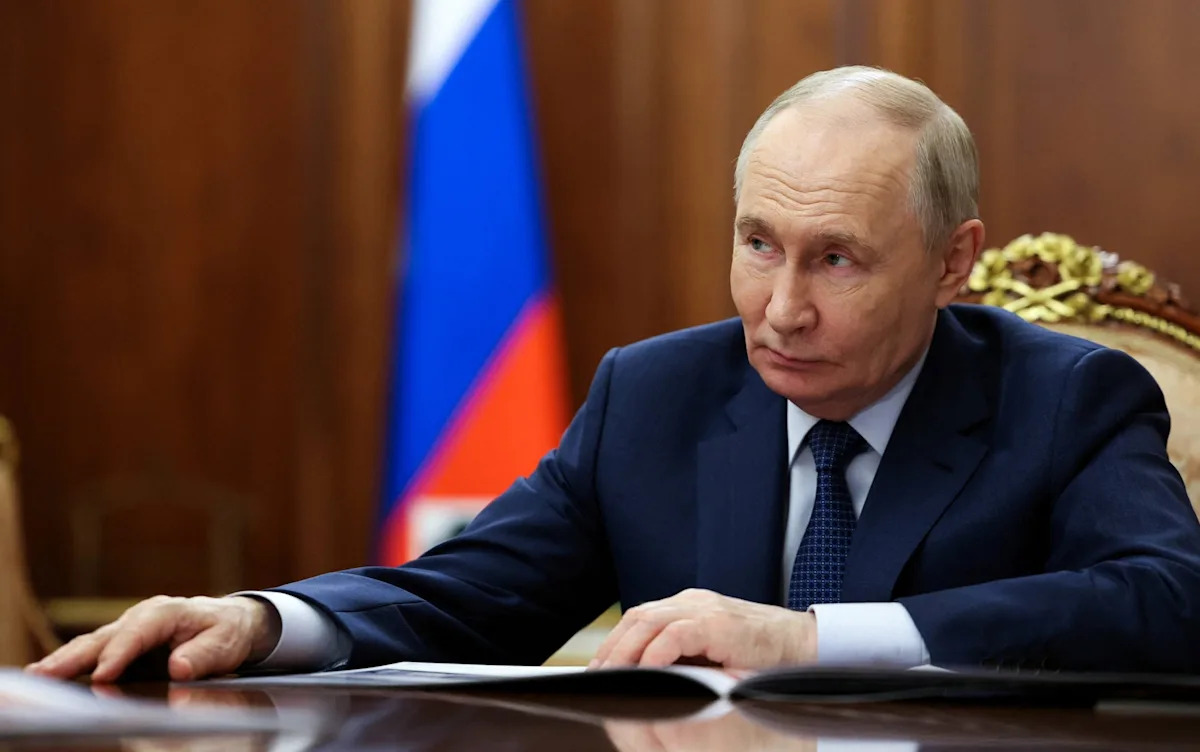
By the time a drone flew all the way to Moscow’s Mosfilmovskaya Street, and slammed into the side of a luxury apartment block on Monday, the writing was already on the wall for Gen Viktor Afzalov.
The head of Russia’s “aerospace forces” – the man in charge of air defences – was dismissed by an increasingly paranoid Vladimir Putin.
Too many drones and missiles are getting through. And this one, just four miles from the Kremlin and less than two miles from the Russian defence ministry building, was too close to home.
Amid a grinding stalemate on the front line, Ukraine has leaned into its mantra of “bringing the war back to Russia” and launched an increasing number of strikes deep into enemy territory.
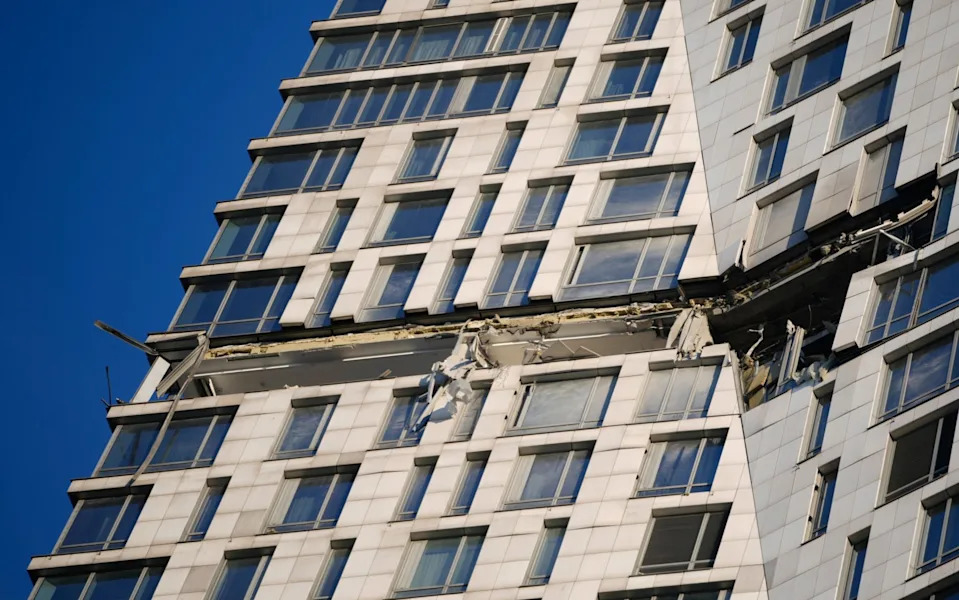
The drone attack on Moscow’s Mosfilmovskaya Street was too close for comfort for Putin – AP
Some 70 per cent of the Russian population is now thought to be within the range of Ukraine’s long-range drones, which are routinely blowing up oil and gas facilities as far away as the Ural Mountains.
This has struck fear into the heart of Muscovite elites.
The capital is the most heavily fortified city in the country, shielded by S-400 and S-300 surface-to-air missiles supported by Pantsir-S1 gun-missile systems and electronic jamming defences.
But Monday’s incursion suggested that the drone slipped through some of Russia’s most sophisticated and expensive air defence systems.
An intelligence dossier this week claimed that the Russian president spends most of his time ensconced in bunkers and no longer trusts the people around him to have mobile phones that are connected to the internet.
Russia’s flagship “victory day” parade on May 9 has been pared back amid fears Kyiv’s drones could descend on Red Square.
Putin’s desperate plea for a temporary ceasefire received a curt response from Volodymyr Zelensky, the Ukrainian president, who said: “It is time for Russian leaders to take real steps to end their war, especially since Russia’s defence ministry believes it cannot hold a parade in Moscow without Ukraine’s goodwill.”
Until then, Putin is cornered and Mr Zelensky is determined to keep applying pressure.
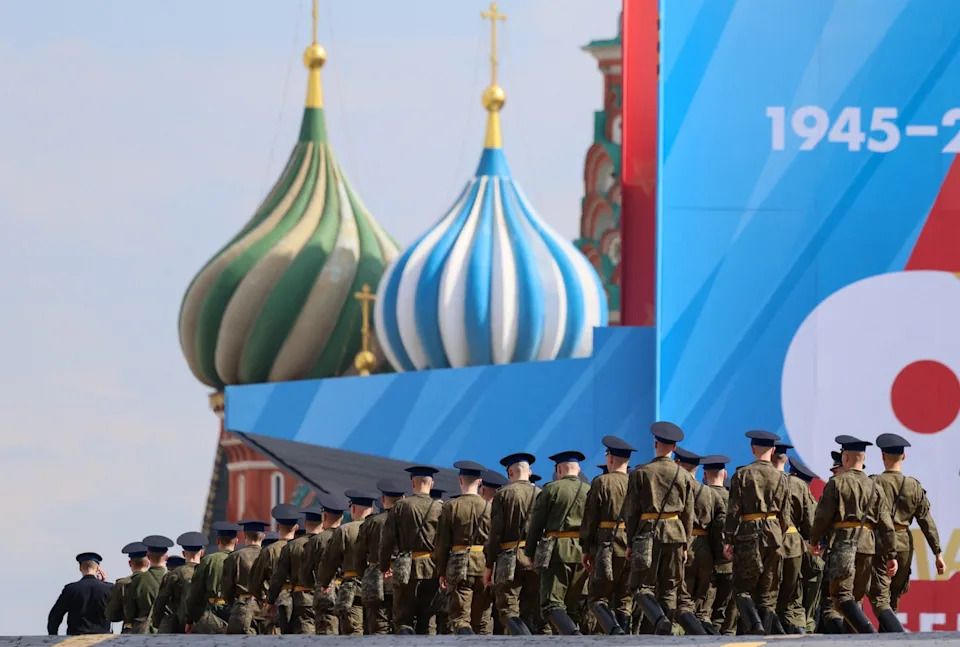
Russian service members rehearse for the flagship Victory Day parade, which has been pared back amid fears over Ukraine’s drones – REUTERS/Anastasia Barashkova
Overnight on Tuesday, Ukrainian drones and missiles once again rained down fire on military facilities and oil refineries across Russia, as sirens sounded in some 18 regions. Mr Zelensky later published footage of an attack on a military technology plant in Cheboksary, in Chuvash Republic, being carried out using home-grown Flamingo cruise missiles.
The number of mid-range strikes has also grown substantially.
“Currently, strikes at distances of 20-plus kilometres are twice as many compared to March and four times as many compared to February,” Mr Zelensky said, without providing exact numbers.
Mid-range strikes are aimed at targets often between 12 and 186 miles away. They aim to undermine logistics and supply chains, hitting warehouses, transport hubs, radar systems, missile complexes, and air defences – thereby also rendering the deep rear more vulnerable to attacks.
In April, Kyiv struck at least 14 Russian oil refineries and terminals, and two industrial plants, marking a four-month high.
The pace has been maintained so far into May. In a strategic pivot, its recent campaign has worked by pummelling fewer facilities repeatedly, degrading local air defences to identify vulnerabilities.
“There will be even more,” Mr Zelensky added. “This is a priority direction.”
The attacks have dealt a blow to Russia’s economy. According to Bloomberg, strikes on energy infrastructure in April sent average refinery throughput plummeting to its lowest level since December 2009.
The Ukrainian president said late last week that such long-range attacks had drained $7bn (£5.2bn) from the Kremlin’s funds so far in 2026.
In recent months, Ukraine has both become better at scaling its existing models, and introduced new drones such as 31-mile-range “Khmarynka” suicide drones, supposedly able to carry seven times the payload of a standard first-person view (FPV) drone, and so-called “Martian” AI-capable drones.
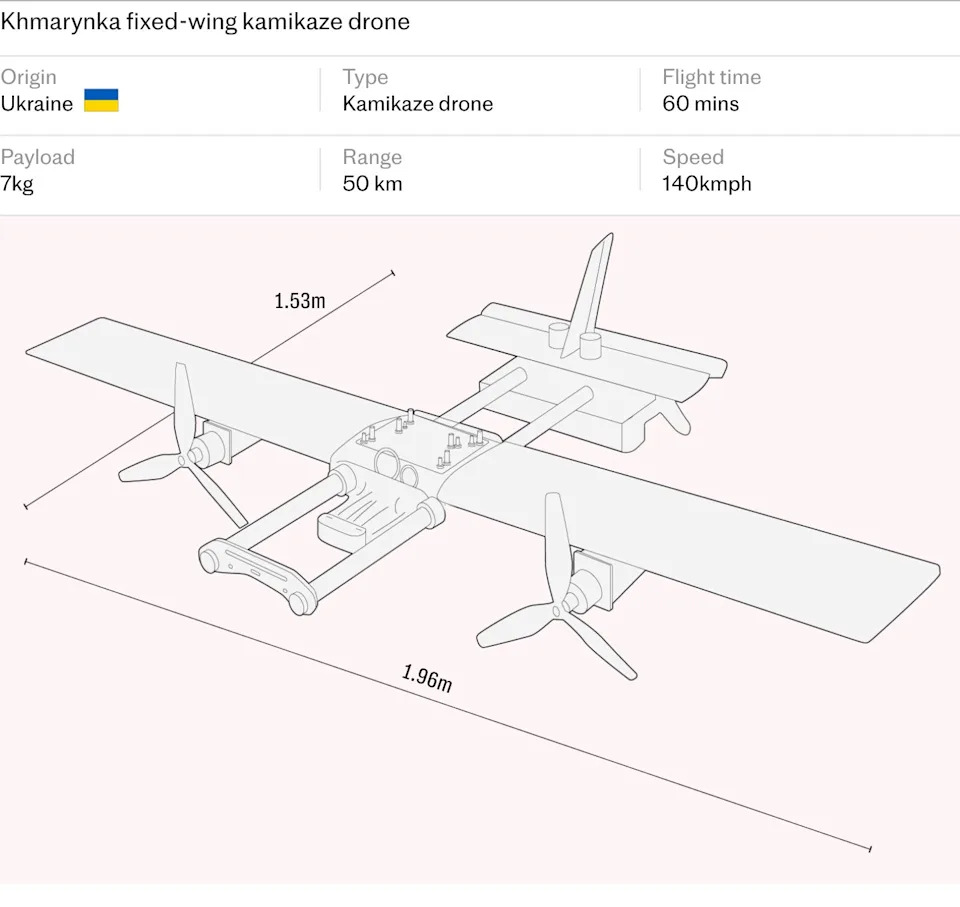
Many of the drones used for mid-range strikes are inexpensive, costing as little as £3,700. Kyiv plans to scale up drone production to more than seven million in 2026, with a particular emphasis on expanding “strike zone” depth from 12 miles to over 62 miles.
It is not just Ukraine’s tactical strike successes that have struck fear into Putin.
The December assassination of Lt Gen Fanil Sarvarov, the head of the Russian general staff’s operational training directorate, led to an overhaul of the security offered to Russian officials, according to an intelligence dossier released this week.
Putin was reported to have summoned security staff three days after the car bomb, which Ukrainian agents were thought to have planted.
The meeting descended into a bitter clash among top siloviki – senior state security officials. Gen Valery Gerasimov, Russia’s top general, apparently “strongly criticised” Alexander Bortnikov, the Federal Security Service (FSB) chief, for failing to protect his officers, warning the lapses had caused “fear and demoralisation” among staff.
Mr Bortnikov replied that the FSB lacked the manpower and resources to counter the attacks adequately, according to CNN.
The agreed response was to expand the remit of the Federal Protection Service (FSO), assigning it responsibility for the security of a further 10 senior providers and tightening security measures around the president.
Any visitors to the Kremlin must now go through two rounds of screening, while staff working in the vicinity of Putin are banned from using mobile phones or any devices with access to the internet.
They must also exclusively use transport organised by the FSO, which is responsible for protecting top officials, while surveillance systems have been set up in the homes of cooks, bodyguards and photographers.
There are still lapses, however.
Late last week, assassins came close to killing an infamous commander known as the “Butcher of Bucha” in a remote military town.
A bomb placed in a mailbox in the military community of Knyaze-Volkonskoye-1 in Russia’s Far East detonated, but killed a Lt Col instead of the supposed target, Maj Gen Azatbek Omurbekov.
The remote garrison town, which has a military base close by and houses a number of prominent military staff, is fortified, its perimeter guarded by checkpoints and armed troops.
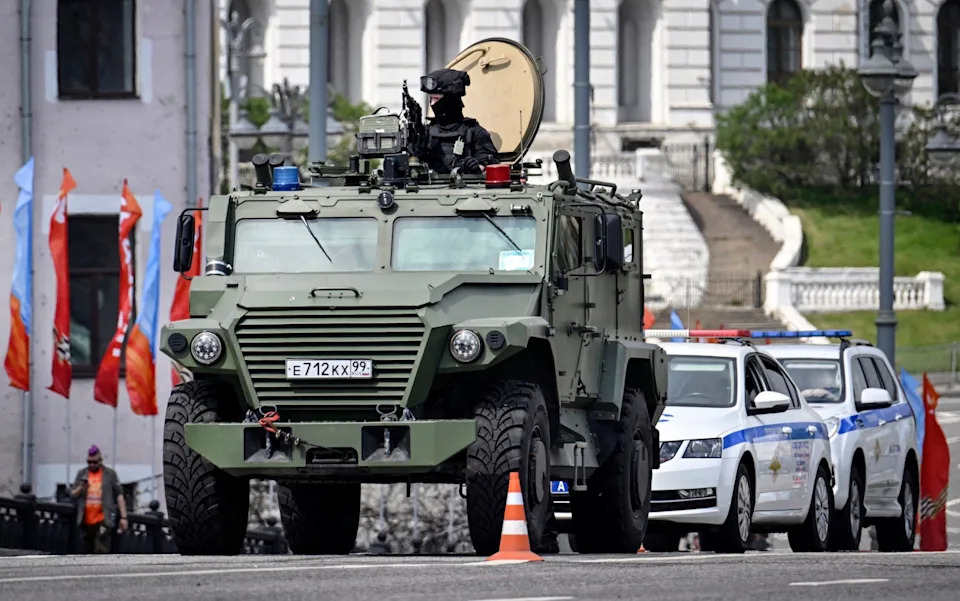
As Moscow prepares for its annual Victory Day parade on May 9, fear has gripped the Muscovite elites – Alexander NEMENOV / AFP via Getty Images
Though unsuccessful, the attempt illustrates the growing reach of Ukraine’s agents in a “shadow war” in which both sides have targeted prominent figures on each other’s soil. Most recently, Lt Gen Vladimir Alexeyev, a top intelligence official, was shot several times in a Moscow stairwell in February.
Amid the escalating fears of an attempt on his life by domestic or foreign actors, Putin is believed to spend increasing amounts of time in bunkers cut off from civilian affairs, obsessing over military developments.
He and his family no longer frequent their favoured residences in the Moscow region and at Valdai, but take refuge in underground shelters in the Krasnodar region for weeks at a time.
The Russian president has not visited a military facility this year, despite a series of highly publicised visits in late 2025 to command posts and other military sites clad in olive-green fatigues, during which he boasted of Russian victories in key Ukrainian strongholds.
Putin holds daily meetings with military officials to discuss the minutiae of small settlements being fought for in Ukraine, but speaks to civilian officials only once every few weeks or months.
His favourability among Russians has dropped to 73 per cent – low by his standards.
The May 9 parade, to mark the victory over Nazi Germany, has become a central event during Putin’s rule.
“They fear drones may buzz over Red Square,” Volodymyr Zelensky said at the weekend. “This is telling, it shows they are not strong.”