
Sign up for the Slatest to get the most insightful analysis, criticism, and advice out there, delivered to your inbox daily.
Moscow’s annual Victory Day parade, celebrating the defeat of Nazi Germany and the end of World War II, is usually a chest-thumping affair, with vast formations of Russian troops marching through Red Square, alongside an impressive array of tanks and missiles, while the country’s leaders beam from the Kremlin’s viewing stand, flanked by foreign dignitaries—including, a couple of times, American presidents—pleasurably awed by the spectacle.
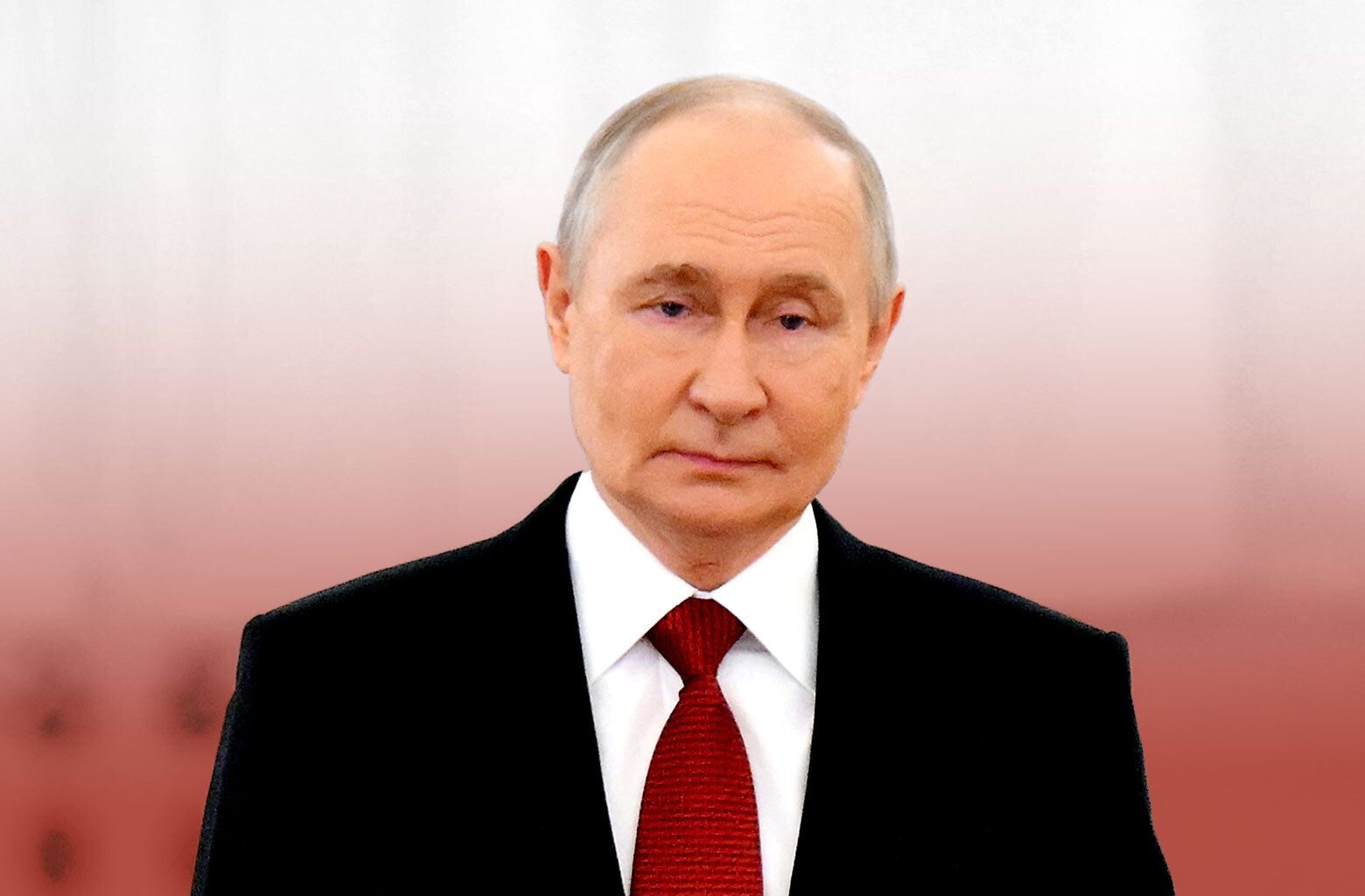
This year’s incarnation, taking place Saturday, will be much more subdued, even diminished, with far fewer troops and no tanks or missiles—no military hardware of any sort—rolled out for display. If any foreign leaders plan to attend the event, their names haven’t been announced. Vladimir Putin himself may put in only a brief appearance.
The reason is that Putin fears Ukraine might wreck the party by hitting it with a drone or committing some other act of sabotage, possibly even killing him in the process. There is good reason for this fear. This will be one of the few times when the Russian president’s precise location, under the open skies, will be known in advance. And the Ukrainians have lately been striking targets deep inside Russia; last week, one of their drones struck a high-rise apartment building in Moscow.
Putin’s fears are so deep, he proposed a ceasefire for May 9, the day of the parade, to avoid any such calamity—the first time he’s ever proposed a suspension of fighting in the four years since he started the war. Ukrainian President Volodymyr Zelensky proposed a counteroffer: start the ceasefire on May 5, to relieve his own people’s suffering for at least a little while. Putin ignored the offer and continued his relentless bombing of Ukrainian cities, so Zelensky rejected Putin’s plea.
On Friday evening, Trump announced that Putin and Zelensky agreed to a three-day truce starting Saturday, along with an exchange of 1,000 prisoners. However, Zelensky issued a statement that restricted this truce in space and time. “For the duration of the parade (beginning at 10:00 am Kyiv time on May 9, 2026), the area of Red Square shall be excluded from the plan for the use of Ukrainian weapons.” The statement cited the precise coordinates of Red Square and said nothing about a ceasefire on attacks elsewhere in Russia.
In any case, Putin has sharply limited the attendance of foreign journalists and shut down Russia’s internet to avoid widespread witnessing and embarrassment, if disaster strikes.
Putin’s caution and Zelensky’s cheek reflect a changing tide in the war. It would go too far to say that either side is winning or losing—but the odds are tipping, a little bit, in Kyiv’s favor.

Fred Kaplan
Iran Has the Upper Hand Now
Read More
Putin had hoped to capture wider and deeper slices of Ukrainian territory in his officers’ spring offensive, which they launched in mid-March, but in fact they made only negligible advances—and Ukrainian troops, far from getting pushed back, recovered a bit more of the ground that they’d lost.
The underlying trends also look grim from Putin’s vantage. Ukraine is deploying about 30 percent more drones than Russia and is introducing technical innovations—adapting their features to counter Russian innovations—far more swiftly. Ukraine has also improved the drones’ range and accuracy, so that they can strike targets deep inside Russia. They have done particularly heavy damage to Russian oil refineries—and in the process gone far toward wiping out the economic gains that Russia had briefly been enjoying from the high energy prices caused by Iran’s lockdown of the Strait of Hormuz.
Finally, there are political winds beyond Russia’s control, not least the electoral defeat of Hungary’s prime minister, Viktor Orbán, Putin’s strongest ally on the continent, who had blocked a $106 billion loan package to Ukraine from the European Union. With Orbán gone, the EU’s loans—and new infusions of military equipment—are going through. This too has bolstered Zelensky’s confidence and intensified Putin’s despair.
One upshot of all this is that Russian public opinion polls show declining support for the war. (This is especially remarkable: These polls tend to exaggerate popular support for Kremlin policies, since the people surveyed may distrust the pollsters’ assurances of anonymity and thus fear negative replies may trigger official reprisal.) Economists and financial elites are speaking out at industry forums about the war’s devastating effects. Putin has reportedly told close associates that he fears a coup or even assassination.
The Supreme Court Sapping Black Voting Power Was Not an Accident
The prospect of Putin’s downfall has been a hot topic of speculation ever since his invasion of Ukraine—which he described at the time as a “special military operation” that would be finished and won in a few weeks or even days—devolved into a grueling war of attrition. Barely a year into the war, Yevgeny Prigozhin, the leader of the Wagner Group, a militia group that often did Putin’s bidding overseas, attempted a coup, sending a column of armored vehicles toward Moscow, but called it off when reinforcements failed to arrive. Putin pretended to forgive and forget, but a couple of weeks later Prigozhin and his top deputies died when their plane blew up shortly after taking off from Moscow. (Though never proven, the evidence clearly points to Putin planting the bomb. Among other things, a camera was positioned on the ground at just the right spot to document the explosion—and to send a video message to any other would-be coup-plotters.)
Putin’s worries may prove to be just another sign of his long-standing paranoia—not at all unusual for an ex-KGB officer or, really, for Kremlin masters and minions throughout history—but this time might be different. As the old joke has it, you’re not paranoid if someone is really following you. And Putin has good reason to suspect he’s being followed.

Sign up for Slate’s evening newsletter.