
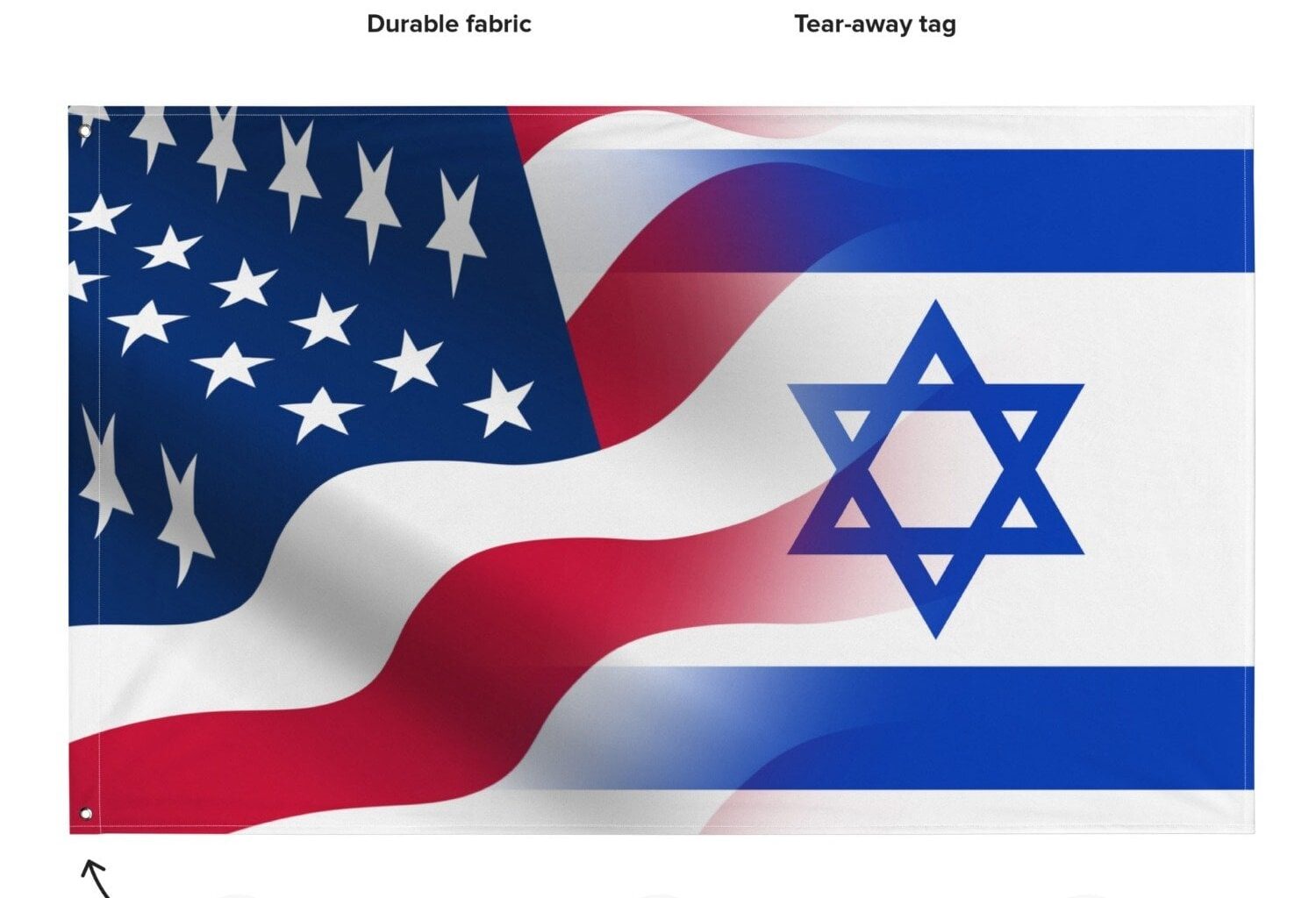
For decades, support for Israel was one of the few issues that united Republicans and Democrats in Washington. Liberals saw Israel as a democratic ally. Conservatives viewed it as a strategic partner and moral cause. The political center held.
That era is ending.
The 2026 midterm elections are becoming the first modern American election cycle in which hostility toward Israel is no longer confined to the political fringes. Instead, anti-Israel rhetoric has become a strange meeting point between the populist extreme right and the activist extreme left. Two movements that agree on almost nothing else, yet increasingly speak a common language when it comes to Israel.
This is not merely a foreign policy debate. It is becoming a defining cultural and ideological fault line inside American politics itself.
Political scientists call this phenomenon “horseshoe theory,” the idea that the far left and far right, rather than remaining opposites, eventually bend toward one another at the extremes. In 2026, Israel sits directly at the point where that horseshoe closes.
The irony is extraordinary.
On the progressive left, Israel is increasingly framed as a colonial oppressor, a symbol of Western militarism, nationalism, and systemic inequality. In activist spaces, support for Israel has become socially radioactive. Democratic primaries now feature candidates demanding arms embargoes and accusing Israel of genocide. Reuters recently reported that opposition to pro-Israel organizations has become a central campaign theme in numerous Democratic races.
At the same time, a growing faction on the populist right is reaching remarkably similar conclusions albeit through an entirely different worldview. The “America First” movement increasingly argues that Israel drags the United States into endless wars, manipulates American foreign policy, and siphons American resources away from domestic priorities. Influencers once firmly inside the conservative movement now openly question the US-Israel alliance. (washingtonpost.com)
The language differs. The destination is increasingly the same.
The far left condemns Israel as a colonial project. The far right condemns Israel as a globalist project. One sees Israel as too Western. The other sees Israel as insufficiently American. But both portray Israel as illegitimate, dangerous, and corrosive to their vision of society. This convergence is already reshaping the electoral map.
Inside the Democratic Party, the Israel issue has evolved from a foreign policy disagreement into a litmus test of ideological purity. Younger progressives increasingly view opposition to Israel as part of a broader intersectional identity framework, placing the Palestinian cause alongside movements tied to race, gender, decolonization, and anti-capitalism. Polling trends are staggering. A recent public sentiment analysis found Democratic sympathy toward Israel falling dramatically over the past five years while sympathy for Palestinians surged. (gov.il)
This shift is now creating enormous tensions between establishment Democrats and activist insurgents. Pro-Israel Democratic organizations are warning that anti-Israel candidates could cost the party swing districts in states like Colorado, California, and Michigan. (demmajorityforisrael.org)
Meanwhile, Republicans face a quieter but equally important identity crisis.
Traditional Reagan-style Republicans still overwhelmingly support Israel. Older Evangelical conservatives remain deeply pro-Israel, but not younger evangelical generations. The MAGA-aligned populist wing increasingly sees foreign alliances through the lens of economic nationalism and anti-interventionism. Israel is no longer exempt from that skepticism.
Figures associated with the nationalist right increasingly echo arguments once heard primarily on the far left: opposition to military aid, hostility toward foreign entanglements, and accusations that Washington prioritizes Israeli interests over American ones. (washingtonpost.com)
The result is something politically unprecedented: Israel is becoming one of the few issues capable of radicalizing both ends of the American political spectrum simultaneously.
For many centrist Americans, in particular Jewish voters, suburban independents, and moderate Democrats (and I am one of them, this growing extremism is deeply unsettling. The concern is no longer merely criticism of Israeli policy. Americans are witnessing a broader collapse of political nuance, where slogans replace analysis and outrage replaces strategy.
Former Democratic Congressman Barney Frank recently warned that Democrats risk alienating voters by embracing ideological absolutism on cultural and foreign policy issues. (nypost.com) His warning applies equally to both parties.
Because this is no longer just about Israel.
Israel has become a proxy battlefield for deeper questions consuming American society:
nationalism versus globalism
populism versus liberal democracy
identity politics versus civic identity
interventionism versus isolationism
tribalism versus pluralism
That is why emotions over Israel now feel disproportionately explosive compared to other global conflicts. Israel is no longer viewed merely as a country in the Middle East. It has become a symbolic stand-in for broader ideological wars raging inside the United States itself.
Where This Leaves Israel
For Israel, this creates a strategic nightmare.
For decades, Israeli diplomacy relied on one foundational assumption: support for Israel in the United States was bipartisan, institutional, and culturally embedded. It is true that in recent years, the government of Israel did not “play” by the rules of this bi-partisan approach, preferring to deal with Republicans over Democrats. Yet historically, Israel could survive disagreements with one administration because the broader American political ecosystem remained fundamentally supportive.
This safety net is fraying. Some go as far to suggest that it disappeared. Recent Democrat votes in the US Senate support this theory.
Israel now faces a reality in which it risks becoming politically homeless inside parts of both parties simultaneously.
This leaves Israel trapped between two hostile narratives:
the progressive accusation that Israel is morally illegitimate
the populist accusation that Israel is strategically inconvenient
Neither framing leaves much room for nuance, complexity, or coexistence.
Worse still, Israel’s traditional communication strategy, often referred to as “Hasbara,” was built for a completely different political era. It was designed for a world where facts, military briefings, and historical arguments could persuade audiences operating from a shared baseline of trust.
That world no longer exists.
Today’s political culture is emotional, tribal, algorithmic, and identity-driven. People do not absorb information primarily through institutions anymore. They absorb identity through influencers, social ecosystems, and emotionally resonant narratives.
Israel is still trying to fight a twenty-first century branding war with twentieth century diplomatic tools. And that is precisely why both extremes are outperforming Israel in the information arena. The far left offers a simple morality play: oppressor versus oppressed.
The far right offers a simple nationalist play: America versus foreign interests.
Both narratives are emotionally clean. Both are easy to market online. Both fit neatly into algorithmic outrage culture. Israel, meanwhile, often communicates through policy papers, spokespeople, statistics, and reactive crisis management.
Rebuilding the Narrative Center
The core mistake many pro-Israel organizations continue to make is assuming the battle is primarily political. It is not. It is cultural.
The future of Israel’s standing in the United States will not be decided first in Congress. It will be decided in culture, identity, community spaces, digital ecosystems, and emotional affiliation. Particularly among younger Americans who increasingly experience politics through values and belonging rather than policy expertise. Therefore, Israel cannot merely defend itself out of this crisis. It must reintroduce itself. That means shifting from defensive Hasbara to proactive nation branding.
Instead of presenting Israel only through conflict, security, and war, Israel must once again become emotionally recognizable to audiences who no longer see themselves reflected in it.
Moving From “Explaining Israel” to “Experiencing Israel”
Facts alone no longer persuade emotionally polarized audiences. People connect to stories, identities, culture, diversity, creativity, coexistence, and human experience. Israel must be reintroduced not only as a military actor or geopolitical issue, but as a living society composed of Jews, Muslims, Christians, Druze, LGBTQ communities, immigrants, artists, entrepreneurs, activists, and minorities all navigating a complex democratic reality. The goal is not propaganda. The goal is familiarity. Because people rarely demonize societies they emotionally recognize.
Rebuilding the Political Center
The extremes dominate because the center has become passive. Strategy focusing on rebuilding coalitions among moderates, liberals, centrists, minority communities, and pragmatic conservatives who reject ideological absolutism must be developed, instead of fighting the far left and far right directly on their own terms, the objective is to strengthen the exhausted middle ground that still believes coexistence, pluralism, and democratic partnership matter. This is not about winning Twitter. It is about rebuilding civic trust.
Reframing Israel as a Shared Democratic Story
Israel’s strongest long-term argument is not perfection. No democracy is perfect. Its strongest argument is resilience.
Israel remains one of the few places in the Middle East where democratic institutions, free elections, independent courts, civil society activism, LGBTQ visibility, religious diversity, and open political debate still visibly exist despite constant regional pressure. That story has become buried beneath endless reactive crisis messaging. Israel must be repositioned not as a symbol of ideological warfare, but as part of a larger democratic story that Americans across political backgrounds can still emotionally connect to.
Understanding That Narrative Vacuums Never Stay Empty
One of the great failures of modern Israeli advocacy is assuming that silence, caution, or neutrality would protect Israel from polarization. It did not. Into that vacuum rushed activists, influencers, ideologues, conspiracy theorists, and political extremists from both sides. If Israel does not actively define itself, others will define it instead. Increasingly, they already are.
Is There a Way Forward?
The 2026 midterms may ultimately reveal something much larger than changing attitudes toward Israel. They may reveal the collapse of the American political center itself. In that environment, Israel becomes both a target and a symbol, a canvas onto which Americans project their own fears, frustrations, ideologies, and cultural wars.
The tragedy is that the extreme left and extreme right believe they are fighting each other while simultaneously feeding the same ecosystem of polarization, outrage, and dehumanization. And Israel now stands directly in the middle of that collision. The challenge for Israel moving forward is not simply surviving criticism. Democracies survive criticism all the time. The challenge is surviving irrelevance, alienation, and narrative collapse in a political culture increasingly driven by emotion rather than institutional loyalty.
That is not a military challenge. It is a cultural one.