
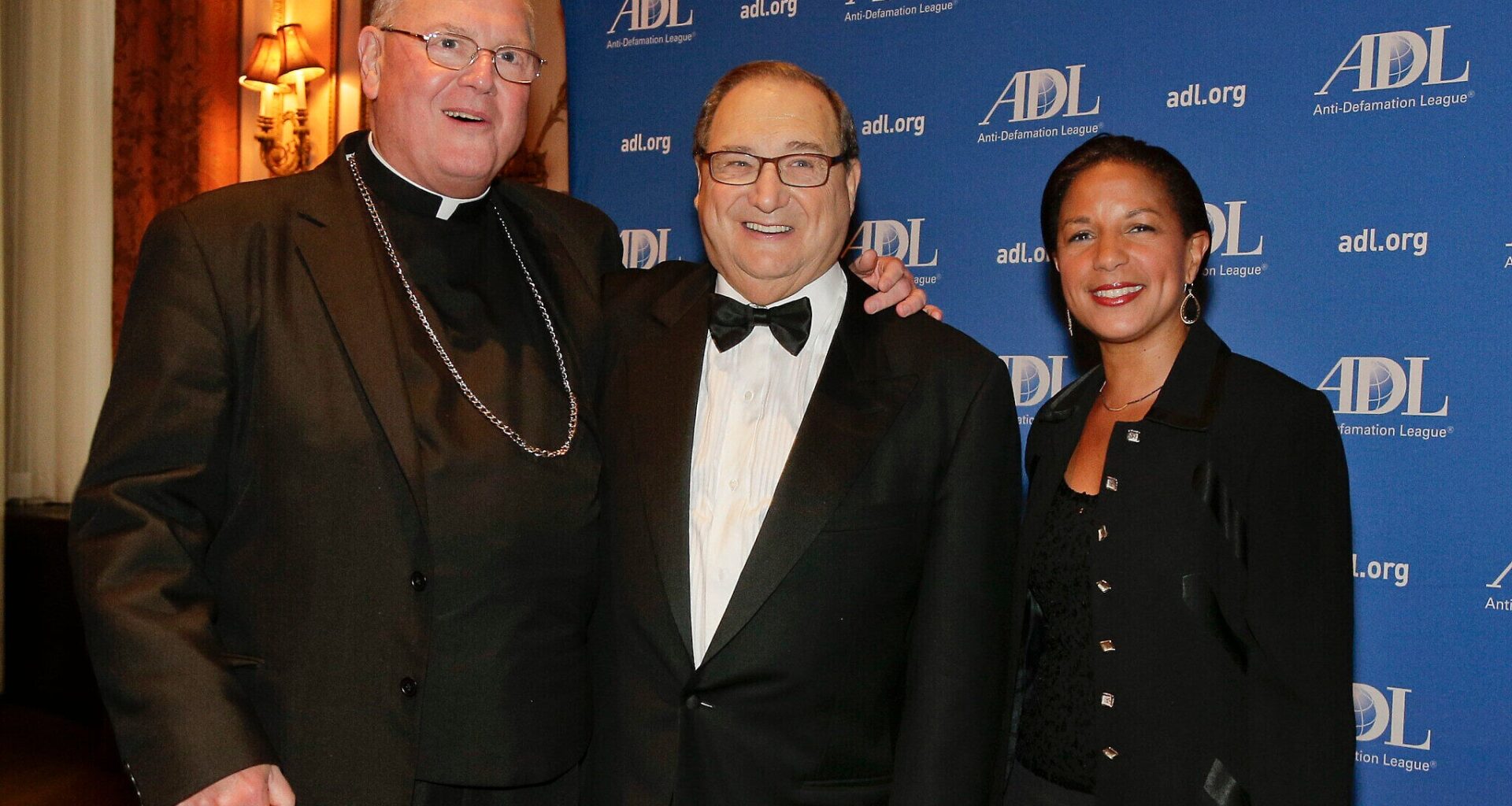
In the second episode of the Netflix political drama “House of Cards,” the scheming protagonist tanks a rival’s career by accusing him of writing an op-ed in college decrying Israel’s “illegal occupation.”
Midway through the 2013 episode, a character comes on screen surrounded by reporters and, referring to that op-ed, says, “We do not consider the issue of Israel and Palestine a laughing matter. And he calls Israel illegal? Well, he’s an antisemite and he is wrong.”
The show identifies the speaker as the president of the Anti-Defamation League.
Never mind that Abe Foxman, who was then the actual leader of the ADL, would almost definitely never have used the phrase “Israel and Palestine” like that, or branded a senior politician as an antisemite because of one critique of Israel. Never mind that his actual views on Israel and the West Bank were far less black-and-white. Never mind that Foxman criticized the episode.
What the show got right was Foxman’s stature, influence, and penchant for blistering public comments. He was for decades the most prominent and powerful arbiter of what was and was not antisemitic. He was the most visible American Jewish communal leader on the national stage.
Get The Times of Israel’s Daily Edition
by email and never miss our top stories
By signing up, you agree to the terms
He was, as many liked to quip, the “Jewish pope.” And there probably won’t be another one after him.
When Foxman died at age 86 on Sunday, more than a decade after his retirement, tributes and obituaries mentioned his survival of the Holocaust as a child; his dedication to the cause of fighting antisemitism, his commitment to stamping out all forms of hate; his tenacity and his warmth. He personified the post-Holocaust battle against antisemitism, in an era when almost everyone understood that it was bad to hate Jews and wanted to fight that hatred.
He also represented something else: an American Jewish consensus that doesn’t exist anymore. The reason no one has quite taken Foxman’s place as an American Jewish spokesperson is that American Jews, fragmented and polarized, could not possibly be represented by one voice.
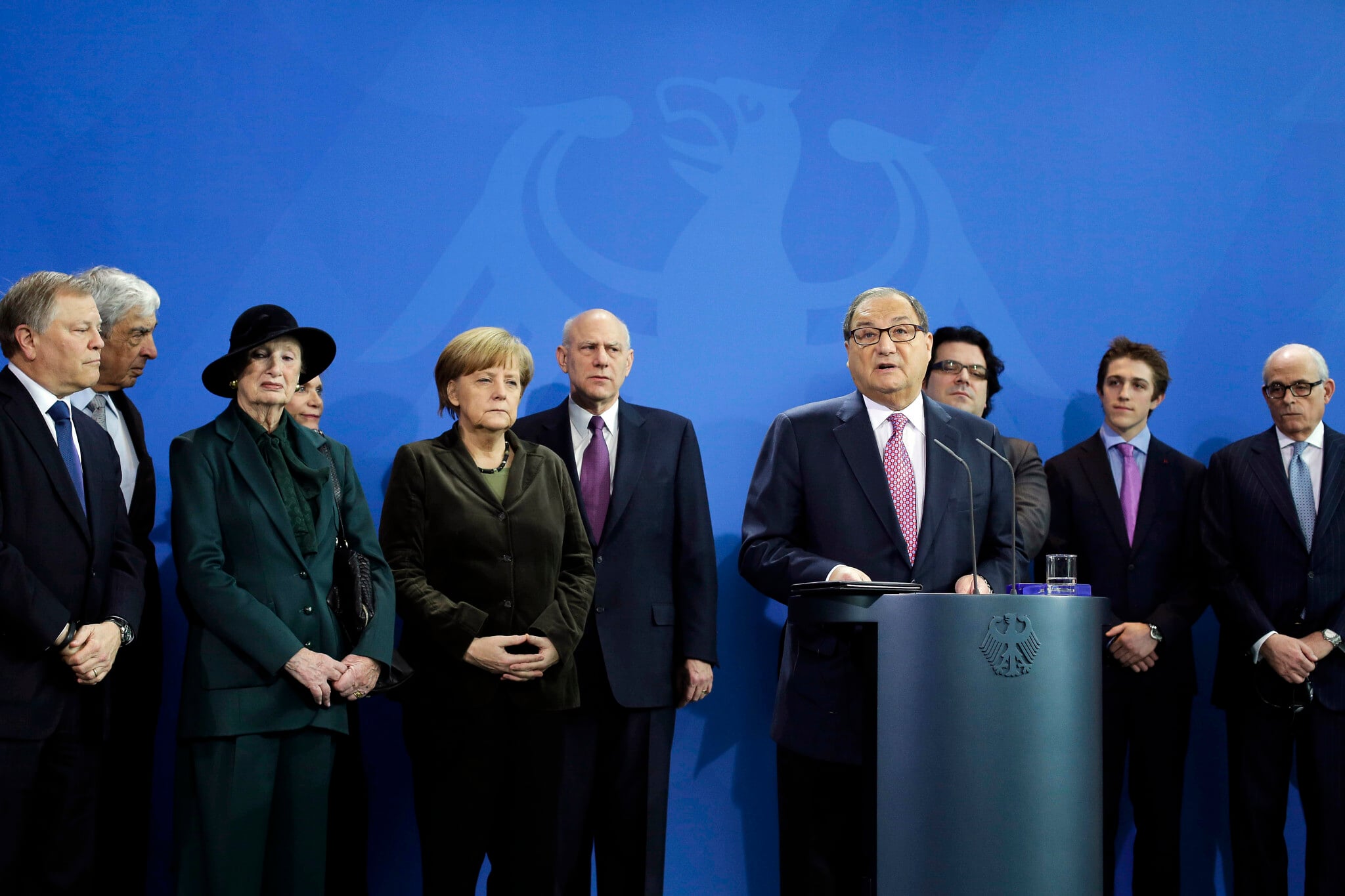
In this Wednesday, March 19, 2014 file photo, the national director of the Anti-Defamation League, Abe Foxman, fourth from right, delivers a speech during the award ceremony for the Joseph Prize For Human Rights to German Chancellor Angela Merkel, fifth from left, at the chancellery in Berlin. (AP/Markus Schreiber).
To be clear, that was also true to a considerable extent during Foxman’s time at the ADL, which he led from 1987 to 2015. Jews did not agree on everything, and he was not universally beloved. He had his critics and enemies, and his occasionally biting rhetoric against antisemitism and in support of Israel turned some people off.
Under his leadership, in 1996, the ADL paid $200,000 to settle a lawsuit over allegations that it spied on a range of progressive groups (it denied wrongdoing). In 2010, he drew backlash from interfaith groups for publicly opposing the construction of a mosque near Ground Zero in New York City. Near the end of his life, he expressed anguish over not recognizing the Armenian genocide.
A divided community
But the community he led was united in key ways. A national survey in 1990 found that 83% of “Jews by religion” said they were attached to Israel. In a 2020 Pew study, the number was down to 67%, and has likely fallen further since. For most of the time he ran the ADL, about 80% of Jews voted for the Democratic presidential candidate. Since then, Republicans have made serious gains.
But most importantly, antisemitism is way worse now than it was when Foxman retired, and Jews (and everyone else) can’t seem to agree on how to define it or fight it, or which side of the political spectrum is guiltier of it. Deborah Lipstadt, the Holocaust historian and former US antisemitism envoy, has lamented those whose “intent is not to fight antisemitism but to use antisemitism as a cudgel against political opponents.”
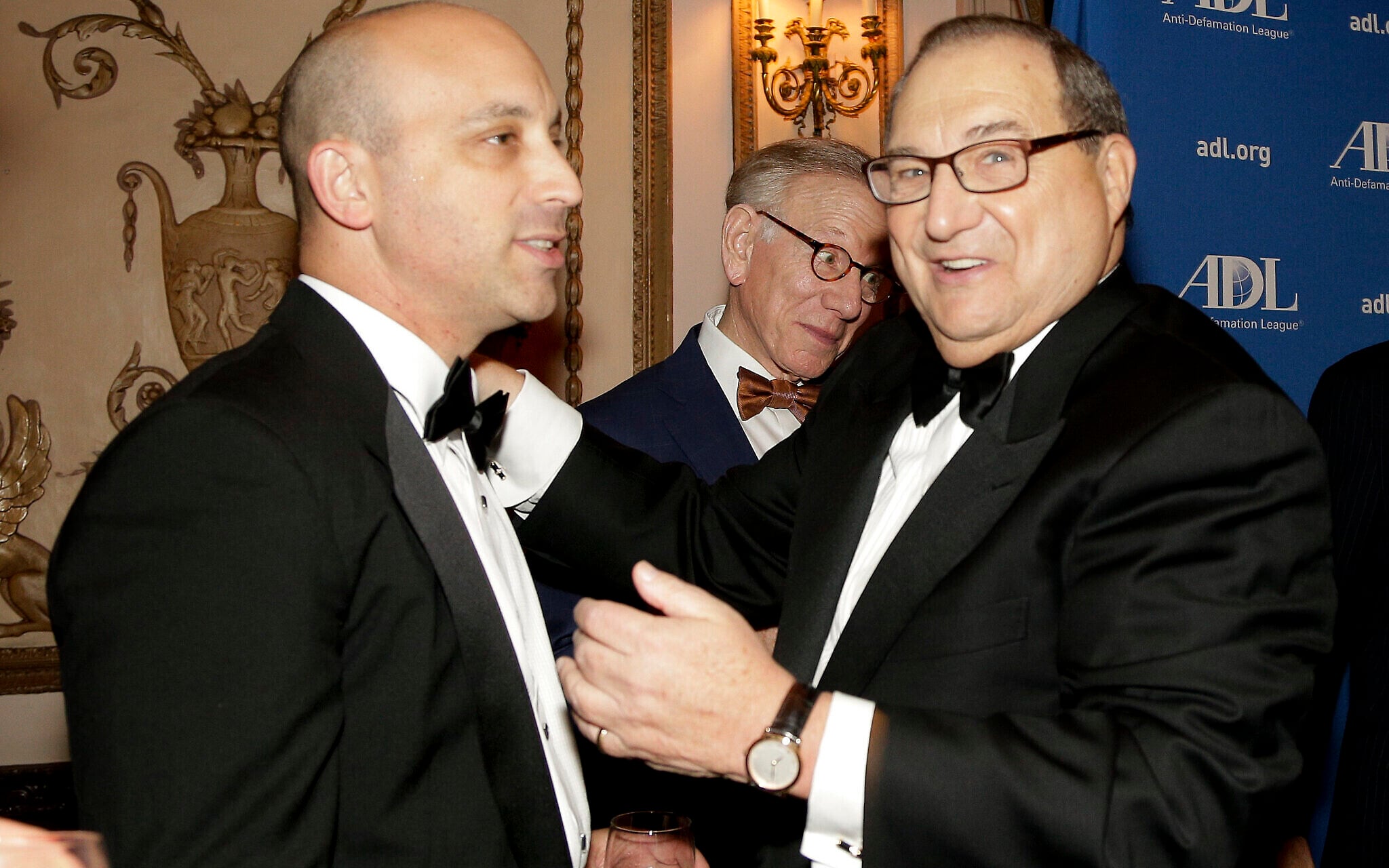
In this June 17, 2015 file photo, Jonathan Greenblatt, left, incoming national director of the Anti-Defamation League, talks with Abe Foxman, outgoing director of the ADL, in New York. (AP/Julie Jacobson)
That’s part of the reason why Foxman’s successor, Jonathan Greenblatt, hasn’t played exactly the same role. Under his leadership, the ADL has a bigger budget and staff than it did under Foxman. He’s built high-profile interfaith activist coalitions and frequently speaks in the media.
But no one calls him, or anyone else, the Jewish pope. Instead, Greenblatt has contended with a call — from someone who had just delivered an address titled the “State of World Jewry” — to “dismantle” the ADL. Something like that would have been unthinkable in the Foxman era. There were definitely people who wanted to shut down the ADL, but they weren’t keynote speakers at marquee Jewish events.
American Jews have confronted similar situations before. Nearly a decade ago, when the Holocaust survivor, author and Nobel Peace Prize winner Elie Wiesel died, I asked a range of Jewish thought leaders if there was anyone else who could take his place as a Jewish moral voice and unifying figure.
The first person I quoted was Abe Foxman.
“I don’t know of anybody out there who can be so comfortable in our very, very partisan, unique Jewish world and experience, and yet be a voice, and an icon, and a standard-bearer of moral issues,” Foxman said of Wiesel.
In many ways, he could have been talking about himself.
Which gorgeous bird do you prefer?

THIS MONTH ONLY: Join our reader support group for as little as $6/month and receive an exclusive tote bag featuring one of Israel’s native birds.
Choose between the Duchifat (orange), Israel’s national bird, or the Shaldag (blue), a beloved symbol of the Israeli landscape.
As a member of the Times of Israel Community, you’ll also enjoy:
An ad-free experience of our site and podcasts.
Exclusive access to award-winning films via DocuNation.
Weekly letters from founding editor David Horovitz.
Join ToI Community & claim my bag
Already a member? Sign in to stop seeing this
You’re a dedicated reader

That’s why we started the Times of Israel – to provide discerning readers like you with must-read coverage of Israel and the Jewish world.
So now we have a request. Unlike other news outlets, we haven’t put up a paywall. But as the journalism we do is costly, we invite readers for whom The Times of Israel has become important to help support our work by joining The Times of Israel Community.
For as little as $6 a month you can help support our quality journalism while enjoying The Times of Israel AD-FREE, as well as accessing exclusive content available only to Times of Israel Community members.
Thank you,
David Horovitz, Founding Editor of The Times of Israel