
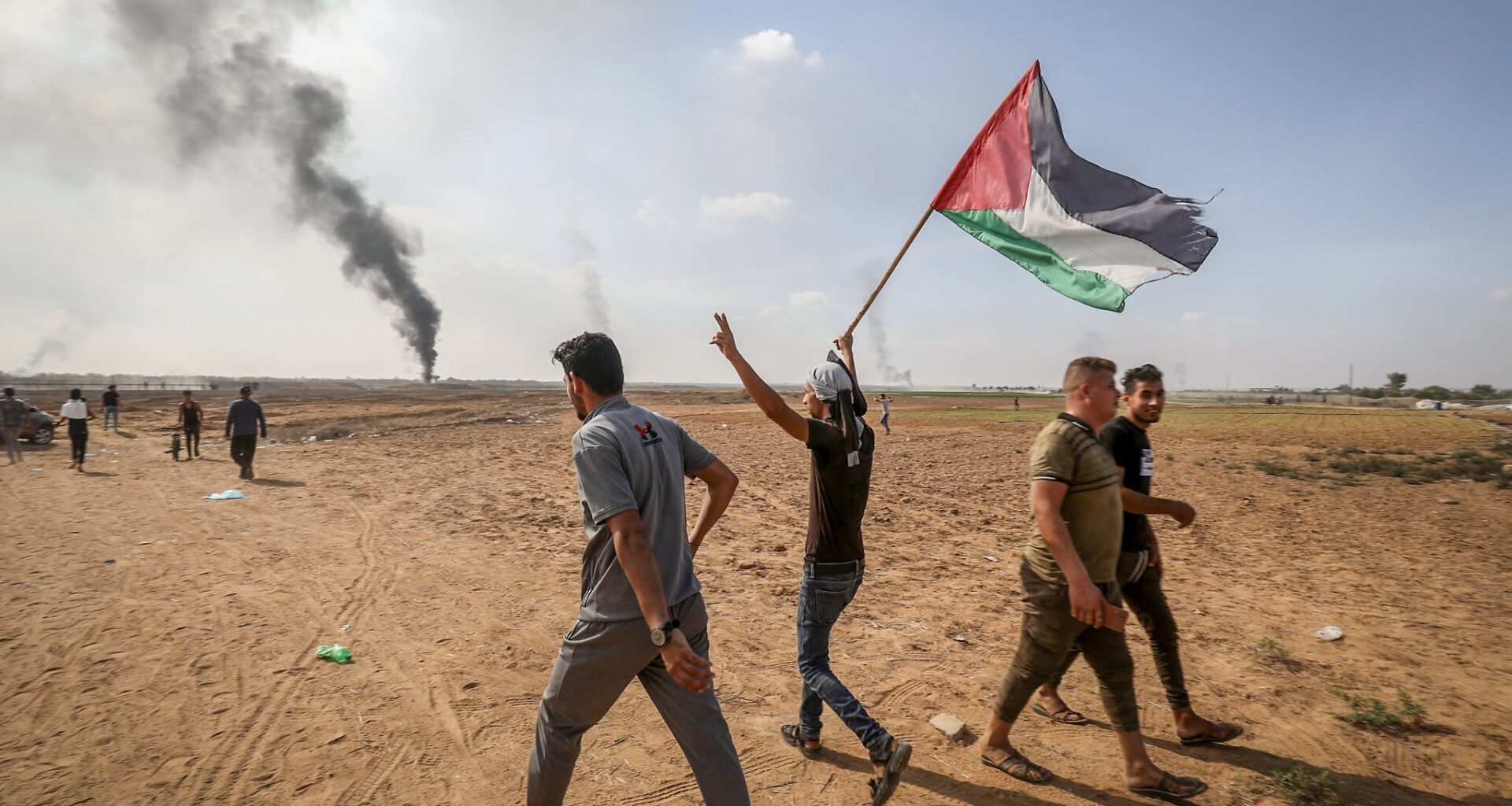
Israel has created a list of all Palestinians who took part in the October 7, 2023, Hamas-led attacks and is working to kill or arrest each one, The Wall Street Journal reported Wednesday, citing current and former Israeli officials with knowledge of the matter.
According to the report, the list includes all Gazans who were identified as having crossed the border on October 7, as well as all Hamas leaders involved in orchestrating the massacre, during which some 1,200 people were killed and 251 taken hostage, mostly civilians, in the deadliest massacre of Jews since the Holocaust.
Israeli intelligence agents tasked with compiling the list of names did so by studying the plethora of video and photographic evidence of the attack posted online by terrorists on and after October 7 and running the footage through facial recognition software, the report said, as well as the contents of intercepted phone calls from people who breached the border into Israel that day.
Israeli officials told the US newspaper that intelligence officials add people to the list once there are at least two pieces of evidence placing them at the scene of any of the atrocities that took place on October 7.
The campaign has continued despite the ceasefire that has been in place in Gaza since October, the report said, pointing to the killing of Hamas Gaza chief Izz al-Din al-Haddad in an Israeli airstrike last week.
Get The Times of Israel’s Daily Edition
by email and never miss our top stories
By signing up, you agree to the terms
The campaign began immediately after the attacks, and “hundreds” have since been crossed off the list, the report added, saying that “no participant is deemed too insignificant” for Israel’s attention, including people who were not affiliated with terror groups and joined the invasion of southern Israel on their own accord.
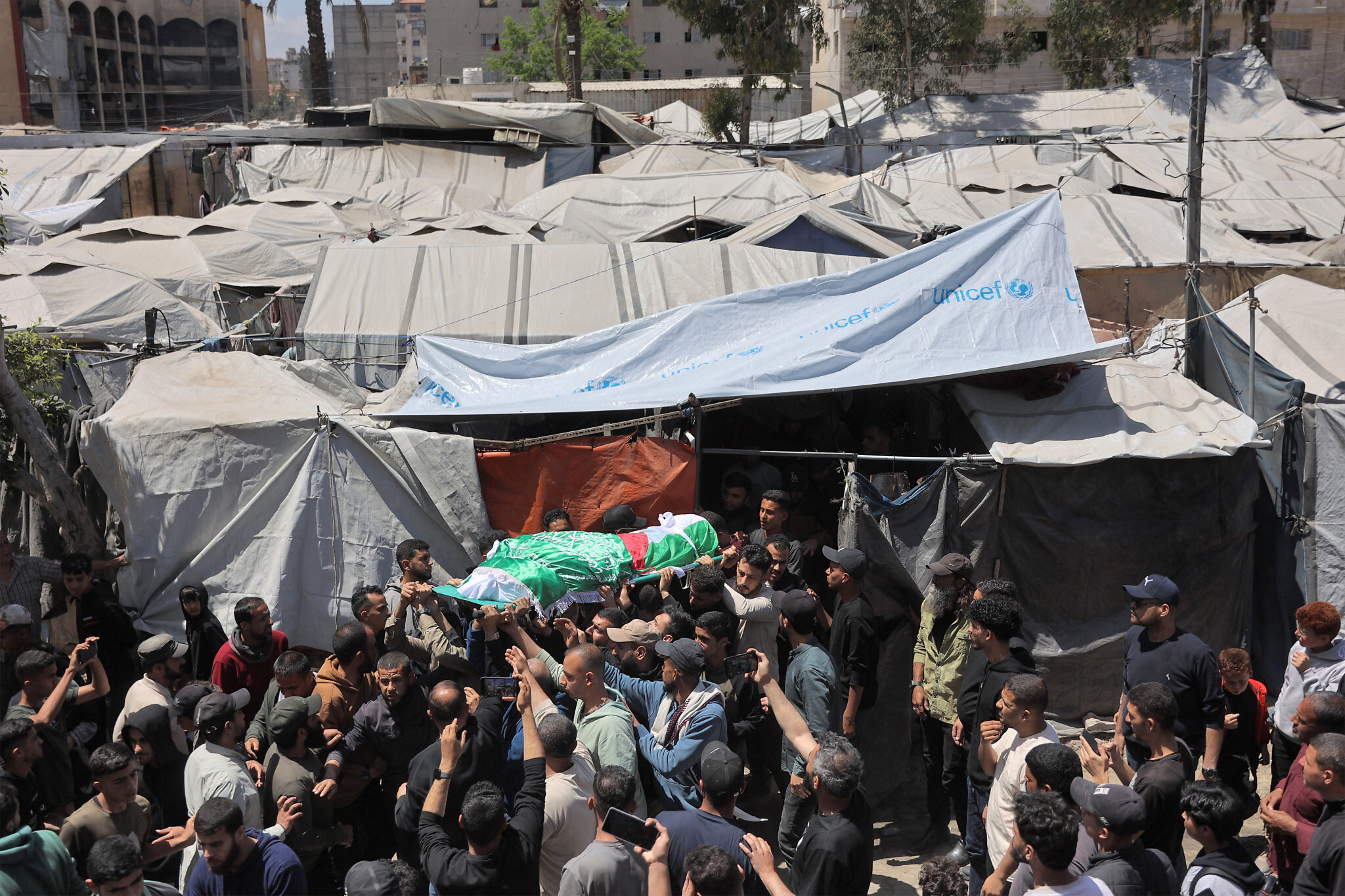
The funeral for Hamas leader in the Gaza Strip, Izz al-Din al-Haddad, begins as mourners carry his body to burial in Gaza City on May 16, 2026. (Omar AL-QATTAA / AFP)
In one case presented in the report, Israel identified a Gazan man who was filmed driving a tractor through the border fence during the initial onslaught, striking and killing him nearly two years later. The report did not identify the man or specify if he directly participated in violence on October 7.
In other instances, it was high-level Hamas and Islamic Jihad military wing operatives that Israel targeted years after they participated in the 2023 onslaught, including Ali Sami Muhammad Shakra, a platoon commander in Hamas’s elite Nukhba Force who took part in kidnapping hostages Hersh Goldberg-Polin, Alon Ohel, Eliya Cohen and Or Levy from a roadside bomb shelter near Re’im.
After Shakra was killed last month alongside several other Hamas operatives, the IDF posted images showing him sticking his head out of a car window while driving into Israel during the attack, with the caption: “Eliminated.”

Hamas terrorist Ali Sami Muhammad Shakr is seen during the October 7, 2023, onslaught, in an image released by the IDF on April 12, 2026. (Israel Defense Forces)
Another example cited in the report was the April killing of Abd al-Rahman Ammar Hassan Khudari, a Palestinian Islamic Jihad terrorist who took part in the invasion and massacre of Kibbutz Nir Oz during the October 7 onslaught.
While international law allows for the killing of those who participate in attacks, it stipulates that there must be an imminent threat in order to justify killing them long after the initial attack. Otherwise, their targeting would be an extrajudicial execution, taking revenge for actions taken months or years prior.
Thus, the IDF has insisted that each operative it kills in Gaza, including ones that took part in the October 7 attacks, posed an “imminent threat to troops” stationed nearby, were planning attacks on troops or on Israel itself, or crossed the “Yellow Line,” which demarcates the current lines of IDF control within Gaza.
Rachel VanLandingham, a former judge advocate in the US Air Force and expert on military law, told the WSJ that while Israel’s campaign “feels retributive,” there is “nothing inherently wrong with prioritizing people on a target list as long as they’re belligerents.”
Israeli officials have invoked Munich as an example of precedent for the retribution campaign against the October 7 terrorists, pointing to the years-long Mossad-led effort to track down and eliminate the leaders of the massacre of Israeli athletes during the 1972 Olympic Games in Germany.
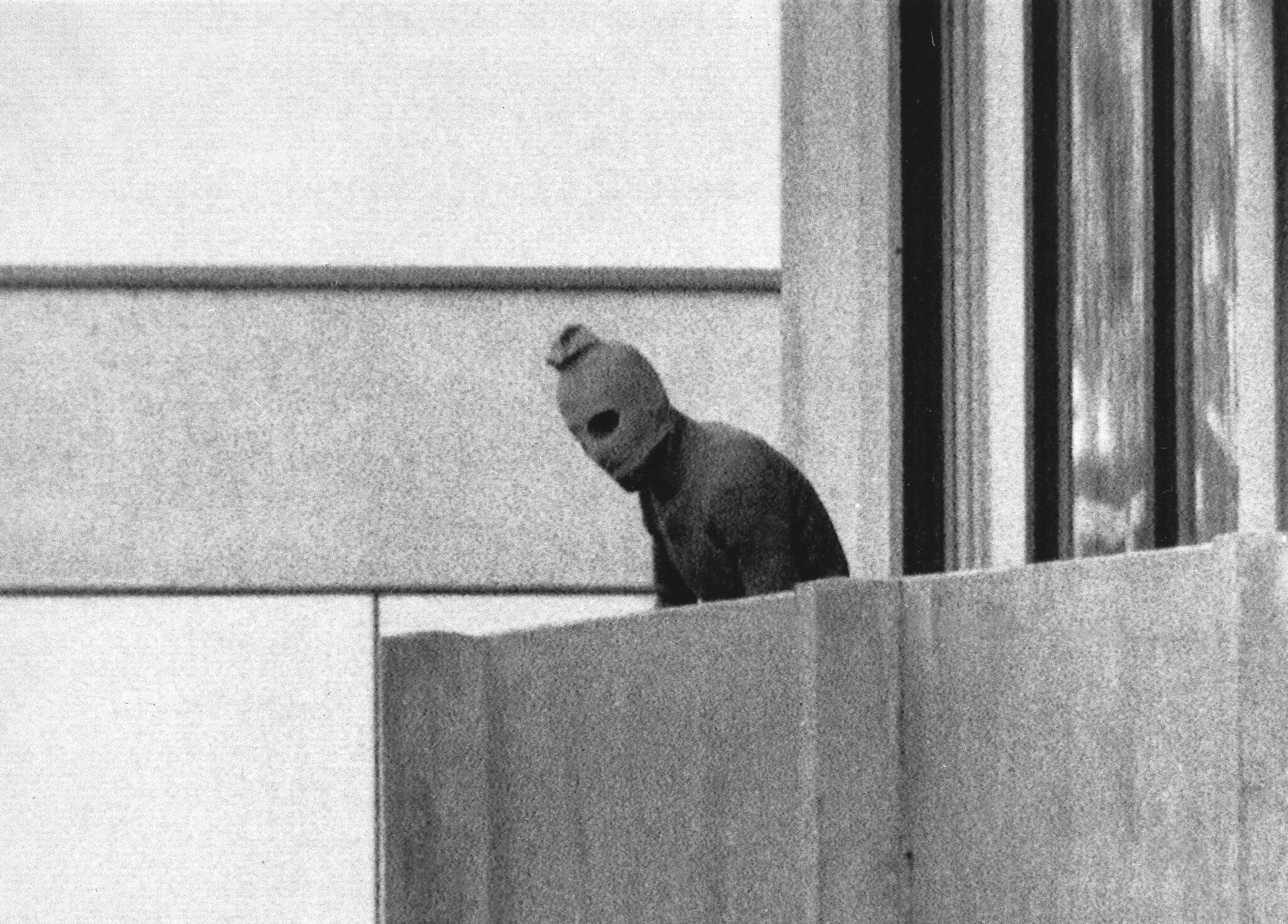
A member of the terror group that seized members of the Israeli Olympic Team at their quarters appears with a hood over his face on the balcony of the village building where the commandos held members of the Israeli team hostage, at the Munich Olympic Village, on September 5, 1972. (AP Photo/Kurt Strumpf, File)
“It will take time, just as it did after Munich,” Mossad director David Barnea said in 2024. “But our hands will reach them, wherever they are.”
Commenting on Israel’s apparent campaign of retribution on those who participated in the attacks, a Hamas official claimed to the WSJ that it is “nothing but an extension of the policy of extrajudicial executions and systematic killing that Israel has practiced against the Palestinian people for decades.” Hamas itself openly executes dissidents in Gaza, and takes part in gunfights with rival clans.
Some experts justify Israel’s policy, saying that the rules of the game are different given the region and type of enemy that Israel finds itself fighting against.
“In the Middle East, revenge is an important part of the discourse. It is about how serious anyone in your environment sees you,” said Michael Milstein, a former senior IDF intelligence officer and expert on Palestinian society.
“Unfortunately, this is the language of this neighborhood,” he told the WSJ.
Which gorgeous bird do you prefer?

THIS MONTH ONLY: Join our reader support group for as little as $6/month and receive an exclusive tote bag featuring one of Israel’s native birds.
Choose between the Duchifat (orange), Israel’s national bird, or the Shaldag (blue), a beloved symbol of the Israeli landscape.
As a member of the Times of Israel Community, you’ll also enjoy:
An ad-free experience of our site and podcasts.
Exclusive access to award-winning films via DocuNation.
Weekly letters from founding editor David Horovitz.
Join ToI Community & claim my bag
Already a member? Sign in to stop seeing this
You’re a dedicated reader

That’s why we started the Times of Israel – to provide discerning readers like you with must-read coverage of Israel and the Jewish world.
So now we have a request. Unlike other news outlets, we haven’t put up a paywall. But as the journalism we do is costly, we invite readers for whom The Times of Israel has become important to help support our work by joining The Times of Israel Community.
For as little as $6 a month you can help support our quality journalism while enjoying The Times of Israel AD-FREE, as well as accessing exclusive content available only to Times of Israel Community members.
Thank you,
David Horovitz, Founding Editor of The Times of Israel