
Beneath their economic strength, Taiwan, Israel, and Poland share a survival blueprint: three democracies navigating volatile neighborhoods, driven by fierce cultural identities and a need to defend sovereignty against larger, often hostile forces. Their circumstances differ profoundly — in size, population, and strategic weight; Israel and Taiwan diverge in legal status, geography, and military doctrine; Poland, a country of nearly 40 million and a pillar of NATO’s eastern flank, occupies a different strategic tier altogether. But those differences don’t weaken the analogy. They sharpen it. What unites these nations isn’t identical situations, but a common strategic mindset. In a world reshaped by geopolitics, that shared instinct is more than theoretical — it may be essential for survival.
Traveling through Taiwan, I kept experiencing a sense of déjà vu — the kind familiar to anyone who knows Israel well. Both countries show that geography doesn’t have to determine destiny.
Since its modern founding, Israel has faced constant questions about its right to exist, challenged by hostile neighbors. Taiwan faces a similar threat, under persistent pressure from across the Taiwan Strait. Instead of succumbing to geopolitics, both societies have turned that pressure into innovation. They’ve become global high-tech hubs, demonstrating that intellectual capital can outweigh physical size. This resilience is supported by strategic, albeit complex, partnerships with the United States and strengthened by a powerful sense of national identity that keeps their societies united in tough times.
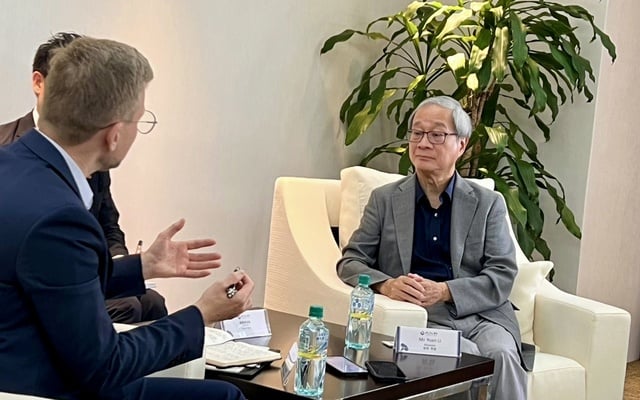
But military preparedness and semiconductor industries are only part of the story. The true strength of these nations lies in their cultural fabric. During a recent meeting in Taipei, Taiwan’s Minister of Culture, Li Yuan, emphasized the importance of cultural diplomacy, especially for countries limited in diplomatic relations. He explained that while formal diplomatic ties are few, cultural exchange creates real, organic links. Talking about Taiwan’s international efforts, he said:
“Taiwan actually has relatively few diplomatic ties with countries worldwide. So, we think that culture can be our bridge to the world.”
When asked about the cultural ties between Taipei and Jerusalem, Minister Li Yuan responded that despite the distance, the bond of mutual appreciation is growing:
“In terms of culture, everything is doing okay. We have mutual exchanges, and we share very similar circumstances. We both have limited resources and land, and we face unstable situations every now and then. But Israel has given us great inspiration because they maximize their power as a country with limited land and resources.”
This inspiration isn’t just theoretical; it actively influences how Taipei promotes soft power worldwide. Inspired by Israel’s cultural resilience, Taiwan is building international bridges, seeking partners who share its strategic instincts. One clear example is unfolding right now in Central Europe. During my interview with Minister Li Yuan in Taipei on Monday, he announced that in June, sixteen prominent Taiwanese writers — a delegation organized by the Ministry of Culture — will visit Poland for literary exchanges, with stops in Warsaw and Kraków. This is a deliberate act of public diplomacy: Taiwan reaching out to a country that understands, through its layered history of partitions and occupation, what it means to defend sovereignty and cultural identity against a mighty neighbor.
Poland’s position on NATO’s eastern flank gives it formidable insight into the existential anxieties felt in Jerusalem and Taipei. Of course, Poland’s situation isn’t identical: unlike Taiwan, it benefits from NATO’s collective security, and unlike Israel, it’s part of the European Union. But history has made Poland acutely aware of how vulnerable states can be between empires. All three nations — Taiwan, Israel, and Poland — have historically had to define themselves in the shadow of larger powers. Today, they’re all engaged in managing historical memory, maintaining democratic institutions, and resisting external authoritarian pressures. The writers’ visit to Warsaw and Kraków is more than just a literary trip. It’s Taiwan signaling that it recognizes where its allies are.
Ultimately, these nations show us that no democracy, however large or small, can rely on military strength alone. True defense starts with identity, is driven by innovation, and strengthened through culture. As Minister Li Yuan said, culture is Taiwan’s bridge to the world. For a nation whose diplomatic space is always contested, that bridge — built through books, films, and human contact — might be more enduring than many official treaties.
Taiwan isn’t Israel. Poland isn’t Taiwan. Their histories, alliances, and international status differ profoundly. But in their shared belief that identity, democracy, and culture are key to resilience, they speak a language each instinctively understands. Being outnumbered doesn’t mean being alone.
Andrzej Pawluszek is a journalist publishing in Poland and the Netherlands, and a former Secretary to Polish Prime Minister Mateusz Morawiecki. He studied at New York University. In 2017, he founded United Against Defamation, an organization combating the undermining of Germany’s responsibility for the Holocaust, as well as antisemitism, anti-Israel sentiment, and anti-Polonism.