
A quiet German initiative brings volunteers to Israel to help rebuild Kibbutz Nir Oz and support bereaved families.
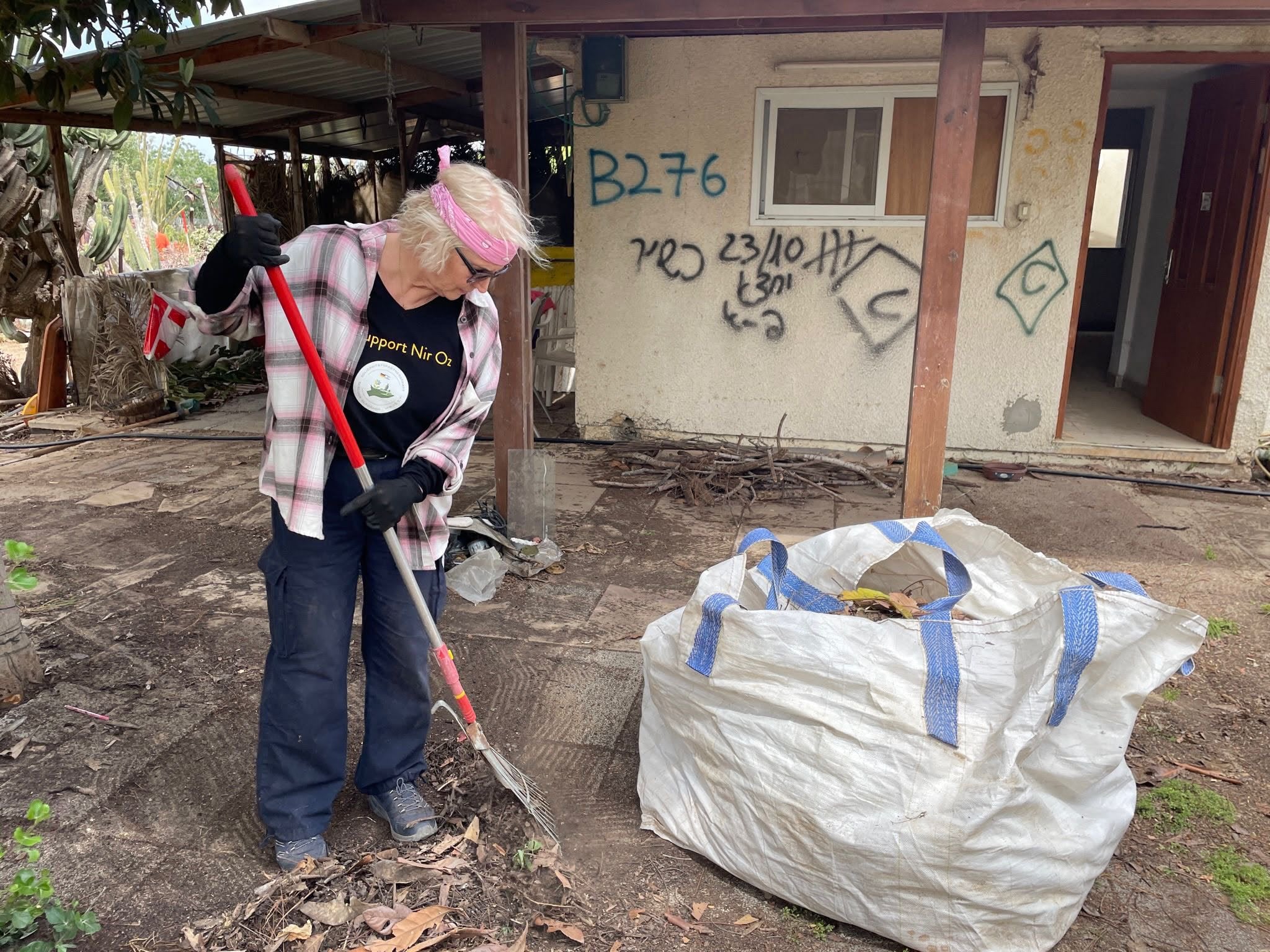
A German volunteer from We Support Nir Oz Group in action at the site of destruction in Kibbutz Nir Oz, Israel (Petra Hemming).
At a time when Israel is increasingly isolated, when flights are emptier, delegations fewer, and even well-meaning supporters hesitate to visit – there is another story unfolding.
It is not loud. It does not come with carefully curated photos or gala speeches.
But it is real.
There are Germans, ordinary men and women, who are quietly travelling to Israel, not to post pictures of themselves incessantly, but to work. To help rebuild.
Recently, I had the privilege of speaking with Petra Hemming, an inspiring woman from my region in Germany. What she shared with me was not just a story of solidarity, but of responsibility lived out in the most practical way.
“I grew up with Israel,” she told me. Her connection goes back decades – to her father, who helped establish a city partnership between Düsseldorf and Haifa, and to her own first visit at the age of 17. That early encounter turned into a lifelong relationship. She has returned nearly 60 times since.
But nothing in that long history prepared her for what happened after October 7.
“It was completely clear to me. We had to do something,” she said.
Together with a close colleague, Petra helped initiate a response that would become the We Support Nir Oz effort — focused on one of the kibbutzim near the Gaza border that was devastated in the Hamas attacks.
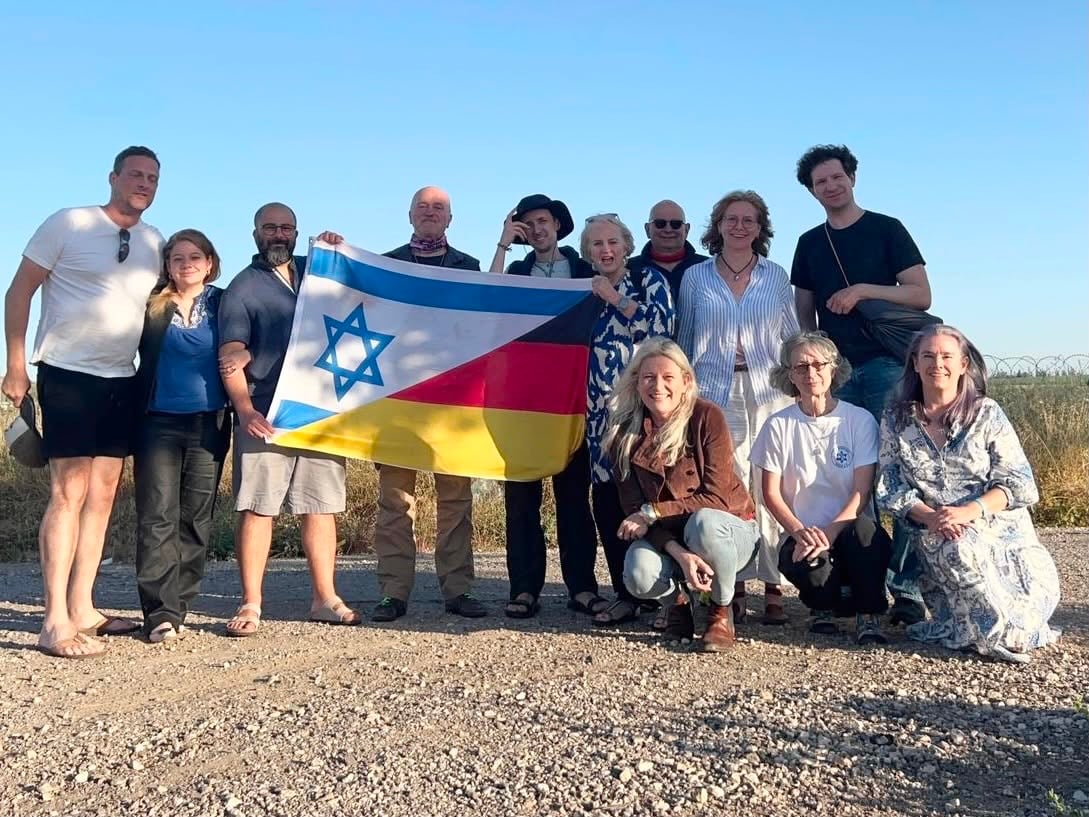
German volunteers helping rebuild Kibbutz Nir Oz. Also photographed here is Arye Sharuz Shalicar, German-Israeli author and IDF spokesperson (Reserve) (Petra Hemming, May 2026).
What they built was not just a campaign or a platform. It was something far more demanding.
They began organizing small groups of volunteers — people willing to travel to Israel at their own expense and work with their hands.
The first trip took place in April 2024.
“When we arrived,” Petra recalled, “nothing had been cleared. Everything was exactly as the terrorists had left it.”
There was no infrastructure for volunteers. They could not even stay overnight in the kibbutz. They worked during the day and left in the evening, returning again the next morning.
And still, they came.
Each group consists of around 10 to 12 people. They are not trained aid workers. They are not professionals flown in by international organizations.
They are teachers, retirees, students, professionals.
They buy a ticket. They show up. And they work.
“We do gardening, agricultural work, help in the kitchen, repair irrigation systems,” Petra explained. “It’s hard physical labour.”
By 8 a.m., temperatures can already exceed 30 degrees. The conditions are harsh, unfamiliar, and physically exhausting.
“I have enormous respect for our volunteers,” she said simply.
And yet, what struck me most was not just the work itself—but the people doing it.
I asked Petra who these volunteers are.
“The youngest we’ve had was 16. The oldest well over 70,” she said. “And everything in between.”
They come from all backgrounds. Jewish, Christian, Muslim, secular. Some have no religious connection at all.
“If I had to estimate,” she told me, “eight out of ten come purely out of solidarity. They just want to say: you are not alone.”
In a world increasingly driven by visibility, this kind of quiet commitment feels almost radical.
These volunteers are not there to perform solidarity. They are not documenting every moment. They are not building personal brands around their activism.
They are there because they believe it is the right thing to do.
And perhaps even more striking: many of them have never been to Israel before.
Petra makes a point of ensuring that their experience is not defined only by tragedy. On weekends, she takes them to Tel Aviv, to Jerusalem, to the Dead Sea.
“It’s important to me that Nir Oz is not the only thing they see,” she said. “They need to experience the life of this country.”
That life, so often absent from international narratives, is precisely what many of them carry back with them.
But the work of Petra and her team does not end with volunteers.
Their initiative, part of the non profit association called Ganey Tikva Verein, stands on two pillars: physical labour and financial support.
From the very beginning, they committed to helping 18 children and young adults from Nir Oz who lost one or both parents on October 7. These orphans receive regular financial support.
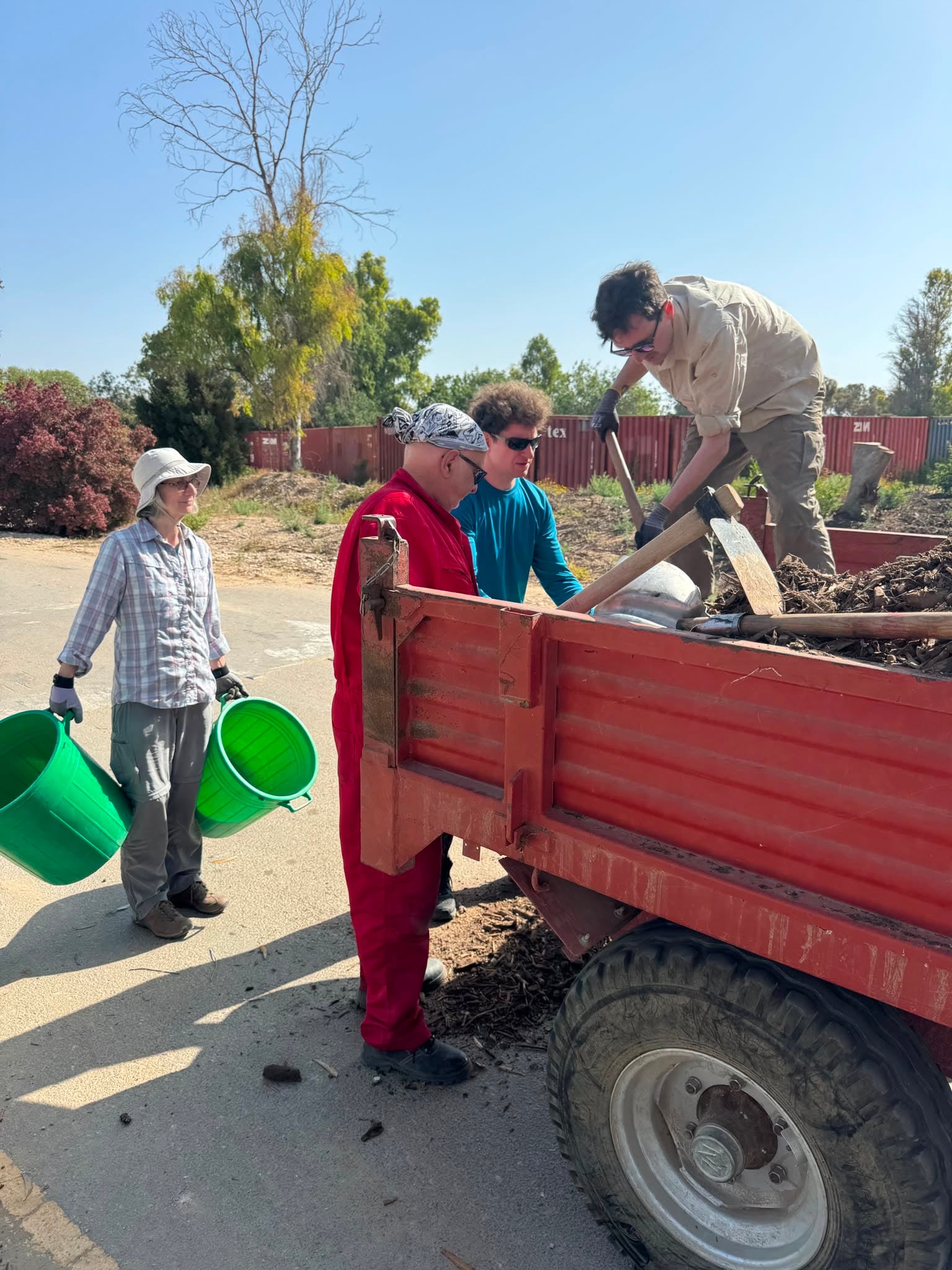
Ordinary men and women from different walks of life in Germany, from students to retirees, volunteer to help rebuild Kibbutz Nir Oz (Photo courtesy: Petra Hemming).
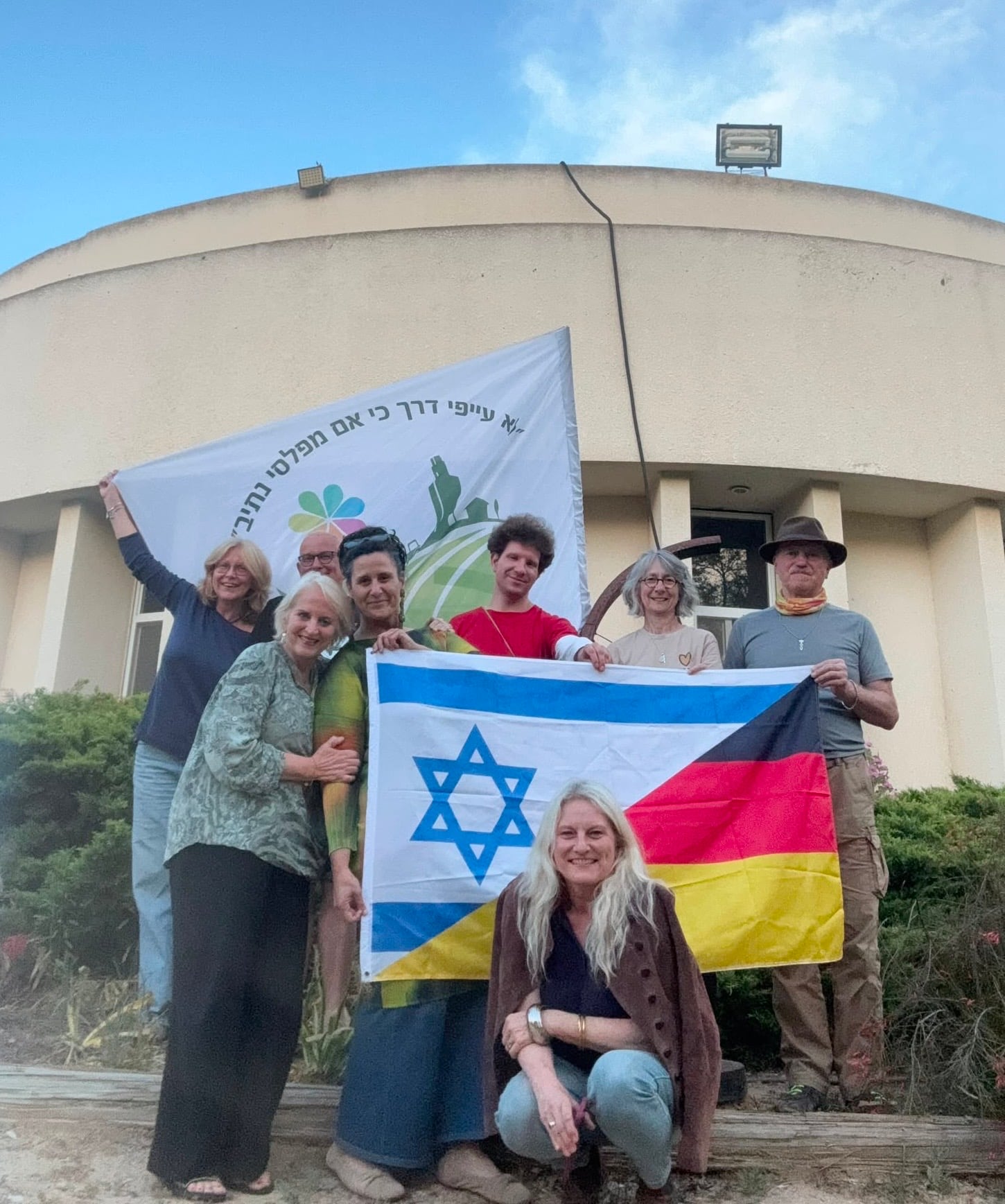
The We Support Nir Oz group from Germany has witnessed meaningful progress over the past two years—from a devastated kibbutz to a community slowly rebuilding and healing (Photo courtesy: Petra Hemming).
They have also raised funds for rebuilding projects, based on what the survivors themselves ask for.
One such project was a community garden in Karmel Gat, where many evacuees still live in high-rise buildings, an almost unimaginable shift for people used to kibbutz life.
“They asked for a garden,” Petra told me. “So we built a garden.”
Today, that space has become a place of life again—where children play, families gather, and even celebrations take place.
More recently, they raised a substantial amount from their donors in Germany to build a guesthouse in Nir Oz.
These are not abstract acts of solidarity. They are tangible, rooted, and deeply human.
When Petra described the gradual changes in the kibbutz, her words carried both realism and hope.
“In the beginning, everything was destroyed,” she said. “Now we see clear progress.”
Most of the destroyed houses have been demolished. New ones are being built. People are returning during the day – working, planting, reconnecting.
One moment, in particular, stayed with her.
“The reopening of the small supermarket,” she said. “It may sound like a small thing but it means independence. It means belief in the future.”
And perhaps that is what all of this work is ultimately about.
Not just rebuilding structures, but restoring the possibility of normal life.
Of course, not everyone will return. Petra spoke candidly about the trauma, especially among families with young children.
“Some say they will never come back,” she acknowledged.
And yet, others do.
Elderly residents, in particular, have insisted from the beginning that they will return and rebuild.
That tension, between loss and resilience, is something no outside volunteer can resolve. But they can stand alongside it and show the Israelis they are not alone.
As our conversation drew to a close, I asked Petra what drives her personally.
“I am not Jewish,” she said. “I was raised completely secular.”
Her motivation, she explained, is rooted in her understanding of Israel. She is drawn to its history, its democracy, and its diversity.
And also in something else.
“Antisemitism was never gone,” she said quietly. “Now it is coming out again. And that has consequences for our own democracy.”
For Petra, this is not only about Israel. It is about the kind of society she wants her children and grandchildren to live in.
“I cannot just sit at home and do nothing,” she said.
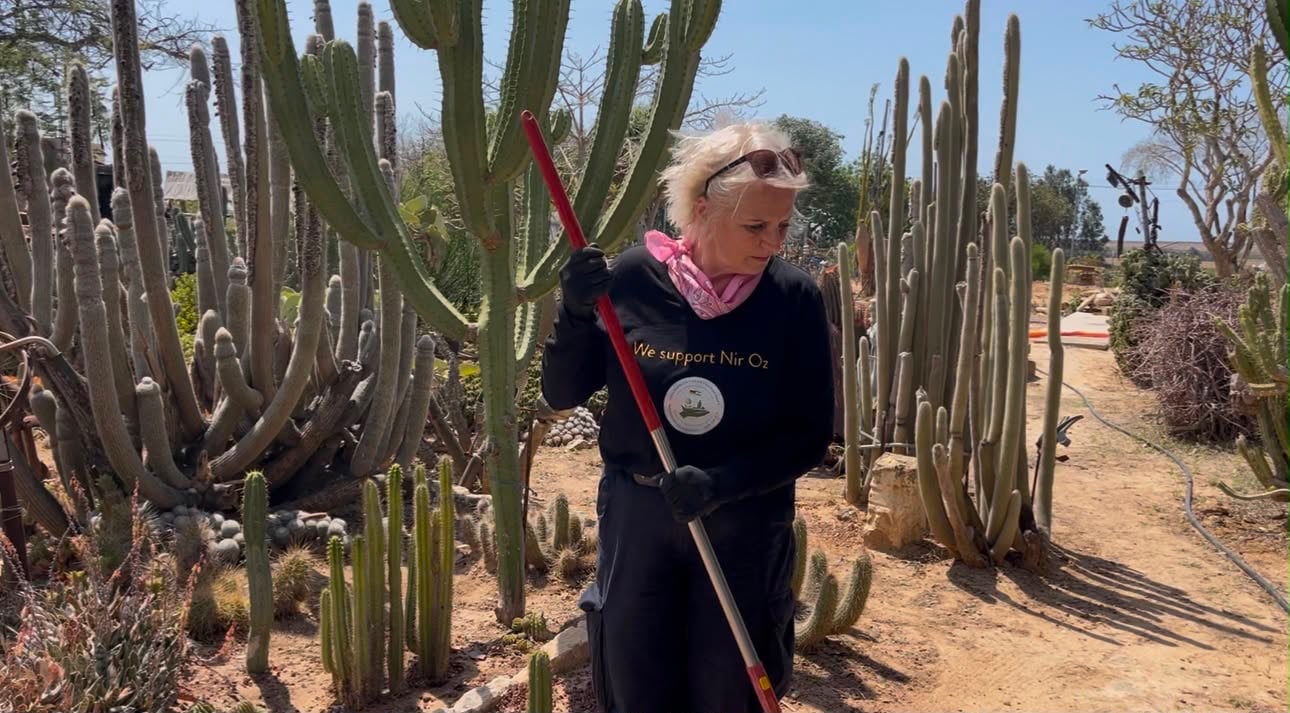
Group leader Petra Hemming in action in Southern Israel (Photo courtesy: Petra Hemming).
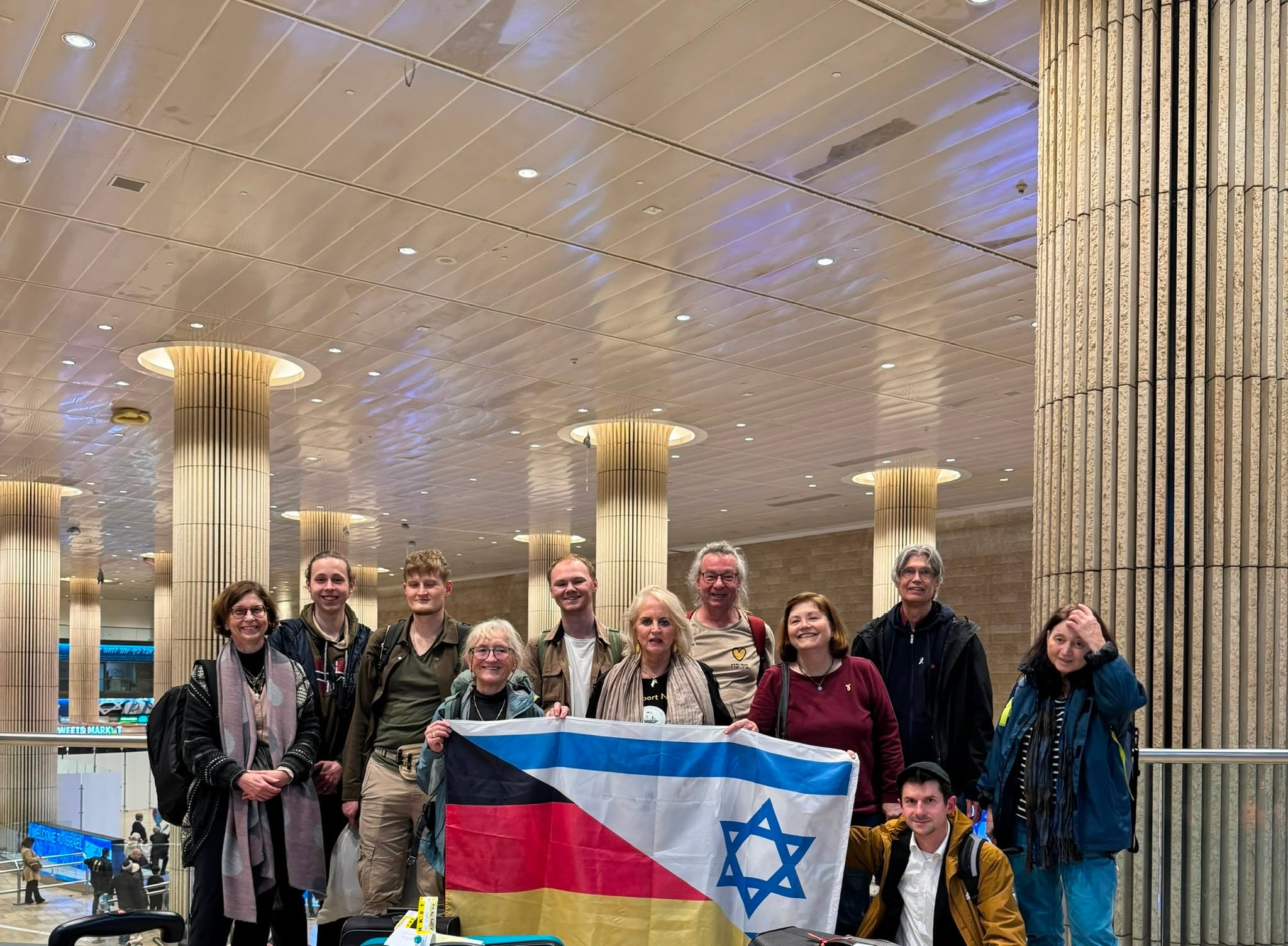
German volunteers at Ben Gurion airport, ready to help rebuild a shattered Kibbutz (Photo courtesy: Petra Hemming).
What Petra Hemming and the volunteers she brings together demonstrate is that there is another Germany, and another kind of “Israel advocates.” One that does not announce itself loudly, does not seek recognition for its actions, and does not measure its commitment in visibility or applause, but instead understands that solidarity, when it is real, is expressed through presence, labour, and responsibility. These are the kinds of stories that deserve far more space in mainstream media, not attention-driven symbolic gestures like the Flotilla activists, but sustained acts of rebuilding carried out by ordinary people who simply choose to show up.