
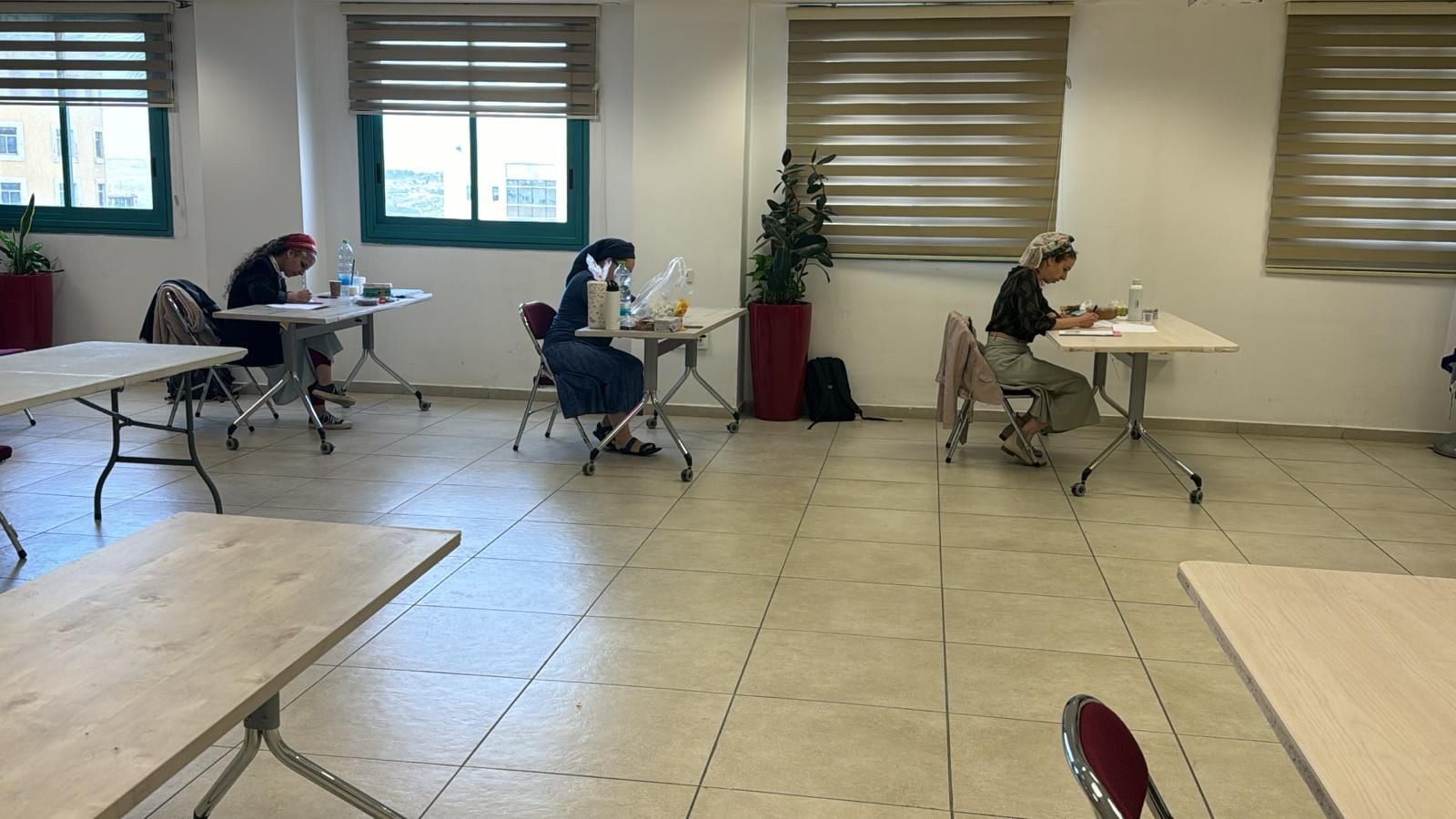
The Chief Rabbinate has decided not to administer the type of rabbinical tests that it is required by a High Court of Justice ruling to make available for female candidates in the upcoming July session, just weeks after three women sat a test for the first time in Israel’s history.
A Rabbinate spokesperson confirmed to The Times of Israel on Monday that the tests won’t be offered in the July session but said they will be available in the fall session, with registration set to begin next week. Asked about the reason for the decision regarding July, the spokesperson declined to answer.
The Chief Rabbinate administers rabbinical tests in the major areas of halacha (Jewish law), including kashrut, niddah (family purity laws), Shabbat, mourning, and marriage laws. Candidates who wish to be eligible to receive rabbinical ordination need to pass a certain number of those tests (six are enough to achieve the level of “neighborhood rabbi,” while the title of “city rabbi” entails 11 tests).
However, the Rabbinate also grants other types of certificates to those who pass the tests, with important economic and social implications. A certain number of tests can be considered equivalent to an academic degree for some public jobs or can guarantee a higher salary.
On that basis, after years of legal battles, the High Court ruled in July 2025 that women must also be allowed to take the standard rabbinical tests to receive the benefits, though not rabbinical ordination, which in mainstream Orthodox practice is reserved for men.
Get The Times of Israel’s Daily Edition
by email and never miss our top stories
By signing up, you agree to the terms
Following the ruling, the Rabbinate scrapped the test’s 2025 fall session entirely.

ITIM Director Rabbi Seth Farber outside the Religious Services Ministry with Rabbanit Yaara Vidman Samuel from the Ein Hanatziv Midrasha (left) and Dr. Ruth Agiv from the Matan Hasharon Beit Midrash (center) where they took a rabbinical test administered by the Chief Rabbinate on April 27, 2026. (ITIM)
In February, it opened registration for spring tests while announcing that the system would be reformed. Six women registered for one of the tests, five for the laws of mourning and one for niddah.
Despite several additional obstacles, including a delay of several hours in delivering the question sheets to the venue where female candidates were invited to sit the test, three women took the exam on April 27. They have yet to receive the results.
A few days later, Channel 13 reported that four rabbis serving on the Chief Rabbinate Council, the highest body advising the government and public institutions on halachic matters, had demanded that the tests be frozen completely until the Knesset could pass a law officially preventing women from ruling on halachic matters or serving in the rabbinate.
According to the report, the rabbis demanding the move included the hardline Religious Zionist rabbis Shmuel Eliyahu and Yaakov Shapira.
Chief rabbis Kalman Ber and David Yosef, while themselves against women taking the tests, seemed less inclined to implement drastic moves, considering that the hypothetical question of rabbinical ordination for female candidates is not going to be relevant for years to come (the report did not address the fact that the High Court ruling did not require the Rabbinate to ordain women as rabbis).
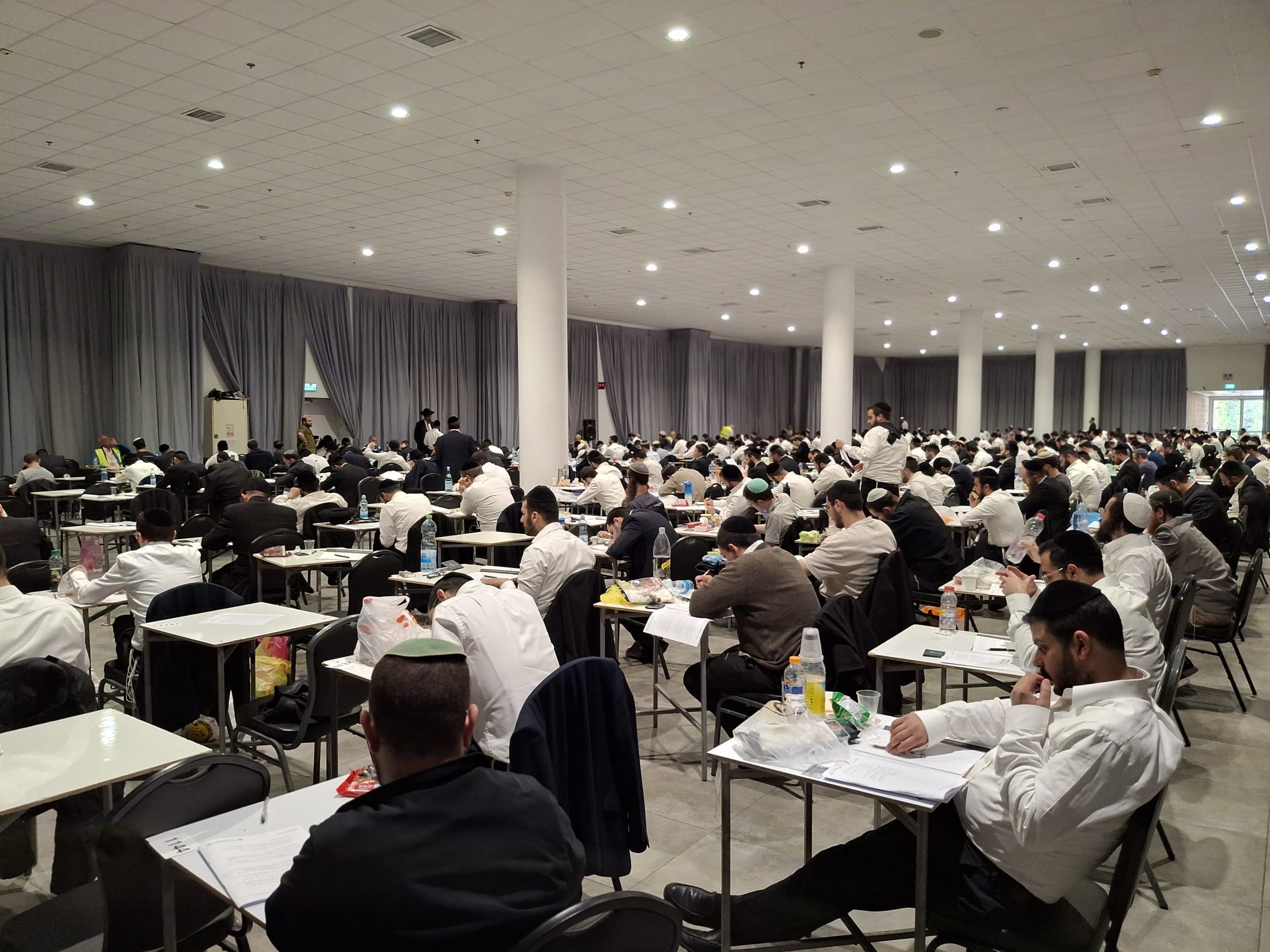
Candidates taking a rabbinical test administered by the Chief Rabbinate at the International Convention Center in Jerusalem on April 23, 2026. (Chief Rabbinate)
Other types of tests administered by the Rabbinate, including advanced halacha tests to become a dayan (rabbinic judge) and tests for kashrut supervisors, ritual butchers, and more, will still be offered in July.
All tests are usually offered three times a year — in the spring, summer and fall.
According to Rabbi Seth Farber, director of the religious group ITIM, which is among those who petitioned the High Court on the subject starting in 2019, the Rabbinate’s decision not to offer the type of tests that must be available to women in July “sends a deeply troubling message.”
“The Rabbinate should recognize that women’s Torah learning and leadership are an important part of the future of Israeli religious life,” he told The Times of Israel. “Allowing women to take these exams will strengthen Torah and strengthen public trust in the religious establishment.”
Which gorgeous bird do you prefer?

THIS MONTH ONLY: Join our reader support group for as little as $6/month and receive an exclusive tote bag featuring one of Israel’s native birds.
Choose between the Duchifat (orange), Israel’s national bird, or the Shaldag (blue), a beloved symbol of the Israeli landscape.
As a member of the Times of Israel Community, you’ll also enjoy:
An ad-free experience of our site and podcasts.
Exclusive access to award-winning films via DocuNation.
Weekly letters from founding editor David Horovitz.
Join ToI Community & claim my bag
Already a member? Sign in to stop seeing this
You’re a dedicated reader

That’s why we started the Times of Israel – to provide discerning readers like you with must-read coverage of Israel and the Jewish world.
So now we have a request. Unlike other news outlets, we haven’t put up a paywall. But as the journalism we do is costly, we invite readers for whom The Times of Israel has become important to help support our work by joining The Times of Israel Community.
For as little as $6 a month you can help support our quality journalism while enjoying The Times of Israel AD-FREE, as well as accessing exclusive content available only to Times of Israel Community members.
Thank you,
David Horovitz, Founding Editor of The Times of Israel