
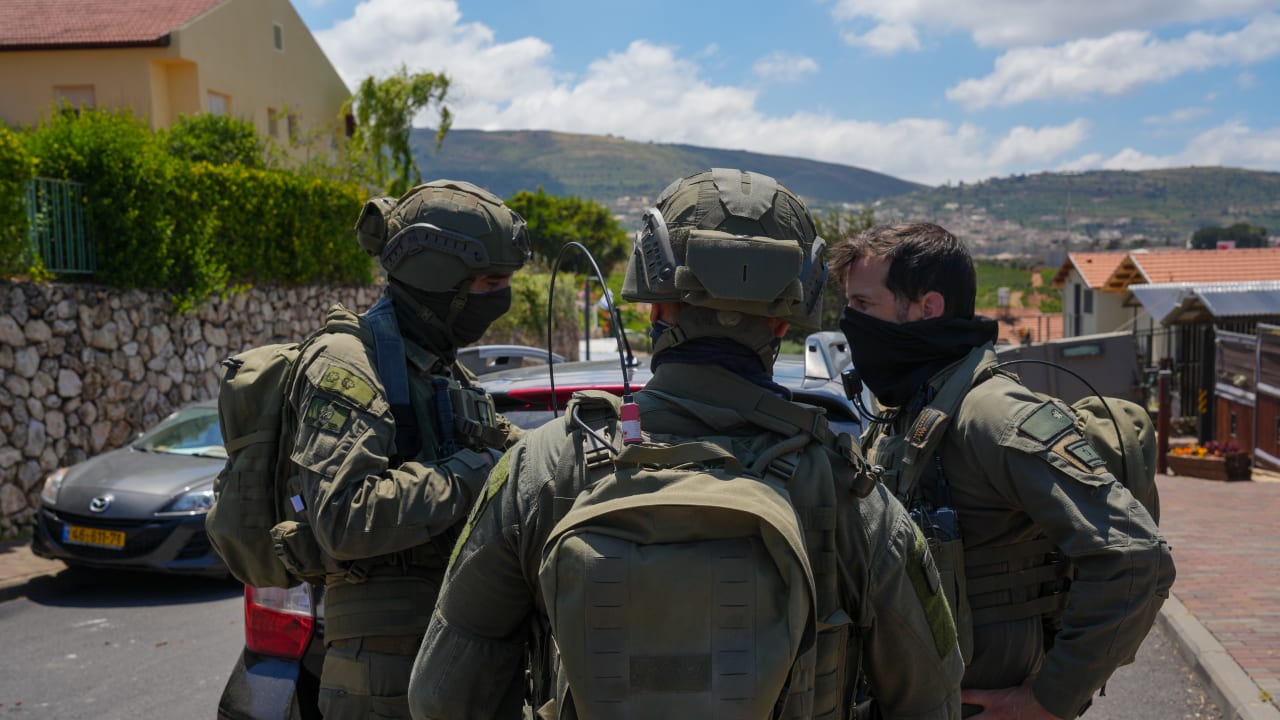
Two weeks ago, the IDF brought a group of journalists to the southern Lebanese city of El-Khiam, just a few kilometers north of Metulla, to show a Hezbollah tunnel buried underneath the floor panels of a clothing store.
One of the questions the officers at the scene were repeatedly asked concerned the drone threat. And each of the officers, three to be exact, answered as if on cue that the exploding drones – which at that time had “only” killed four people and injured another 50 since the “ceasefire” in Lebanon went into effect on April 16 – were a tactical threat, not a strategic one.
The reporters were assured that the IDF was working on solutions and that this weapon was not impacting the IDF’s overall operations.
“The drones do not affect our operational work,” one Givati officer said. “We have made adjustments. We operate somewhat differently now, with adaptations that I won’t elaborate on, but at this point the threat is manageable.”
Perhaps from a purely military perspective, that is true. Israel’s northern campaign is not collapsing because of drones. Hezbollah is not overrunning the Galilee. The strategic balance along the northern border has not fundamentally changed.
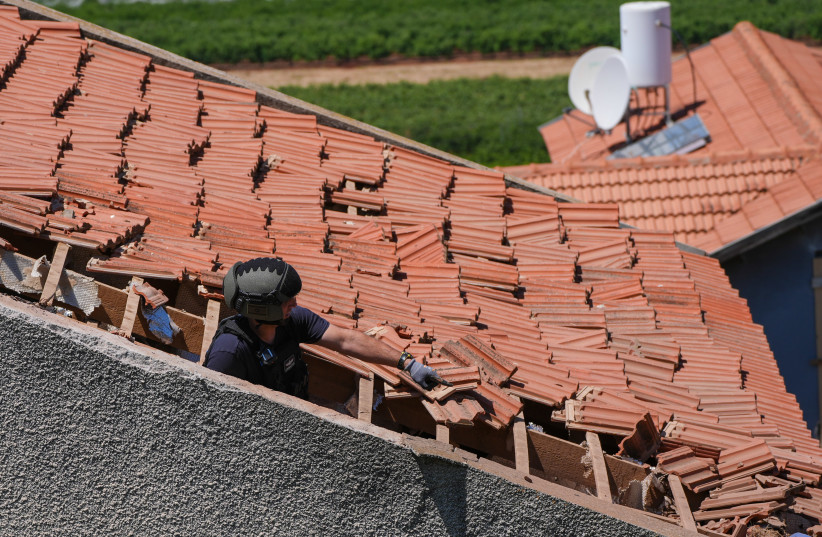 Israeli security forces at the scene where a house was hit by an explosive drone launched by Hezbollah from Lebanon in Metula near the Israeli-Lebanese border, May 25, 2026. (credit: AYAL MARGOLIN/FLASH90)
But for the family of Sgt. Nehoray Leizer – killed by a drone in southern Lebanon Sunday – or the family of Staff Sgt. Noam Hamburger, killed Saturday by a drone at the Biranit outpost inside Israel on the northern border, the fact that these drones are “only” a tactical problem, not a “strategic” one, is no consolation whatsoever.
And the problem with “tactical” threats is that, when left unanswered, they accumulate. The issue is not whether drones pose an existential threat to Israel. They do not. The issue is whether Israel is allowing a low-intensity but deadly war of attrition to continue because broader diplomatic considerations are constraining the response.
Three soldiers killed since media tour
In the two weeks since that media tour, another three soldiers have been killed and 20 more injured by this weapon, bringing the number of security forces killed since the cease-fire to 11.
Nobody is saying to move the IDF out of Lebanon; the casualties have not led to a repeat of the Four Mothers movement that had such an influence in pushing Israel out of Lebanon in 2000. After October 7, the vast majority of the country understands why you need the IDF situated between the terrorists and civilian communities.
But what people are asking is why the army is not doing more – taking more stringent action – after each one of these drone attacks.
Because what appears to be developing is a dangerous equation in which Hezbollah believes these attacks fall below Israel’s escalation threshold. And once an enemy concludes it can inflict casualties without paying a meaningful price, the attacks tend not to diminish, but to multiply.
Eventually, the IDF will find a technological solution to this problem. If it found a way to knock ballistic missiles out of the stratosphere, it will find a way to deal with inexpensive, explosive-laden drones.
But a fiber-optic drone defense system is not built overnight, and until those solutions are perfected, deterrence must compensate for the technological gap.
In the meantime, Israel cannot tolerate a steady drip-drop of morning news bulletins beginning with the dreadful words “permitted to publish,” followed by the reading of another name killed by this weapon.
It is unconscionable to have additional tools available and not use them, leaving soldiers in the field badly exposed.
And Israel does have more tools. The growing sense within Israel’s security and political establishment is that Jerusalem’s freedom of action in Lebanon is being constrained by Washington’s desire to preserve diplomatic momentum with Iran, and concern that a major Israeli escalation in Lebanon could derail those efforts.
What are those tools?
Disproportionate use of force; responding to every drone attack with strikes on the beating heart of Hezbollah in Beirut’s Dahiya quarter or in the Bekaa Valley.
The logic behind disproportionate retaliation is not revenge. It is deterrence: convincing Hezbollah that every drone attack carries consequences so painful that the tactical gain no longer justifies the cost.
Since the beginning of the cease-fire, those attacks – commonplace until Hezbollah entered the war on Iran’s side on March 2 – have largely halted. Concurrently, the drone attacks have only increased, with increasingly deadly results.
Smotrich: Destroy Beirut’s buildings in retaliation for drones
IDF Chief of Staff Lt.-Gen. Eyal Zamir reportedly articulated this sentiment at a security consultation on Monday with Prime Minister Benjamin Netanyahu, saying that the IDF should be attacking buildings in Hezbollah’s Beirut stronghold in response to the attacks. Finance Minister Bezalel Smotrich echoed that sentiment, saying that “we should bring down 10 buildings in Beirut for every 10 drones.”
Brig.-Gen (res.) Erez Winner, a former head of the operational planning team in the Southern Command and now a fellow at the Jerusalem Institute for Strategy and Security, said in an interview on Army Radio that the right way to deal with this type of threat is to keep the enemy busy with other matters.
“That means attacking more, rather than looking for technological solutions, which are important but take time and are not an immediate answer.”
Winner said the drone operators are not sitting in Dahiya, but rather in southern Lebanon, “where the IDF can and needs to operate much more aggressively. The key is attack and not defense. The key is that a village from which a drone was sent needs to come under fire and operations such that it is impossible to carry on with regular life.”
That phrase – “the key is attack and not defense” – increasingly appears to be at the heart of this debate.
To be sure, harsher retaliation carries the risk of escalation. Hezbollah could respond more forcefully. Northern residents could again find themselves under heavy rocket fire. And broader regional diplomacy, especially regarding Iran, could become more complicated.
But the current approach equally carries risks as well, specifically normalizing a deadly war of attrition in which Hezbollah continues to extract a steady price while Israel absorbs the blows and waits for technological solutions.
As October 7 so painfully illustrated, sometimes the price of inaction is greater than the risk of action.
Winner pointed out that Israel knows how to act against American opposition when necessary, as it did when it operated in Rafah in 2024 despite heavy US pressure and objections.
Democracies everywhere eventually reassess policies that impose a steady human cost without a clear strategic payoff.
Thirteen American service members have lost their lives since the beginning of the current campaign against Iran that began on February 28, and that number has been repeatedly cited in the US by those wondering whether the war is worth the cost.
Eleven members of Israel’s security apparatus have been killed in attacks in Lebanon or emanating from Lebanon since April 17.
There is no reason why that same sensitivity should not trigger a reassessment here as well – not toward withdrawal, but toward stronger action. Because the results suggest the current tactics are not working, and more needs to be done to prevent Hezbollah from launching these drones and exacting an unacceptable daily price.