
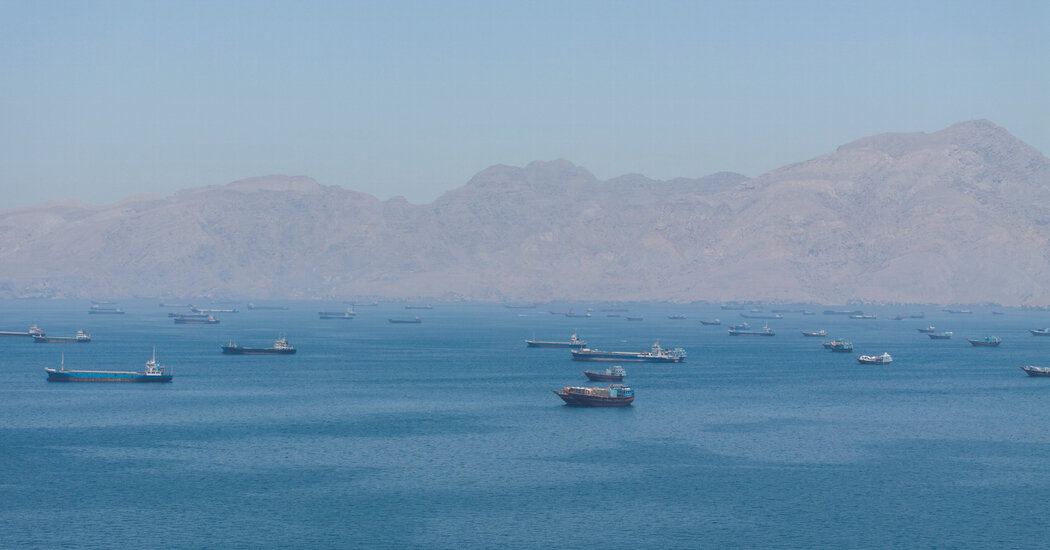
U.S. officials are closing in on a framework for negotiations with Iran that could lead to the reopening of the Strait of Hormuz while the two countries negotiate over President Trump’s demands for an end to Iran’s nuclear program, according to three U.S. officials with knowledge of the discussions.
Mr. Trump has not signed off on the emerging framework, and it was not clear if it matches Iranian understanding. Even as U.S. and Iranian officials acknowledged negotiators had agreed to a draft memorandum, White House officials provided only a vague outline of what they had agreed to, at least preliminarily.
But the development could amount to a breakthrough in extending the cease-fire and setting the table for more substantive negotiations three months after the war began.
Under the framework, the Iranians would see some economic relief for their strangled economy as progress is made in the negotiations.
The details are part of a memorandum of understanding being discussed between the two sides, which could bring them to the negotiating table for a formal deal that would end the war and potentially ease the global energy crisis it has caused.
For the Americans, key to any deal would be that Iran disavows its nuclear program and any intention of acquiring a nuclear weapon — a promise Iranian leaders have made many times over the years — and agree to dispose of its highly enriched uranium, two of the officials said. The Strait of Hormuz would reopen immediately, one of the officials said, but the U.S. military blockade there would stay in place. The blockade would be reduced in proportion to how much of the pre-war ship traffic is restored, the official added. That would incentivize Iran to move quickly to remove mines that it laid throughout the Strait, and allow U.S. officials to gauge the progress on the waterway becoming safer to cross.
The three officials were not authorized to speak publicly, and all were granted anonymity to discuss the U.S. view of the current talks.
There remain gaps in what the United States has said about the memorandum of understanding and what Iranian officials have signaled publicly. Part of the problem is that leaders on both sides are managing their own domestic audiences and dealing with hard-liners who are working hard to undermine any potential deal. The most challenging sticking point will be what happens to Iran’s highly enriched uranium.
Mr. Trump has made clear to aides that he will not sign off on any deal in which the United States can be said to be giving direct cash payments to Iran. Mr. Trump has attacked President Barack Obama for years over the “pallets of cash” that the United States delivered to Iran to settle a decades-old financial dispute, timed after Mr. Obama’s 2015 nuclear deal. Given that political reality, Mr. Trump’s team has been developing ideas that would involve other countries, including the Qataris, releasing funds to the Iranians.
Mr. Trump and his team have quietly lobbied the Gulf Arab states to underwrite Iran’s postwar reconstruction, contingent on the Iranians agreeing to acceptable terms. The Gulf countries have discussed a $300 billion investment fund to that end.
Another mechanism under discussion is lifting the freeze on some of the Iranian funds held by Qatar to purchase medicines and feed stock. Qatar would then turn those items over to Iran, according to one of the officials. Both steps would require the United States to sign off on them, a U.S. official said.