
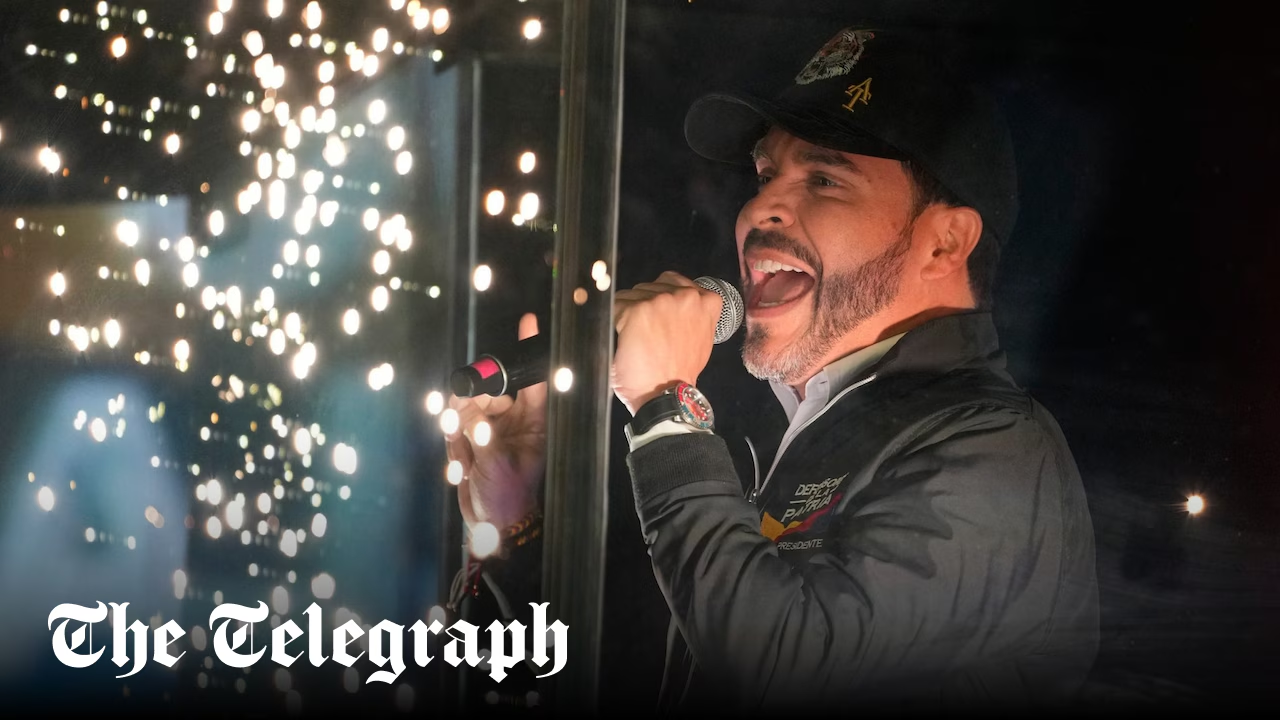
His rise reflects a country increasingly frustrated by security problems.
Mr Petro entered office in 2022 with a promise of “total peace” – an ambitious effort for a country long beset by an internal armed conflict.
His plan was to negotiate simultaneously with guerrilla groups, drug traffickers and criminal organisations. Four years later, many Colombians view his strategy as a failure, with violence surging.
The International Committee of the Red Cross reported that the humanitarian impact of Colombia’s armed conflict reached its worst level in a decade in 2025.
Mass displacement rose by 111 per cent, and deaths and injuries from explosive devices increased by a third.
Kidnappings, which had fallen to historic lows after the 2016 peace accord with the Farc guerrillas, have also risen, while armed groups have expanded their presence across much of the country, fuelled by cocaine trafficking and illegal mining.
On Thursday, Willy Rodríguez, the mayor of San Jose del Guaviare, told AFP that clashes between two dissident factions of the disbanded Farc guerrilla movement had left 48 people dead in the Colombian Amazon.
The deteriorating security picture has been central to the election campaign.
Mr de la Espriella’s answer is unapologetically Bukele-esque.
He proposed the building of mega-prisons in remote regions of the country, modelled on El Salvador’s notorious anti-gang facilities. And he suggested that extraordinary constitutional powers may be necessary to restore order, floating tougher detention regimes and collective prosecutions for criminal groups.