
The Canadian economy is in a “vulnerable position,” according to at least one economist, after the latest GDP data revealed a technical recession.

Statistics Canada said Friday that GDP in the first quarter of 2026 fell 0.1 per cent on an annualized rate, and follows a revised one per cent annualized decline in the fourth quarter of 2025. A technical recession is most commonly defined as two consecutive quarters with negative economic growth.
Friday’s release came as a surprise to some economists, who were expecting to see a positive result for the quarter.
“First-quarter growth was a disappointment. We’re certainly in a vulnerable position, with some of the key engines of growth beginning to sputter,” said principle economist Andrew DiCapua of the Business Data Lab and Canadian Chamber of Commerce in a statement.
“April shows some hope, but this does not set the economy up for the growth we had expected this year.”
Story continues below advertisement
The statement added: “The outlook remains choppy.”

Get daily National news
Get daily Canada news delivered to your inbox so you’ll never miss the day’s top stories.
On a quarter-over-quarter basis, the agency says growth was essentially unchanged, but small movements in quarterly figures are magnified when converted into annualized rates. Real GDP declined last October and in March, but growth was either flat or positive in the four months in between.
“The Canadian economy continued to struggle in the first quarter, as GDP posted another decline,” said Katherine Judge at CIBC Economics in a statement.
“The 0.1 per cent annualized drop was in stark contrast to the consensus for a rebound to 1.5 per cent.”
Judge highlights how there were sizeable drops in business and residential investment as well as government spending. She adds that this was the fifth straight drop in business investment amid uncertainty brought on by trade war and U.S. tariffs.
More on Economy
More videos
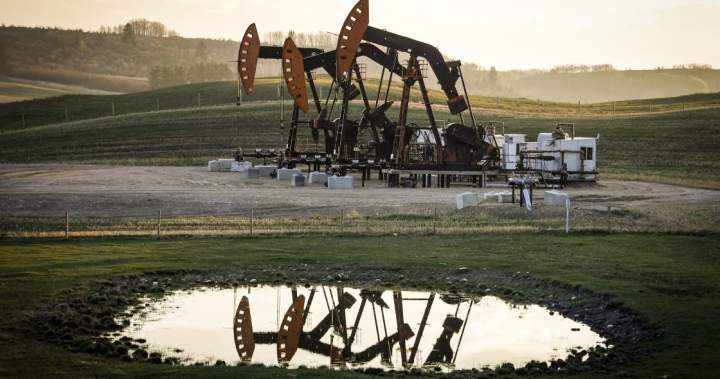
Statistics Canada mainly blames higher imports of gold and a weak month for Canada’s resource extraction industries in March for dragging down recent economic activity.
Exports fell 0.1 per cent overall in the first three months of the year, even as Canada’s oil sector increased shipments of crude oil products and natural gas. Statistics Canada says declines in exports of passenger vehicles and lights trucks offset most of those gains as the sector continues to get hit by U.S. tariffs.
Story continues below advertisement
Friday’s release comes one day after the Bank of Canada said the economy is facing a “volatile” global environment and is vulnerable to shocks as households and businesses continue to struggle.
The agency’s early estimates for real GDP in April call for a sharp rebound to 0.4 per cent growth in the month as the mining, quarrying and oil and gas sectors returned to growth.
– With files from The Canadian Press
© 2026 Global News, a division of Corus Entertainment Inc.