
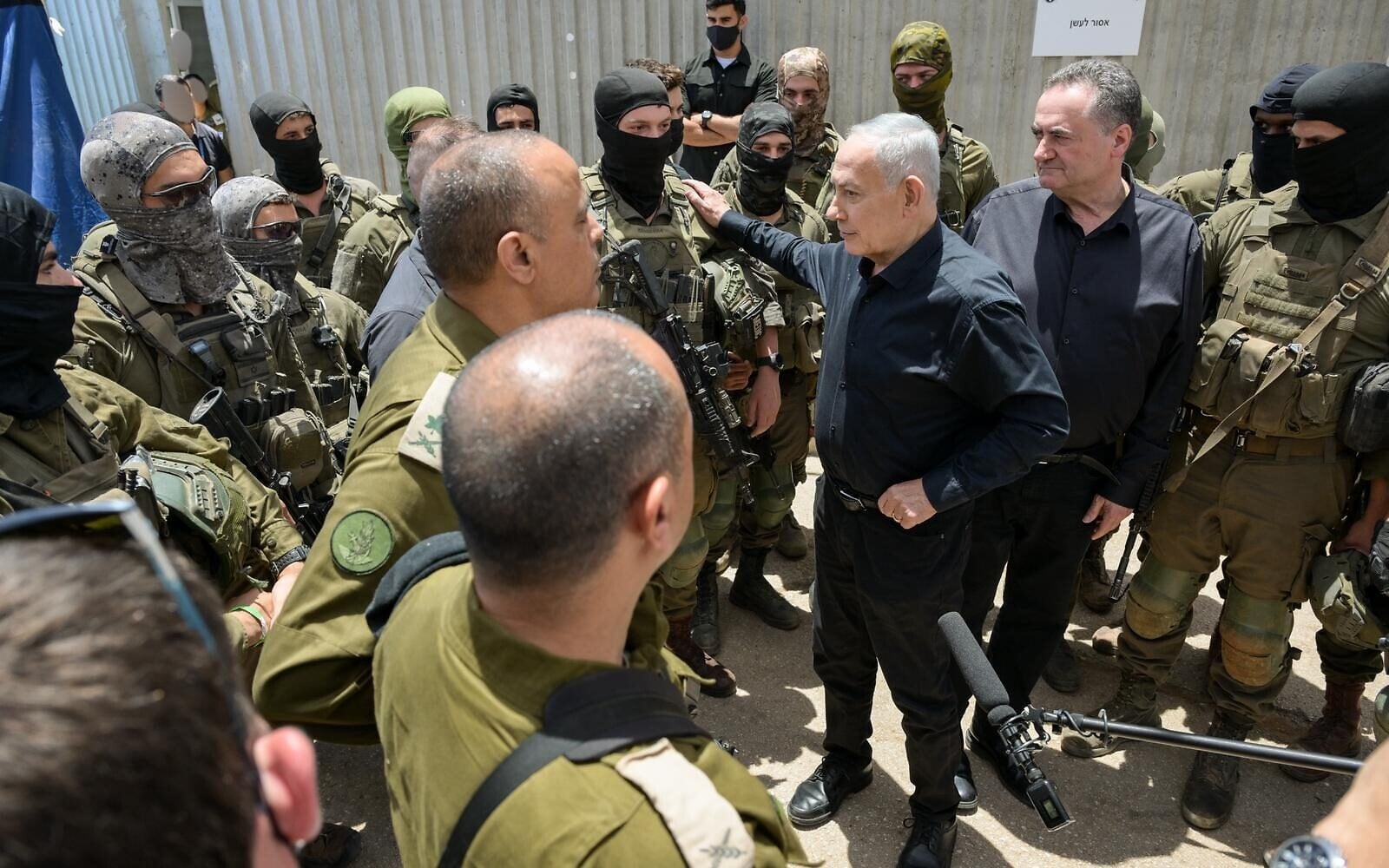
Prime Minister Benjamin Netanyahu confirmed Friday that troops of the IDF’s 36th Division have crossed Lebanon’s Litani River, as Israeli and Lebanese military officials held a new round of talks in the US.
“Our forces crossed the Litani, and they’ve advanced to the dominating terrain,” Netanyahu said on a visit to troops on the northern border. “We’re also operating in Beirut, and in the Beqaa, across the entire front, and hitting Hezbollah hard.”
The comments came as Lebanese state media reported at least six people killed in Israeli strikes on south Lebanon on Friday, including a local police officer in the town of Ebba, north of the Litani River.
Meanwhile, the military said twice Friday morning that it intercepted suspected Hezbollah drones over areas where troops were operating in southern Lebanon. The suspected drones triggered sirens in the Israeli border communities of Shtula, Misgav Am and Margaliot.
The IDF had on Thursday struck Beirut for the first time in three weeks, after mostly avoiding attacks on the Lebanese capital at the White House’s request amid the fragile ceasefires in Lebanon and Iran that US President Donald Trump announced last month. The military also struck Hezbollah targets in the terror group’s eastern Beqaa heartland and elsewhere in south Lebanon, killing at least 14 people, according to local officials.
Get The Times of Israel’s Daily Edition
by email and never miss our top stories
By signing up, you agree to the terms
In recent days, Israel has issued repeated evacuation warnings to swathes of the southern coastal city of Tyre and carried out heavy strikes there as well.
On a visit to an IDF post on the Lebanese side of Mount Dov, IDF Chief of Staff Lt. Gen. Eyal Zamir said Friday that “even at these moments, our forces are advancing and operating,” according to remarks provided by the military.
“There is unprecedented cumulative damage here to Hezbollah, from thousands of terrorists to senior and mid-level commanders,” he said.
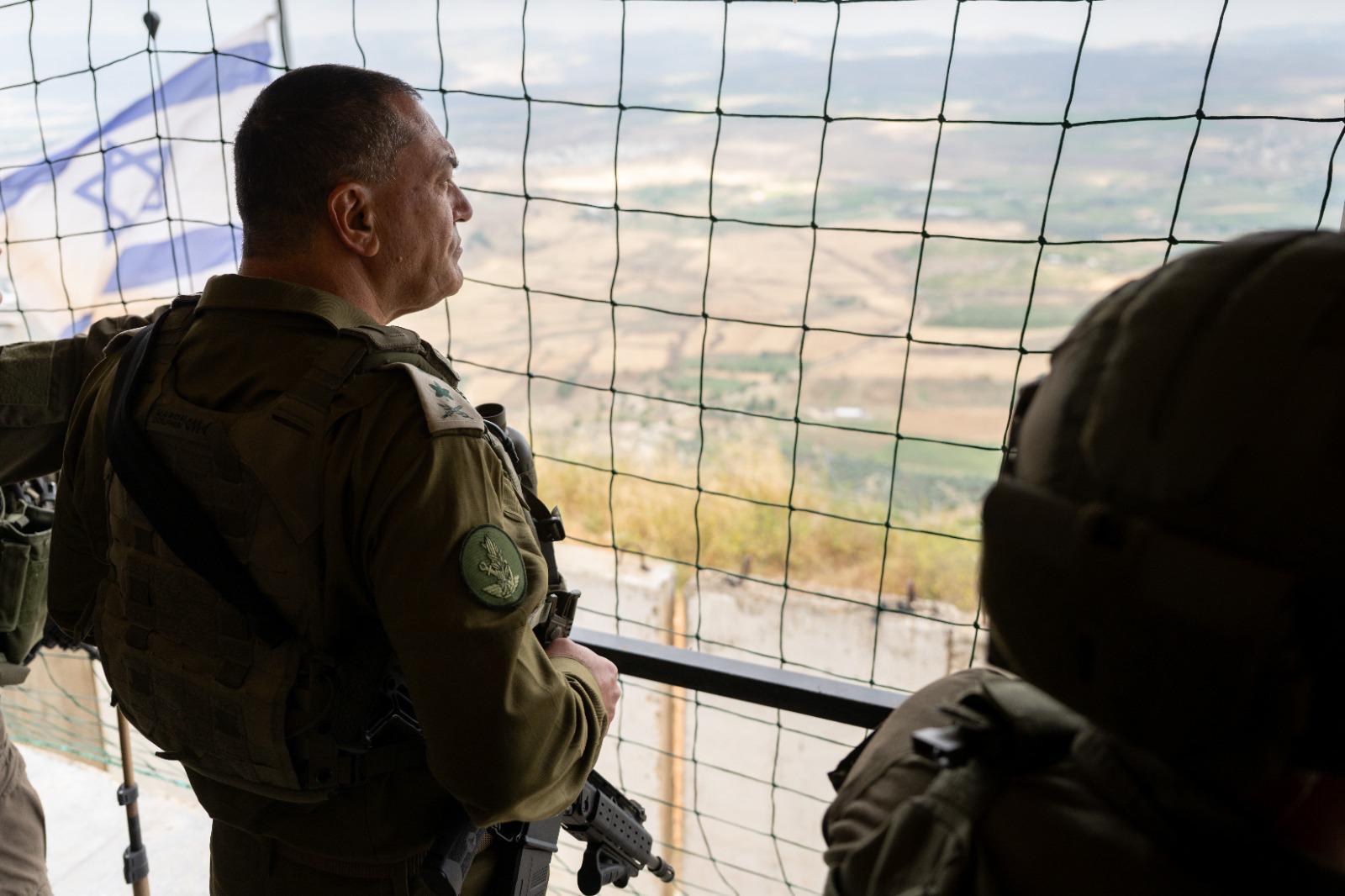
IDF Chief of Staff Lt. Gen. Eyal Zamir visits an IDF post on the Lebanese side of Mount Dov, May 29, 2026. (Israel Defense Forces)
He added that the IDF’s “forward defense line” in southern Lebanon, demarcating its security zone, “does not limit us.”
“Wherever we identify a threat and wherever we are required to remove a threat, we will act. Wherever there is an operational need to maneuver, we will maneuver,” he said.
“Every strike against Hezbollah is also a strike against the Iranian axis and the Iranian investment in the region,” said Zamir. “We are prepared for any development and remain at a high level of readiness against Iran as well.”
The military confirmed Thursday that ground troops have, over the past several days, conducted raids beyond the military’s “forward defense line,” in addition to the airstrikes that have taken place beyond that line.
The defense line, which the IDF announced last month, demarcates the military’s declared security zone in southern Lebanon. The line lies mostly south of the Litani, which runs about 30 kilometers (20 miles) from the Israeli border and has long been Israel’s benchmark in the bid to push Hezbollah northward.
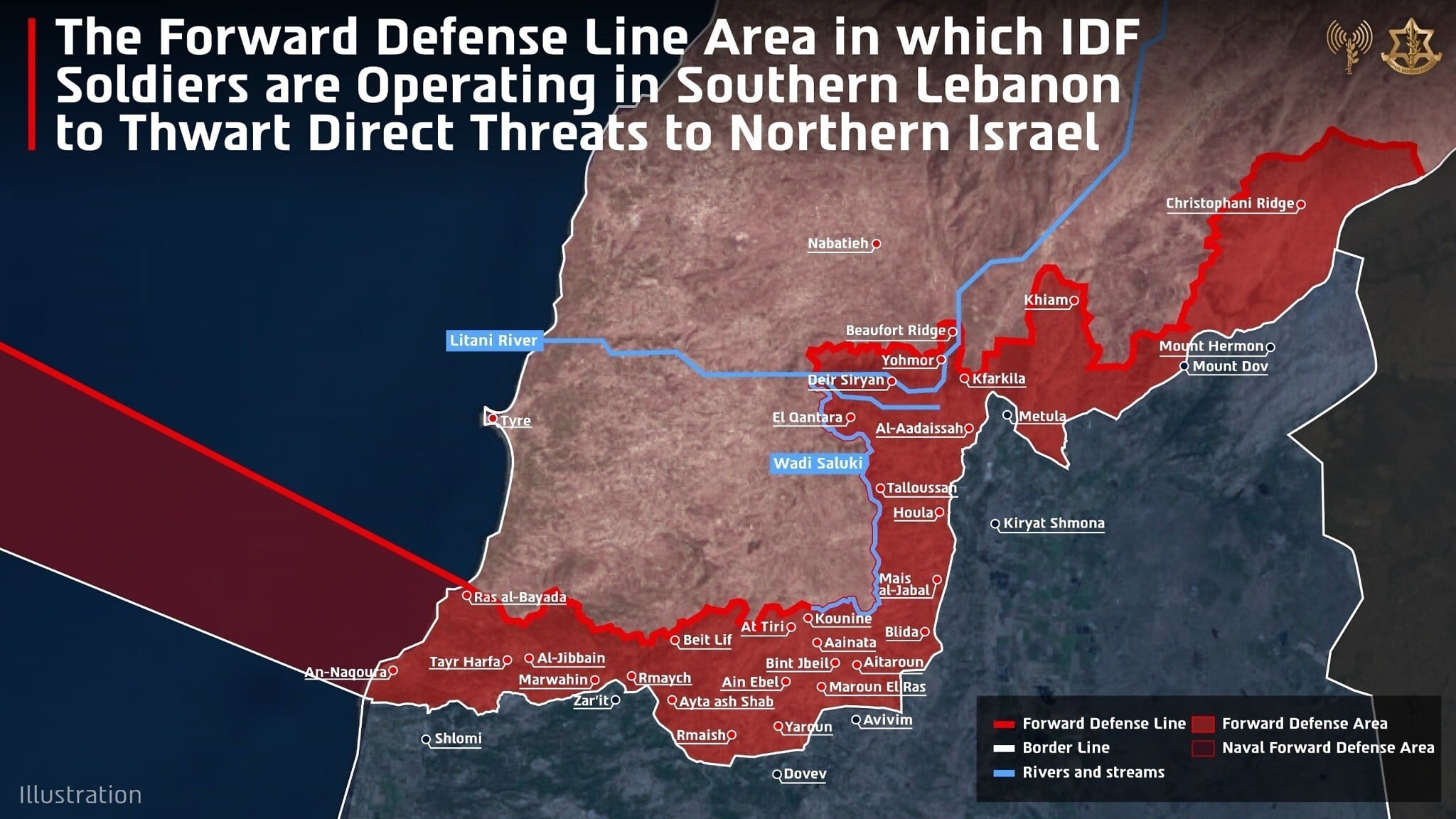
A map published by the IDF, showing its forward defense line in southern Lebanon, April 19, 2026. (Israel Defense Forces)
A military official said the IDF raids beyond the defense line seek to push Hezbollah farther from the border and better defend the security zone, amid the terror group’s increased, sometimes fatal use of first-person view (FPV) drones to attack troops in southern Lebanon and northern Israel.
In a video statement Thursday, IDF Spokesman Brig. Gen. Effie Defrin — who was wounded leading a tank battalion in the 2006 Lebanon war — said ground troops were operating “in places that I, as a battalion commander, was unable to reach, and they are doing so with great success.”
Commenting on advances by Israeli ground forces, Lebanese security sources said Israeli troops had crossed the Litani near the village of Zawtar al-Sharqiyah on Thursday but retreated to the southern bank of the river later in the day.
Ground forces crossed back over the Litani again on Friday, the sources said, saying it wasn’t a major advance and that it took place at an eastern point on the Litani that sits close to the Israeli border.
Israeli, Lebanese envoys to reconvene for US-brokered talks
Meanwhile on Friday, military representatives from Israel and Lebanon were meeting at the Pentagon on Friday to discuss steps for combating Hezbollah.
It was the first strictly military meeting in the US-brokered negotiations since the sides agreed to split the talks into diplomatic and security tracks. Accordingly, Israeli Ambassador to the US Yechiel Leiter did not attend the talks on Friday, an embassy official said.
The first meeting of the diplomatic track will be held on Tuesday and Wednesday next week at the US State Department.
Friday’s meeting is not expected to lead to any major announcements, and the sides still face an uphill battle to reach a deal that would normalize Israeli-Lebanese relations and disarm Hezbollah, the embassy official said.
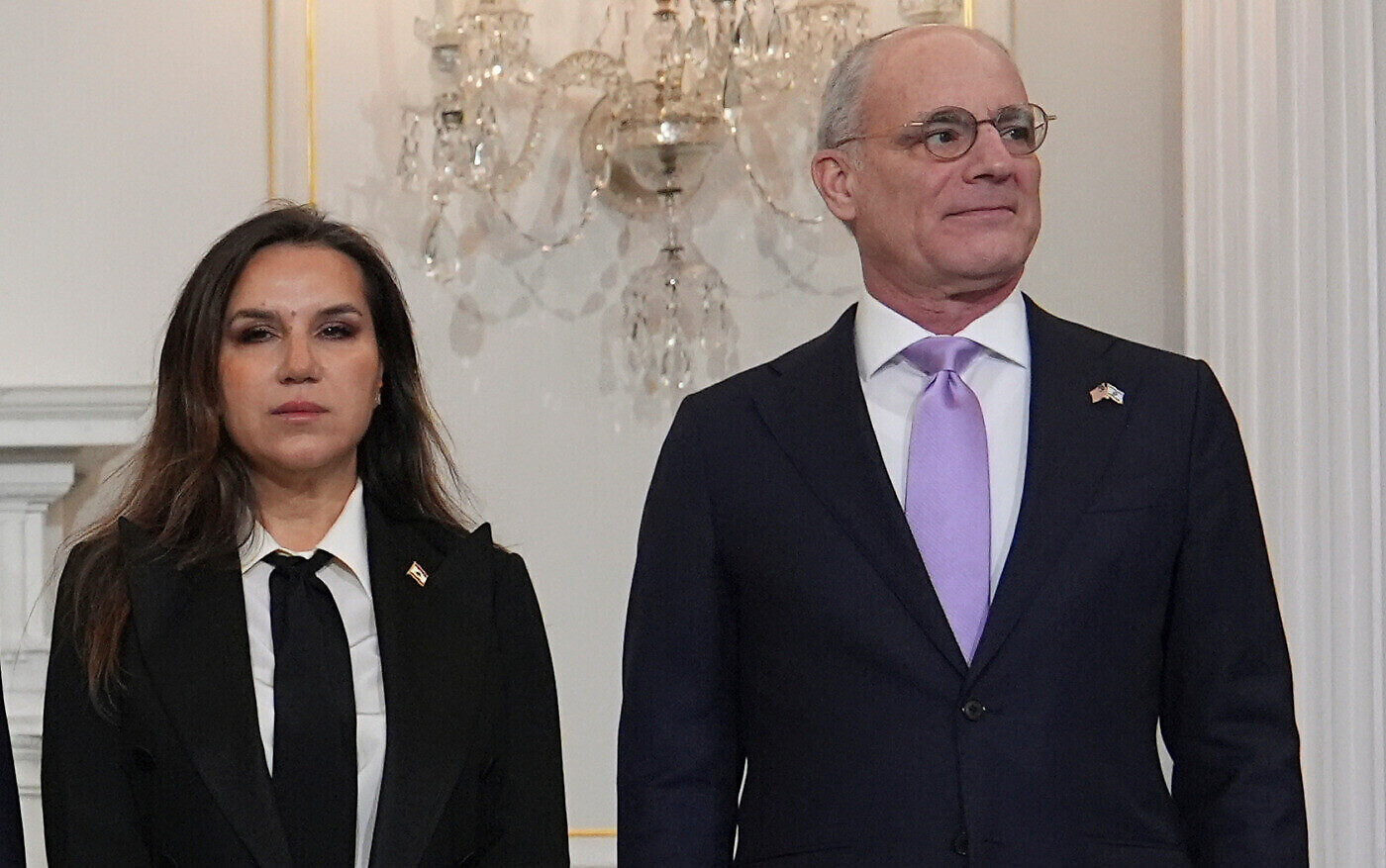
Israeli Ambassador to the US Yechiel Leiter and Lebanese Ambassador to the US Nada Hamadeh Moawad at the US State Department in Washington, April 14, 2026. (AP Photo/Jacquelyn Martin)
The Lebanese government demands that the deal ensure an IDF withdrawal from Lebanon, while the Iran-backed terror group is adamantly opposed to disarmament and has slammed the government for engaging with Israel on the issue.
Israeli and Lebanese negotiators previously held three rounds of talks at the State Department starting last month. The first round was followed days later by US President Donald Trump’s announcement of a ceasefire in Lebanon on April 16, eight days into the ceasefire in Iran.
That truce has not been felt in southern Lebanon, though, where Israel carries out daily strikes against what it says are Hezbollah operatives and infrastructure, and the Iran-backed terror group targets Israeli troops that have established an increasingly large buffer zone, which Jerusalem claims is for protecting its northern communities from enemy fire.
While the US has okayed Israeli strikes in Lebanon against targets that Jerusalem deems a threat, it has drawn a line on strikes in Beirut, which has largely avoided Israeli fire.
Ahead of Friday Pentagon talks, the office of Lebanese President Joseph Aoun said he told US Secretary of State on Friday that a ceasefire with Israel was “an essential gateway to moving on to any other step.”
Aoun “emphasized the need to exert all efforts to reach a ceasefire, considering it an essential gateway to moving on to any other step,” the statement said.
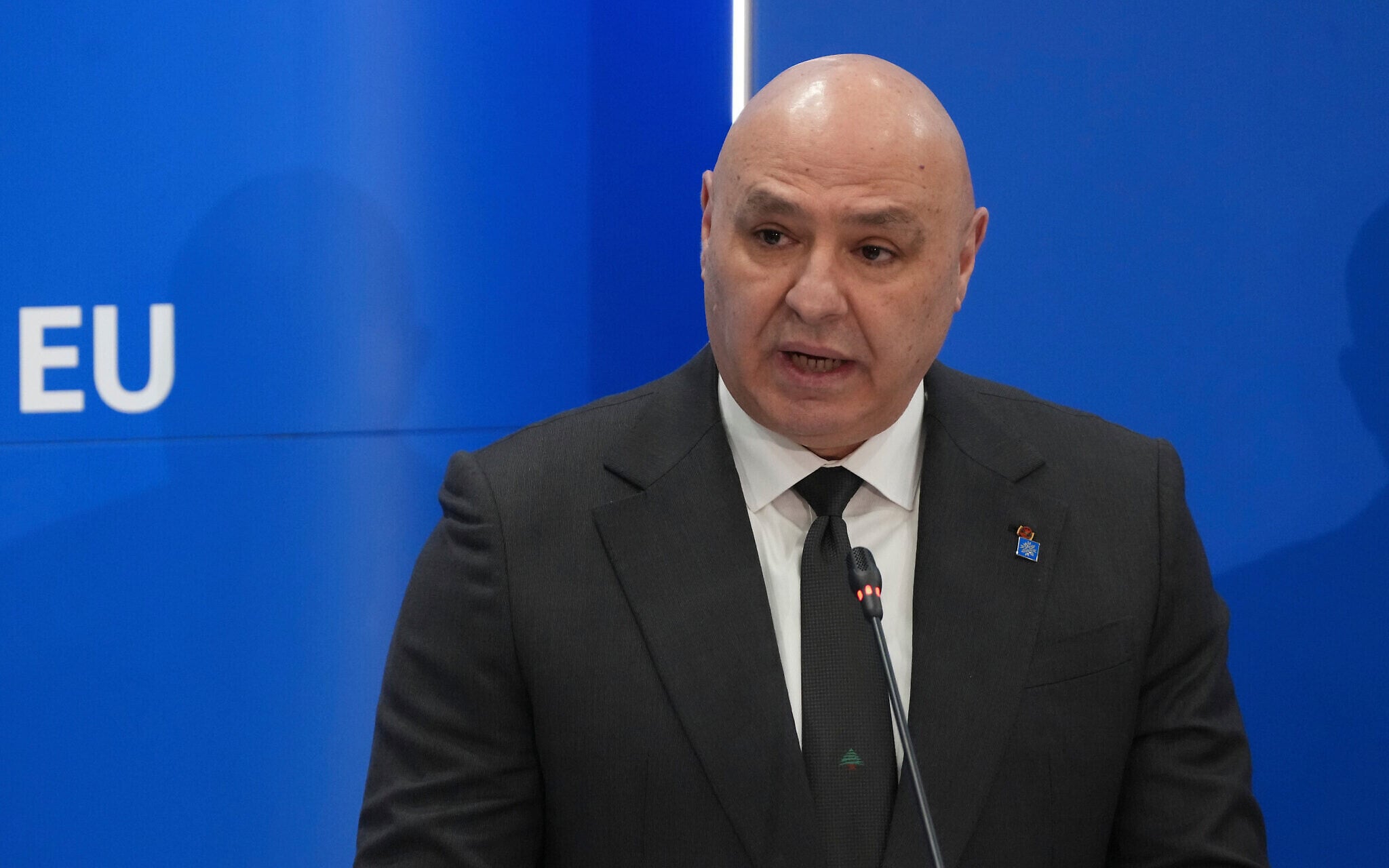
Lebanon’s President Joseph Aoun speaks during a press conference after the EU Summit in Nicosia, Cyprus, April 24, 2026. (AP/Petros Karadjias)
Rubio reaffirmed Washington’s commitment to consolidate the results of the US-brokered negotiations, and “support for the stability, independence and sovereignty of Lebanon on all its land,” according to the statement.
UNICEF says 15 children killed in Lebanon over past week
Lebanon was drawn into the wider regional war when Hezbollah, on March 2, launched its first attack on Israel since a November 2024 ceasefire agreement that ended over a year of hostilities.
That agreement required the Lebanese government to disarm Hezbollah. Israel accuses Beirut of falling short.
Lebanon’s health ministry, which does not distinguish between combatants and civilians, says Israel’s attacks have killed over 3,200 people in Lebanon since March 2.
The IDF said Friday that it has killed over 2,500 Hezbollah operatives since March 2, including 800 since the Lebanon ceasefire was announced.
The military also said it obtained intelligence confirming the “most senior field commanders of Hezbollah” were recently killed, including the commander of Hezbollah’s forces in the Khiam area, an assistant to the deputy commander of the Badr regional division, the intelligence officer for the Beaufort Castle area, the chief of engineering in the Yohmor area and his deputy, the commander of Hezbollah’s forces in Jibchit, and the chief of engineering in the Jouaiya area.
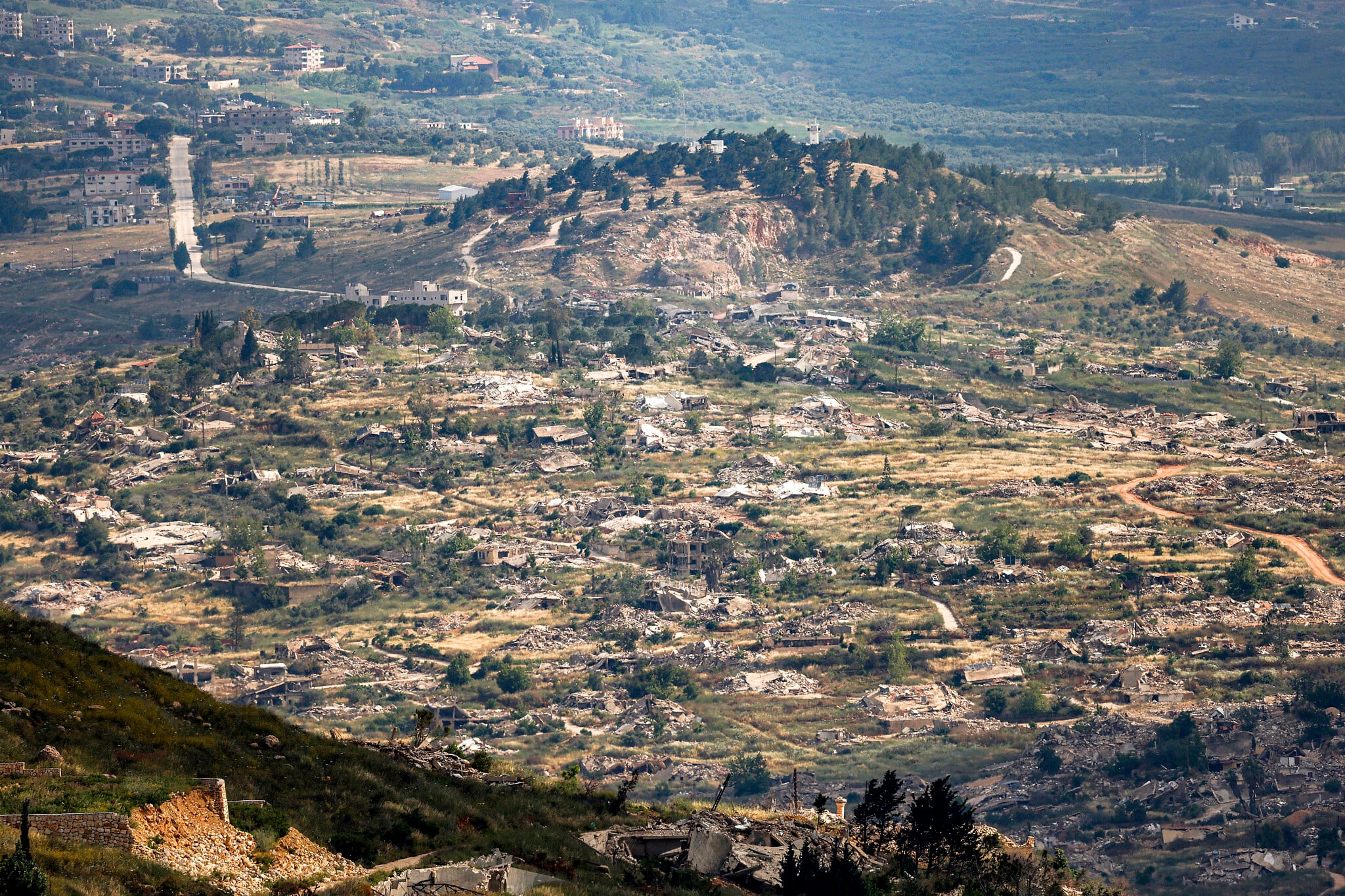
Destroyed buildings are pictured in the village of Kfarkila in southern Lebanon as seen from across the border in the Upper Galilee region of northern Israel on May 29, 2026. (Jalaa MAREY / AFP)
UNICEF, the United Nations children’s agency, said Friday that 15 children have been killed and 62 wounded in Lebanon over the past seven days.
The figures, attributed to Lebanon’s health ministry, were “staggering,” UNICEF spokesman Ricardo Pires told a media briefing in Geneva.
“We understand the vast majority of these children were impacted by airstrikes in south Lebanon,” he said. “Only yesterday, seven children were killed, and 30 were injured.”
In total, 55 children have been killed and 212 wounded since Trump’s April 16 announcement of a ceasefire in Lebanon, Pires said.
Christian Lindmeier, a spokesman for the World Health Organization, told the same press conference that there had been 1,774 injuries and 608 deaths in Lebanon from April 17 to May 22.
Lindmeier added that Israel’s campaign left Lebanon’s medical infrastructure in dire straits.
“The threat of expansion of military activities raises grave concerns for the health of the population,” Lindmeier said. “To date, in this conflict, a total of 16 hospitals and 13 primary healthcare centers have been damaged… Three hospitals remain closed.”
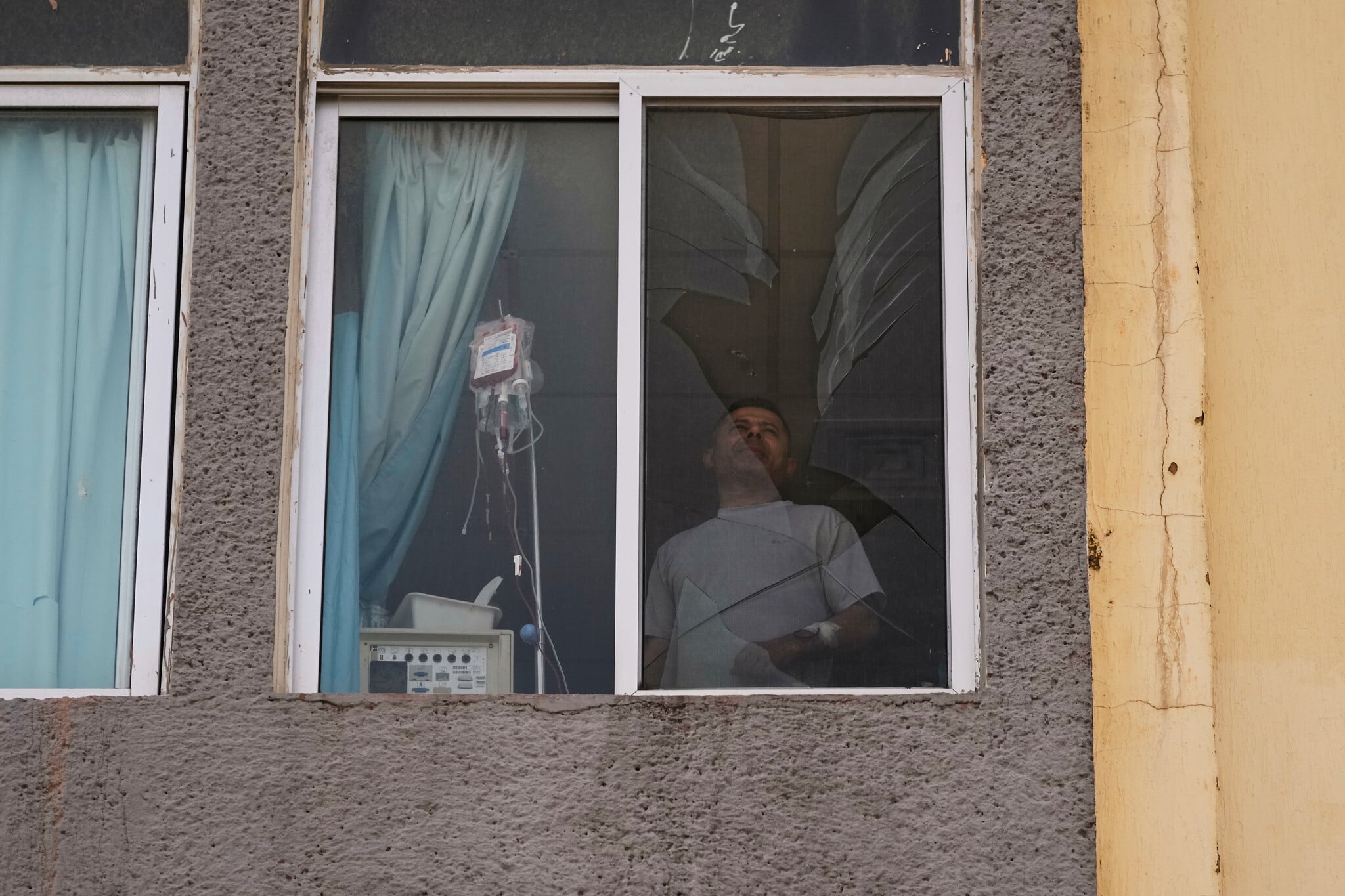
A patient is seen through a shattered hospital window, following an Israeli strike that was hit a nearby building in the southern port city of Tyre, Lebanon, on April 4, 2026. (AP Photo/Mohammed Zaatari)
South of the Litani, access to acute medical care and maternal health services “remains critically constrained,” Lindmeier said.
Patients are facing “delays of up to 48 hours to secure clearance for movement to referral facilities, causing serious risks to patient outcomes, including increased maternal and neonatal morbidity and mortality,” he said.
Israel has bombed several bridges over the Litani in recent weeks — effectively cutting off the area to the south from the rest of Lebanon — accusing Hezbollah of using them to transport weapons and reinforcements. Israel has also accused the terror group of embedding itself in civilian infrastructure, including hospitals.
Lebanese culture minister: Heritage sites in ‘serious danger’ from Israeli strikes
Meanwhile, Lebanon’s culture minister told AFP on Friday that Israeli strikes on the country’s south were putting heritage sites in “serious danger.”
“Bombings fell very close to the ruins of Tyre,” a UNESCO World Heritage site, Culture Minister Ghassan Salame said.
In recent days, Israel has issued repeated evacuation warnings to swathes of the southern coastal city of Tyre and carried out heavy strikes.
Early Thursday, Israel’s military warned it would target a building in Tyre, which it showed on an accompanying map as located very close to the city’s archaeological area.
Around two hours after the warning, AFP footage showed a fireball followed by smoke as a strike hit the district.
Salame also said the medieval Beaufort castle overlooking Nabatieh was “directly hit… we know that several bombs fell on this fortress.”
Israeli forces used the castle, also known as Qalaat al-Chakif, as a base during their previous 18-year invasion of southern Lebanon that ended in 2000. The region around the castle is “the epicenter of the battle being waged for the control of localities” close to it, in the Nabatieh region, Salame said.
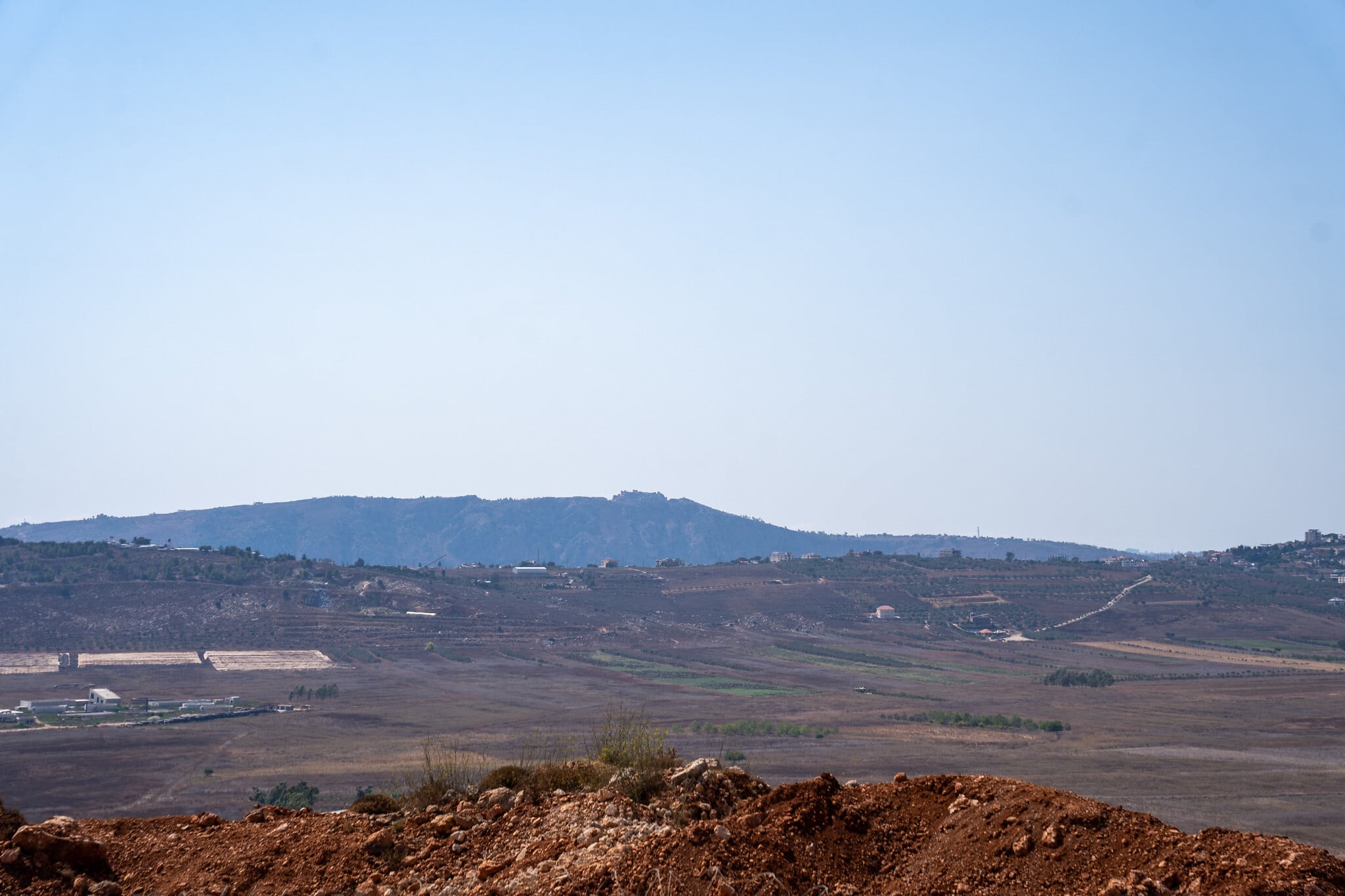
The view of Beaufort Castle from an IDF post inside southern Lebanon, just north of Metula, July 28, 2025. (Emanuel Fabian/Times of Israel)
On Wednesday, an AFP correspondent saw smoke rising near the castle after what appeared to be artillery fire.
Further south, Salame said, “the multi-religious and extremely precious site of Shamaa, 10 kilometers (six miles) from Tyre, was severely bombed and lost at least three of its four domes.”
He added that his ministry’s teams do not have access to most of the targeted sites due to the ongoing fighting.
He asked UNESCO to “appoint a special commissioner” to assess the impact of the violence on the sites, and said he would request a “UNESCO commission of inquiry to visit the area” once the fighting was over.
He said Lebanon had placed signs at all UNESCO World Heritage sites, “but apparently the Israeli air force does not really respect this identification.”
According to Salame, Lebanon has “placed 79 sites across the country under enhanced UNESCO protection,” including Tyre and Beaufort Castle, since the war that ended with the November 2024 ceasefire agreement.
“Non-compliance with these clauses would constitute ‘serious violations’ of the 1954 Hague Convention and… potential grounds for prosecution,” UNESCO said that year.