
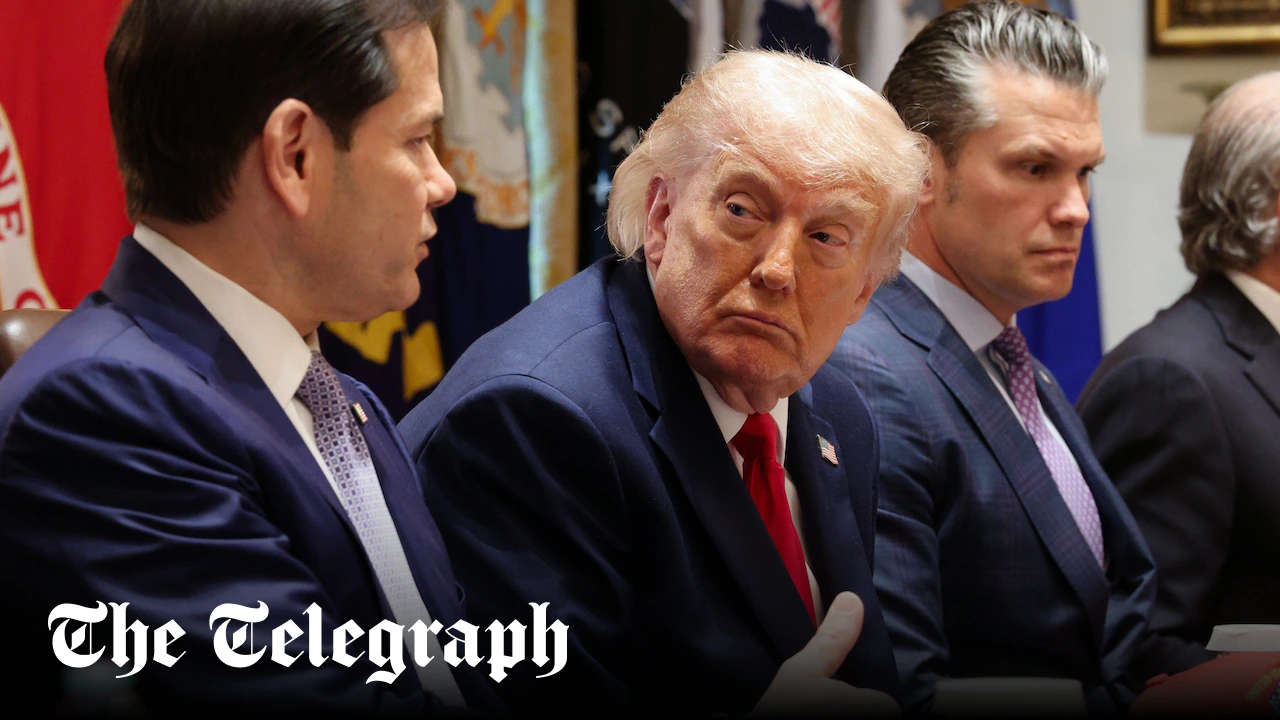
Earlier on Friday, Iran’s top negotiator warned that Tehran’s “nuclear dust”, which the US claims is intended for use in a nuclear bomb, would never be removed from Iran.
Pete Hegseth, the US defence secretary, said: “We still have global obligations to ensure that, say, Iran doesn’t get a nuclear weapon.”
In a speech at the Shangri-La Dialogue defence summit in Singapore, Mr Hegseth added that “any deal with Iran would be a good deal”.
On Thursday, a US official told The Telegraph that Iran and Washington had reached an agreement in principle to extend their ceasefire and begin negotiations on Tehran’s nuclear programme. But the framework for a memorandum of understanding must still be signed by Mr Trump, who has so far delayed signing the agreement.
That accord is expected to reopen the Strait of Hormuz and require Iran to remove its mines from the crucial shipping lane within 30 days.
Later on Thursday, the US navy threatened to strike ships attempting to lay mines in the strait and said its forces would remain on “high alert” for an Iranian attack.
However, the US military has not confirmed whether Iran has placed mines in the strait despite multiple searches, two US officials told NBC News.
After the US president’s announcement, Esmail Baghaei, Iran’s foreign ministry spokesman, told state television: “Exchange of messages is going on, but no deal has been finalised yet.”
Regarding the US blockade, he added: “This action was illegal, a violation of the ceasefire, and an interference with international navigation.
“We will have to see whether they will follow through on this in practice, or whether it is simply a propaganda claim.
“If they do carry it out, it would in effect mean the cessation of a wrongful act they began several weeks ago – one they should never have committed in the first place.”