
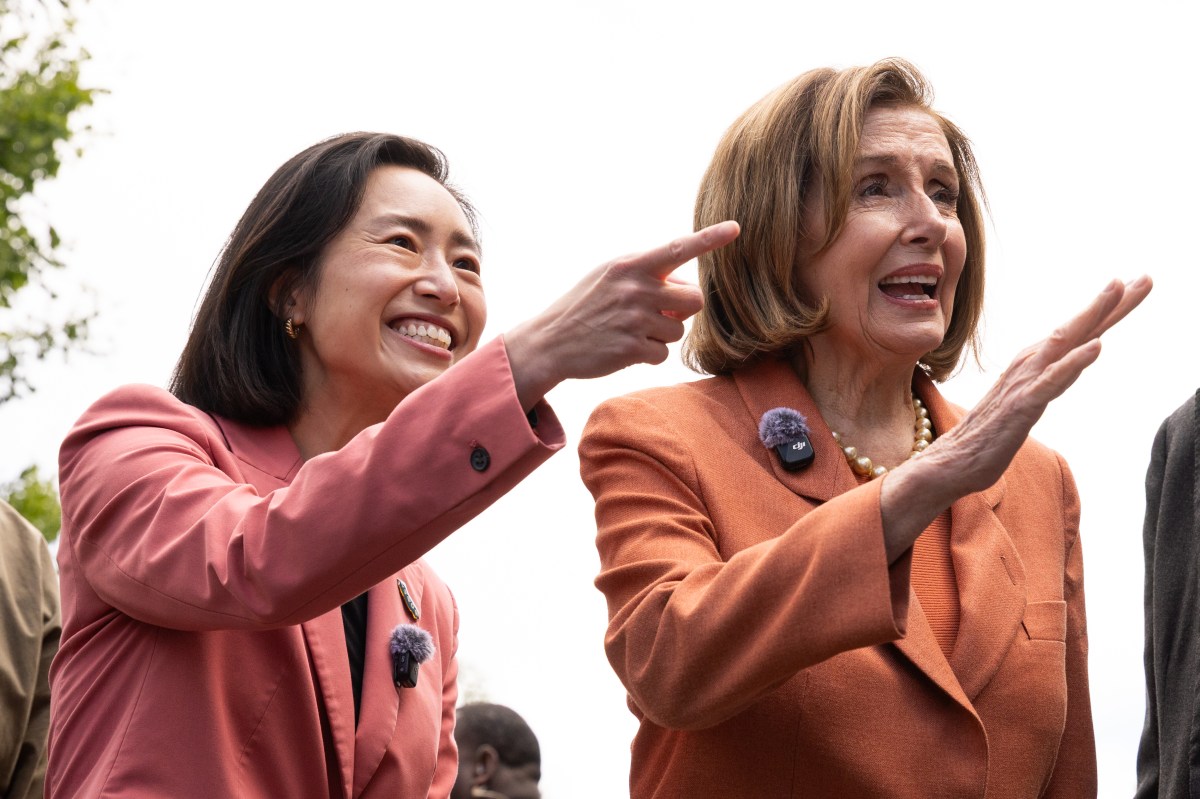
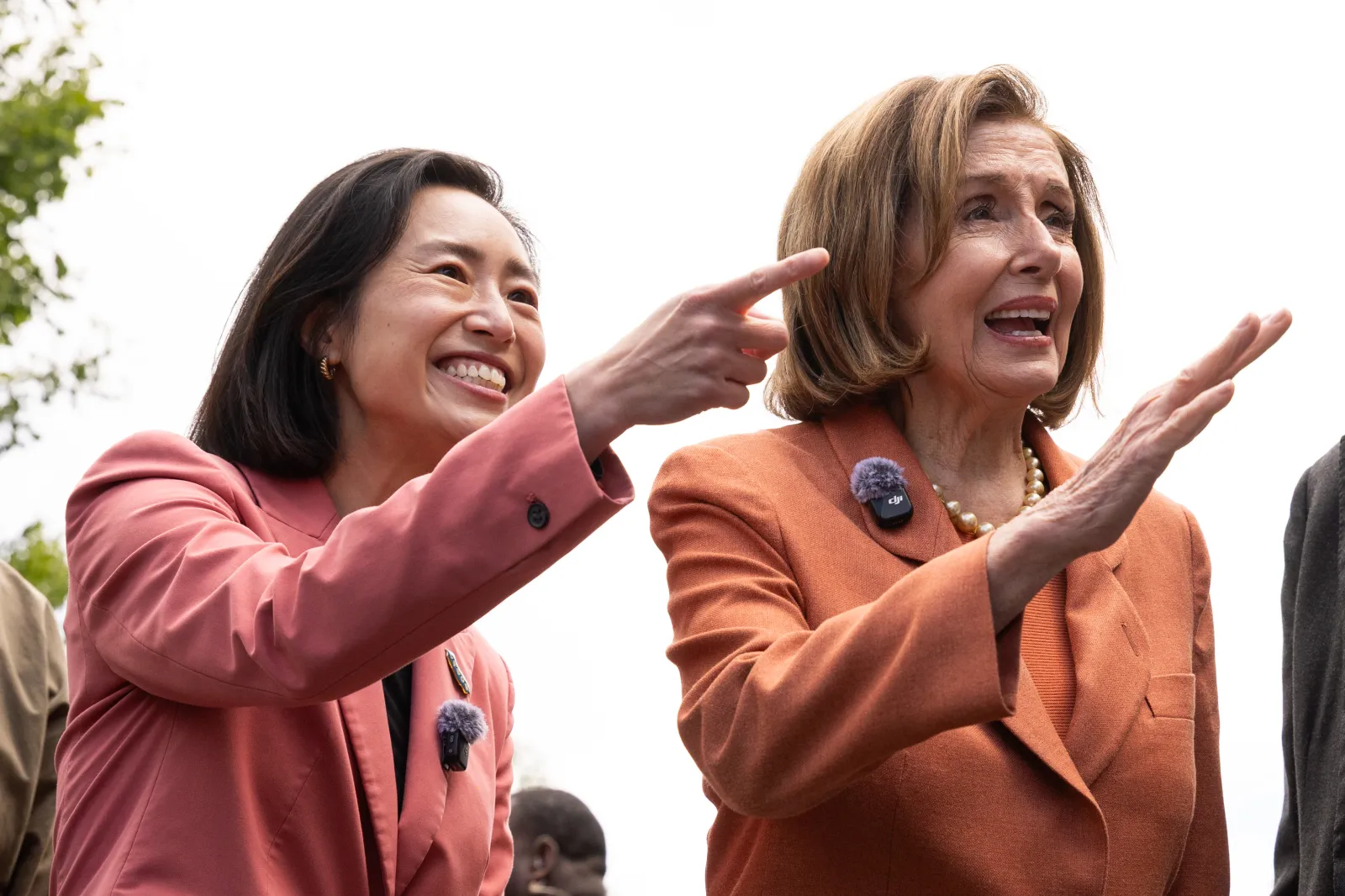
When Nancy Pelosi endorsed Connie Chan two weeks before the June 2 primary, she broke a habit of a lifetime. The speaker emerita rarely wades into local races, and almost never into one where her favored candidate is running third. But these are not ordinary circumstances, and this is not an ordinary seat. It is hers.
For nearly four decades, Pelosi represented San Francisco while reshaping American politics from Washington. She passed the Affordable Care Act, led her party through two wars and a financial crisis, and became the first woman to hold the speaker’s gavel. In the last act of that career, she set for herself two major goals: keep Donald Trump out of the White House, and keep the Democratic left from gaining power within her party. She failed at both. Now she is trying to choose her own successor, and even that could be slipping away.
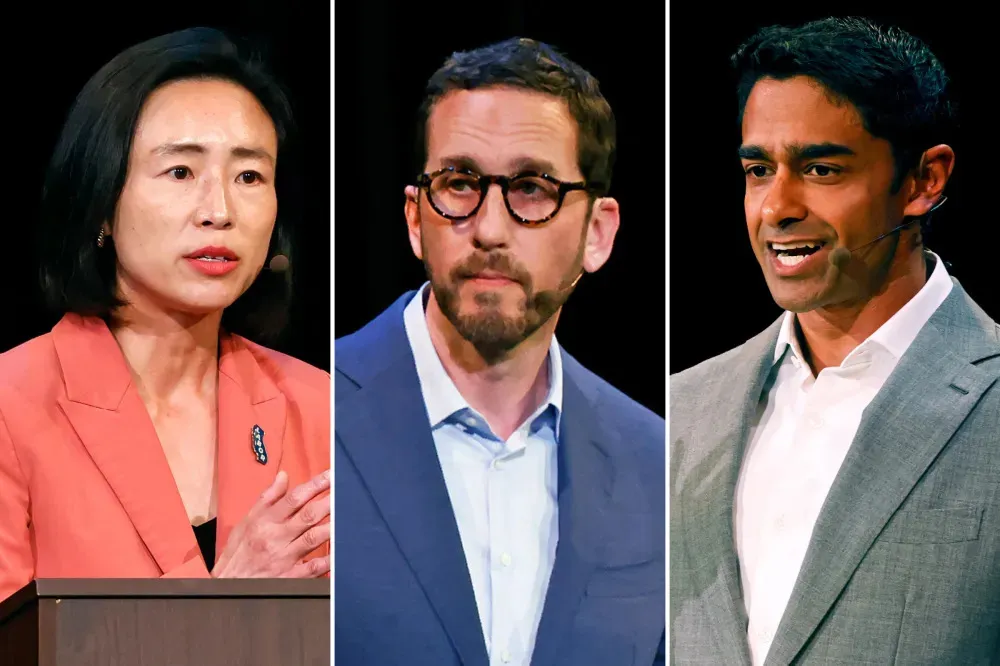
The polling suggests Pelosi’s chosen candidate is the most vulnerable of the three. State Senator Scott Wiener leads comfortably. Chan and Chakrabarti are locked in a fight for the second and final spot in the November runoff. A late EMC Research poll of 542 likely voters from May 3-7 showed Wiener at 38 percent, Chan at 22 percent and Chakrabarti at 21 percent.
A Sextant Strategies survey from late April put Wiener at 40 percent, Chakrabarti at 18 percent and Chan at 17 percent. Both came before Pelosi’s endorsement. Under California‘s “jungle” primary, the top two finishers advance regardless of party, meaning a district Kamala Harris carried by nearly 68 points will almost certainly send two Democrats to the general.
David McCuan, a political scientist at Sonoma State University, said the timing of the endorsement was itself a tell. “One reason for Rep. Pelosi’s endorsement is that Supervisor Connie Chan has underwhelmed in the retail politics of being on the ground,” he told Newsweek. “Her punches haven’t landed. The Rep. Pelosi ‘magic’ was designed to give the Chan campaign a boost and to put some space between the other two candidates with an eye on November.”
Pelosi’s Magic Might Be Fading
The endorsement of a struggling candidate by a departing political giant tells its own story. Chan’s difficulties on the ground, weak fundraising and inability to unite the traditional Pelosi coalition of labor groups and neighborhood Democrats suggest something broader: the political network that shaped San Francisco Democratic politics for four decades no longer carries the same influence it once did.
Pelosi’s final years in politics were defined by her efforts to stop Trump from returning to the White House and managing the Democratic Party’s progressive wing as it pushed for a more confrontational agenda. Neither battle ended the way she had hoped.
Democrats lost the House majority in the 2022 midterms, bringing Pelosi’s speakership to a close. Two years later, after President Joe Biden’s disastrous debate performance, NBC News reported Pelosi worked quietly through her network of lawmakers and donors to build pressure on Biden to step aside, helping sustain the effort whenever momentum appeared to fade.
Watch Here: The 1600 Podcast Full Episode
Biden eventually left the race, and Vice President Kamala Harris went on to lose to Trump in November. Former first lady Jill Biden later said she was “disappointed” in Pelosi, describing their relationship as a friendship that stretched back 50 years. Pelosi has denied directing any effort against Biden. “I didn’t call one person,” she told CBS News.
Throughout her years confronting Trump, Pelosi rarely engaged him directly by name. “I don’t like talking about him,” she said at a Wall Street Journal event in 2023. Trump, meanwhile, called her an “evil woman.” Grant Davis Reeher, a political science professor at Syracuse University, told Newsweek that the hostility between the two “is different, and reminds me of the 19th century.”
At the same time, Pelosi spent years balancing competing factions within her own party, protecting moderate Democrats in swing districts while advancing legislation she believed could pass Congress. Chakrabarti emerged from the opposite side of that debate. As Alexandria Ocasio-Cortez’s first chief of staff and a co-founder of Justice Democrats, the group that helped build the Squad’s electoral infrastructure, he filed to challenge Pelosi before she had even announced her retirement. His campaign centers on issues he argues party leaders have failed to deliver, including Medicare for All and a ban on congressional stock trading.
“We need something different right now because the existing institutions and establishment have led us to this point,” Chakrabarti told Newsweek.
Money vs. the Machine
Jim Ross, a veteran California political strategist who managed Gavin Newsom’s successful gubernatorial campaign, said the central tension in the race has less to do with Pelosi’s standing than with the role of money in a post-Citizens United political landscape.
“The issue in this campaign is not ideological or generational but economic,” Ross told Newsweek. “Less than two years after a billionaire self-funded his way to becoming mayor, can a centimillionaire self-fund his way into a congressional run-off? If Connie Chan loses, it will reinforce the impact of unlimited money on local races, overcoming even strong support from respected leaders like Speaker Pelosi and labor.”
Ross also identified a stylistic divide in the race that runs deeper than policy.
“There is a stylistic difference with Chakrabarti, who takes on a more combative, anti-establishment tone, while Chan, though more progressive than he is, is much more moderate in tone,” he said. “There is a part of the Democratic base that wants a person who will fight the status quo, but the policies and issues are secondary to the fight itself. Chakrabarti is getting traction because people see him as a fighter.”
Chakrabarti has made Pelosi’s era itself part of his argument. “The one thing people don’t like more than Donald Trump is a feckless and ineffective leadership in the party,” he previously told Newsweek.
For the progressive challenger, one of his sharpest attack lines, and one tha has been well received by young Democrats, has been Pelosi’s record on congressional stock trading. Since becoming speaker, Pelosi’s wealth grew from roughly $30 million to $278 million, the product of well-timed trades in tech stocks, options and her husband Paul’s venture-capital deals, a pattern that fueled public suspicion that lawmakers use insider information to enrich themselves.
“This is all part of a larger problem, which is just the whole idea of corruption in our politics,” Chakrabarti said. “If you’re in Congress, you sit on committees that oversee a lot of these industries, and it’s unethical to be using that insider information, that knowledge to make stock trades.”
Two Establishments, One Race
Not everyone sees this race as a referendum on Pelosi’s legacy. Some Democrats argue the field itself tells a more complicated story.
“There are really two establishment candidates in that race: Chan and Scott Wiener,” Matt Bennett, co-founder of Third Way, a centrist think tank, told Newsweek, pushing back against any simple reading of the field as Pelosi’s machine versus the insurgents.
“If Chan or Wiener end up winning, it’s a clear rejection of the radicalism of the DSA, Justice Democrats, and others who support Chakrabarti,” he said. “If that can’t win in San Francisco, where can they win exactly?”
Ross, the veteran California political strategist, said the ideological distance between the three candidates is narrower than the campaign rhetoric suggests. “By California and San Francisco standards, Wiener is a mainstream, center-left Democrat. While Chan and Chakrabarti are more progressive than he is, it is by degrees,” he said. “None of the candidates’ votes in Congress would be appreciably different.”
Jim Kessler, executive vice president for policy at Third Way, said the district’s voters would not be moved by the Pelosi endorsement alone, but that the broader result still points toward the center.
“What strikes me about this race is how the most moderate Democratic entry, Scott Wiener, is the most likely winner,” Kessler told Newsweek. “At a time when the far left is promising revolution, it is very possible the most mainstream of the Democrats will take the gold medal.”
What Comes Next
Pelosi staked her endorsement on Chan carrying her legacy forward. Whether Chan makes it to November will be the first real measure of how much that legacy is still worth, and what kind of party Democrats are choosing to become.
However, Ross said the deeper issue driving all three candidates, regardless of where they sit on the ideological spectrum, is economic anxiety.
“Voters are very worried about the direction of the economy, particularly with AI, and about their own and their kids’ futures,” he said. “The Democratic Party needs to be the protector of working people, with a focus on promoting policies and positions that improve people’s lives. This is why affordability resonates so strongly—people are squeezed by high prices.”
Bennett said that whatever happens in San Francisco, Democrats need to keep their eyes on the bigger map.
“As for the fall, Democrats need to focus on picking up those five House seats in more competitive districts,” he said. “Turning blue places bluer, as Chakrabarti wants to do, does nothing to put a check on Trump. Winning red seats does.”
Pelosi has made clear she is not disappearing. On Memorial Day, speaking at the Presidio with Chan and Wiener seated nearby, she told the crowd that while it was her last such address in office, she “certainly will be with you in the audience in the future.”