
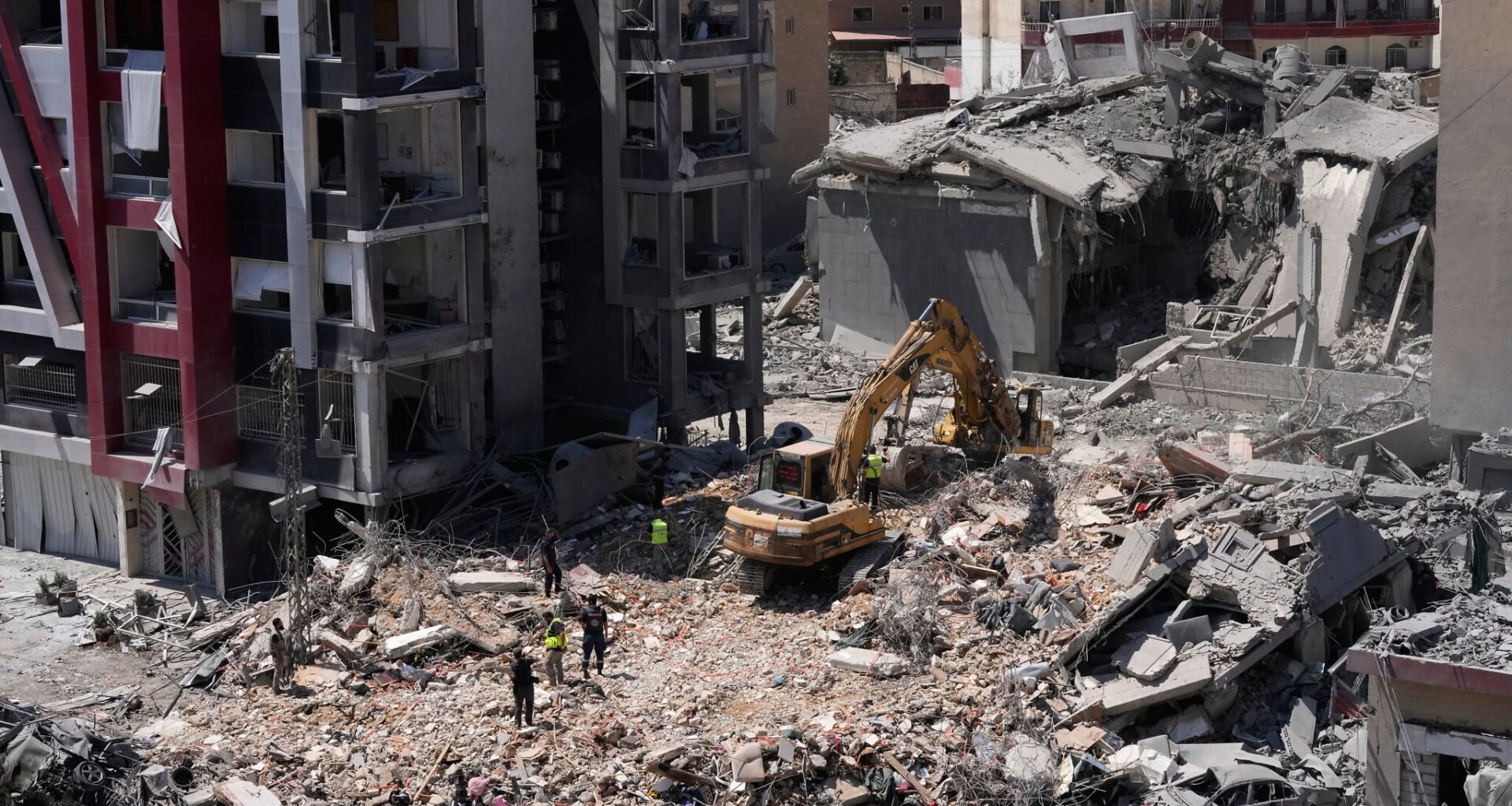
Israel and Lebanon were set to hold a fresh round of talks on Tuesday, as Hezbollah continued to target Israeli troops in Lebanon and fresh IDF strikes were reported, despite indications from US President Donald Trump that Washington had brokered a truce between Israel and the Iran-backed terror group.
Negotiations between Israel and Lebanon were set to take place Tuesday and Wednesday at the US State Department in Washington — the fifth round of talks between the sides since April.
During the third round last month, the sides agreed to separate the talks into political and security tracks, with the latter meeting for the first time last week. This week’s talks will be only for the political track.
A Lebanese diplomatic official who spoke to The Associated Press on condition of anonymity in line with regulations said that Beirut was still committed to holding talks to end the conflict despite the tensions.
Lebanon, whose government has committed to disarming Hezbollah, has demanded a halt to Israel’s strikes and full Israeli withdrawal, while Israel, which accuses Beirut of failing to disarm Hezbollah, demands that the terror group give up its weapons. Hezbollah has rejected the direct talks.
Get The Times of Israel’s Daily Edition
by email and never miss our top stories
By signing up, you agree to the terms
In an apparent sign that the terror group will respect the new truce, an aide to Lebanese Parliament Speaker Nabih Berri, a key Hezbollah ally, said the senior government figure will guarantee the Iran-backed group’s adherence to a “global ceasefire” with Israel.
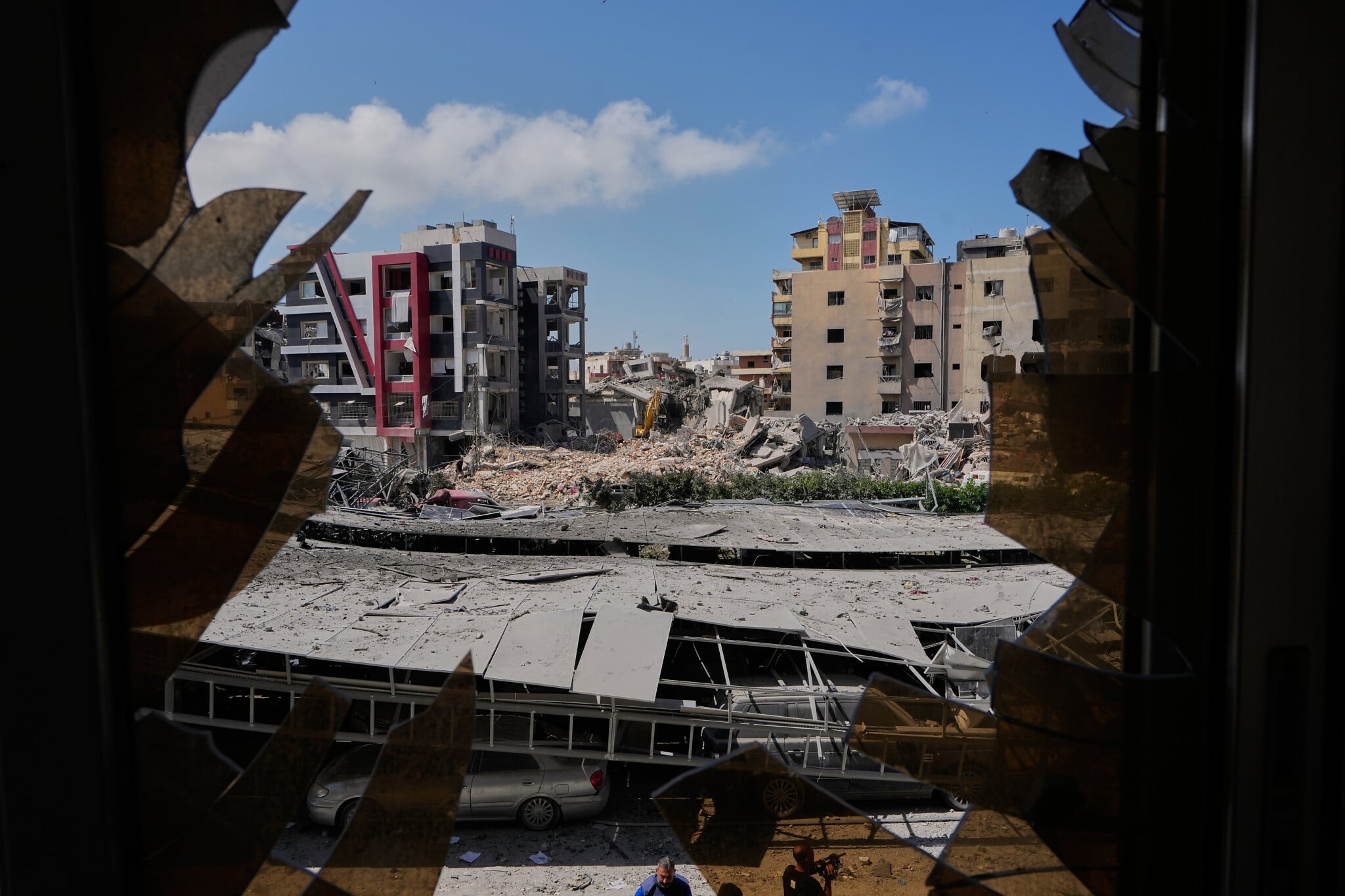
A destroyed building that was hit Monday in an Israeli airstrike is seen through a shattered window of the Jabal Amel Hospital, in the southern port city of Tyre, Lebanon, June 2, 2026. (AP Photo/Mohammed Zaatari)
Berri, who heads the Hezbollah-allied Amal party, has long acted as an intermediary between the group and the United States. His adviser Ali Hamdan told AFP Tuesday that “speaker Berri’s main demand is a global ceasefire. If a global ceasefire deal is reached, he will guarantee Hezbollah’s respect for it.”
Hamdan clarified that a “global ceasefire means a halt to Israeli strikes by air, land or sea, and that it will not carry out detonations or demolitions” in the south, where Israel is accused of razing entire villages, which have been riddled with Hezbollah tunnels and positions, many inside homes.
Fire continues despite truce announcement
Despite the planned talks and the declared truce, Hezbollah appeared to continue its attacks on Tuesday morning, when sirens were triggered in the northern city of Kiryat Shmona and nearby border communities by a suspected drone over an area of southern Lebanon where troops were operating. A short time later the military said the incident had ended without injuries.
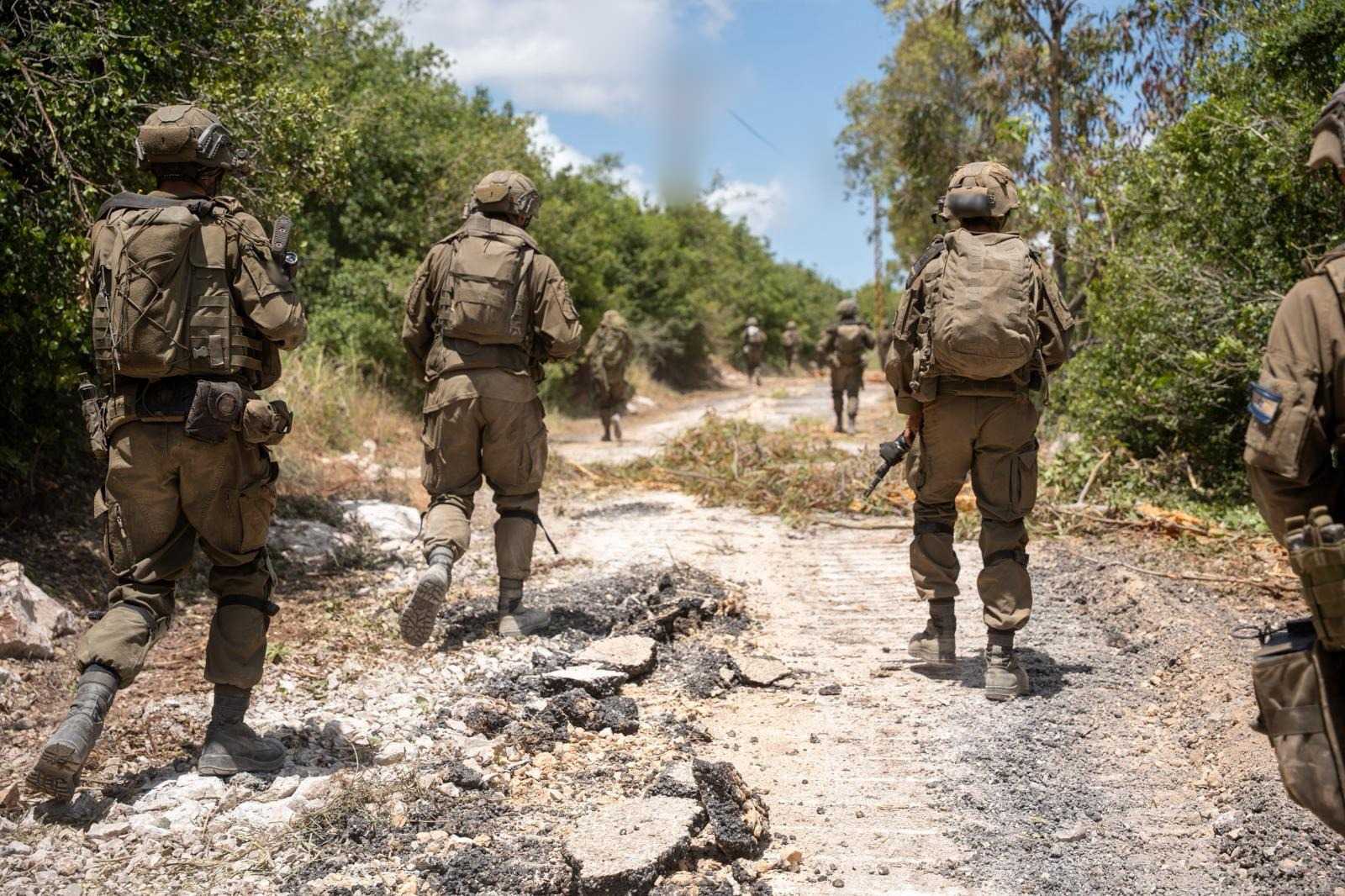
IDF troops operate in southern Lebanon, in a handout photo published on June 1, 2026. (Israel Defense Forces)
Overnight, the IDF said it had intercepted two Hezbollah rockets fired toward Safed, while an apparent Hezbollah drone struck a military position in the Western Galilee, close to the border with Lebanon. There were no injuries in either of those incidents.
Lebanon’s National News Agency said Israel conducted fresh airstrikes on south Lebanon on Tuesday morning.
The Lebanese army said two of its soldiers were moderately wounded in an Israeli drone strike on a road between the towns of Habboush and Deir al-Zahrani, in the Nabatieh area.
The Israeli military did not comment on the incident.
In a separate incident, an Israeli strike was reported on a car in the southern Lebanon town of Toul, near Nabatieh.
There was no immediate comment from the IDF.
بالصورة: السيارة التي استهدفتها الغارة الإسرائيلية على بلدة تول بقضاء النبطية جنوبي لبنان pic.twitter.com/gq1jg7Y7hj
— هنا لبنان (@thisislebnews) June 2, 2026
Also on Tuesday, the IDF reiterated its evacuation warning for Nabatieh ahead of strikes targeting Hezbollah, having first issued the warning for the southern Lebanese city last week.
“We renew our urgent warning to the residents of Lebanon located in the city of Nabatieh. For your safety, you must evacuate your homes immediately and move north of the Zahrani River,” warned army spokesman Col. Avichay Adraee.
“In light of the Hezbollah terror organization violating the ceasefire agreement, the IDF is compelled to act against it forcefully. The IDF does not intend to harm you,” he added.
Commenting on strikes in southern Lebanon carried out on Monday, the IDF said it bombed Hezbollah weapon depots, command centers, and other infrastructure where members of the terror group were operating. The military published footage of the strikes.
כוחות צה״ל ממשיכים בפעילות בדרום לבנון: אוגדה 91 וחיל האוויר תקפו מחבלים ותשתיות של ארגון הטרור חיזבאללה
כוחות צה״ל ממשיכים לפעול בדרום לבנון.
אתמול, אוגדה 91 וחיל האוויר תקפו מחסני אמצעי לחימה, מפקדות, ותשתיות טרור נוספות בדרום לבנון מהם פעלו מחבלים של ארגון הטרור חיזבאללה pic.twitter.com/Cq4XJ3h9jn
— צבא ההגנה לישראל (@idfonline) June 2, 2026
According to Lebanon’s civil defense agency, six people were killed in one Israeli strike on the southern village of Marwaniyeh Monday night, with three more wounded.
In a statement on Facebook, the agency said rescue operations had been ongoing since late Monday at the site of “a residential building that was targeted” in the town, near the coastal city of Sidon, adding that “these operations resulted in the removal of six bodies and the rescue of three wounded people.”
Extended warning times
Amid the continued attacks on Israel and Israeli troops, the IDF Home Front Command said it would be extending the warning times given for rocket fire from Lebanon on Haifa and another 160 communities in northern Israel from 60 seconds after a siren is heard to 90 seconds.
This was set to begin at 4 p.m. on Tuesday.
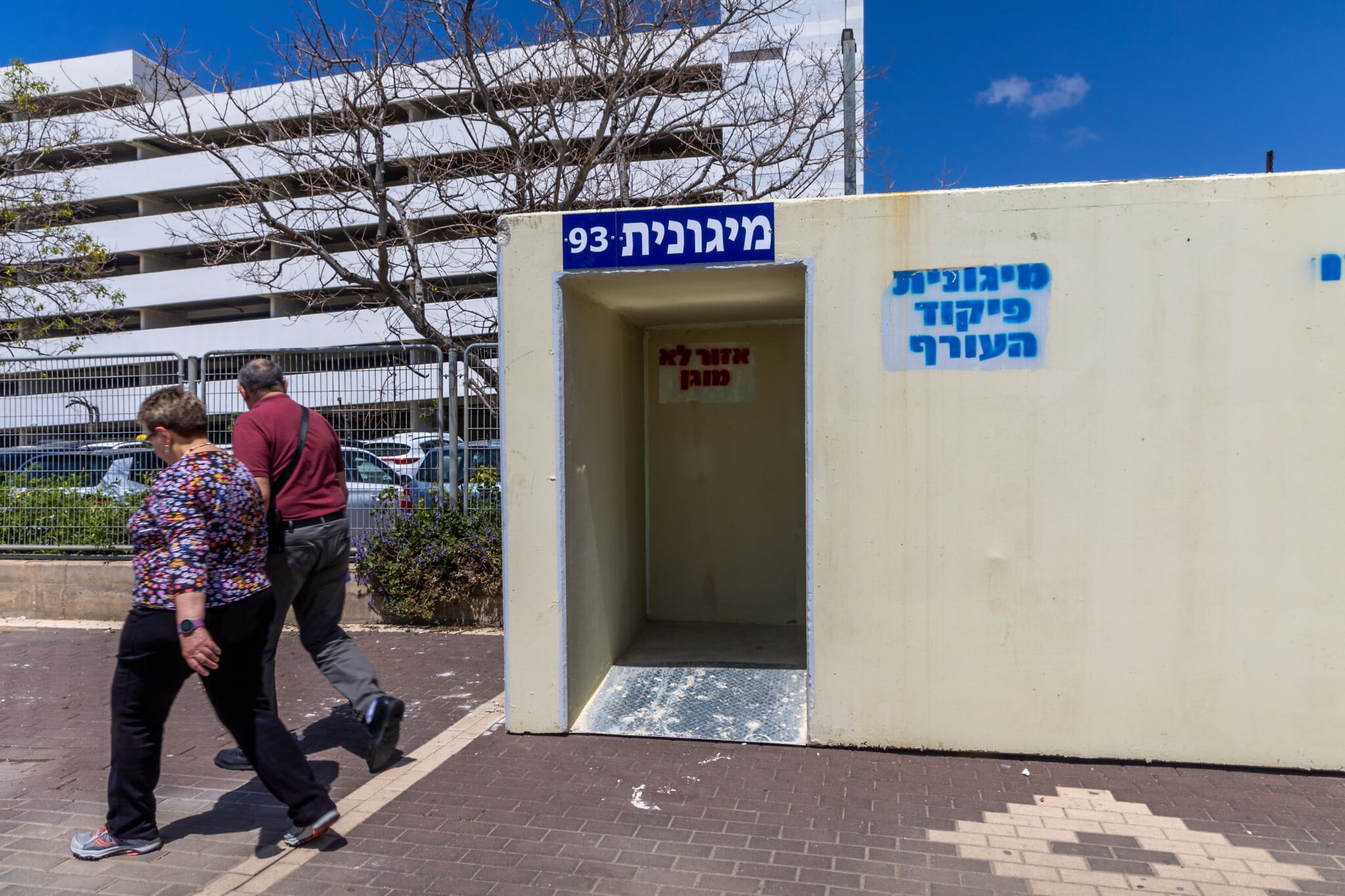
A small public bomb shelter in the Northern Israeli city of Nahariya. April 13, 2026. (Yossi Aloni/Flash90)
The Home Front Command, along with other military bodies, analyzed Hezbollah’s rocket fire and the IDF’s detection systems, and determined that 161 communities in the north can be given longer warning times.
Similar moves were carried out by the Home Front Command in recent months in communities along the Lebanon border, in the Golan Heights, in the Galilee, as well as in the southernmost city of Eilat.
‘Nothing can justify Israel’s occupation’
Trump’s push for a truce — reportedly after Tehran threatened to bolt talks with the US if the IDF didn’t cease its strikes in Lebanon — came as the previous ceasefire brokered on April 16 largely evaporated, with Hezbollah keeping up its relentless rocket and drone attacks and the IDF pushing ahead with widening airstrikes and an expanded ground operation.
France’s foreign minister said Tuesday that there was no justification for Israeli troops remaining deep inside Lebanon.
“Nothing can justify the continuation of military operations and Israel’s prolonged occupation deep inside Lebanese territory,” Foreign Minister Jean-Noel Barrot told France TV.
On Sunday, the IDF said it had captured the historic Beaufort Castle and the surrounding strategic ridge as it pushed deeper into Lebanon. Israel previously held the castle area during the 18-year occupation of southern Lebanon in 1982-2000, before troops were withdrawn.
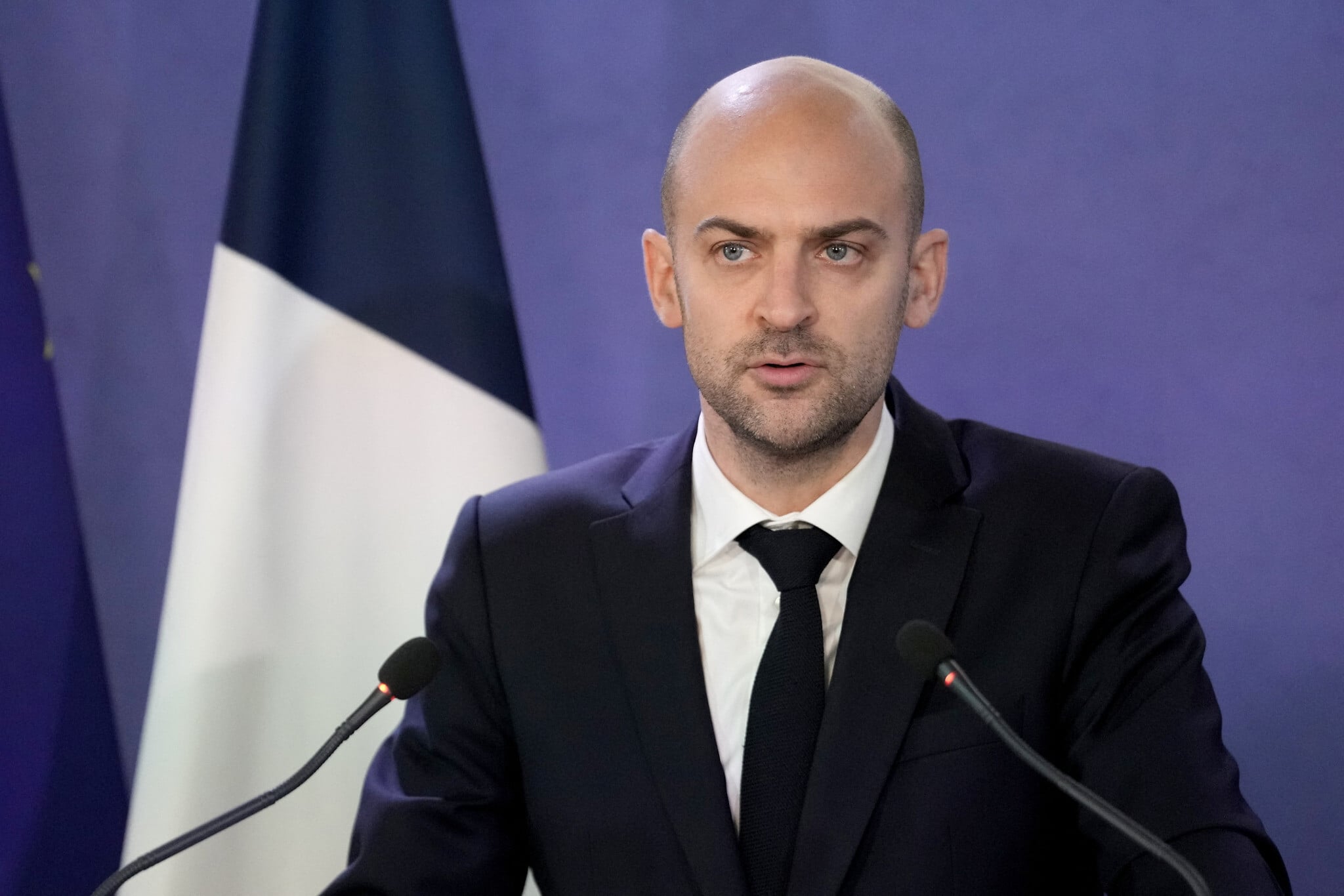
France’s Foreign Affairs Minister Jean-Noel Barrot gives a press conference after a crisis meeting in Paris on March 2, 2026. (Thibault Camus / POOL / AFP)
The latest round of fighting between Israel and Hezbollah began on March 2, when Hezbollah fired rockets into northern Israel two days after the US and Israel attacked its main backer, Iran. Since then, 26 IDF soldiers and one Defense Ministry civilian contractor have been killed in southern Lebanon, 14 of them since a ceasefire was introduced on April 16. Two civilians were also killed by Hezbollah rockets, and an Israeli civilian was mistakenly killed in the north by Israeli artillery shelling.
In Lebanon, the Israeli military has said that it has killed over 2,500 Hezbollah operatives, including hundreds of members of the terror group’s elite Radwan Force, since early March.
Since March 2, Hezbollah has fired some 5,500 rockets at IDF troops operating in the south of the country, as well as around 2,500 at Israel, according to the military. There were at least 75 rocket impact sites in Israel.
In addition, Hezbollah launched around 300 drones, of which 25 struck Israel, according to the IDF.
The IDF believes Hezbollah still possesses thousands of short-range rockets, along with hundreds of longer-range projectiles. The IDF has said that Hezbollah is launching most of its attacks from deeper within southern Lebanon, north of the Litani River, and not from areas close to the border.