
Before you get mad at me: I know there’s a woman — or something who … used to be a woman — in the backrooms in Backrooms. There is nothing inherently male about Kane Parsons’ Backrooms. There’s nothing inherently anything about the backrooms in Backrooms by design. The ever-expanding, replicating, and manipulating series of rooms take scraps and memories of those who pass through it, expanding into something that defies personality or ease. The neutrality of the space is part of the terror. The rooms are what you bring to them, even if that thing is horrible and scary. But there are two characters who bring something else into the room, and they both happen to be women.
Backrooms focuses on Clark’s (Chiwetel Ejiofor) obsession with the rooms and how they come to intrigue and comfort him during an otherwise unremarkable and miserable time in his life. Clark is divorced, in debt, and living in his furniture store when he discovers a slippery passageway. There is a pathetic sense of masculinity to Clark, who refuses to be wrong in both life and career, and the rooms grant him an opportunity to exist in a space where he is both captain and explorer. Trying to explain the backrooms, however, proves difficult. Despite his adept description of the area, his therapist, Mary (Renate Reinsve), doesn’t really buy this new development in Clark’s life. So in order to convince her — and himself — that this is all actually happening, he enlists his young assistant manager, Kat (Lukita Maxwell), and her boyfriend, Bobby (Finn Bennett), to film their journey into the rooms.
Kat is not at all keen on going back there, and she decides she wants to leave the second she gets in there. Bobby, however, succumbs to Clark’s enthusiasm, or at least appreciates the general weirdness of the space. There’s a brief flash when it seems like Backrooms may devolve into a Zoomer vs. Gen X exploration of a space with Kat and Bobby audibly drawing attention to every weird little thing happening. But Parsons and screenwriter Will Soodik are keen to dispatch with the younger generation almost as soon as they show up — both curiosity and incuriosity punished by the same force. By the time Mary winds up in the backrooms to figure out what happened to Clark, it’s clear she’s not much more enthused about what’s going on there than Kat.
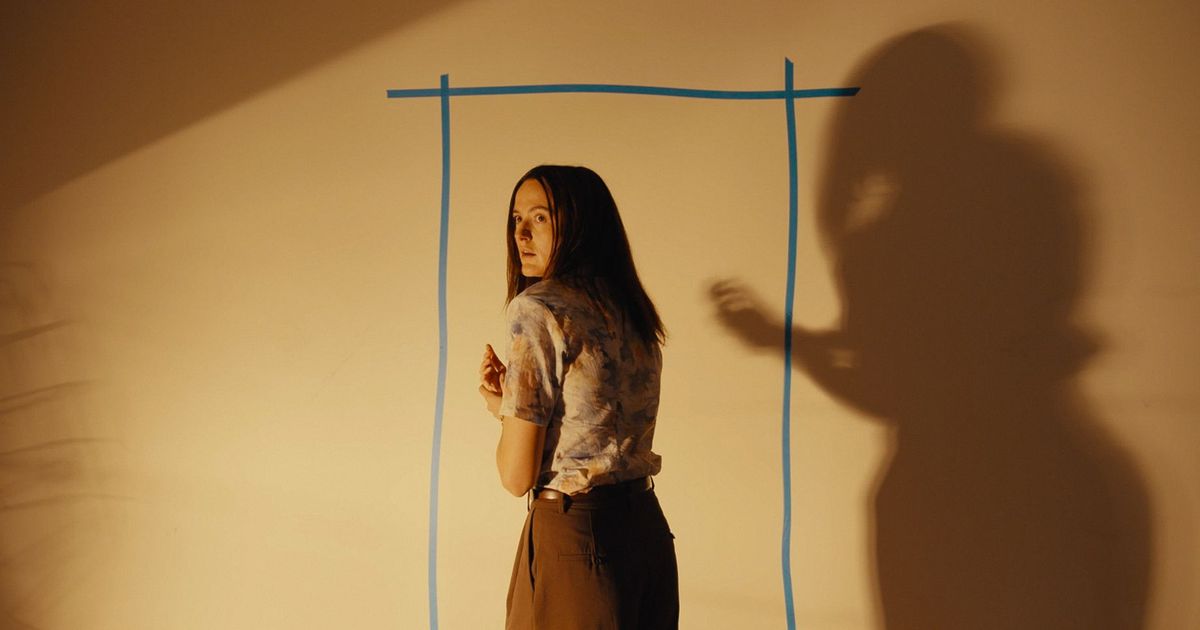
At one point, Clark tries to explain what’s been happening to Mary, but she would rather escape her imprisonment than understand the vastly complicated science and/or magic occurring around her. That’s not to say that Mary doesn’t have her own traumas, but she knows better than to bring that into the space herself. In an act of self-preservation, she remains uninterested, as so few heroes in horror movies actually have the strength to — the men may be interested in this swirling eddy of memory, but Mary isn’t.
What is on display here is the feminine indifference to the concept of lore. Backrooms should be and is completely self-explanatory to anyone who sees it — even someone who has never been on YouTube or is baffled by the Gen-Z fear of an open, empty space with carpeting. But regardless of how interested or not the various exploratory parties are, everyone comes to agree that what’s happening here is not good — it just may not matter why things are not good. It’s kind of a rehash of the “Roman Empire” meme that presupposes men are thinking about the Roman Empire more or less constantly while women are thinking about … anything else. More direct problems in their lives or societal inequalities, maybe. Not to reduce an A24 movie made by a 20-year-old to gender essentialism, but it ultimately is about how women know where to locate the nearest exit while men go down a rabbit hole. This has killed many a woman in the world of horror, but Backrooms lets Mary’s indifference to lore saves her life.
At the end, when asked to explain what she endured, Mary can’t bring herself to articulate what she went through. Is she traumatized? Maybe, but there is a greater resentment etched across her face. An explanation doesn’t actually matter here, her glare suggests, not when there are real lives at stake. It’s insulting to think that any knowledge gleaned from her time in the backroom could put more people in danger, rather than encourage them to break out of loops. In a promotional video for the movie, A24 cut together several scenes of Reinsve in interviews with the cast against the backdrop of the rooms. “I thought I was done with being in this space,” she says. She’s speaking for herself, surely, but maybe also secretly for Mary too.
Sign up for the Vulture Daily
An entertainment newsletter for the pop-culture obsessed.
Vox Media, LLC Terms and Privacy Notice
Related