
More details are emerging about the practical implications of Schedule Policy/Career, just days ahead of the Trump administration’s deadline for agencies to formally reclassify thousands of career federal employees on the White House’s list.
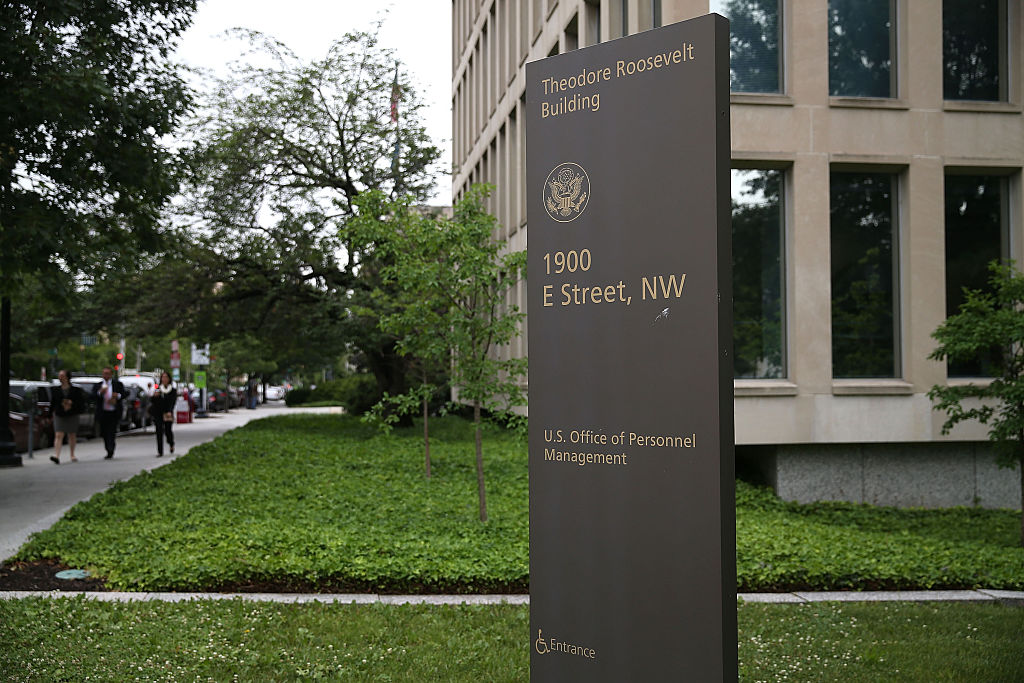
Implementation instructions for agencies on Schedule Policy/Career are now available in guidance that the Office of Personnel Management published Monday. The new federal employment classification made close to 8,000 career federal employees at-will workers — in effect, stripping them of long-standing civil service protections.
OPM’s latest guidance offers a closer look at what Schedule Policy/Career will mean for federal workforce recruitment, adverse actions and many other personnel policies.
Adverse action guidance
Under Schedule Policy/Career, reclassified employees are now considered “at-will” workers — a change that OPM said lets agencies “act more quickly on serious performance or conduct issues.” In instances where employees are determined not to be meeting performance and conduct expectations, agencies no longer have to institute “lengthy” performance improvement plans.
]]>
Employee termination decisions should be based on “performance, conduct or job or mission-related reasons,” OPM said in one of its guidance documents.
“Your manager still must be fair, follow law and policy,” OPM added.
Agencies are also discouraged from setting “predetermined” penalties for Schedule Policy/Career employees, OPM said. But agencies can still decide to create “general expectations” for reclassified employees and set guidelines for how to address “unacceptable” work.
“In establishing such a policy, agencies should not unnecessarily constrain supervisors seeking to hold an employee accountable,” OPM said in an FAQ document.
In cases where Schedule Policy/Career employees are being disciplined or fired, agencies also do not need to create procedures for giving advance notice to personnel. The discipline procedures are now “one-step actions,” OPM said.
“However, agency supervisors have discretion to provide advance notice to Schedule Policy/Career employees as part of their investigation into whether separation is warranted,” OPM added.
The Trump administration’s guidance this week provided a sample termination notice agencies may use when firing Schedule Policy/Career employees. The template included space for agencies to specify if an employee termination was due to “unacceptable performance or misconduct,” when applicable.
]]>
Agencies should include documentation of “unacceptable performance or conduct” of an employee to provide a basis for a firing action, OPM said.
A senior Trump administration official told reporters last week, “as long as employees are performing their job duties in a competent, professional manner,” reclassified federal employees “have nothing to be afraid of.”
But many organizations and federal unions have warned that Schedule Policy/Career will have a chilling effect across the career federal workforce.
“This action will undermine the effectiveness of the civil service in carrying out government operations on behalf of the American people,” said William Shackelford, national president of the National Active and Retired Federal Employees Association (NARFE) — one of several organizations suing the Trump administration over Schedule Policy/Career.
Personnel changes for reclassified employees
Employees who get reclassified into Schedule Policy/Career will lose many of their long-standing job protections. They are ineligible for the adverse action proceedings afforded to career civil service members under chapters 43 and 75 of Title 5 of the United States Code. They also cannot appeal their initial transfers into the new “excepted” employment category.
OPM’s guidance outlined the various “conditions of continued employment,” and set expectations for agencies to require reclassified employees to sign a notice acknowledging what their conversion means. The acknowledgement requires reclassified employees to confirm they understand their position is now in the excepted service, at-will and exempted from civil service protections.
Agencies can access several template documents to use for informing federal employees of their conversions into Schedule Policy/Career.
In most cases, reclassified employees will also no longer be eligible for pay-based retention, recruitment or relocation incentives, nor will they be able to access student loan repayment options. Those incentives will generally only remain applicable for those who have pre-existing service agreements, according to OPM.
In an informational document for affected federal employees, OPM emphasized that other aspects of federal employment — such as pay, leave, benefits and reduction-in-force (RIF) rules — do not change. The Trump administration said protections for whistleblowers and protections against prohibited personnel practices also still apply.
]]>
But these processes for reclassified employees will look somewhat different. Schedule Policy/Career employees can still make whistleblower disclosures to the Office of Special Counsel. But they would have to go through their agency’s internal general counsel office regarding any prohibited personnel practices.
“For anybody who is observing unlawful behavior or has concerns about that, whistleblower protections cannot ultimately be compromised despite somebody being in Schedule Policy/Career,” OPM Director Scott Kupor told reporters last week.
The process changes, however, have drawn criticism from many in the federal community.
“The practical implications of this action are clear,” American Federation of Government Employees National President Everett Kelley said last week. “Workers who once felt comfortable reporting waste, fraud, abuse and mismanagement at their place of employment because they were protected from retaliation will now be afraid for their jobs if they speak out.”
OPM also said in its guidance that reclassified employees will not “automatically” lose eligibility for collective bargaining, but their eligibility could still change depending on if agencies make a petition to the Federal Labor Relations Authority.
Employees will generally be eligible for the same performance awards — the one exception being that Senior-Level (SL) employees who are reclassified as Schedule Policy/Career will no longer be eligible for the Presidential Rank Awards.
OPM noted that agencies are permitted to set up an additional, separate awards pool for Schedule Policy/Career employees, ensuring they are “appropriately compensated for their outstanding work.” There will also be a separate presidential awards program established specifically for employees in the new classification.
Hiring expectations under Schedule Policy/Career
Agencies also now have guidelines to follow when recruiting for positions that would fall within the new employment category. OPM included suggested wording for agencies to use in USAJobs hiring announcements for Schedule Policy/Career positions.
“Your employment in this position will be at-will. Merit Systems Protection Board (MSPB) appeals of adverse actions concerning performance, discipline and other matters … will not be available to an individual serving in this position,” the sample job announcement language states.
New federal hires who are onboarded as Schedule Policy/Career employees will be expected to sign a document acknowledging their excepted service status and lack of civil service protections.
“Notices will include an acknowledgement that the new hire has read and understood this information, that the employee understands that they will serve at-will without rights to appeal an action concerning performance, discipline or whistleblowing to the MSPB, and that they have signed this notice voluntarily and not under duress,” OPM’s guidance stated.
Because Schedule Policy/Career employees are at-will, OPM also noted there is no need for newly hired employees to serve a trial or probationary period, since they would no longer have civil service protections in the first place.
Reclassified Schedule Policy/Career employees are expected to receive notice from their agency by this Wednesday with details on their new employment status. Agencies are also expected to update personnel files to reflect the classification changes.
Updated Monday evening with a correction regarding whistleblower disclosures.
If you would like to contact this reporter about recent changes in the federal government, please email drew.friedman@federalnewsnetwork.com or reach out on Signal at drewfriedman.11
Copyright
© 2026 Federal News Network. All rights reserved. This website is not intended for users located within the European Economic Area.