
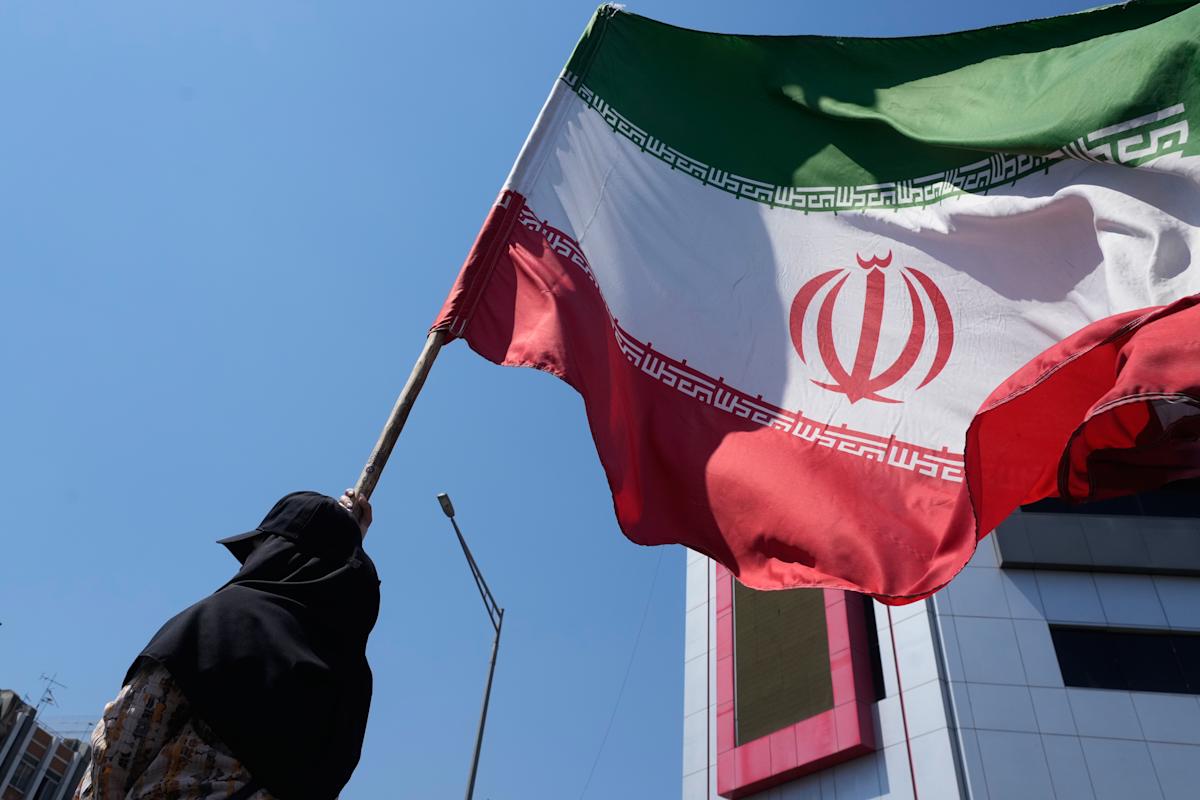
US stocks climbed after the US struck Iran in a major escalation of the war, setting up for a rebound from the market’s latest sell-off as investors weighed the latest moves in the conflict.
The Dow Jones Industrial Average (^DJI) and benchmark S&P 500 (^GSPC) both rose roughly 0.6%, while the Nasdaq Composite (^IXIC) climbed by a slightly stronger 0.7%.
The US’s latest round of strikes ended swiftly, leading investors to hope once again that the conflict would soon be resolved, and oil (CL=F, BZ=F) prices had ticked lower after whipsawing higher Wednesday night.
Some of those losses reversed, however, on Thursday morning, after President Trump said the US would be striking Iran again Thursday night, seizing control of Kharg Island, and taking “total control” of the country’s energy sector, raising anxieties of a potential ground invasion.
The renewed military activity and fresh threats set markets up for a difficult day on Wednesday. Stocks dove and oil jumped amid signs the Strait of Hormuz would remain closed for the foreseeable future. The day’s downbeat sentiment was exacerbated by the latest inflation report, which showed prices rising rapidly.
Meanwhile, after the bell, Oracle (ORCL) reported earnings results that beat expectations, but the company’s stock sank on disappointing cloud sales.
Wholesale inflation for May came in higher than expected, the Bureau of Labor Statistics reported Thursday, right on the heels of May’s consumer prices inflation report. Producer prices rose 1.1% in May over the previous month, above estimates of 0.7%. Year-on-year, headline wholesale prices rose by 6.5% in May, above estimates of 6.4%. Core wholesale inflation came in at 0.4% month-on-month and 4.9% year-on-year, both below estimates.
Elsewhere on the economic data calendar, initial jobless claims for the week ended June 6 rose to 229,000, outpacing expectations of 220,000 claims. Continuing claims also rose to 1.795 million.
The main event of the week lands on Friday, with the expected market debut of Elon Musk’s SpaceX (SPCX), which is positioned to mark the biggest IPO in history.
LIVE 9 updates
 US stock market opens in the green on Thursday
The US stock market turned into the green after a fresh wave of US strikes on Iran, with investors looking for a rebound heading into Friday’s marquee SpaceX IPO.
The Dow Jones Industrial Average (^DJI) led gains, picking up 0.5%, while the benchmark S&P 500 (^GSPC) and Nasdaq Composite (^IXIC) rose 0.3% and 0.4%, respectively.
While oil prices came down overnight after the US said its bombing campaign had ended, prices advanced again on Thursday after President Trump vowed to strike Iran again Thursday night and take “total control” of Iran’s oil and gas sector.
Per Capital.com analyst Kyle Rodda, “US President Donald Trump’s rhetoric has turned from constructive to bombastic regarding the war,” now stoking fears of a ground war.
In the corporate world, Oracle (ORCL) results after the bell on Wednesday exceeded expectations but disappointed investors on cloud sales. On the economic calendar, wholesale inflation for May was hotter than expected on Thursday, as producer prices rose 1.1% in May over the previous month, and by 6.5% yeayear.
Oil prices spike after Trump says US to bomb Iran again, take ‘total control’ of country’s energy sector
Oil prices spiked on Thursday morning after President Trump said the US military would be striking Iran again tonight and “assume total control” of the country’s energy sector.
“The United States will be hitting Iran (Whose Navy, Air Force, Radar, Anti Aircraft, and all other forms of Defense, together with most of its offensive capability, are GONE!), VERY HARD TONIGHT,” the president wrote on social media.
“At some point in the not too distant future, we will be taking Kharg Island, and other oil infrastructure points, and assume total control of their Oil and Gas Markets, much like we have with Venezuela, which is working out brilliantly for both Venezuela and the United States of America,” Trump added.
Futures on Brent crude (BZ=F), the international benchmark, jumped as much as 0.6% to cross above $94 per barrel after pulling back overnight from strong gains on Wednesday. Contracts on US benchmark WTI crude (CL=F) advanced as far as 1% to climb above $91 per barrel.
Prices on both contracts had surged on Wednesday evening after the US launched a major airstrike offensive inside Iran, in the largest escalation of conflict between the two countries since the signing of the ceasefire agreement in early April.
The Iranian news agency Fars said Thursday that “all interests associated with economic holdings managed by Elon Musk in West Asia, including Arab countries and Israel,” have been added to the Iranian military’s target database.
ECB votes to raise rates for first time since 2023 as war in Iran lifts inflation and cuts growth
The European Central Bank voted to raise rates on Thursday for the first time since 2023, lifting the benchmark deposit rate to 2.25% from 2% amid pressure from the war in Iran on the global economy.
The main refinancing operations (MRO) and marginal lending facility rates were brought up to 2.4% and 2.65%, respectively, as part of the decision, marking a hike across all three key eurosystem interest rates.
The euro held largely steady against the Dollar in the minutes after the widely expected decision was published.
“The war in the Middle East is generating inflation pressures, and the decision to raise rates is robust across a range of scenarios mapping out how the shock might evolve and affect the medium-term outlook for the euro area,” the ECB said in a statement.
ECB economists have revised up their baseline inflation predictions for 2026 and 2027, to 3% and 2.7%, respectively, while lowering their estimates for growth in both years, attributing the changes in both metrics to the impact of the war in Iran.
Europe is more dependent on Middle Eastern oil and gas than the US, leaving the continent more exposed to what has become the largest energy supply shock on record.
“The outlook remains uncertain, with upside risks for inflation and downside risks for economic growth,” the ECB wrote.
“The full implications of the war for medium-term inflation and growth will depend on the intensity and duration of the energy price shock, as well as the scale of its indirect and second-round effects.”
Initial jobless claims rise higher than expected
Initial jobless claims rose to 229,000 in the week ended June 6, according to data released by the Department of Labor on Thursday, coming in above the previous week’s tally of 225,000 first-time claims.
Economists had expected initial claims to be lower at 220,000 for the week, according to consensus estimates compiled by Bloomberg. The four-week moving average of initial claims rose to 219,000 from 214,750 the week prior.
Continuing claims, which track the unemployed population still seeking work, rose to 1.795 million in the week ended May 30 from the prior week’s revised count of 1.771 million.
Economists had been looking for 1.785 million continuing claims.
 Job seekers attend a small business summit and job fair hosted by the Chicago Department of Aviation on May 12, 2026, in Chicago, Illinois. (Scott Olson/Getty Images) · Scott Olson via Getty Images Wholesale prices rose more than expected in May
Wholesale inflation came in higher than expected in May, data released Thursday by the Bureau of Labor Statistics showed.
Producer prices rose 1.1% in May over the previous month, exceeding the 0.7% increase expected by economists and matching April’s revised gain.
The “core” reading — which excludes the more volatile food and energy costs — showed producer prices advanced by 0.4% over the previous month. That was slightly below the 0.5% growth economists had predicted and above April’s revised gain of 0.7%.
On a year-over-year basis, headline prices rose by 6.5% in May, above estimates of 6.4% and outstripping April’s 5.7% print. Core inflation came in at 4.9%, cooler than estimates of 5.4% and matching the previous month’s revised gain.
‘Magnificent 7’ stocks have lost $2 trillion so far this month, driving the S&P 500 decline: Chart of the Day
Yahoo Finance’s Jared Blikre reports:
The S&P 500’s (^GSPC) decline in June looks like a market sell-off. Under the hood, it is mostly a megacap problem.
The “Magnificent Seven” — Microsoft (MSFT), Amazon (AMZN), Apple (AAPL), Alphabet (GOOG, GOOGL), Nvidia (NVDA), Tesla (TSLA), and Meta (META) — have erased roughly $2 trillion in market value this month, according to Yahoo Finance analysis.
That accounts for more than two-thirds of the S&P 500’s total market-cap loss in June.
The group’s biggest drag has come from Microsoft and Amazon, which have each lost more than $350 billion in market value this month. Apple and Alphabet have each shed roughly $300 billion, while Nvidia and Tesla have lost about $260 billion and $200 billion, respectively.
The result is a top-heavy index doing what top-heavy indexes do: moving with its largest stocks.
The group accounts for more than two-thirds of the S&P 500’s market-cap loss this month · Yahoo Finance analysis
Oracle stock falls 10% premarket on growing capex, cloud sales miss
Oracle (ORCL) stock fell about 10% on Thursday morning after the company’s cloud sales missed Wall Street estimates and its capex spending blew past estimates.
Oracle also said it would raise roughly $40 billion to pay for its AI spending through a mixture of debt and equity sales, which raised concerns about growing debt.
“The bottom line here is the existential risk of underspending is substantially higher than the existential risk of overspending,” Futurum CEO Daniel Newman told Yahoo Finance after the results crossed.
Yahoo Finance’s Dan Howley reports on the quarterly results:
For the fourth quarter, Oracle saw earnings per share (EPS) of $2.11 on revenue of $19.18 billion. That’s better than the EPS of $1.97 and $19.09 billion in revenue analysts were expecting, according to a Bloomberg analyst consensus.
Oracle’s Cloud business revenue, which includes Cloud Applications and Cloud Infrastructure, came in at $9.91 billion. Wall Street was looking for $9.99 billion.
Gold continues drop as US-Iran strikes drive price down
Bloomberg reports:
Gold (GC=F) whipsawed after the US completed a fresh round of strikes against Iran, raising the stakes in a war that’s roiled global markets and stoked inflation.
Bullion rose as much as 1.1% in choppy trading, reversing a drop of similar magnitude that took the metal close to $4,000 an ounce earlier Thursday. The US military said it had completed strikes against targets in Iran, after President Donald Trump accused the country of dragging out talks on an interim peace deal. In response, Tehran announced that it is closing the Strait of Hormuz to all vessels.
The latest attacks underscored Trump’s growing impatience that the two sides have failed to reach an agreement. Now in its fourth month, the war has disrupted energy flows via Hormuz, caused oil prices to rise and raised the likelihood of interest-rate hikes as central banks try to keep inflation in check.
Gold is around 22% below where it was trading before the Iran war broke out at the end of February. The metal’s recent decline through its 200-day moving average has triggered additional selling as it’s seen as an important level watched by institutional investors.
Wed, June 10, 2026 at 11:34 PM UTC Oil prices surge as US begins wave of airstrikes on Iran, Tehran military command says Hormuz strait closed
The US military began a renewed round of air strikes on Iran Wednesday evening, sending oil prices surging north after several days of escalating tensions between Washington and Tehran.
Futures on Brent crude (BZ=F), the international benchmark, gained as much as 3.4% to cross above $96 per barrel after falling below the level on Monday. Contracts on US benchmark WTI crude (CL=F) advanced as far as 3.8% to climb above $93 per barrel.
Prices on both contracts pulled back by roughly 1% after Fox News reported comments from President Trump that he spoke with Iranian leaders directly and the US bombing campaign would end shortly after. The US would “bomb the shit out of them” if Iran didn’t sign an agreement put forward by Washington, Fox News reported Trump saying.
The strikes come after threats from President Trump and Secretary of Defense Pete Hegseth throughout Wednesday morning and early afternoon that the US would be resuming more severe action toward Iran after an initial round of strikes on Tuesday.
“We’re going to be attacking them, attacking them very hard,” Trump told reporters at the White House on Wednesday, only hours before the strikes began. “We hit them hard yesterday, and we’re going to hit them hard again today.”
Iran’s top military command said less than two hours after the US airstrikes began that the Strait of Hormuz, the world’s most critical chokepoint for global oil flows, is now completely closed, per Reuters. Iranian media, citing Iran’s Revolutionary Guard, reported that two ships had been struck while trying to make the crossing out of the Persian Gulf.
Seyed Marandi, an advisor to the Iranian negotiating team that met with US negotiators in Vienna, wrote on social media Wednesday that, “Because of the psychopath in the White House, the Strait of Hormuz will now be completely closed.”