
There are moments in Israel when the line between emergency medicine and emotional survival disappears.
You see it in hospital hallways. You hear it in the voices of teenagers carrying grief too large for their age. You feel it in rehabilitation units, trauma clinics, Youth Aliyah villages and conversations with clinicians trying to hold together a country living through sustained uncertainty.
For many people around the world, Hadassah in Israel is synonymous with hospitals. That is true, but incomplete. Hadassah has become something larger. It is part of Israel’s emotional infrastructure, helping sustain not only the country’s physical health, but also its psychological resilience during moments when fear, loss and instability threaten daily life.
During one of my visits to Jerusalem, I remember standing quietly in a hospital corridor watching families move in and out of patient rooms while staff continued their work with remarkable calm and tenderness. There was urgency everywhere, but also humanity.
A nurse paused to comfort a frightened mother. A social worker sat beside a teenager who looked emotionally exhausted. No one appeared rushed in their compassion, despite the weight surrounding them. Those moments stayed with me because they reflected something I would continue to see throughout Israel: healing here is never only clinical. It is deeply relational.
On my visits to Israel, I have been struck by how deeply integrated Hadassah is into the welfare and safety of the Israeli people. The work is not abstract. It is visible in emergency rooms treating victims of terror attacks, oncology units comforting frightened families, rehabilitation centers helping wounded soldiers re-learn how to walk and, increasingly, mental health centers caring for children and adolescents navigating profound stress and loss.
Since October 7, Israel has faced one of the most severe mental health crises in its history. Researchers and public health officials have documented dramatic increases in anxiety, depression and post-traumatic stress symptoms across the population of Israel.
Children and adolescents have been particularly affected.
One report noted that more than 19,000 Israeli children were formally recognized as victims of terrorism since the October 7 attack.
Studies have also shown steep increases in anxiety, depression and psychiatric distress among Israeli youth during the ongoing war. These numbers are staggering, but statistics alone do not capture what chronic fear does to a child.
Chronic fear changes the nervous system. It disrupts sleep, concentration, emotional regulation and the ability to feel safe. Younger children may regress developmentally. Adolescents may become withdrawn, irritable, hypervigilant or emotionally numb. Some experience panic attacks. Others stop speaking altogether about what they have seen.
In Israel, many children are carrying multiple layers of distress simultaneously: rocket sirens, displacement, loss of loved ones, military deployment of parents or siblings, community devastation and collective grief.
Mental health clinicians understand that untreated childhood adversity does not simply disappear with time. It can shape identity, relationships, physical health and long-term functioning well into adulthood.
This is where Hadassah’s work becomes especially important. Hadassah has expanded mental health services significantly in response to the post-October 7 crisis. Its clinicians are treating rising rates of anxiety, depression, sleep disturbance and trauma-related disorders while simultaneously training additional providers in evidence-based interventions. The response has been multidimensional because the needs themselves are multidimensional. There is individual therapy, family therapy, psychiatric care, group treatment, rehabilitation support and community-based intervention. There are programs for soldiers, bereaved families, displaced civilians and children who no longer experience the world as predictable or safe.
What stands out is that Hadassah approaches mental health not as a side issue, but as essential medicine.
That philosophy feels deeply connected to the legacy of Hadassah’s founder, Henrietta Szold. Long before trauma-informed care became standard language in behavioral health, Szold understood something fundamental: healthcare must address the whole person. Body. Mind. Need for Community. Dignity.
That vision continues today not only in Hadassah’s hospitals, but also in Hadassah-supported youth villages across Israel. They provide educational and residential support for vulnerable youth from diverse backgrounds, including immigrants, refugees and adolescents facing significant psychosocial challenges. These settings are not simply schools. For many students, they become stabilizing environments where consistency, mentorship and emotional support help restore a sense of safety and possibility.
As a clinical social worker, I could not help but notice how closely these programs align with what we know about resilience science.
Protective relationships matter.
Safe environments matter.
Predictability matters.
Belonging matters.
Children heal in the context of connection.
In behavioral health, we often speak about the importance of restoring agency and meaning following overwhelming experiences. In many ways, Hadassah’s work reflects exactly that principle. Whether through medicine, education, rehabilitation or psychosocial support, Hadassah helps people move from survival toward recovery.
Importantly, Hadassah’s care reaches across the many communities that make up Israel’s social fabric as it serves Jewish, Muslim, Christian, Druze, immigrant and refugee populations alike. In a region often defined by division, there is something profoundly hopeful about institutions that continue to treat human dignity as a universal imperative.
And this is all happening while the crisis itself is still unfolding.
But this creates enormous pressure on the healthcare system. Israeli mental health providers are working under extraordinary conditions. Demand for services has surged nationwide, with experts warning that the psychological impact of the war will continue for years.
At the same time, Israeli clinicians are helping lead innovation in mental healthcare. Programs increasingly incorporate integrated models that combine psychiatry, psychology, social work, rehabilitation medicine, family systems approaches and community intervention. There is growing recognition that treatment for youth must address not only symptom reduction, but also restoration of developmental functioning, school engagement, peer relationships and family stability.
This is particularly critical for adolescents, who are still forming their sense of identity and worldview as they struggle to regulate their emotions. Prolonged exposure to instability can profoundly shape those developmental processes. Early intervention matters because the adolescent brain remains highly adaptive. Evidence-based treatments such as trauma-focused cognitive behavioral therapy, Eye Movement Desensitization and Reprocessing (EMDR), family-centered interventions, expressive therapies and resilience-building programs can significantly reduce long-term impairment when implemented early and consistently.
Israel’s challenge now is not only responding to acute psychological distress but sustaining long-term mental healthcare capacity for an entire generation. Hadassah is helping to shoulder that responsibility. Its physicians, nurses, social workers, psychologists, educators, volunteers and other staff are preserving hope and helping people to remain connected to life itself during a profoundly painful chapter in Israeli history.
That may ultimately be Hadassah’s greatest contribution to the land and people of Israel.
Deborah is a member of the Hadassah Writers’ Circle, a dynamic and diverse writing group for leaders and members to express their thoughts and feelings about all the things Hadassah does to make the world a better place. It’s where they celebrate their personal Hadassah journeys and share their Jewish values, family traditions and interpretations of Jewish texts. Hadassah members are proud of their Zionist mission and their role as keepers of the flame of Jewish values, traditions and beliefs as well as advocating for women’s empowerment and health equity for all. Since 2019, the Hadassah Writers’ Circle has published nearly 800 columns in The Times of Israel Blogs and other Jewish media outlets. Interested in writing? Please contact hwc@hadassah.org.
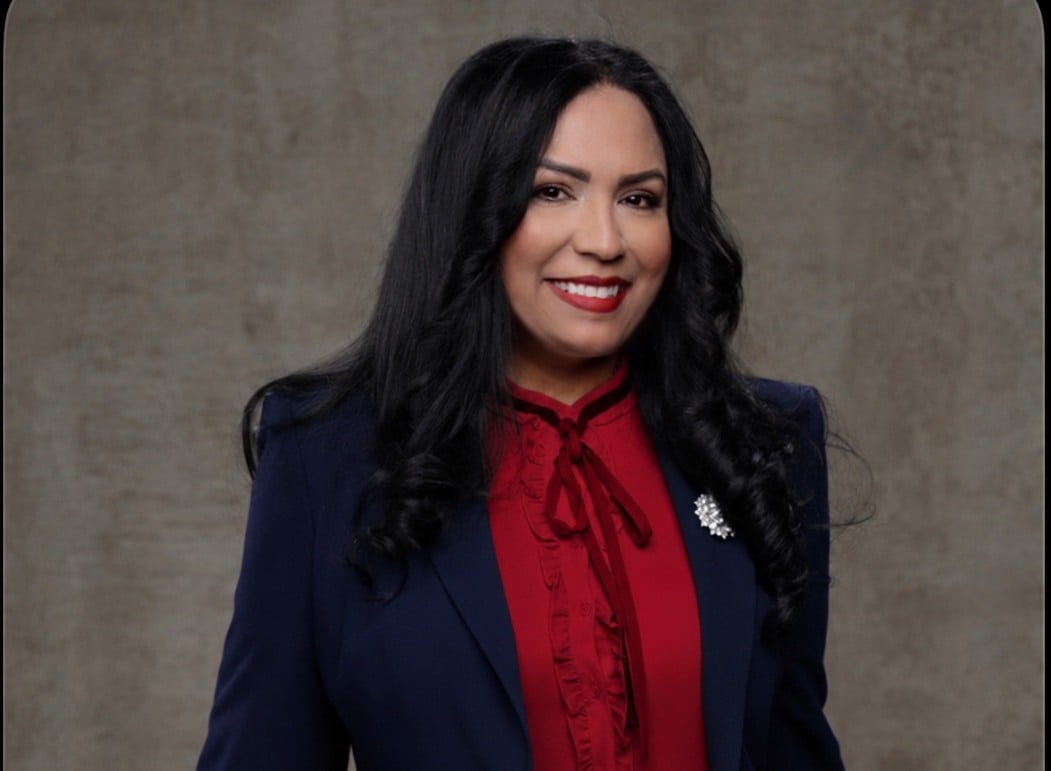
Dr. Deborah Villanueva, DSW, MSW, LCSW, is president of Hadassah Long Beach / Orange County. Formerly she was the Organizational Vice President and Chair of Hadassah Evolve for Long Beach and Orange County, as well as a board member of the Hadassah Southern California Region. A member of the Hadassah Writers’ Circle, she was recently included in Hadassah’s “2025 Edition of 18 American Zionist Women You Should Know.” Dr. Villanueva is a Licensed Clinical Social Worker (LCSW) in Long Beach, CA, with over 25 years of experience serving marginalized communities, including Native American and Latinx women. Specializing in perinatal mental health and trauma, she provides culturally sensitive care. Dr. Villanueva holds a graduate degree in Social Work from California State University Northridge and a Doctorate from USC. She is an international speaker on women’s health and human trafficking prevention. She was recognized as Woman of the Year by the Los Angeles County Commission for Women and named Social Worker of the Year in 2024. In 2025, she was awarded HealthCare Hero of the Year by the RISE Summit on Social Determinants of Health and was recognized as one of the 100 Women to KNOW in America. Dr. Villanueva currently serves as Vice President of Education at Temple Beth-El in San Pedro, CA, and is a Councilmember of the Los Angeles County Sexual Assault Council (LAC SAC).