
On June 17, 2026, President Donald Trump called Iran’s ballistic missile force an instrument of “self-defense.” He suggested US Space Force oversight of Iran’s nuclear enrichment installations if the uranium stayed inside the country and dismissed critics of his Iran memorandum as “losers.”
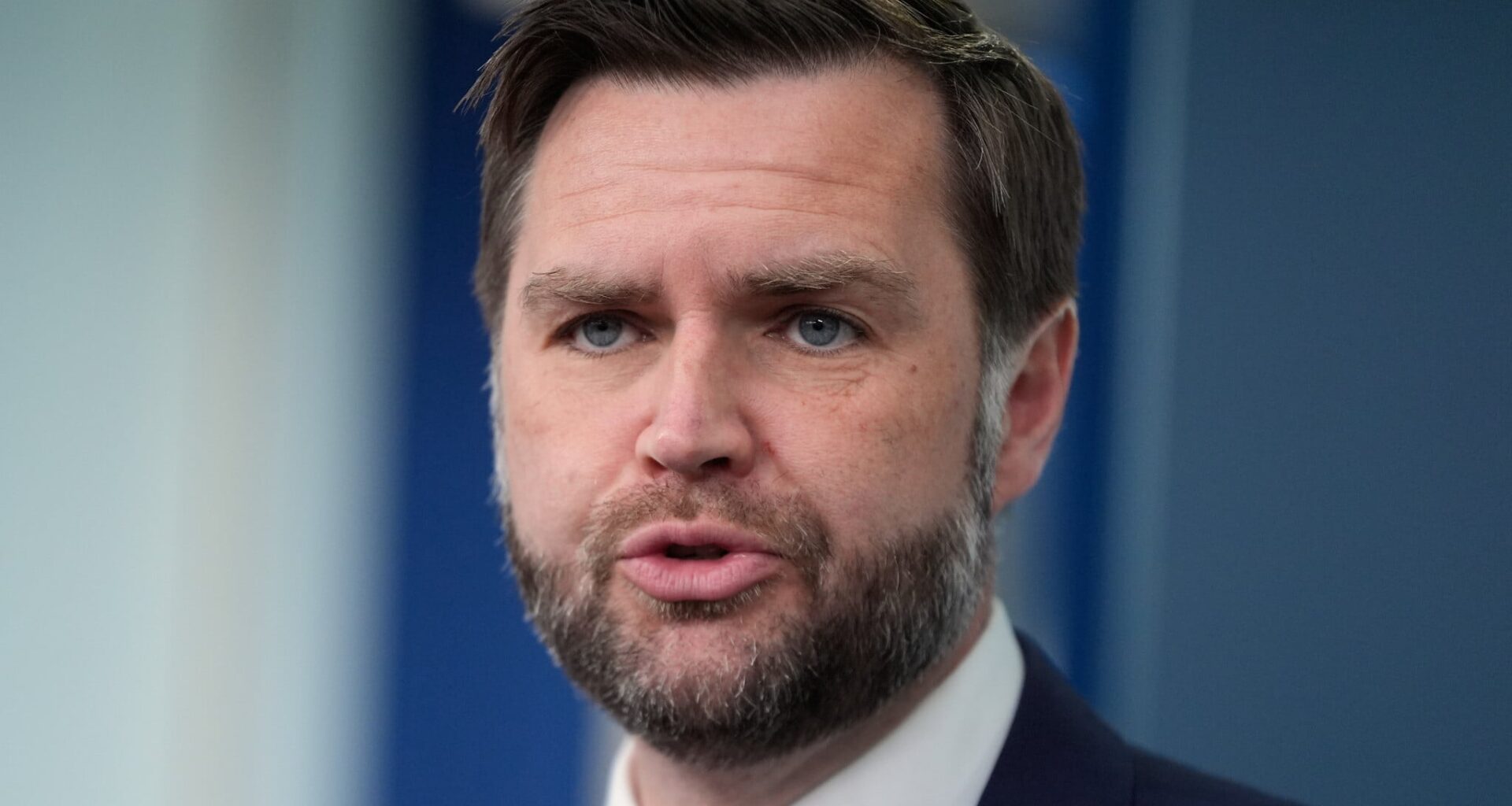
Vice President JD Vance gave the policy its rationale. According to him, Trump alone remains “the only world leader still sympathetic to Israel”; therefore, Israel must respect the “peace process”, stop striking Beirut, and avoid going “wild in Lebanon” even as Hezbollah fires rockets at Israeli civilians and soldiers. Vance collapsed the distinction between Iran’s offensive arsenal and Israel’s right to self-defense, then told Israelis to “wake up.”
This is capitulation masquerading as realism. Vance no longer grounds support for Israel in common enemies, intelligence cooperation, or shared democratic values. He treats it as a revocable favor from an “America First” camp that sees allies as burdens and terrorist regimes as tools. When so-called conservatives equate Israeli counter-terror operations with the regime that arms the terrorists, Washington is not confronting the arsonist but lecturing the fireman.
The US-Iran memorandum delivers the payoff. Tehran receives roughly $344 billion through sanctions relief, released assets, investment, and restored energy value—$24 billion via Qatar, $20 billion through Emirati channels, and $300 billion in a reconstruction and energy package. The State of Israel had no seat at the table, yet was told to bless a deal that preserves Hamas, Hezbollah, and Iran’s imperial project.
The United States supplies Israel $3.8 billion annually in military aid, plus more than $17 billion since October 7. Now that support increasingly functions as a leash compelling Israel to tolerate the Iranian proxies it was armed to destroy.
Vance’s policy does not just swap Marco Rubio’s liberty rhetoric for Tucker Carlson’s love for dictators — it performs a full ideological hostage exchange, trading the American eagle for a participation trophy from the “Strongmen Are Just Misunderstood” gift shop. Older Republicans warned against reckless entanglements. The new faction entangles Washington in excuses for Tehran and brands Israeli self-defense as provocation.
China watches closely. Trump’s recent criticism of Taiwan has already revealed the pattern. Beijing can squeeze the Taiwan Strait and wait for Washington to recast retreat as prudence. Bloomberg Economics and CSIS estimate that a Taiwan conflict could cost up to $10 trillion in one year, exceeding the costs of the 2022 Ukraine conflict or the 2008 crisis. Unquestionably, the memorandum weakens America’s deterrence when revisionist powers measure its will.
Confronted with this, Prime Minister Netanyahu has a clear survival choice. He must denounce the memorandum and its moral equivalence to project coercive credibility and authority. Silence in favor of Trump would damage both. Recent polls show that 71 percent of Israelis distrust Trump’s ability to safeguard their security under this deal. Thus, a leader who allows Jerusalem to be equated with Tehran risks rejection and strategic decline.
At the same time, the US Congress should impose conditions. No sanctions relief, asset releases, or investment windfalls until Iran’s long-range ballistic missile program is irreversibly dismantled and until Tehran ends all support for its terrorist proxies. No American aid to Israel should hinge on passivity toward active threats. Congress should also investigate Qatari influence operations and any post-political business incentives behind this policy.
Israel must move beyond protest. In a multipolar world where Washington’s support is increasingly conditional, blind reliance on any single capital is reckless. Jerusalem must urgently expand domestic munitions production, intensify defense co-development with India, diversify its suppliers, and stockpile war reserves sufficient to sustain prolonged campaigns without foreign vetoes.
The Jewish state must revive the Periphery Doctrine for the current era. This means tightening cooperation with Greece and Cyprus in the eastern Mediterranean, building partnerships across Africa to project power, harnessing Eastern European defense technologies, and forging the Abraham Accords states into a genuine, operational anti-Iran alliance.
Equally vital, Israel should lead the creation of a Latin American “Southern Eyes” intelligence network modeled on the Five Eyes alliance. Iran and Hezbollah are actively weaponizing Brazil, the tri-border region, and other footholds for financing, narcotics trafficking, and ideological subversion. Jerusalem must begin with Javier Milei’s Argentina through expanded intelligence sharing, joint counter-terror finance operations, and coordinated diplomatic efforts to isolate Iranian proxies in the region. Tehran’s return to the Western Hemisphere is no sideshow; it is a central front in the conflict with the Mullahs.
Finally, Israel should pursue cautious, interest-based channels with Russia and China. Moscow’s Ukraine war and Beijing’s anti-Israel UN record complicate matters. Yet Russia influences Tehran via weapons, Syria, energy, and diplomacy, while China remains Iran’s largest oil customer and economic lifeline. These ties can serve as a source of indirect pressure, intelligence, defense co-development, and technological diversification.
Strategic sovereignty is not betrayal. No nation facing existential threats can mortgage its survival to another country’s election timetable. Vance has exposed the real danger — not an Iranian violation of any memorandum, but Washington’s willingness to normalize such deals, carry them past the November midterms, and entrench them as the baseline for a future administration.
Jerusalem must speak without equivocation. It should reject any false equivalence between aggressor and defender and defend its people and territory without apology, hesitation, or the illusion of foreign permission. Israel’s survival cannot be outsourced by whoever is in the Oval Office.
Jose Lev Alvarez is an American-Israeli scholar specializing in Middle Eastern security policy.
A multilingual veteran of both the IDF Special Forces and the U.S. Army, he holds a B.S. in Neuroscience with a Minor in Israel Studies from American University, three master’s degrees (international geostrategy, applied economics, and intelligence studies), and a medical degree. He is currently completing a Ph.D. in Intelligence and Global Security in the Washington, D.C. area.
In addition to blogging for the Times of Israel, he contributes to the Washington Examiner, is a writing fellow at the Middle East Forum, and regularly provides geopolitical analysis on Latin American television networks.