
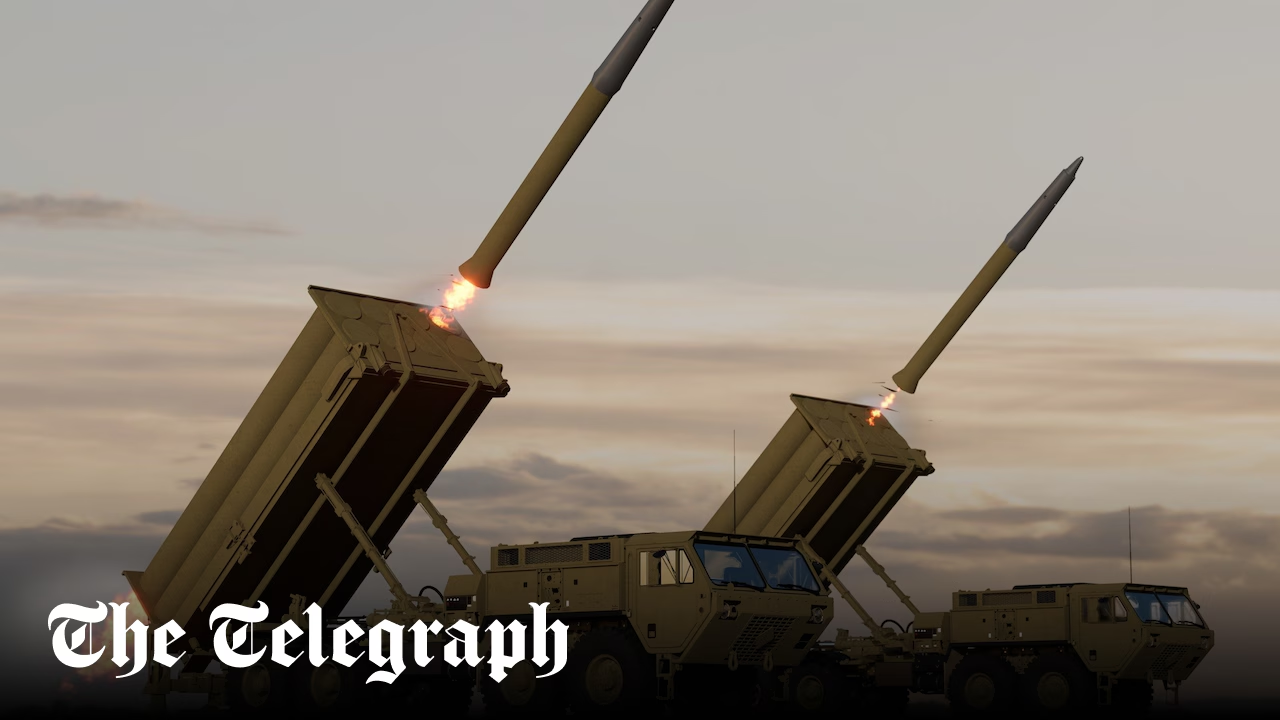
It is understood that the Hebrides launches saw all systems fire despite some minor technical hiccups, which were to be expected as part of the “fail fast” approach to the project, and which firms will now work to iron out before further trials.
The second phase of so-called Project Brakestop is now under way, with companies awarded follow-on contracts worth around £15m for further development. British officials hope to deliver the first of the new systems to Kyiv within a year.
Louise Sandher-Jones, the new Armed Forces minister, said the weapons would “complement” others, such as Storm Shadow missiles, which allow Ukraine to strike deep into Russia but carry a higher cost.
“The UK stands shoulder-to-shoulder with Ukraine, and we will continue to provide the support it needs to defend itself against Russian aggression,” she added.
“Project Brakestop shows what happens when we combine that commitment with the talent and ingenuity of British industry. In less than a year, UK companies have taken an ambitious concept from the drawing board to flight testing, delivering a new generation of capability at remarkable speed.”
Western officials say Kyiv’s battlefield performance has improved significantly in recent months, with Ukrainian drones pinning down Russian troops on the front line.