
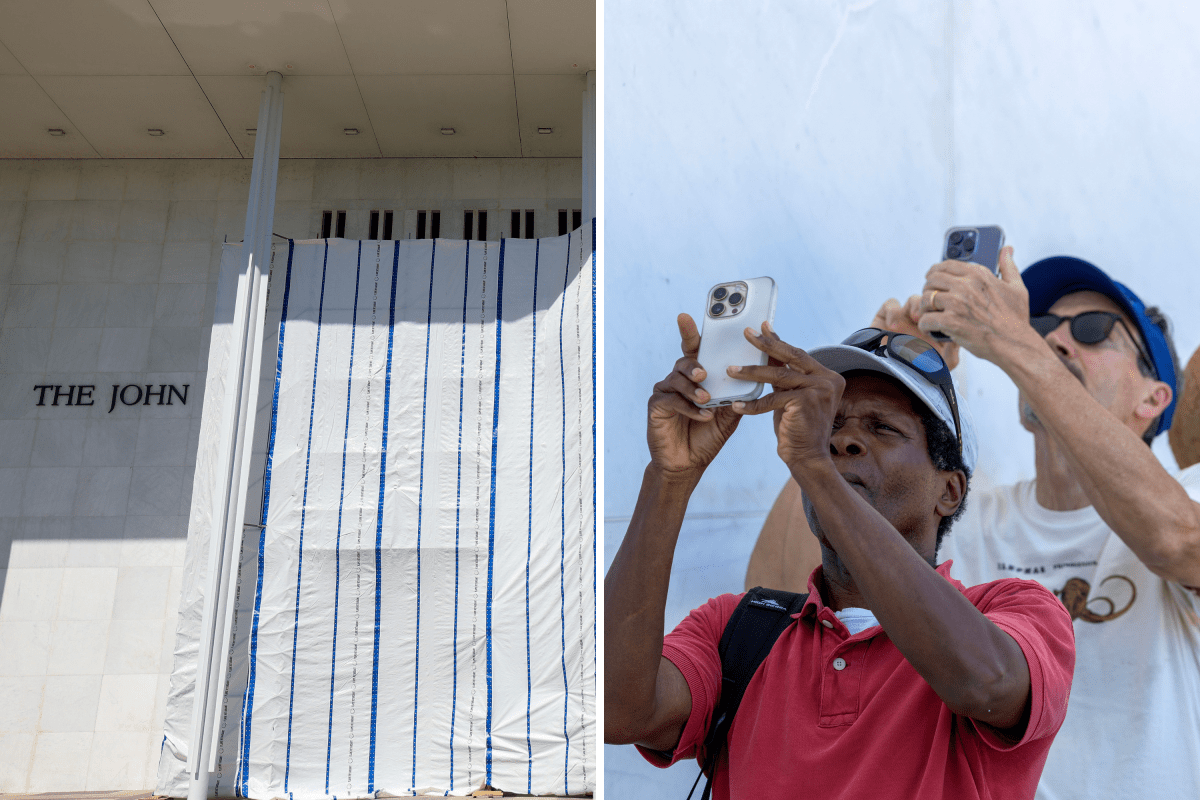
Claims that “broken egos” are driving decisions at the Kennedy Center have surfaced in new court filings, as a legal dispute intensifies over why large tarps continue to cover the building’s facade days after a federal court ordered the removal of President Donald Trump’s name.
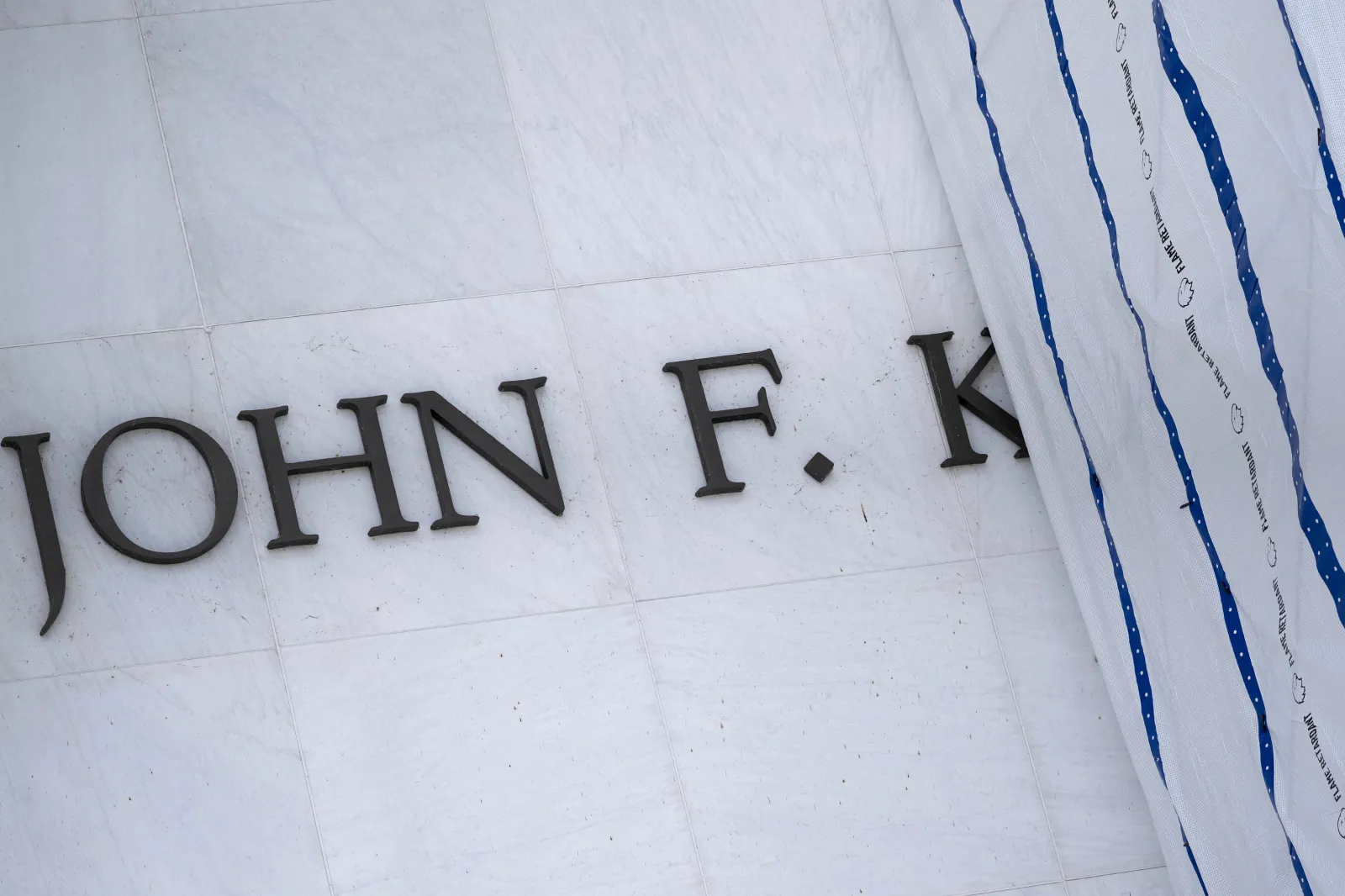
Massive coverings remain draped across the front of the John F. Kennedy Center for the Performing Arts in Washington, D.C., obscuring public view of the area where signage was taken down.
In a filing submitted June 19, attorneys for Representative Joyce Beatty, the Ohio Democrat who brought the lawsuit, challenged the center’s explanation for keeping the tarps in place, raising questions about whether the coverings are tied to maintenance or obscuring whether the court’s ruling has been fully carried out.
Read More on News
The filing came in response to a directive from U.S. District Judge Christopher R. Cooper requiring Kennedy Center officials to provide an update on renovation plans and how the venue would remain open while construction work proceeds.
It outlined three possible paths forward—full closure, partial shutdown, or phased repairs—but left key decisions unresolved ahead of a planned board vote in mid-July.
Newsweek reached out to the Kennedy Center via email for comment on Saturday morning.
 What the Court Ordered—and Why It Matters
The dispute now sits at the intersection of law, governance, and public accountability, as U.S. District Judge Christopher R. Cooper weighs whether Kennedy Center officials have met both the letter and spirit of his order.
At the center of the controversy is a sweeping ruling issued May 29, in which Cooper found that adding Trump’s name to the Kennedy Center violated federal law.
“The Kennedy Center’s organic statute makes crystal clear that the Center is to be named for President Kennedy,” Cooper wrote, emphasizing that only Congress has the authority to change its name.
The decision required officials to remove all Trump-related signage within 14 days and block plans for a two-year closure.
It drew on the Kennedy Center Act, which designates the institution as a “living memorial” to John F. Kennedy and places its governance within a federally defined framework.
That statute has long made the site a hybrid entity—federally owned but overseen by a politically appointed board—creating tensions now playing out in court.
By mid-June, officials confirmed in legal filings that they had “removed all physical signage” referring to Trump from the building and its grounds.
But the removal itself was largely concealed from public view, carried out behind scaffolding and flame-retardant tarps installed overnight on June 13.
 A Tarp That Won’t Come Down
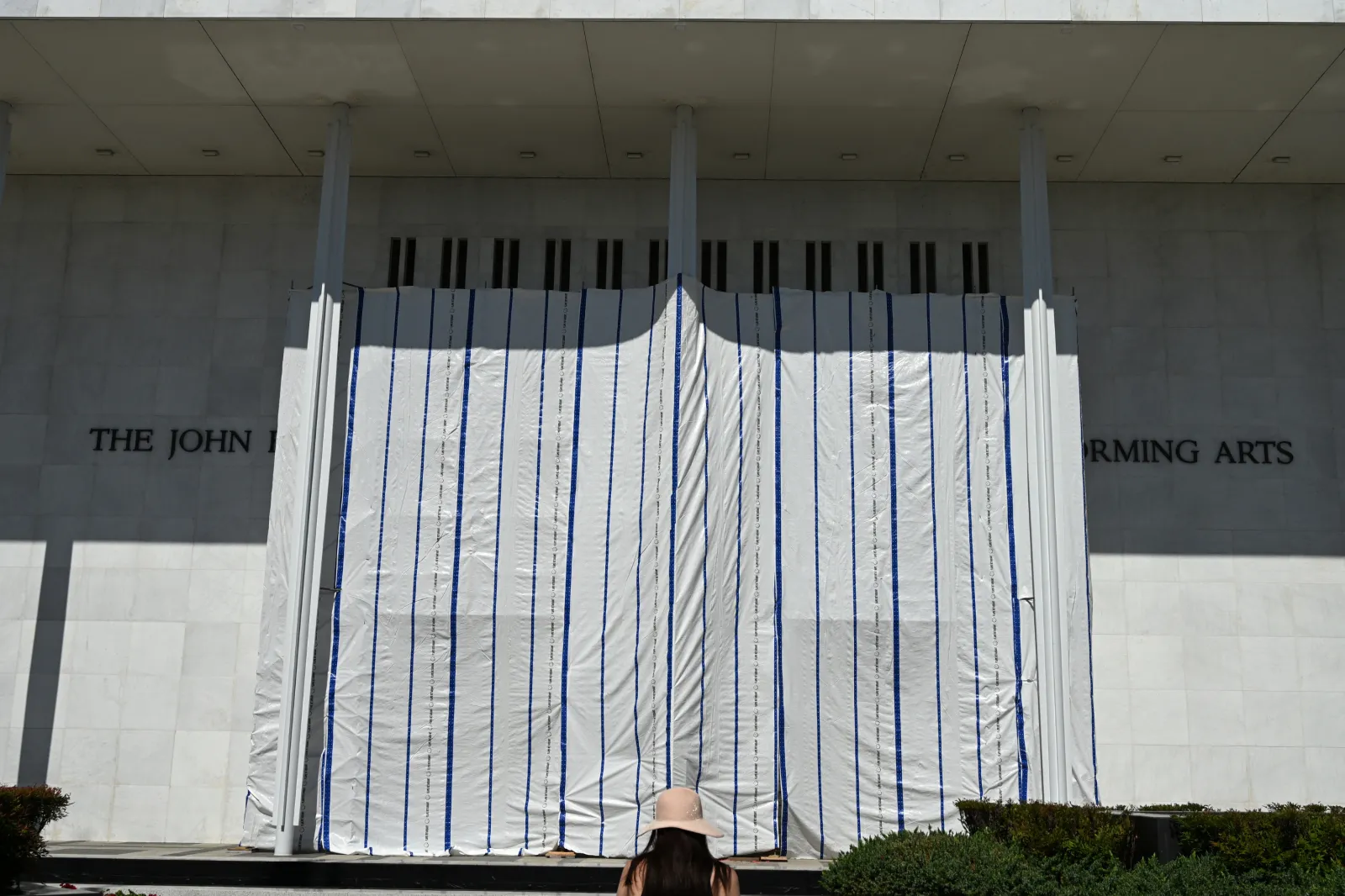
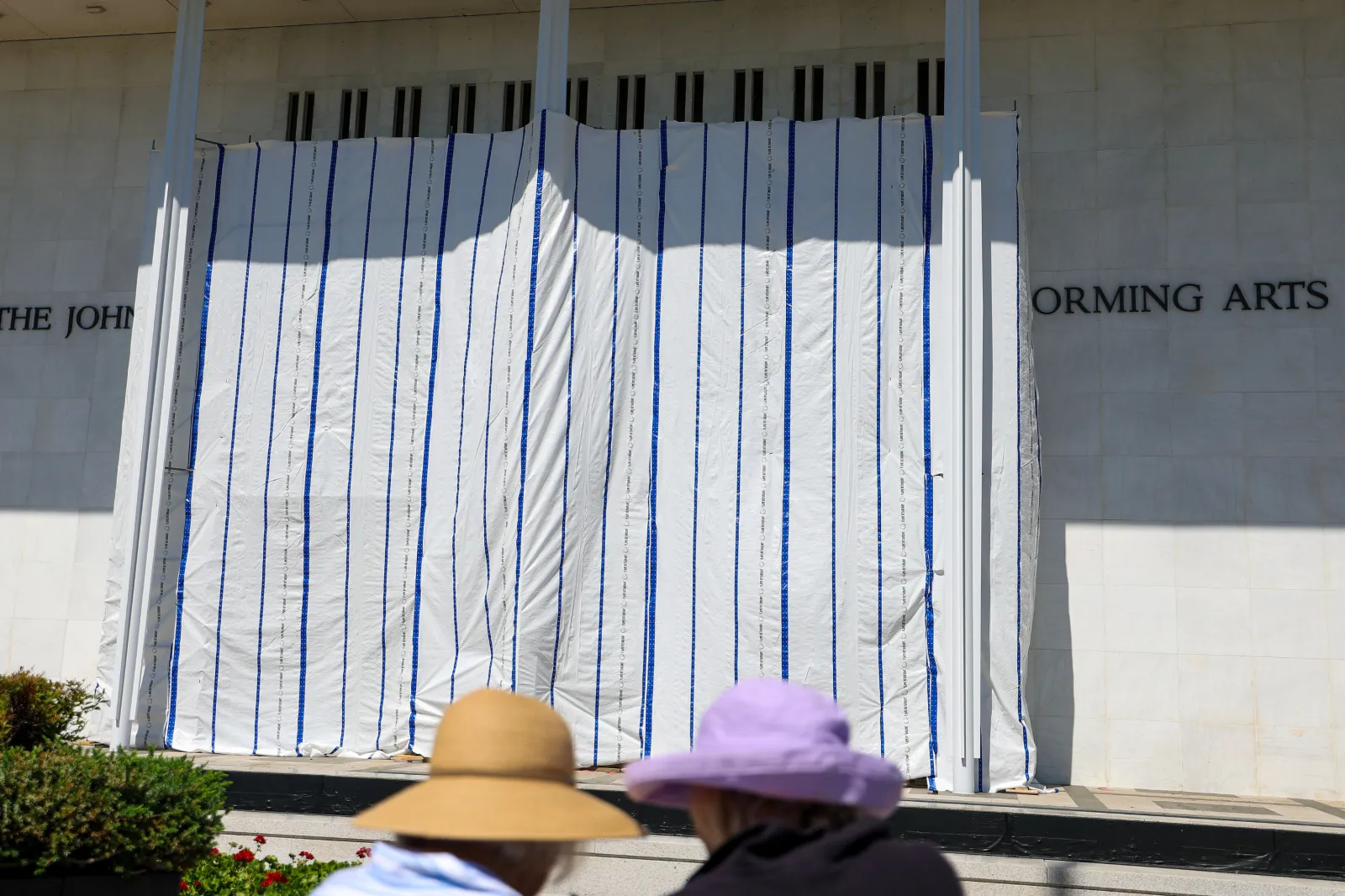
More than a week later, the coverings remain in place, blocking visitors from seeing the façade—and preventing independent confirmation of what name is now displayed.
Kennedy Center officials have offered an explanation to the the delay. Spokesperson Roma Daravi told CNN the tarps will remain while crews address “maintenance needs of the marble and soffit panels.”
Yet officials have not provided a timeline for when they will be removed.
Documents released earlier this year suggest those repairs are not trivial. Internal renovation materials describe “decades of deferred maintenance” and highlight structural concerns, including marble deterioration and soffit panels weighing more than 2,000 pounds that have reached “end-of-life” status.
Court Filings Raise ‘Broken Egos’ Claim
But in their June 19 filing, Beatty’s legal team directly contested the maintenance rationale.
They described the tarp as effectively “semi-permanent,” arguing it appears designed to obscure whether the Kennedy Center has fully complied with the court’s order.
Attorneys alleged the decision reflects “broken egos” among leadership and could represent a breach of fiduciary duty to the institution.
Those claims build on broader arguments in the case that the Kennedy Center’s board has failed in its legal obligations.
Beatty’s lawyers warned that proposed shutdowns and governance decisions risk turning the institution into a “lifeless husk,” violating its statutory duty to operate as a functioning national cultural center.
The latest filing stops short of alleging noncompliance outright, but frames the tarp as an obstacle to verification—effectively shifting the burden back to the court to determine whether oversight has been satisfied.
 What Visitors and Performers Say
Visitors arriving at the Kennedy Center expecting to see the restored “John F. Kennedy Center for the Performing Arts” inscription have instead encountered a façade largely hidden from view.
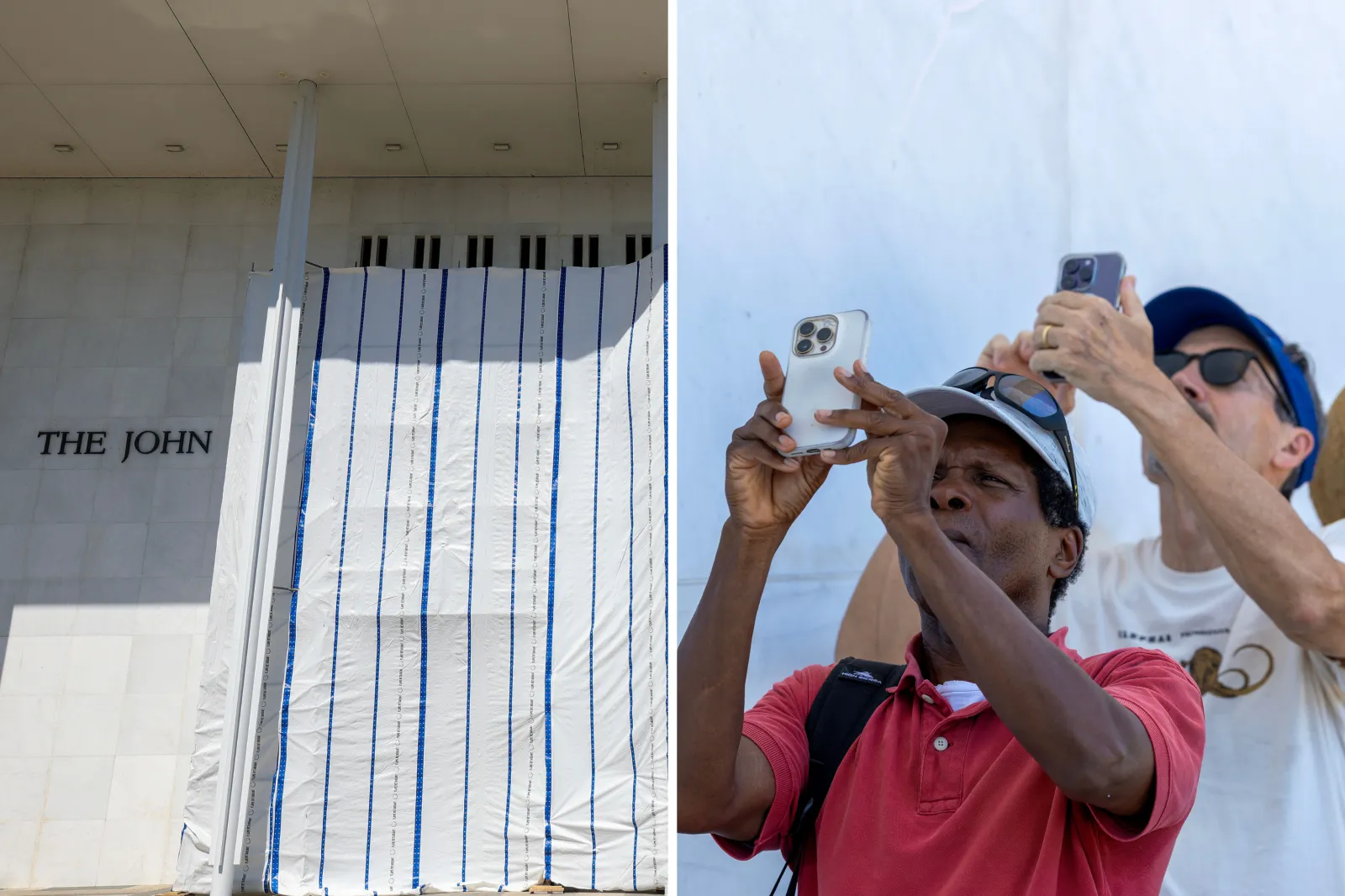
Even during the overnight removal of the Trump signage, onlookers were unable to observe the process directly due to the coverings.
Actor Tommy Gedrich, appearing in Moulin Rouge! The Musical, questioned the official explanation, telling The New York Times: “I think it doesn’t take that long to preserve marble”.
He also went on to say that the tarps block two backstage entrances, forcing cast members to walk around the building—“two football fields wide”—to reach the Opera House stage.
Reaction Divided
Public response has been mixed, ranging from skepticism to indifference.
Democratic lawmakers have been among the most vocal critics. Representative Jamie Raskin of Maryland described the situation as “a literal cover-up,” while Beatty said Trump was attempting to hide “an embarrassing defeat” after losing in court
Speaking to CNN, Stephen Caken, a New York resident visiting Washington, D.C. for an internship, said he was puzzled that the coverings remained after the court-ordered removal.
“It seems like they’re trying to just kind of take away attention from this whole charade,” he said.
And John Mathew Smith, a Maryland resident, offered a more pointed critique. “To me, he’s trying to deface America’s symbols before he starts finishing defacing the country itself,” he told CNN.
“I don’t know if they took down the sign, because I can’t see it,” Luna Woo, a violinist visiting from Portland, Oregon, as part of the National Symphony Orchestra’s Summer Music Institute, told The New York Times.
But speaking to the New York Times, one theatergoer, who declined to give her name, was less concerned, dismissing the controversy as “a lot of hoopla over nothing.”
Outside the building, protesters have gathered with chants of “Take down the tarp,” framing the issue as symbolic of broader concerns about political control of cultural institutions.
As crews began draping tarps over the scaffolding early Saturday last weekend, people gathered below chanted “Shame!”
During one such protest, a demonstrator speaking to WUSA9 suggested repurposing the covering as a form of public spectacle.
“We should take down the tarp so we can actually see that his name is down from the Kennedy Center,” the protester said. “If it was long enough, let’s cover up the reflecting pool with it… I think it’d be a great use of that tarp that has no business being up in front of the center right now.”
While largely symbolic, the suggestion underscores how the tarp has shifted from a construction detail into a focal point for political and cultural frustration.
Renovation Plans Still Unclear
The dispute over the tarp is unfolding alongside broader uncertainty about the Kennedy Center’s future.
According to court filings submitted June 19, officials are weighing three options:
A full closure with no programmingA partial closure allowing limited public accessOr phased repairs while maintaining performances
The venue had previously planned to shut completely for two years starting in July, but the court blocked that proposal and ordered the center to remain operational.
Filings show the Kennedy Center now intends to maintain an “operational model” beyond the initial July 5 closure date, with public access continuing even as programming decisions remain unresolved.
 A Broader Battle Over Control
The tarp dispute is the latest chapter in a wider legal and political struggle over the Kennedy Center.
After taking control of the board in 2025, Trump and his allies pushed to rename the venue and proposed sweeping renovations that included a two-year shutdown.
Beatty’s lawsuit challenged those plans. In May 2026, a federal judge ruled the renaming unlawful and blocked the closure, forcing the institution to reverse course.
What began as a dispute over naming authority has since expanded into a broader conflict over governance, programming and transparency—issues now symbolized by the still-standing tarp.
What Happens Next
For now, the tarps remain in place—and so do the questions. The court is expected to continue reviewing whether the Kennedy Center has fully complied with its order, including whether additional explanations are required about the tarp and the timeline for its removal.
Until then, the view of one of Washington’s most recognizable cultural landmarks remains obscured.