
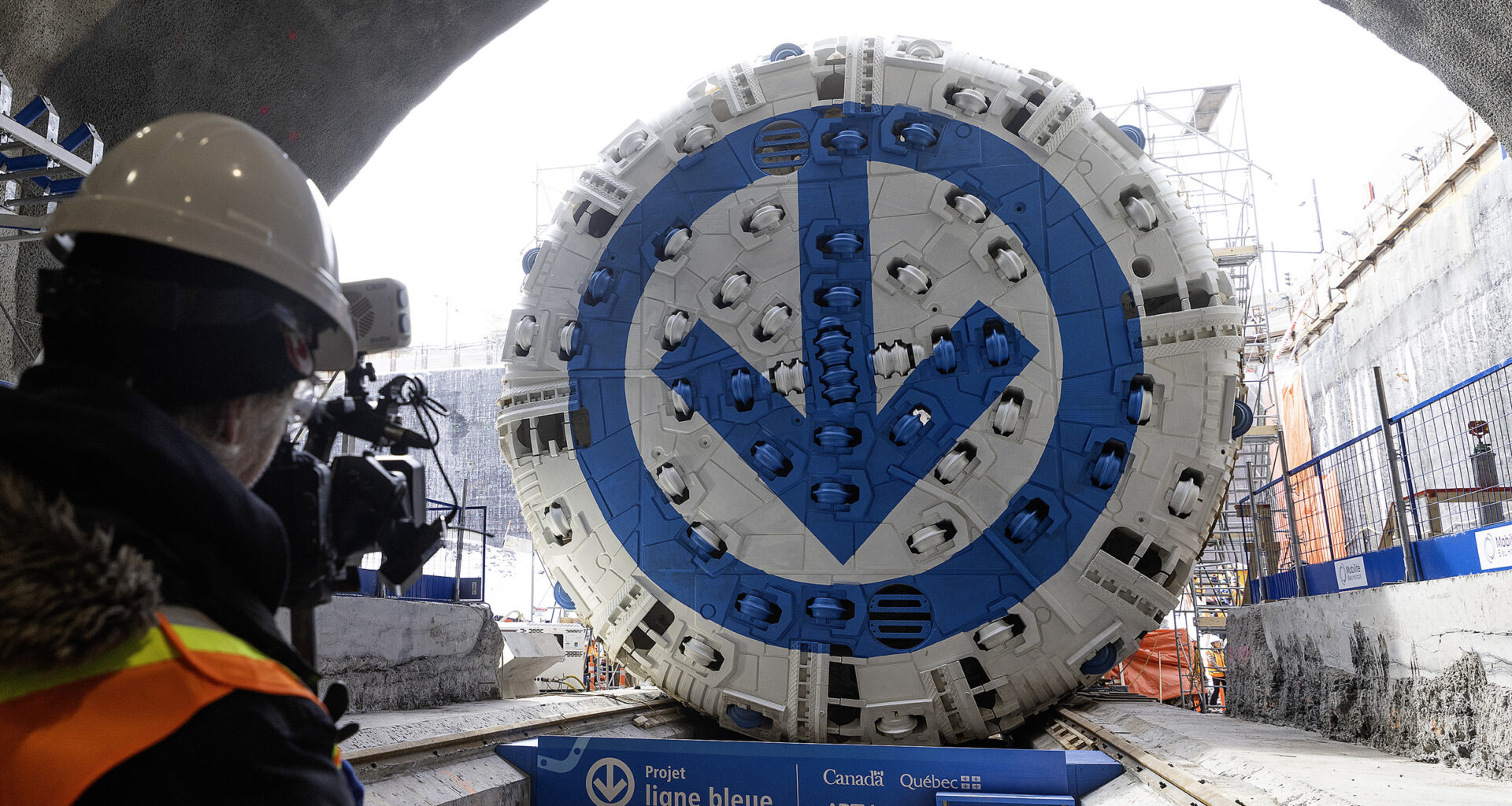
On the surface, high-tech methods employed to build the latest extension of Montreal’s métro system seem revolutionary.
A tunnel-boring machine that stands three storeys, or 12 metres high, rotates at a rate of five turns per minute to dig roughly 15 metres of métro tunnels per day, while pouring concrete behind it to seal it all up. Such technology makes it relatively easy to put together major subway expansion projects, as the tunnel machine will dig four kilometres of tunnel in roughly 18 months.
But when you dig deep to examine the length and cost of modern projects, they appear to fall far short of the era of the métro’s inception in the 1960s, which was planned and executed in a span of less than six years and even came in under its original budget.
When it opened in 1966, Montreal’s métro was considered an engineering marvel, because of its design achievements, but also due to its low price tag and the speed with which the original network was built. It cost $213 million to build 26 kilometres and 26 stations. Adjusted for inflation, that’s $2.1 billion in today’s dollars or $80 million per kilometre.
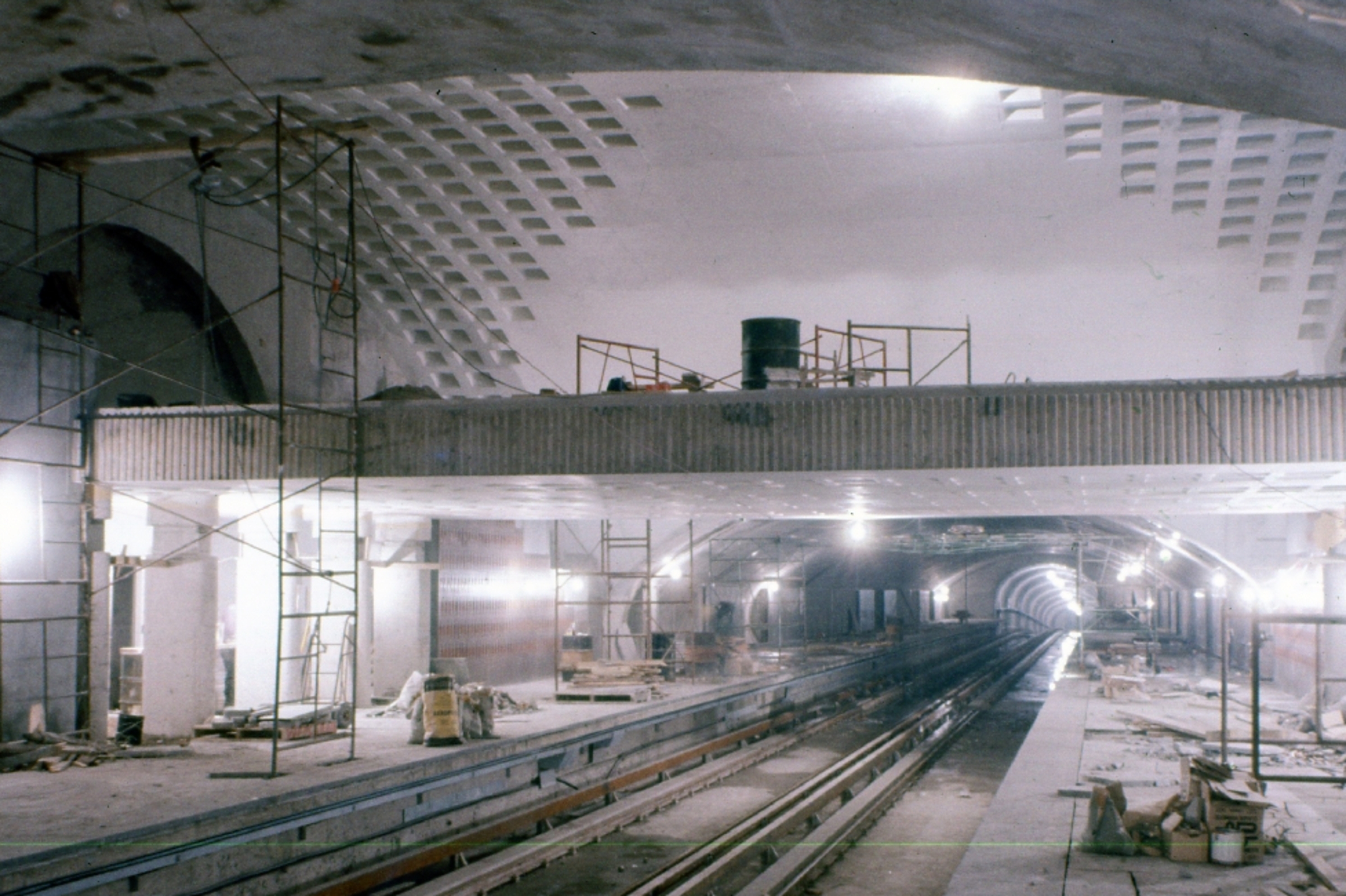 Construction of the Beaubien métro station in 1965. City of Montreal archives
Consider that the current 5.5-kilometre expansion of the Blue Line is expected to cost at least $7.6 billion for five stations. That amounts to an eye-popping $1.4 billion per kilometre — among the most expensive in the world. It’s also expected to take six years to complete the project.
So does it really cost 18 times more to build a métro today than it did back in the 1960s?
Experts aren’t surprised by that assessment, and they point to numerous causes for the situation. Fixing it, however, is no simple matter, they say.
It wasn’t so long ago that métro extensions were affordable. In 2007, the project to extend the Orange Line three stations to Laval was a relative bargain at $745 million for 5.2 kilometres. Adjusted for inflation, it amounts to $1.1 billion for the project in today’s dollars, or $211 million per kilometre — one sixth of the cost of the Blue Line extension.
Matti Siemiatycki, a University of Toronto professor and the director of infrastructure at the School of Cities, said Canada has the distinction of being the country with among the most expensive infrastructure projects, and it spells trouble for the future, as costs continue to balloon, while the causes of this increase are not clear.
“The costs are through the roof for transit projects,” Siemiatycki said. “It’s out of control, and worse, it’s out of line with what our peers are doing. And this is troubling for all sorts of reasons.”
Montreal isn’t alone, he said. The cost of Toronto’s 15.6 kilometre Ontario Line is expected to reach close to $27 billion, which is just over $1.7 billion per kilometre.
Siemiatycki speculates that some of the regulations attached to project construction are to blame. Another issue is the amount of subcontracting that is done in major projects, as there are more companies involved and each takes a profit margin on the work.
“We also lose control of the project, the more companies that are involved,” he said.
Métro historian Benoît Clairoux said people have to remember that the construction standards are far different today than they were in the 1960s. Among the major changes is the attention now paid to worker safety.
“Most of the job, roughly 70 per cent, was done by using explosives in the rock, and the rest was with cutting and covering,” he said. “Maybe it was quicker and cheaper before, but it wasn’t better. We have to remember that 12 people died during the first phase of the métro.”
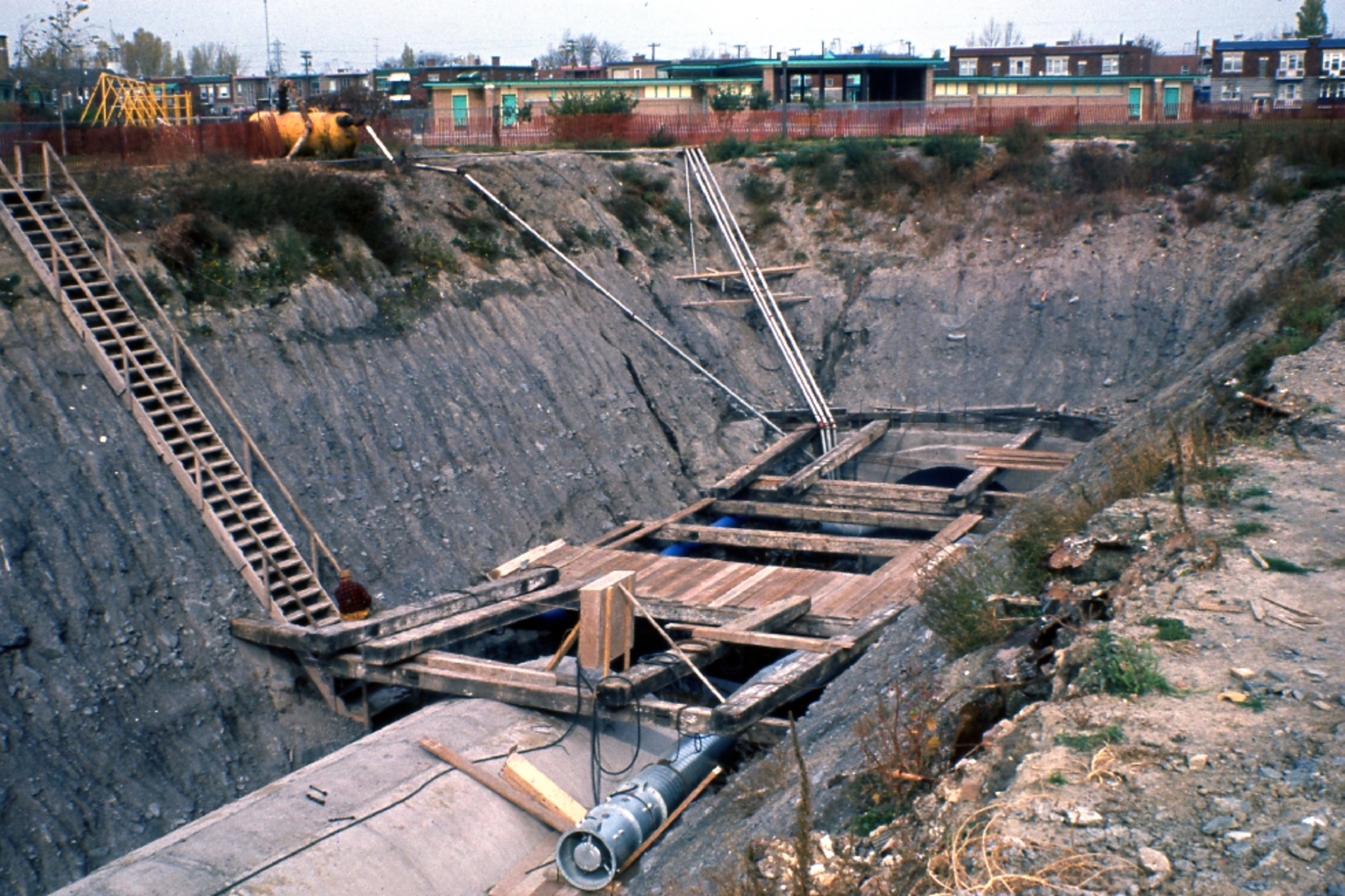 Montreal métro tunnel construction between Crémazie and Sauvé metro stations in 1963. City of Montreal Archives
He added that entire neighbourhoods were also demolished for major projects back in that era, and there was little care taken for relocating those who became homeless as a result.
Ahmed El-Geneidy, the director of the school of Transportation Research At McGill, said that is the price of living in a democracy today, as opposed to an autocracy.
“There are a lot of rules now in place so that no lives are lost during construction, and that comes at a cost of time,” he said. “I think it’s worth it for people to be stuck in traffic a little bit so we can allow someone to go home to his wife at the end of the day.”
Siemiatycki agreed that it was easier to build projects of all sorts back in the 1960s — because there were far fewer rules about how construction companies could conduct their business.
“This was the era when you could just ram projects through, partly because of the safety issues, but also because you could just brush away the opposition to the projects,” Siemiatycki said.
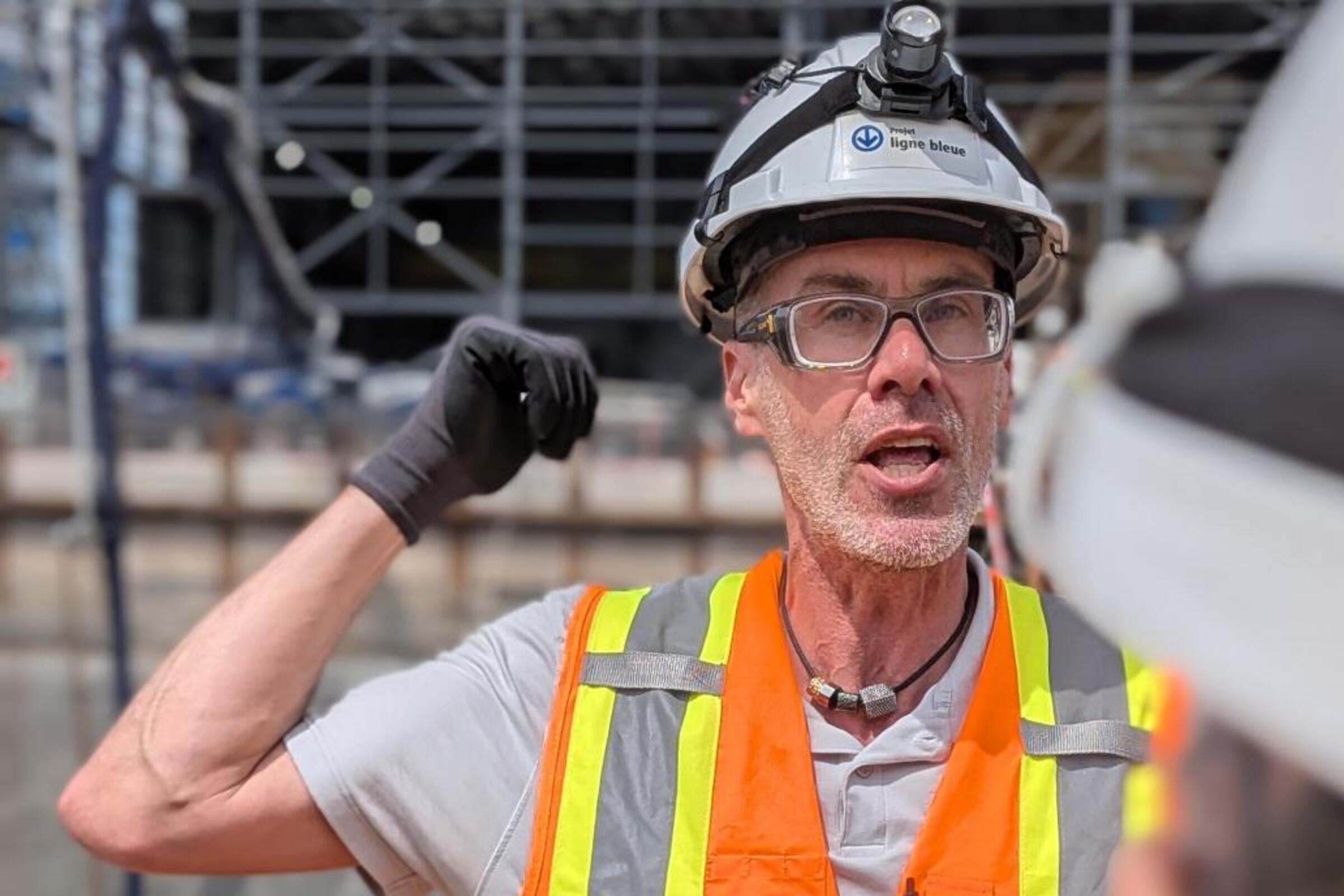 David Chartier, head of construction of the STM’s blue line métro extension project. STM
Speaking for the current Blue Line extension project, David Chartier explained that there are also more environmental norms to respect, more studies that need to be done before a project, and more public consultation that has to be done.
“We have proven that the costs of the project are in line with the (worldwide average),” Chartier said. “I think we’re even a little more competitive.”
Murtaza Haider, a professor and the Executive Director of the Cities Institute of the University of Alberta, doesn’t buy that argument. He called on politicians in provincial and federal circles to figure out why infrastructure seems to be more expensive to build in Canada compared to most other countries.
“The current situation is that we have lost control of how we build public infrastructure,” Haider said. “Cost discipline has gone out the window; it’s scandalous.
“It is a crisis.”
 Peter J. Thompson /Postmedia News files
We have lost control of how we build public infrastructure.
Murtaza Haider
Executive Director of the Cities Institute of the University of Alberta
He added that the public seems less concerned when transit projects go over budget, because most agree that public transit serves the greater good and leads to economic benefits. He called on authorities to pay more attention to financial discipline.
“The mindset is that we need more transit, and at any cost, it’s good,” he said. “So if I’m a builder, I can increase my proft margins, because there is no one trying to get money for dollars. This shouldn’t be acceptable.”
El-Geneidy added that there also fewer companies around these days that can build such projects, so the ones that exist have greater power to dictate the price.
Siemiatycki agrees there is something fundamentally wrong with the way projects are planned, conceived and built that drives up their cost unreasonably.
He called on authorities to go back to Square 1 and examine all the steps involved in planing and building projects.
“I can’t accept that we won’t be able to afford to build transit,” he said. “I think this is a matter of urgency for Canada (to get a handle on costs of infrastructure). What’s happening in Montreal is a microcosm of what’s going on in the rest of the country.”
El-Geneidy too is concerned that the métro’s extensions are too pricey, and said it may be too costly to extend the métro in the future.
“If you want to extend the métro, you have to pay a high price,” he said.
However, there is a bright side, because even with its cost overruns taken into account, the new REM light-rail network is far more affordable than building a series of underground tunnels to extend the métro. The cost of that project is estimated to be roughly $140 million per kilometre at its current estimate of $9.2 billion.
“I think the REM model is where we might go in the future, because it is much cheaper and much faster to do,” he said.
You’ll often see Jason Magder donning a hard hat and florescent vest at a local construction site. As The Gazette’s transportation reporter for more than a decade, he has seen the new Champlain Bridge built, the old one demolished and followed the ups and downs of the city’s transit system. He has been covering news in Montreal for 25 years.
jmagder@postmedia.com