
The Iran War of 2026 did more than reshape the regional order. It delivered a verdict on a question Israeli policymakers have spent three years avoiding: how much latitude does Israel actually have, and how much of that latitude depends on a patron whose interests are not identical to its own? The war answered that question more clearly than any white paper could. Israel would be wise to sit with the answer before it makes its next move.
This is not an argument for Israeli weakness, and it is not an indictment of Israeli capability, which remains formidable. It is an argument that the country has been negotiating, internally and externally, as though it held a kind of leverage the last three years have shown it does not hold — and that the cost of that mistake is no longer theoretical.
What the war actually showed
Start with the warning that preceded the war. Before the first strike, Gen. Dan Caine, chairman of the Joint Chiefs of Staff, told the administration directly that U.S. munitions stockpiles were already significantly depleted — a concern reported by the Washington Post days before the war began. The administration proceeded anyway, in substantial part because Netanyahu’s assurance was that the campaign would be short. It was not short. It ran forty days, and the bill did not land only on Israel.
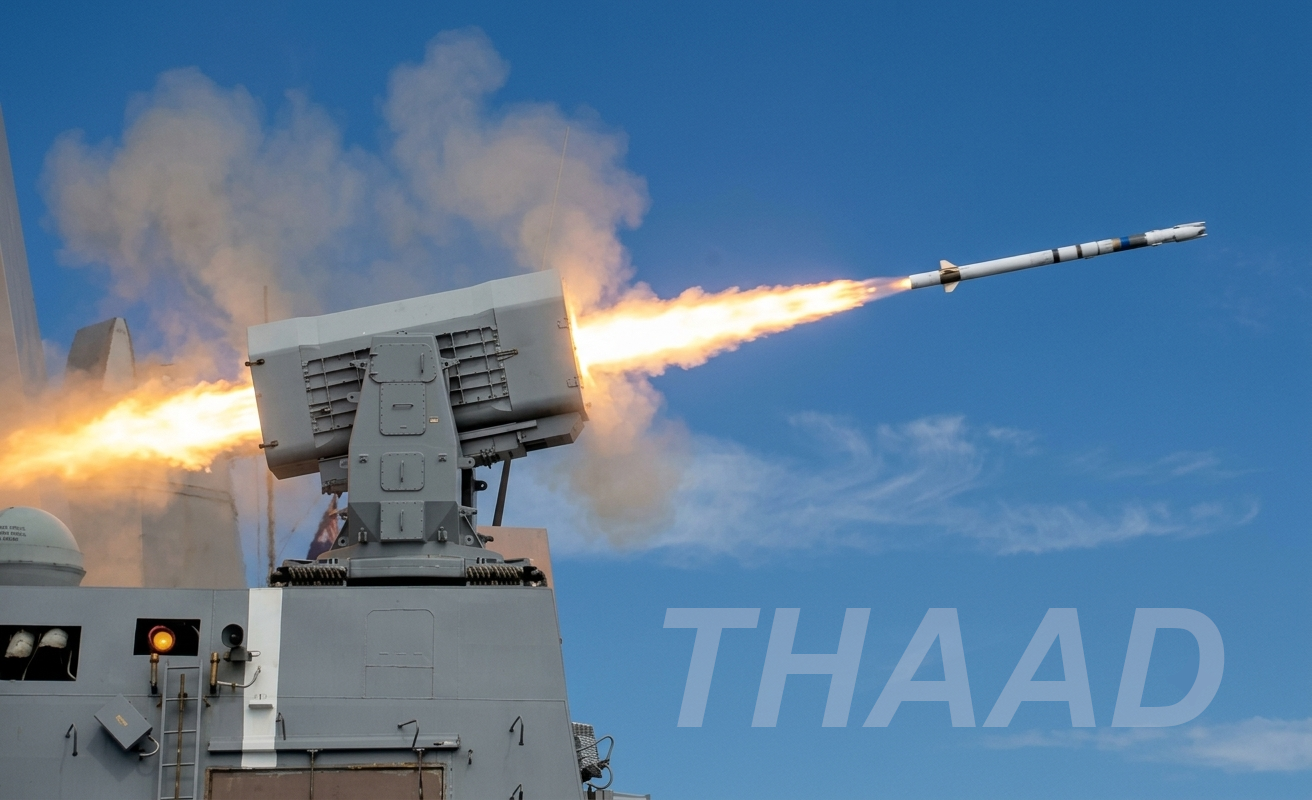
During those forty days, Pentagon assessments described to the Washington Post showed the United States fired more than 200 THAAD interceptors defending Israeli airspace — roughly half the Pentagon’s global inventory — while Israel fired fewer than 100 Arrow interceptors and around 90 David’s Sling interceptors, many against lower-tier threats from Yemen and Lebanon rather than Iran’s most advanced missiles. By the war’s later weeks, Israeli interceptor stocks were reportedly down to “double digits,” forcing defenders to ration which incoming threats they engaged. The United States carried so much of the load because Israel’s own stockpiles, expended across consecutive rounds of conflict since 2023, could not sustain the tempo alone — exactly the dynamic Caine had flagged before a shot was fired. CSIS’s postwar assessment found that restoring U.S. stockpiles of the munitions most heavily used in the campaign would take two to three years even under favorable conditions. Israel does not currently possess, at the scale a sustained regional war requires, the magazine depth or production surge capacity this war depended on — and the war’s own architect in Jerusalem told Washington it would not need to find out.
The reaction that proved the point
What happened next matters as much as the numbers. The United States did something Israel structurally could not do for itself, after its own military leadership had warned against the risk, and while absorbing real exposure relative to its actual peer competitors — two to three years of depleted readiness against China and Russia, spent defending Israeli skies during a war Israel’s own prime minister promised would be brief. Senator Mark Kelly’s blunt framing during the war — at some point, this becomes a math problem — was an accurate description of a great power drawing down its strategic reserve to cover a partner’s shortfall, after that partner had assured Washington the drawdown would be minor.
A common Israeli response to American caution in the war’s later stages has been to wave it off as election-year politics — Trump worried about the midterms, nothing more. That explanation is more comfortable than the real one. The more basic fact is that Washington was warned in advance by its own senior military officer that the stockpile could not sustain a prolonged campaign, accepted Netanyahu’s assurance that prolongation would not be necessary, and absorbed the cost when that assurance proved wrong. Reducing American hesitation to domestic politics lets Israeli strategic discourse avoid the harder question: what does it mean that a war promised to be short instead consumed half of America’s most advanced missile-defense inventory and will take years to repair? A senior partner managing its depleted reserves after absorbing that risk on the junior partner’s own prewar assurance is not betraying the partnership — it is the partnership working exactly as its capital structure dictates. Treating it as betrayal, rather than reckoning with the prewar miscalculation that produced it, is the same category error driving every other misjudgment in this war, restated in its most emotionally charged form.
Two paths, neither fully priced
This is where the moment gets dangerous — not because Israel lacks options, but because the options being floated in Jerusalem carry risks nobody seems to be pricing in.
One path is strategic self-sufficiency: reduce reliance on U.S. aid, build domestic industrial capacity, eventually act without needing anyone’s resupply or permission. The grievance behind it is real — American support is not what it was a decade ago, and a future hostile Congress could make the relationship’s politics far harder. But “going it alone” is not a switch to flip; it is a decade-plus industrial undertaking, and the dependencies this war exposed do not vanish because a policy paper reframes the relationship. Floating near-term autonomy right after a war that demonstrated the capability gap in countable interceptors risks the same kind of optimistic bet that produced the prewar promise of a short war.
The second path, marketed as the more sophisticated alternative, replaces the visible, politically vulnerable aid line item with deeper joint R&D, co-production, and military-industrial integration. It looks like emancipation. But it does not reduce dependence — it changes its form, from a check a future Congress could withhold to interlocking industrial programs far harder to unwind. That may be sound on its own terms, but it is a different entanglement, not an exit from one, and it carries a cost rarely said aloud: deeper integration makes it more plausible that American force posture gets pulled into a future conflict that originated from an Israeli decision, not an American one. Israel cannot ask for tighter integration and greater autonomy at once and expect both for free.
The capital structure problem
Here is the part Israeli political culture has the hardest time accepting: this is, structurally, a junior partnership, and pretending otherwise is the actual error. When one partner supplies the overwhelming share of the capital — the munitions, the surge capacity, the global standing — and the other supplies a fraction of it, the larger partner sets more of the terms. That is not an insult. It is how capital structure works. A partner investing fifty billion dollars and one investing one billion can build something real together, but the smaller partner does not run the board meeting as an equal, and acting otherwise is the surest way to damage a partnership worth keeping.
This is a trade-off, though, not a verdict, and there is a legitimate case on both sides. There is real value in owning your own company outright, even at a fraction of the profit — answering to no one else’s politics, never again discovering your options end where someone else’s risk tolerance ends. Israel is entitled to want that. But there is an equally serious case for staying a junior partner inside the dominant conglomerate: in the mean streets of Middle East geopolitics, a minority stake in the right enterprise, on the right terms, has kept smaller partners prosperous and protected for most of the last seventy years. The resupply, the cover, the deterrent weight of a superpower’s name — these are not consolation prizes. They are a strategy, and a proven one. What Israel cannot do is claim the benefits of both positions at once: the sovereignty of the owner and the resupply lines of the junior partner.
Do the math first
This is a decision about trade-offs, and it deserves the treatment serious trade-offs get — without pride, bravado, or emotion, the three forces that have governed too much of Israeli strategic discourse for too long. Full ownership and a lower, harder-won return. Junior status and a superpower’s resupply lines and industrial depth. Either path can be a defensible national strategy, chosen with eyes open. What is not defensible is choosing by wounded pride, or by the comforting assumption that the asymmetry this war just demonstrated will resolve itself before the bill comes due.
This is a pattern, not a single misjudgment. The last three years have produced several serious miscalculations — about how much escalation Washington would tolerate, about whether standoff airpower alone could produce regime change, about how quickly hawkish coalition politics would foreclose its own diplomatic exits, and, before any of that, about how long a war against Iran would actually take. Each error was made with confidence. Each was made, in part, by treating an asymmetric relationship as a matter of pride rather than planning.
Israel has the right to choose either path, or some blend, on its own terms — this is Israel’s call, not Washington’s and not an outside analyst’s. But the choice deserves the cold arithmetic of a boardroom, not the emotional register of a grievance. Do the math on what each path actually costs, in munitions, industrial capacity, political entanglement, and time. Decide deliberately, while there is still room to. The alternative is discovering the answer the way Israel discovered the limits of its interceptor stockpile in the middle of this war: too late to plan for it, at the worst possible moment to learn it.