
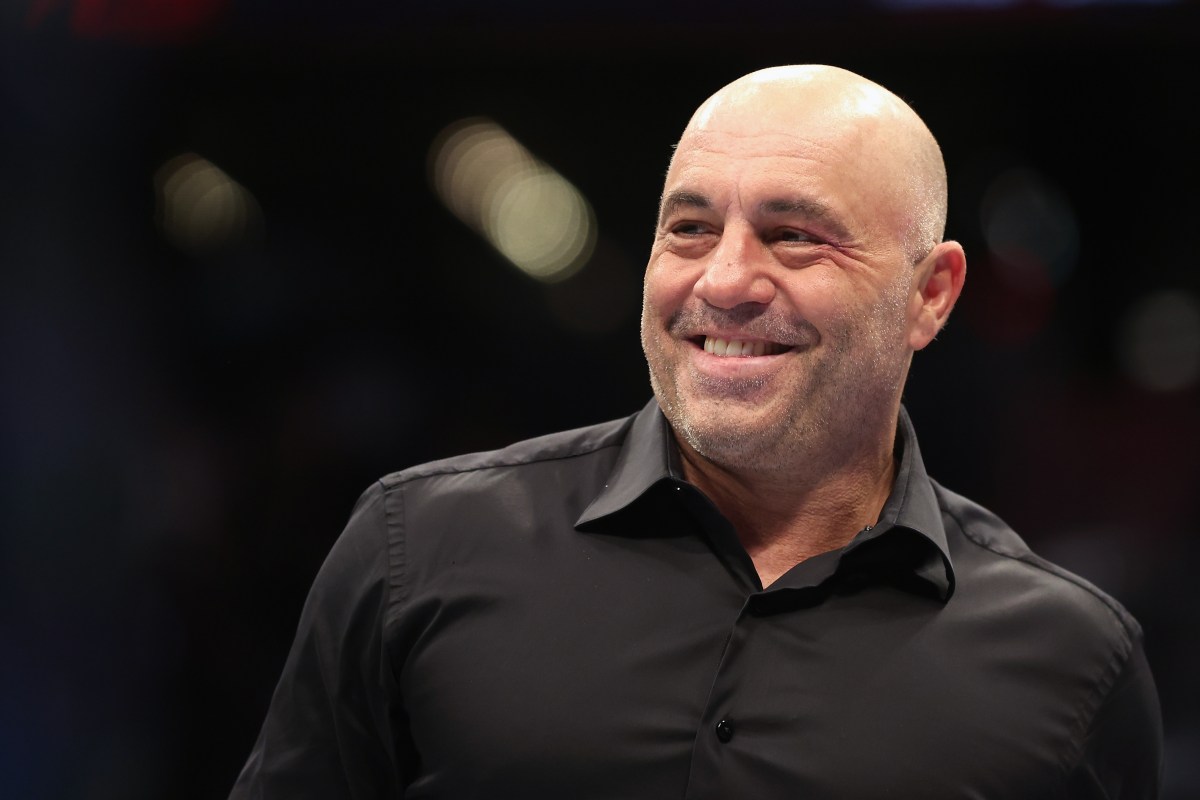
Joe Rogan said Israel’s influence “creeps” Americans out.
Rogan’s comments during a new discussion on his podcast, The Joe Rogan Experience, reflect a broader shift in how many Americans view Israel since Hamas’ October 7, 2023, attack on Israel and the humanitarian crisis in Gaza amid Israel’s military operation.
Some Americans have criticized pro-Israel groups such as the American Israel Public Affairs Committee (AIPAC), which has provided significant funding to pro-Israel candidates over the years. However, supporters of Israel have warned that some of that criticism has veered into antisemitism at a time of rising antisemitic incidents.
Read More on News
Newsweek reached out to Israeli Prime Minister Benjamin Netanyahu’s office and AIPAC for comment via email.
Rogan’s remarks came during a discussion with comedian and podcaster Tim Dillon.
“That’s the disturbing thing to a lot of people, like how much influence do they really have on this country? That’s what creeps people out because I think no one really considered it before October 7,” Rogan said.
He named Nick Fuentes, a right-wing figure considered to be a “white nationalist” by the Southern Poverty Law Center, as somebody who “considered” Israel’s influence, but said it wasn’t “an openly discussed thing amongst young people.”
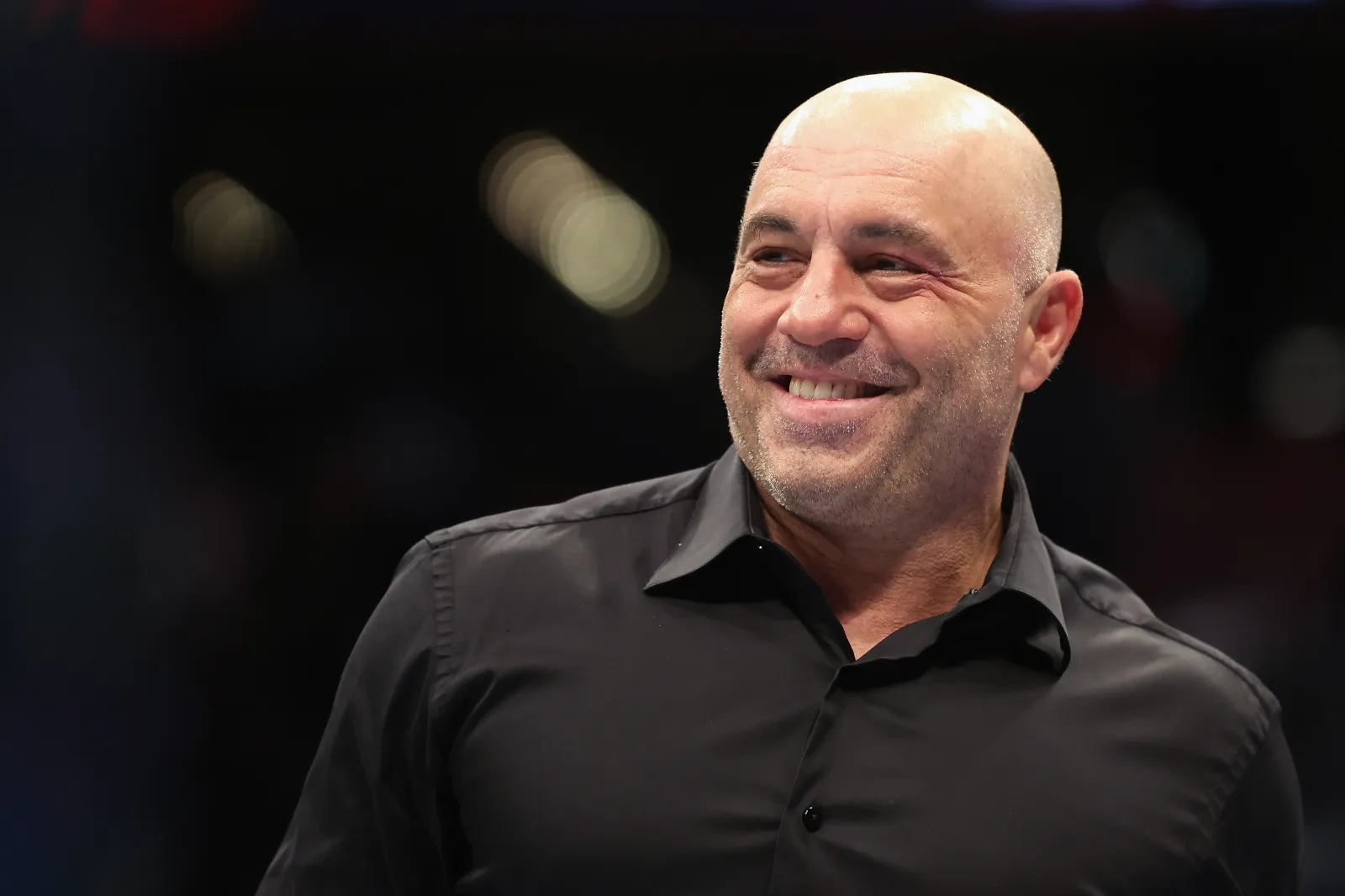
His remarks drew some backlash online.
The Nexus Project, a nonprofit whose goal is to combat antisemitism, wrote on X that the exchange “is exactly how antisemitism becomes normalized.”
“These little moments are not little within the context of a podcast with 15 million listeners. If even just .1% of those listeners are drawn to Fuentes because of this clip, that’s 15,000 people,” the group wrote.
On October 7, 2023, Hamas led an attack against Israel, killing 1,200 and abducting 251. Israel has said 58 hostages remain in Gaza, and that only 21 of them are believed to be alive.
Following the attack, Israel launched an offensive on Gaza, killing more than 73,000 people, according to The Associated Press, citing Gaza’s Health Ministry. Israel disputes the ministry’s figures. Critics sounded the alarm on Israel’s military operation, raising concerns about the number of civilians killed or displaced.
The U.S. support for Israel amid the operation has also faced scrutiny amid the developments, with some critics saying Washington should not be providing support for Israel due to those humanitarian concerns around civilians.
The U.S. and Israel have been longtime allies, with leaders touting shared values and Israel as a strategic partner in the Middle East.
Many Israel critics have noted there is a difference between legitimate criticism of Israel and antisemitism. Critics have said remarks from Fuentes, who has denied the Holocaust and called the state of Israel “the anti-Christ,” have crossed that line.
Americans’ Views on Israel
The United States has long been a close ally to Israel and has supported its government throughout the past few years, but more Americans are questioning that relationship, polling data show. Positive views of Israel fell from 55 percent in 2022 to 37 percent in 2026, according to the Pew Research Center.
Numerous recent polls suggest that Americans view Israel increasingly unfavorably amid the recent Middle East conflict. The Pew Research Center poll, published in April 2026, also found that the share of Americans who do not have confidence in Netanyahu increased from 42 percent to 59 percent.
Democrats were more likely to have negative views of Israel, with 80 percent viewing the country unfavorably compared to 41 percent of Republicans. Divides were also generational—70 percent of those between the ages of 18-49 view Israel unfavorably, compared to 49 percent of those 50 or older.
Gallup has found a similar trend. Their latest polling found that in 2026, for the first time, more Americans were sympathetic to Palestinians than Israelis amid the situation. Favorable views of Israel fell to 46 percent earlier this year, a new low that is down from 54 percent in 2025 and 58 percent in 2024.
“U.S. public opinion toward the Israeli-Palestinian conflict has shifted in the past 12 months, and for the first time in Gallup’s annual measurement since 2001, Americans’ sympathies no longer lie more with the Israelis than the Palestinians,” the polling memo reads.
Meanwhile, a Quinnipiac University poll released Wednesday found that 48 percent of Americans believe the U.S. has been “too supportive” of Israel, a large increase from only 16 percent in 2017.
Israel Influence Becomes Political Question
Both parties have dealt with fraying coalitions over Israel.
On the Democratic side, legislators and pundits have been divided over Israel for years. Prominent progressives like Senator Bernie Sanders, a Vermont independent, and Representative Alexandria Ocasio-Cortez have been more critical of Israel.
But centrist Democrats have walked more of a tightrope of maintaining support of Israel generally, while voicing criticisms of current leadership. This has created tensions, which came to a head in 2024 when some progressives declined to support former Vice President Kamala Harris’ campaign against Trump.
Israel critics within the Democratic Party won in several New York congressional primaries with the backing of New York City Mayor Zohran Mamdani, himself a leading critic of Israel.
Republicans have historically been more unified in their support for Israel, going back decades. But that is changing with more conservatives raising questions about that relationship.
Former Representative Marjorie Taylor Greene, who represented Georgia in Congress from 2021 to 2026, wrote to X in May, “It’s not an antisemitic conspiracy theory when a foreign lobby openly brags that they bought two congressional seats with candidates who will be loyal to Israel.”
AIPAC’s influence has also become a sticking point. It has opposed Israel critics in both parties, such as Representative Thomas Massie, a Kentucky Republican, or former Representative Cori Bush, a Missouri Democrat. Both lost primaries after AIPAC spent millions of dollars on their opponents.
AIPAC’s Defense
Many lawmakers from both parties have defended AIPAC, arguing that its spending to support candidates who are supportive of the U.S.-Israel relationship is legal and transparent, and that it is no different from other lobbying groups that advocate for their causes on Capitol Hill.
The specific focus on AIPAC, many supporters of Israel say, constitutes antisemitism and has played into anti-Jewish stereotypes.
Pennsylvania Governor Josh Shapiro, a Democrat, told Politico he believes some AIPAC criticism has been “used cynically by some to try and silence certain voices, to try and say that certain people participating in politics shouldn’t count or should be viewed in a toxic way.”
“Now, do I agree with every political decision they’ve made? Every endorsement they’ve made? Of course not. I think what we have seen is a weaponization of that, and I think that is a danger for our system,” he said.
He said it is “very dangerous in our system if you are trying to silence certain voices based on their race, based on their faith, based on their particular ideology.”
Senator Susan Collins, a Maine Republican running against progressive Democrat Graham Platner, an Israel critic, defended AIPAC in a recent interview on Fox News.
“It’s important to recognize that AIPAC is made up of Americans who care deeply about our relationship with Israel,” Collins said.
Contact Newsweek editors on this story: Jason Lemon and Gray R. Thomas