
(AP)
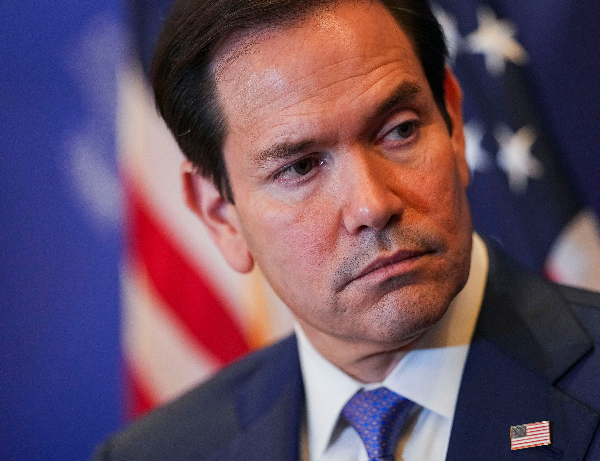
Secretary of State Marco Rubio warned that Iran’s emerging plan to impose shipping fees in the Strait of Hormuz could generate up to $40 billion annually and spread to other global waterways, according to a Wall Street Journal report.
Rubio said the Iranian concept would effectively transform one of the world’s most critical shipping lanes into a structured revenue system tied to transit access and maritime services.
He warned that if such a model is adopted, it could be replicated in other strategic chokepoints around the world “like a contagion,” according to The Western Journal.
The Wall Street Journal reported that Iran’s broader vision goes beyond informal ship-by-ship charges and instead involves a formalized toll-and-services framework tied to security, environmental oversight, and coordinated transit management.
The Journal reported that the system could generate up to $40 billion annually by monetizing traffic through the Strait of Hormuz, a critical artery for global energy shipments.
Iran has reportedly floated the arrangement as a long-term governance structure for the waterway, potentially involving regional stakeholders in a revenue-sharing model tied to shipping access.
U.S. officials have strongly pushed back against the concept, arguing that international waterways must remain open and free of unilateral tolls or political conditions.
Rubio reiterated that the United States would not recognize any system that conditions passage through the Strait of Hormuz on payment or compliance with Iranian demands.
The Strait of Hormuz remains one of the world’s most sensitive maritime chokepoints, with roughly one-fifth of global oil shipments transiting the narrow passage.
The dispute comes as tensions remain elevated in the Gulf, with Washington warning that attempts to monetize passage rights could destabilize global trade and energy markets.
© 2026 Newsmax. All rights reserved.