
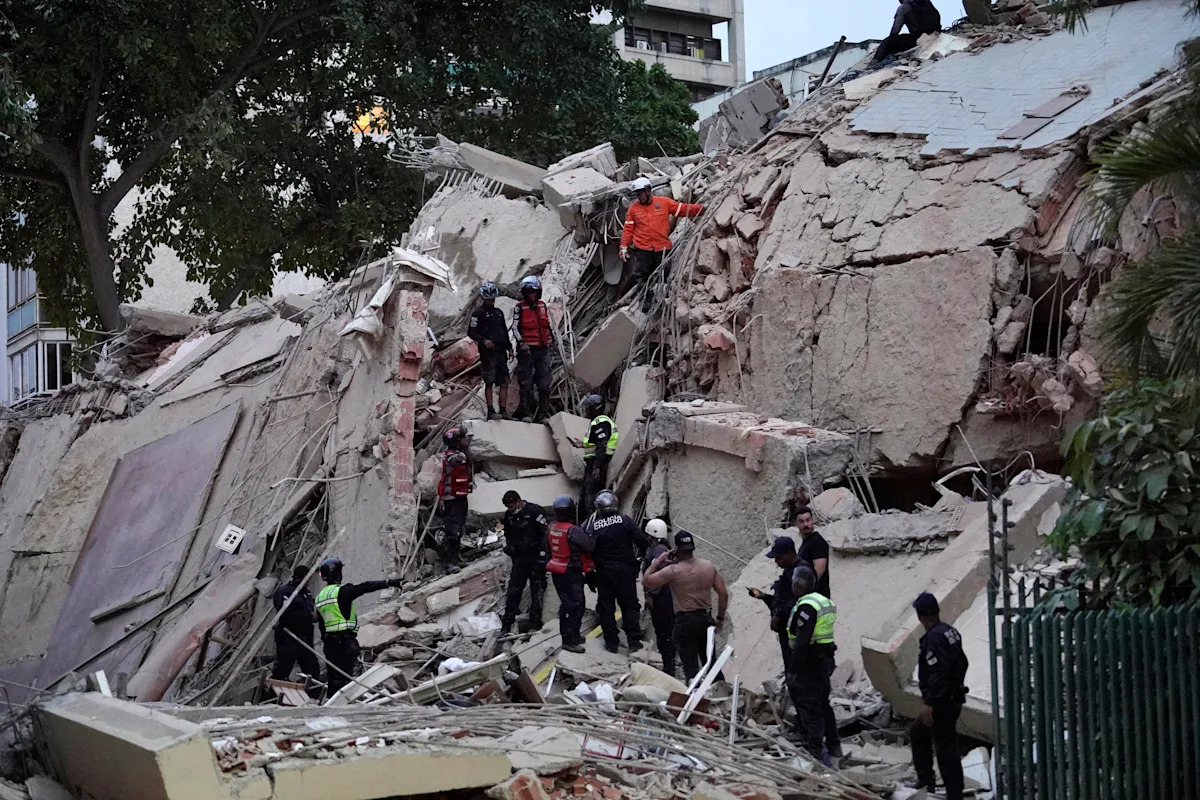
Some emergency disaster experts refer to the first 48 or 72 hours after a disaster as a “golden window” to find survivors — a period when they are most likely to survive without food or water.
However, other researchers maintain that there should be no rigid upper limit on how long people can survive, particularly when they may have been trapped in rubble caused by earthquakes, such as those in Venezuela.
They say there is often “a wide variety in survival ‘time to rescue'” and that the majority of documented rescues take place within the first five or six days. However, even this data should be treated with caution, due to a lack of detailed, consistent reporting that often accompanies the chaotic scenes in the aftermath of a disaster.
In northern Venezuela, Herculean efforts are underway to find as many survivors as possible, with volunteers from Grey Bull Rescue, a donor-funded organization headquartered in Tampa, joining locals in a race against time.
Bryan Stern, the chairman of the volunteer service that has operated in Haiti, Syria and Lebanon, told Reuters that, while it wanted to find trapped American citizens, “we save lives, no matter who.”
Stern said his team specializes in filling gaps in the critical early phase of disaster response by moving to areas that have not yet been searched.
“The way we do it is literally we get on the ground, and we look for places that haven’t been searched yet,” he said. “When there are teams of people digging in a particular place, we get out of the way … we’ll go digging other places.”