
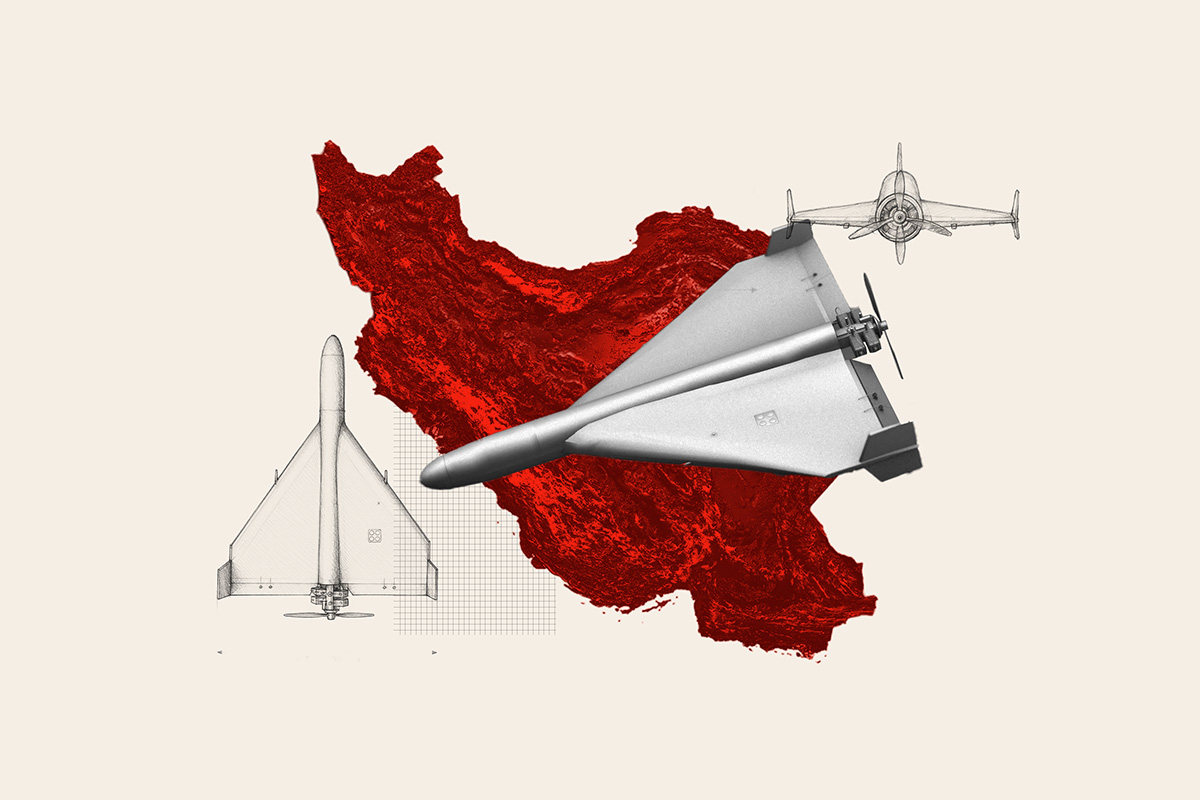
Whether over the waters of the Persian Gulf or across the skies of Eastern Europe, one weapon can be found thwarting advanced defenses and redefining 21st-century combat to deadly effect.
And that’s thanks to Iran.
The Shahed-136 loitering munition—often called a “suicide” or “kamikaze” drone—is the product of a decadeslong and still-ongoing effort by the Islamic Republic to perfect a tool capable of overcoming shortfalls in air power projection against foes equipped with state-of-the-art platforms utilizing more complex and far pricier technology.
Read More on World
Estimated to cost between just $20,000 and $50,000—in many cases as little as $7,000—per system, the Shahed-136 and other variants have turned the tables of traditional military doctrine, with Russia trading million-dollar missile strikes to launch licensed copies in Ukraine and even the United States scrambling to develop a low-cost clone of its own amid its conflict with Iran.
“The Shahed’s effectiveness isn’t technological sophistication; it’s the opposite,” Akram Kharief, author of In the Shadow of the Shahed, told Newsweek. “Analysts consistently frame this as a cost-exchange weapon: Its value lies in numbers, since the drones are cheap and easy to mass-produce compared to the systems built to shoot them down, making them ideal for saturating and exhausting air defenses while each intercept burns a far more expensive defensive asset.”
“The Shahed has given states like Russia and Iran a cheap way to impose disproportionate costs on adversaries,” Kharief said, “forcing them to waste expensive interceptors on low-cost drones while also inflicting a steady psychological toll on civilian populations.”
 Origins of the Shahed
While Iranian officials have mocked the U.S. for attempting to replicate the Shahed, which translates to “witness” in Arabic and Persian, the system has an origin story spanning several foreign predecessors dating back to the final years of the Cold War.
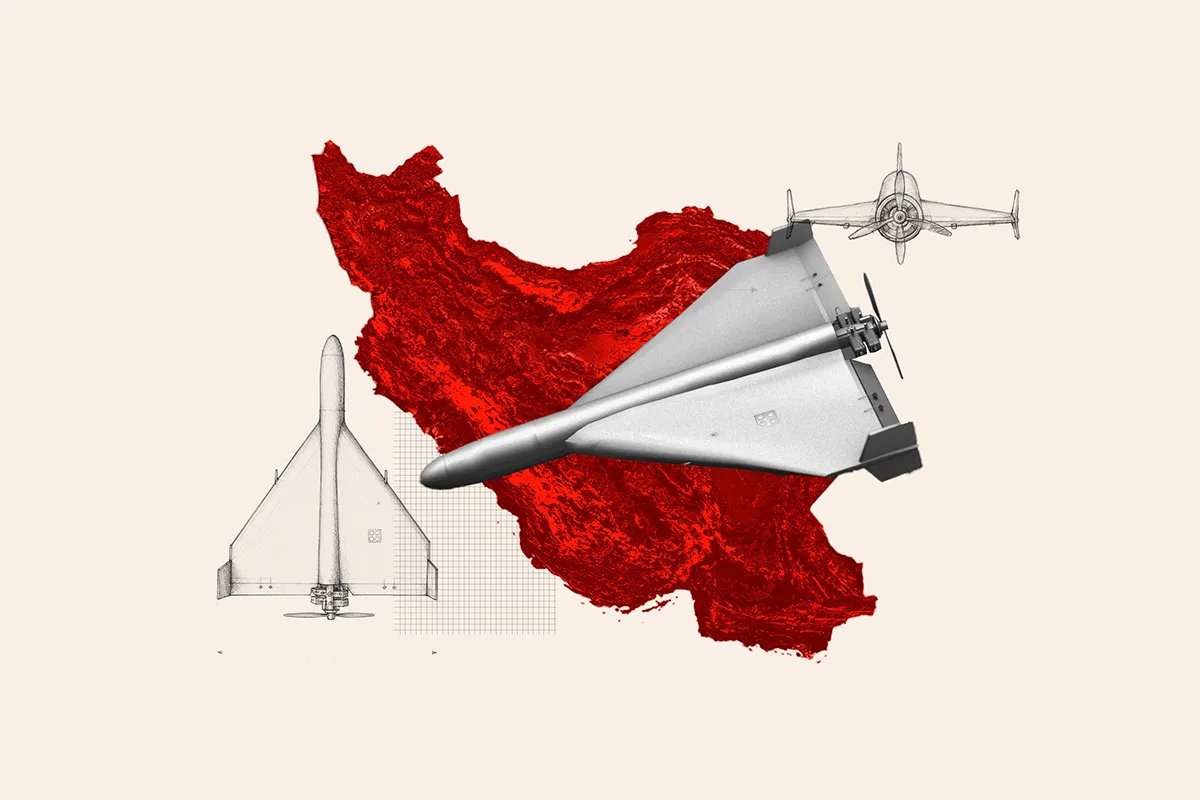
As NATO sought a cheap solution to neutralizing Soviet defenses in the event of a confrontation, one answer came in the form of a project known as the “Drohne Anti-Radar (DAR),” developed in the 1980s by West Germany’s Dornier with U.S. support. The prototype bears a striking resemblance to the modern Shahed and was conceived as a one-way attack drone capable of loitering over enemy territory, detecting radar arrays and striking them.
The system was never put into service. However, it did find a home at Israel Aerospace Industries, which developed a similar Harpy design, variants of which are still deployed today.
How exactly the technology made its way to Iran remains murky. But Fabian Hinz, an independent expert specializing in weapons systems, said the first Iranian drone to match, at least in external appearance, was the Shahed-131.
“That drone was the Shahed-131 and they made one major change to it,” Hinz told Newsweek. “Instead of a radiation seeker, they put in satellite navigation guidance—so basically GPS, GLONASS, BeiDou, these systems—so that the system would work like a low-cost cruise missile. You just type in the target’s coordinates and then strike the target.”
In an endeavor headed by the IRGC-linked Shahed Aviation Industries group, Iranian engineers then set out “to upscale the whole thing, put a more powerful engine to increase range—that’s a very common development approach—and it became the Shahed-136,” Hinz said.
Ali Bagheri Dolatabadi, professor at Yasouj University in Tehran, tied the Shahed’s development to Iran obtaining Harpy models used by Israel to conduct strikes in Syria.
“Iran worked on and upgraded the Israeli samples,” Dolatabadi told Newsweek. “The first unveiling of these drones took place in 2021.”
The Shahed-136 is manufactured by the state-owned Iran Aircraft Manufacturing Industries Corporation (HESA), whose original factory—somewhat ironically—was built by U.S. company Textron prior to the 1979 Islamic Revolution.
As to how Iran innovated the weapon, Hinz said the actual process demands little in terms of technology, utilizing over-the-shelf components readily available even for a nation under international sanctions. He called it “the democratization of deep precision strike,” a “poor man’s cruise missile” capable of striking up to 2,000 kilometers away.
 Born Out of Necessity
When it comes to why Iran managed to develop such a platform while much larger, wealthier countries could have easily done so, the decision was a matter of necessity rooted in the Islamic Republic’s past challenges on the battlefield.
Back in the 1980s, as the DAR was being developed 1,500 miles away in West Germany, Iran was mired in a devastating war with neighboring Iraq.
In the throes of conflict and a new revolutionary path, Iran “was forced to confront two unpalatable facts,” according to Steven Feldstein, a former U.S. State Department official who is today a senior fellow at the Carnegie Endowment for International Peace’s Democracy, Conflict, and Governance Program.
First, he told Newsweek, “there was no way to preserve the existing military infrastructure modeled on expensive U.S. platforms due to sanctions and loss of human capital.” At the same time, Iran “was in a brutal war with Iraq that required the regime to come up with solutions to counter its adversary.”
“These incentives pushed Iran to develop an indigenous drone and ballistic missiles program that relied on experimentation, cost-effective alternatives, and iterative/adaptive designs,” Feldstein said. “By the mid-1980s, Iran had developed the first Mohajer drone, and the following year produced the initial Ababil drone. Over the coming decades, its investments in drone manufacturing would bear fruit.”
The debut use of the Shahed-136 is difficult to pinpoint, though Shahed models are believed to have been in the arsenal of Tehran’s allies, such as the Iran-aligned Ansar Allah, or Houthi, movement in the late 2010s and early 2020s. The system is suspected to have been involved in the deadly July 2021 strike on the MT Mercer Street oil tanker and potentially as early as in two 2019 attacks against Saudi oil facilities, all incidents for which Iran denied any involvement.
Dolotabadi estimated that “the drone used in Saudi Arabia was probably the Shahed 131 model, an early version of the drone, which is very similar to the Shahed 136, with only a difference in size.”
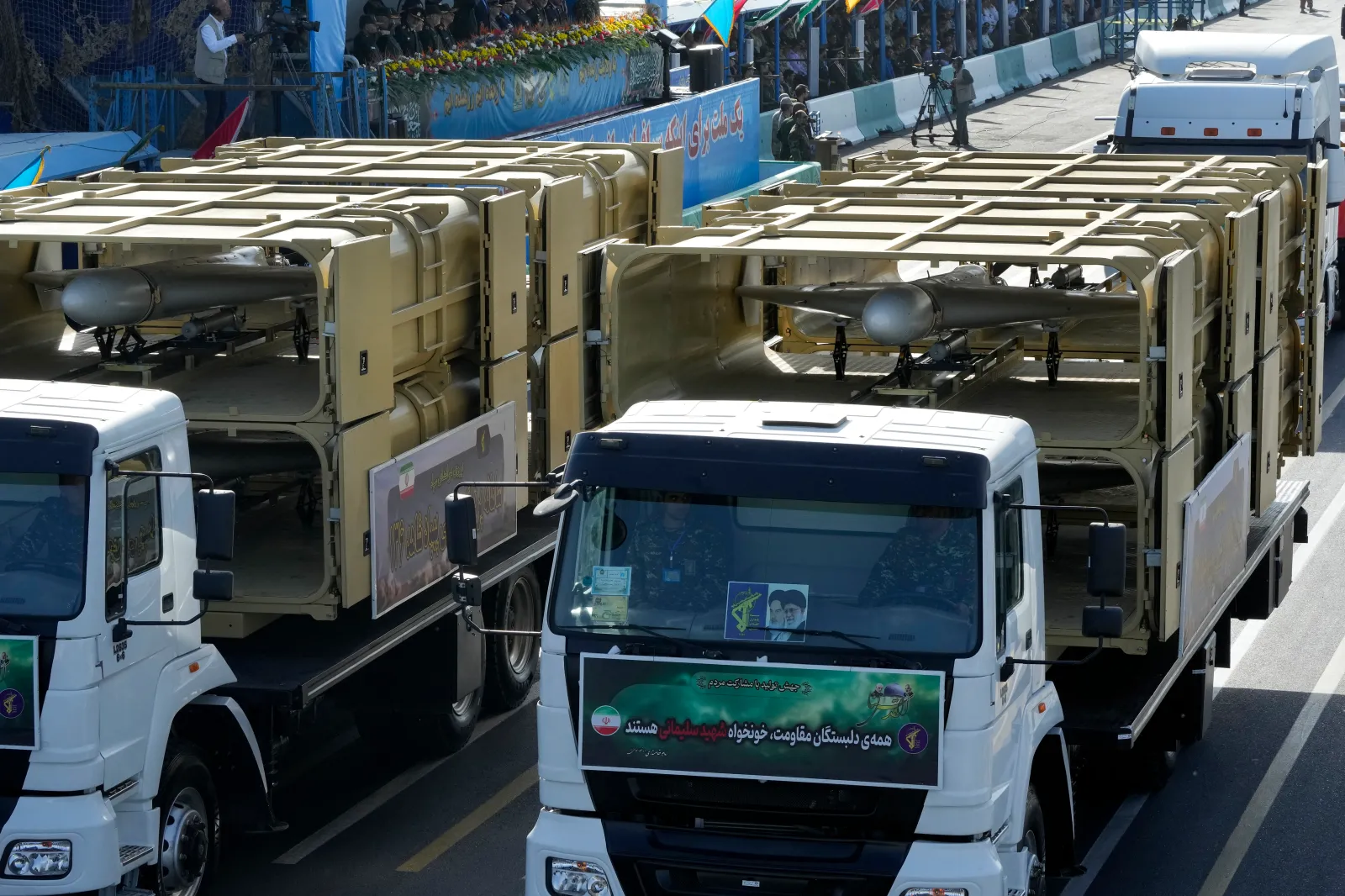
Shahed drones found their way into the hands of other Iran-backed militias targeting U.S. troops in Syria through 2022. That same year, the weapon grew in international notoriety with its use in Ukraine by Russia, whose Geran variant has occasionally strayed into neighboring NATO states.
It was this conflict that “helped make these drones famous,” said Dolotabadi. He said Iran provided Russia with about 2,400 Shahed-136 units in 2022 before Moscow began producing its version in coordination with Tehran.
Since then, Iran has pressed on with developing new Shahed mods, testing them during the 12-Day War with Israel in June of last year and amid the U.S.-Israeli war launched against Iran in February. In both instances, they proved a powerful tool.
“What makes the Shahed so effective is that it combines significant destructive power and relative precision with highly favorable cost advantages,” Feldstein said.
He saw the weapon as “symbolic of broader shifts taking place on the battlefield—namely the reemergence of cheap mass as a strategic factor in modern war.”
 A Sanctions-Proof Weapon
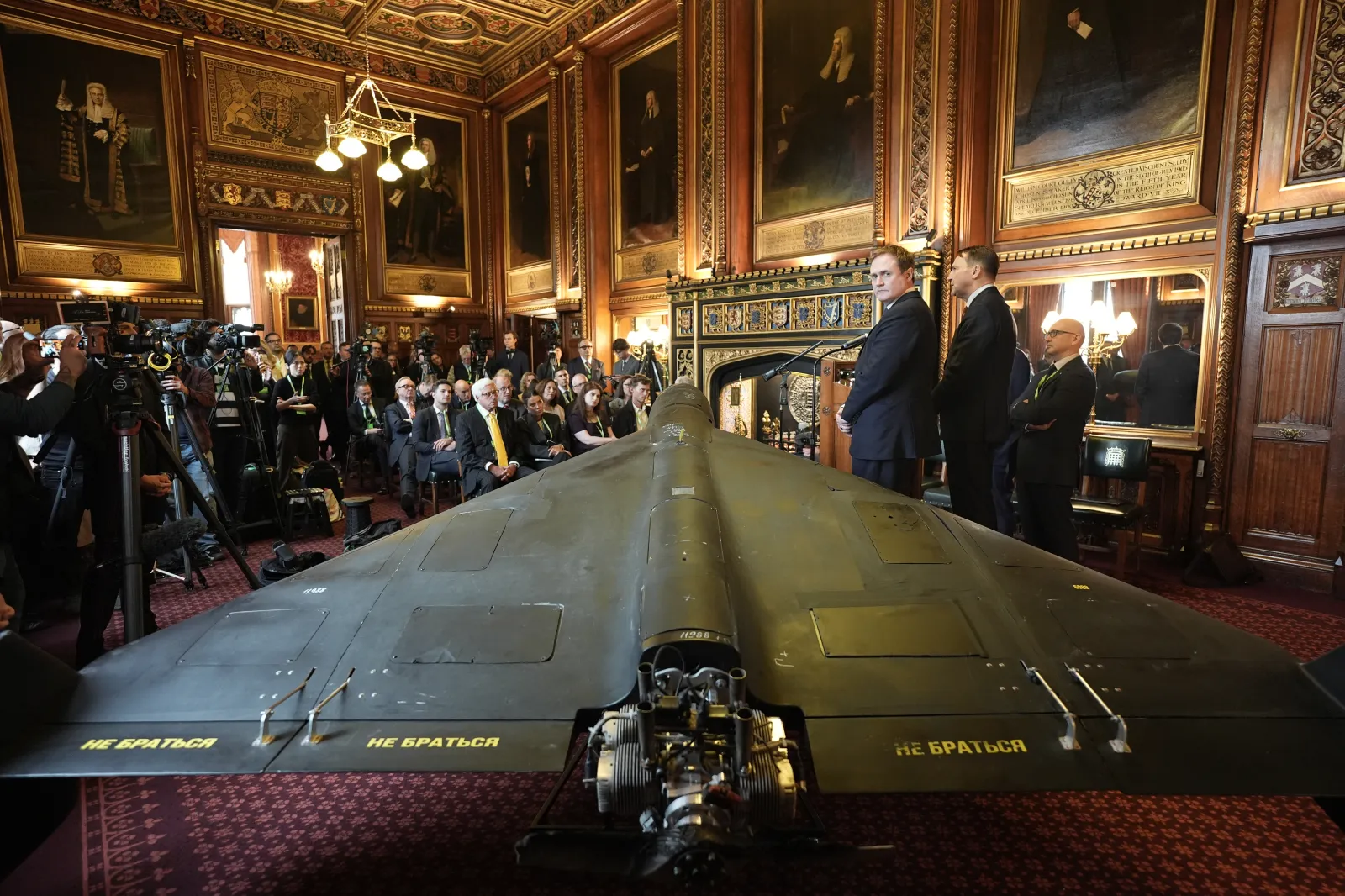
The simplicity of the Shahed-136 also works in favor of nations vulnerable to U.S. sanctions. Washington has repeatedly sought to curb Tehran’s drone-building capacity through blacklisting companies within Iran and abroad—including in China— suspected of aiding the Shahed production effort.
But rather than dissuade Tehran, the U.S. sanctions have likely “pushed Iran to build an indigenous, decentralized production base that could withstand external pressure,” argued James Patton Rogers, executive director of the Brooks Tech Policy Institute at Cornell University and co-founder of the British International Studies Association’s War Studies working group.
“Rather than relying on complex military supply chains, Iran has designed the Shahed around commercially available dual-use components and resilient production networks,” Rogers told Newsweek. “Access to Chinese electronics and manufacturing innovation has also helped strengthen those supply chains, allowing Iran to produce these systems at scale despite continued sanctions.”
Not even more direct measures such as a U.S.-Israeli air campaign aimed at destroying Iran’s military-industrial capacity appears to have substantially hindered production, which U.S. reports indicate has ramped up since an April ceasefire.
The Shahed appears to have played an influential role in the U.S. decision to seek a truce in the first place, with Iran having unleashed thousands of drones toward Israel, Arab states hosting U.S. military bases and ships daring to transit the Strait of Hormuz oil and gas trade chokepoint.
Rogers pointed out that the Shahed’s nature of being “cheap, relatively simple to build, and designed for mass production” has lent itself to an emerging strategy that threatens to render unsustainable the use of once-renowned defense platforms such as the Patriot, whose interceptors cost roughly $4 million each.
Shahed-style drones are “increasingly being used in coordinated mass attacks designed to overwhelm air defenses through sheer volume,” Rogers said. “That’s why the Shahed has become so influential.”
“It has shown that you don’t always need highly sophisticated weapons to have a strategic effect—sometimes quantity, combined with the right tactics, is enough,” he added. “It’s no surprise that other countries are now seeking to copy or license the design.”
But with the proliferation of such technology, Dolatabadi felt it inevitable that new challengers would be emerging down the line.
“Of course, it seems that these capabilities will only last as long as defensive weapons can render them ineffective,” Dolatabadi said. “We are witnessing the amazing growth of military technologies and electronic weapons, and we cannot expect these weapons to have their current effectiveness in the long term.”
Contact Newsweek editors on this story: Francis Mao and Gray R. Thomas