
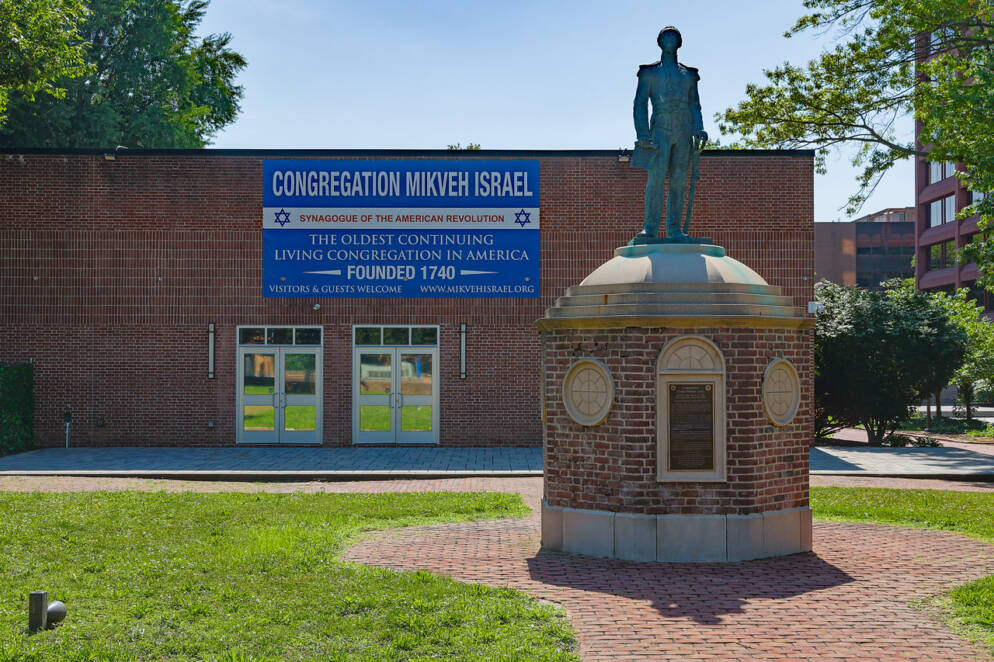
 Congregation Mikveh Israel (Photo credit: Christopher Brown)
Congregation Mikveh Israel is well-known as “the synagogue of the American Revolution.” Its history dates back to 1740, which, of course, was decades before the Revolution even started.
The Sephardic synagogue has close to 10,000 artifacts from its nearly three centuries of existence, according to Yosef Zarnighian, the congregation’s senior rabbi.
And for the first time, Zarnighian and other shul leaders are putting them on display across the synagogue. Fittingly, they have aligned their exhibition with the America 250 celebration in Philadelphia this summer.
The displays are open to the public every weekday from 10 a.m. to 3 p.m. The synagogue is also offering sessions by appointment. The synagogue unveiled this museum-like experience on July 1.
“We wanted to showcase what we have that would present the synagogue’s history in a way that will capture the public’s attention,” Zarnighian said. “America 250 brings a unique atmosphere and interest to the public in American Jewish history that has not been seen in quite some time.”
Mikveh Israel is also well-known as “the longest continuously operating synagogue in the United States.” It was not the congregation to which George Washington sent his famous letter to the Jewish community, promising that it would have religious freedom here. That was Touro Synagogue in Newport, Rhode Island.
Mikveh Israel, though, has a similar letter from Washington making the same pledges. It also has notes from presidents Clinton, Trump and Biden expressing the same inherent natural right of religious freedom. They are all in a display case in the lobby of the synagogue.
In the same case, you can find a letter from Abraham Lincoln. This one has nothing to do with religious freedom. It’s a thank-you note to congregants for the letter they sent him expressing condolences on the passing of his 11-year-old son, Willie, in 1862.
“It shows we cared about the welfare of the country, and even about the welfare of the individual president, where we’re sending him a shiva call,” said Zarnighian.
Visitors who walk into the Mikveh Israel lobby and turn left down the hall will see the rooms in which the new displays are laid out.
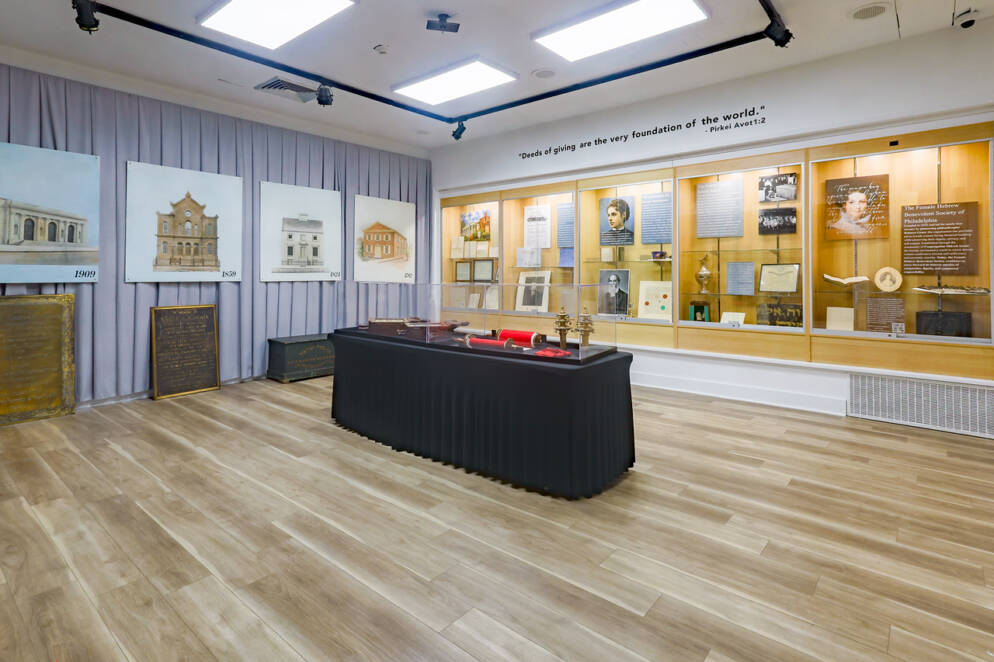 The general exhibit at Congregation Mikveh Israel. (Photo credit: Christopher Brown)
The room on the right shows artifacts that emphasize Mikveh Israel’s long history and its contributions to American Jewry. A side wall features building images of the synagogue’s various homes dating back to 1782.
Along a back wall is a shrine to Sabato Morais, Mikveh Israel’s rabbi from 1851 to 1897. Zarnighian described Morais as “a staunch abolitionist and a pioneering figure in Jewish philanthropy.”
“He was known as the patriarch of Russian Jews during the first wave of Russian Jews to the United States,” Zarnighian said.
But he wasn’t even Russian. He was Italian.
“He taught himself Russian to help them,” the current rabbi said. “He found them funding, got them jobs.”
Flanking the Morais display are exhibits on the synagogue’s contribution to the growth of Jewish organizations in the U.S.
Gratz College was founded in 1895 as the first independent Jewish teachers’ college in North America, and it was housed at Mikveh Israel until 1909. The Female Hebrew Benevolent Society of Philadelphia was launched to provide aid to women facing financial hardship, and it was started through the congregation. The Association for Jewish Immigrants, now HIAS Pennsylvania, was founded in 1882 by Mikveh Israel members.
“Nothing over here has previously been on display,” Zarnighian said.
Across the hall, synagogue leaders re-created the 19th-century living room of the Gratz family.
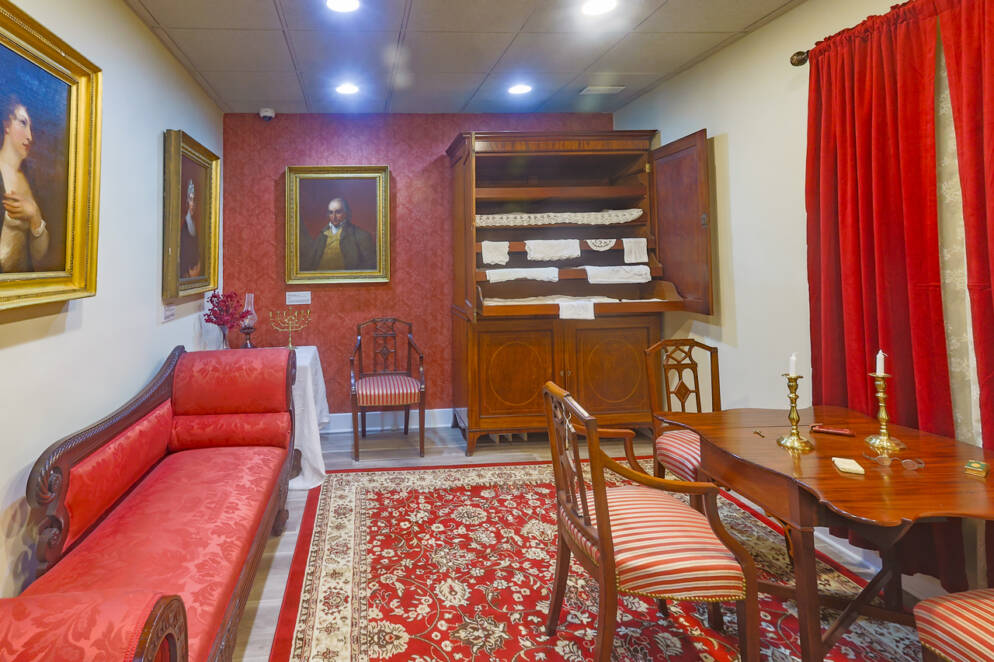 The re-creation of the Gratz living room at Congregation Mikveh Israel. (Photo credit: Christopher Brown)
Brothers Barnard and Michael Gratz came to the U.S. from Poland in the 18th century, established themselves as successful merchants and joined Mikveh Israel. Their efforts paved the way for their children — Rebecca, Hyman, Simon and Benjamin — to become successful in business, activism and philanthropy. Rebecca helped start the Female Hebrew Benevolent Society and the first Jewish Sunday school program in the U.S.
In the family’s re-created living room, Mikveh Israel has displayed their table, chairs, bookcase and Shabbat candles, among other items. Zarnighian also made sure to point out the actual books in the bookcase.
“You get a little glimpse into how well-read Jews were at the time. They were not peasants who didn’t know how to read or write,” he said. “They were reading Edgar Allan Poe. They were reading Shakespeare. They were also studying their Judaism, like the works of Reverend Isaac Leeser.”
The Gratz room and the general exhibit show only a small percentage of the items that Mikveh Israel has in its collection. Zarnighian estimated that 98% of the artifacts remain in storage.
But even if they were all on display, they would likely tell the same story.
“The best way I can describe what the exhibitions showcase is the rapid success and growth of American Jewry from the founding to today,” the rabbi said.
In a nation renowned for its individualism, no one did it alone.
“You need people active. You need people involved. And you need to have a dynamic congregation that works together. If you want to be a passive Jew in the U.S., it won’t work,” Zarnighian said. “What our exhibition shows is that when the community is active, it thrives.”
jsaffren@midatlanticmedia.com