
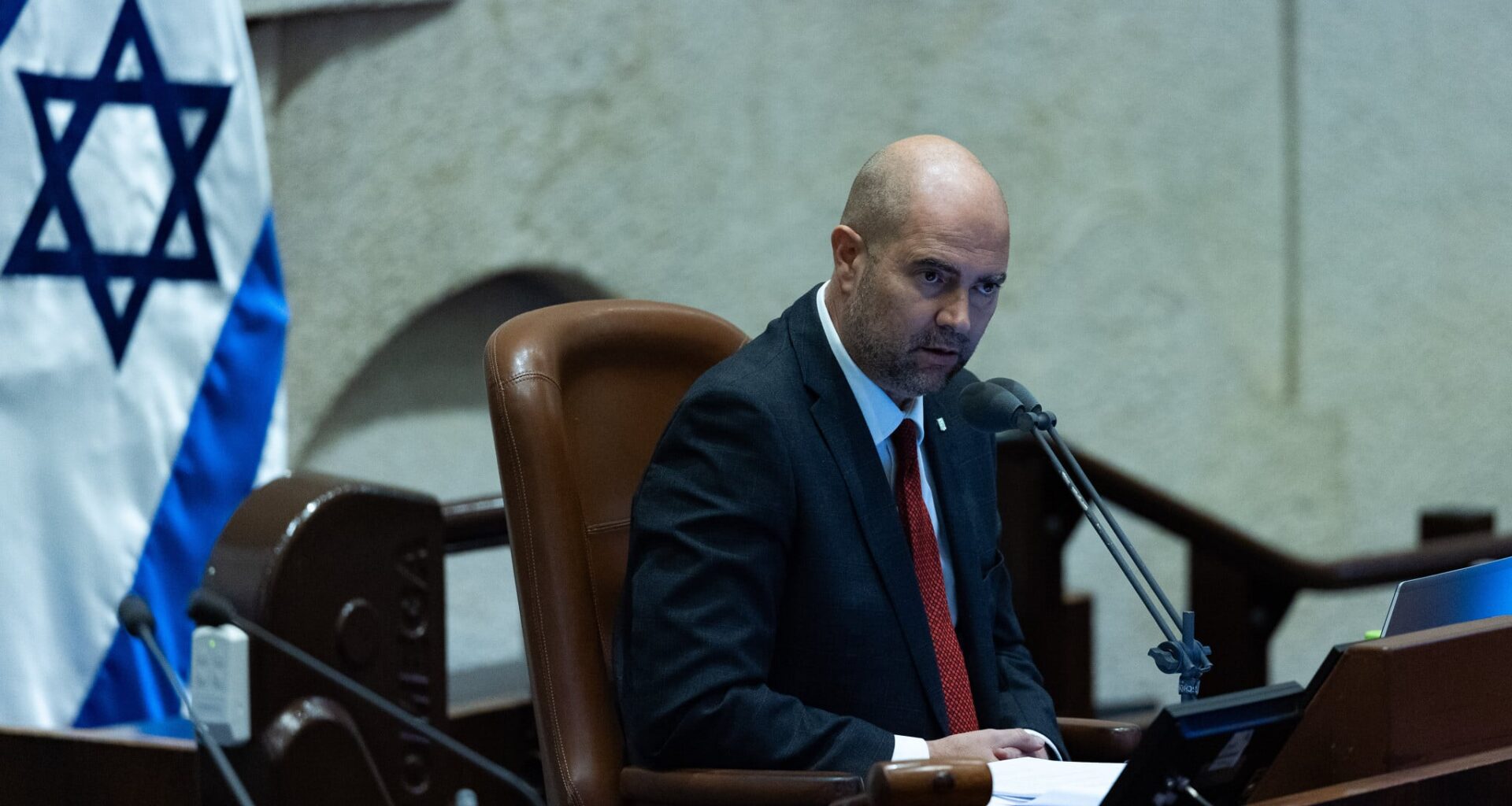
The Knesset is set to dissolve on July 17, putting Israel on course for national elections likely to be held on October 27 — the latest date permitted by law.
While no official decision has been announced, Knesset Legal Adviser Sagit Afik last week recommended dissolving parliament on July 17, and both Knesset Speaker Amir Ohana and Coalition Whip Ofir Katz have indicated that this is the expected timetable.
Although October 20 remains a possible election date, the statutory length of the campaign period, the High Holidays and the proximity of the anniversary of the October 7, 2023, attack have increasingly narrowed the practical options to late October, with the 27th emerging as the likeliest date.
A spokesperson for Ohana confirmed to The Times of Israel that, under the current legal timetable, “the elections will be held on October 27. According to the legal situation, as a result, the Knesset must dissolve on July 17.”
Hebrew media also reported that Ohana and Katz relayed the same timetable to coalition lawmakers.
Get The Times of Israel’s Daily Edition
by email and never miss our top stories
By signing up, you agree to the terms
The timing also aligns with Prime Minister Benjamin Netanyahu’s political interests. The premier is not believed to favor bringing the elections forward. Since reaching an agreement with the ultra-Orthodox parties to stabilize his coalition, he has focused on advancing as much legislation as possible before the Knesset dissolves, when those efforts are likely to be frozen or require opposition consent.
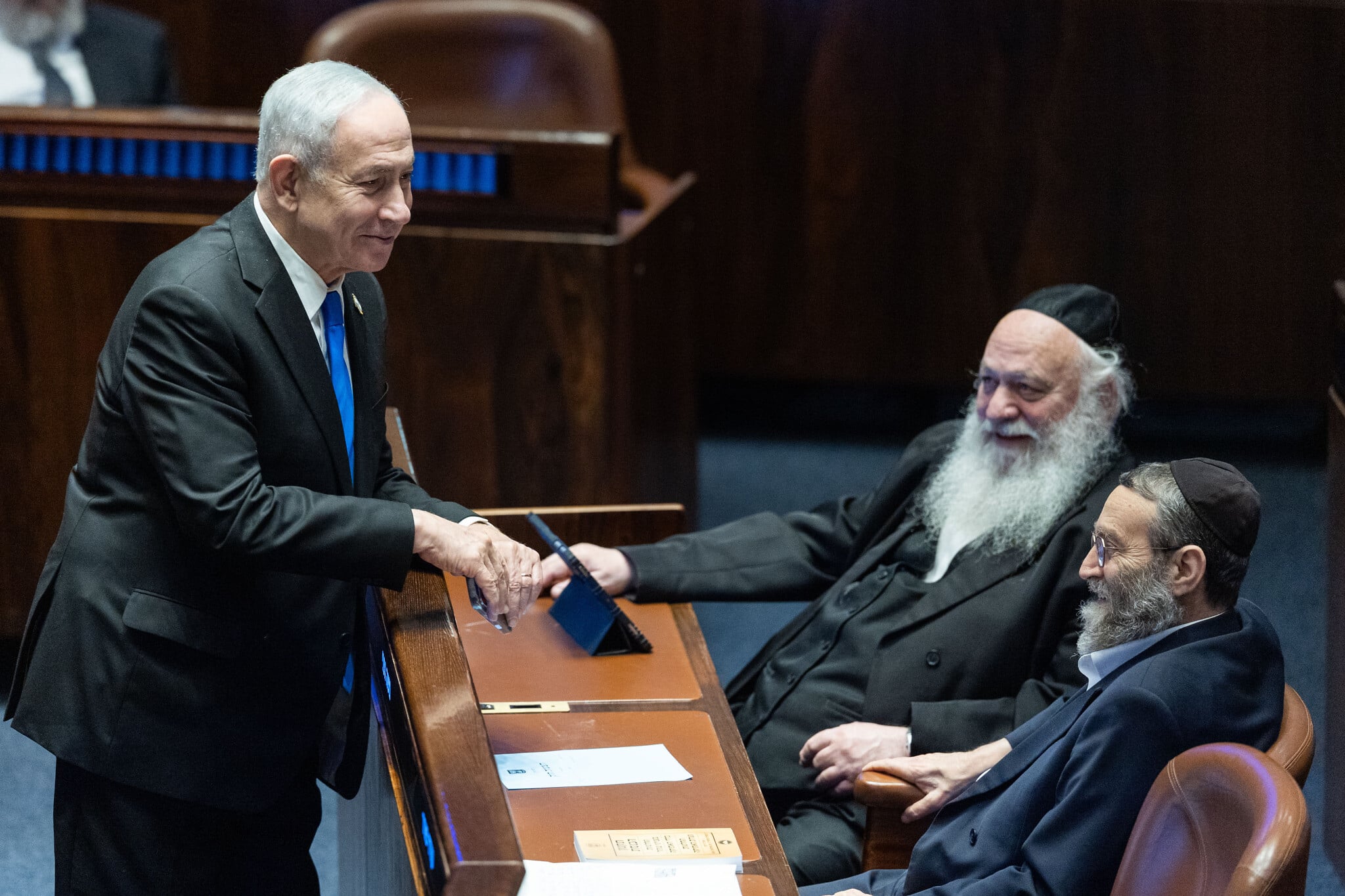
Prime Minister Benjamin Netanyahu (left) speaks to United Torah Judaism lawmakers Moshe Gafni (right) and Yitzhak Goldknopf in the Knesset plenum in Jerusalem, July 1, 2026. (Yonatan Sindel/Flash90)
Opposition leaders have argued that the premier also has an electoral incentive to delay the vote as, based on current polling, he will be unable to form a coalition.
According to longstanding legal practice, the Knesset must dissolve at least 90 days and no more than 150 days before an election in order to allow for the statutory campaign period.
As Israeli law requires elections to be held every four years unless the Knesset is dissolved earlier, October 27 is the latest possible date on which the next vote can be held.
Although October 6 and October 13 remain legally possible if the Knesset dissolves in time, both are highly impractical dates, since they closely follow the High Holidays.
Additionally, an October 6 election would take place on the eve of the third anniversary of the October 7 attack, and an October 13 vote would come less than a week after nationwide commemorations, forcing the coalition that was in power during the attack to campaign in the immediate shadow of its anniversary. As a result, October 20 and October 27 emerged as the most plausible dates, with Likud party leaders favoring the latter.
Afik told lawmakers on the Knesset House Committee last week that “in the unique circumstances of this Knesset, the appropriate date for its dissolution is July 17.”
Such a date would “create legislative transparency” and provide stability for the Knesset Legal Department as regular legislative work gives way to the restrictions governing the election period, thereby avoiding “unnecessary disputes” over when those limitations take effect.
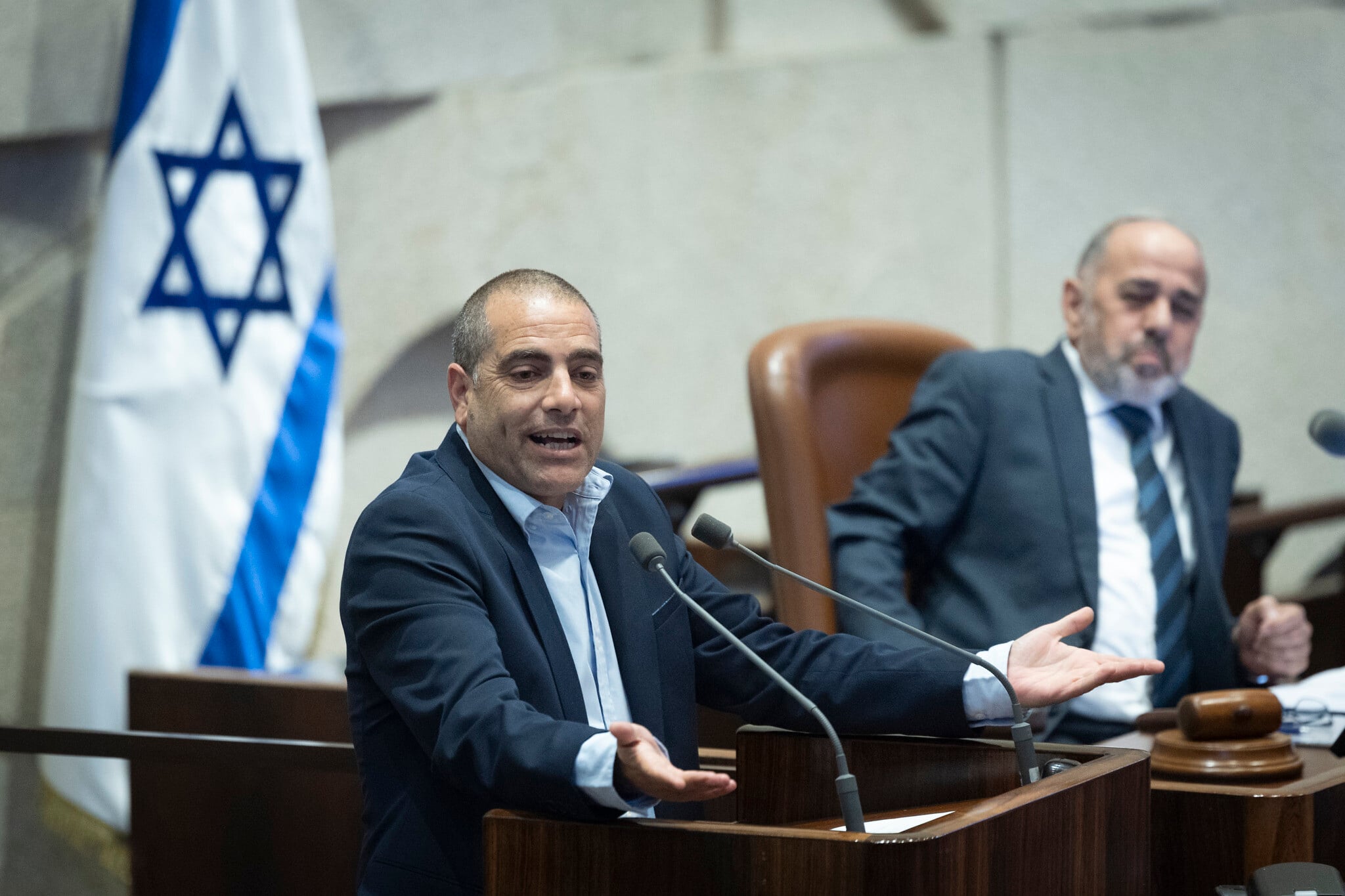
Coalition whip Ofir Katz (Likud) speaks in the Knesset before the passage of the first reading of a bill to dissolve parliament, June 1, 2026. (Chaim Goldberg/Flash90)
The expected timetable marks a dramatic reversal from just a month ago, when the coalition itself advanced legislation to dissolve the Knesset and potentially trigger early elections amid an escalating crisis with the ultra-Orthodox parties, which threatened to bring down the government over its failure to advance legislation preserving military exemptions for Haredi men.
The Knesset dissolution bill, which passed its first reading in June unanimously, 106-0, was advanced without specifying an election date. Katz, the coalition whip, states at the time that it would be held between September 8 and October 20, with the exact date to be determined before the final votes on the bill.
That effort has since stalled after Netanyahu reportedly reached a deal with Shas and United Torah Judaism to advance key Haredi legislative priorities, including a proposed Basic Law on Torah study intended to shield draft evaders from sanctions, a temporary order to freeze arrests of draft dodgers, and a bill repealing the kosher reform passed by the previous government.
In return, the Haredi parties are expected to support coalition initiatives including a controversial pair of bills curbing the power of the attorney general — one of the few checks on executive power in Israel — Communication Minister Shlomo Karhi’s bill to overhaul broadcast media, and legislation establishing a politically appointed probe into the failures surrounding October 7.
Since then, the government has embarked on a legislative blitz aimed at passing as many of its own contentious bills as possible before parliament dissolves, when legislation generally grinds to a halt unless agreed to by both coalition and opposition.
We can’t do this work alone.

The war with Iran has been draining for all of us in Israel. But when I heard about a high casualty incident – ballistic missile impacts in Arad and Dimona that left nearly 200 people wounded – I drank a cup of coffee, packed a bag, and headed south.
There, I spoke with Shilgit, the head of an after-school program for underprivileged youth. Standing outside her destroyed center, Shilgit said it was a miracle that no children were hurt and spoke about the community coming together in the hours since.
As a Times of Israel reporter, I’m committed to telling stories of resilience like Shilgit’s. But my colleagues and I can’t do this alone. If you value work like this, please consider joining our reader support group, The Times of Israel Community. Your financial support is essential to keep real human reporting like this going.
— Stav Levaton, military reporter
Already a member? Sign in to stop seeing this
You’re a dedicated reader

That’s why we started the Times of Israel – to provide discerning readers like you with must-read coverage of Israel and the Jewish world.
So now we have a request. Unlike other news outlets, we haven’t put up a paywall. But as the journalism we do is costly, we invite readers for whom The Times of Israel has become important to help support our work by joining The Times of Israel Community.
For as little as $6 a month you can help support our quality journalism while enjoying The Times of Israel AD-FREE, as well as accessing exclusive content available only to Times of Israel Community members.
Thank you,
David Horovitz, Founding Editor of The Times of Israel